

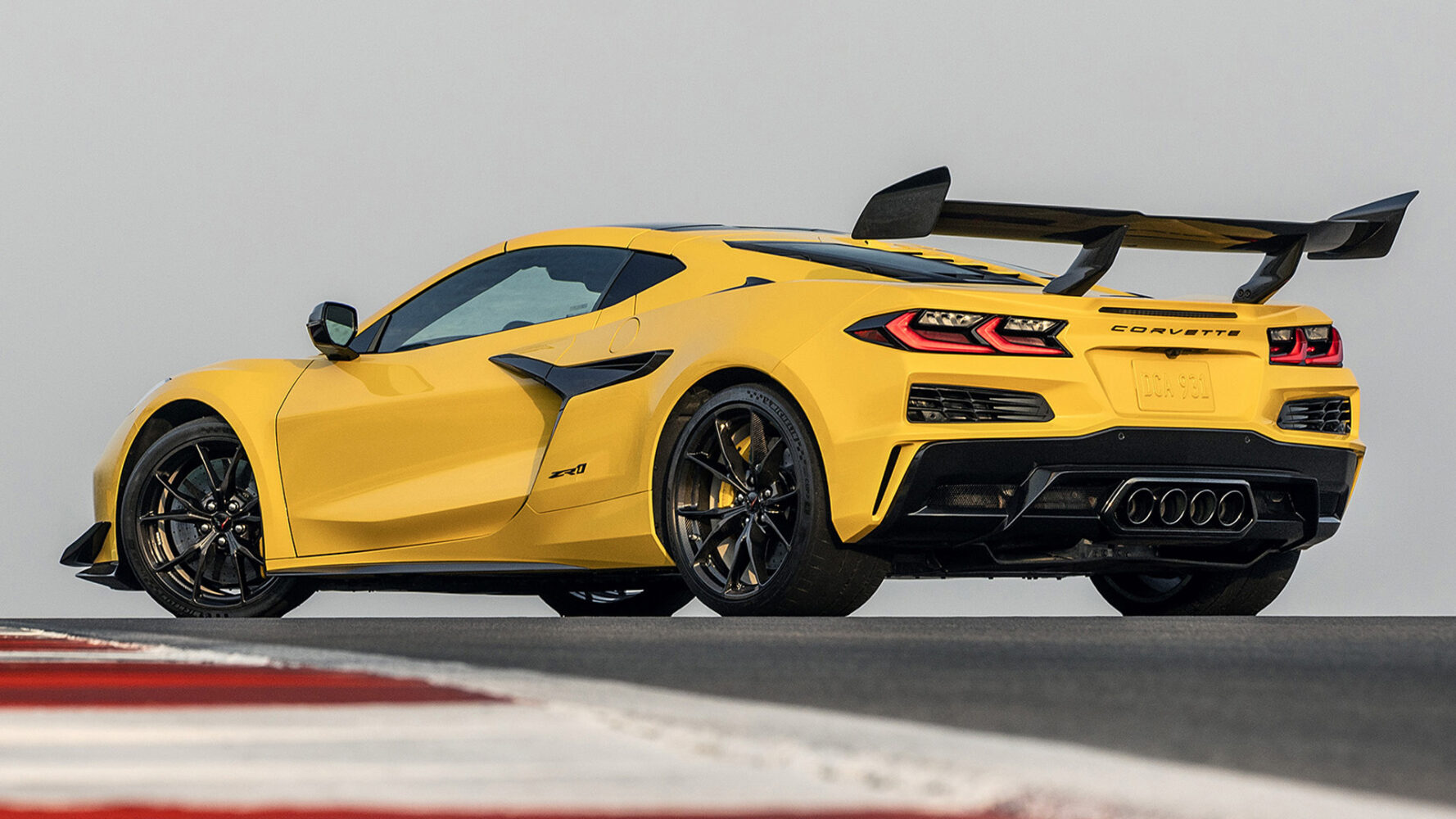
When YouTuber Wheelr_ pushed his new Corvette ZR1 to 185 mph at Daytona Speedway, he discovered something GM’s engineers probably didn’t advertise: the car’s own aerodynamics were damaging the paint. Small chips appeared around the rear wing mounts, where 1,200 pounds of downforce had concentrated into contact patches smaller than a smartphone screen.
The culprit is the ZTK performance package’s massive 75-inch carbon fiber wing, which transforms the ZR1 into a street-legal wind tunnel experiment. That engineering marvel generates enough downforce to glue the car to pavement at triple-digit speeds, but it’s also flexing the rear fascia just enough to crack the paint where the wing’s uprights meet the bodywork.
The Physics Behind the Problem
Extreme aerodynamics meet material limits at sustained high speeds.
The issue emerges during sustained runs above 180 mph, when the ZTK wing approaches its maximum downforce potential. According to Chevrolet’s aero figures reported by automotive outlets, the wing generates around 180 pounds of downforce at 80 mph, scaling up to nearly 1,000 pounds at 186 mph. That enormous load concentrates through four mounting points, each no larger than a quarter.
The body panel flexes microscopically under this pressure, while the paint—engineered for durability, not flexibility—cannot bend at the same rate. Result: micro-cracking and chips where carbon fiber meets painted aluminum, typically hidden until someone removes the wing entirely.
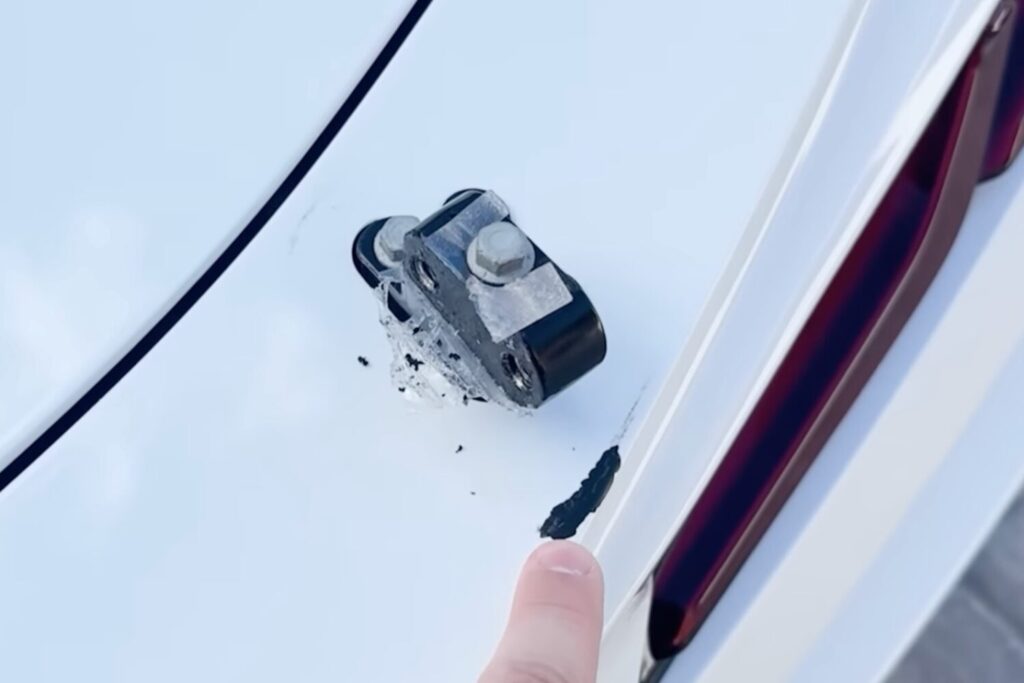
So far, documented cases show the issue only affects cars running sustained speeds above 180 mph on track or closed courses. Reports indicate roughly three ZR1s and one Z06 with a retrofitted ZR1 wing have experienced this problem. Damage appears primarily around wing stanchion mounting points, most visible when the wing is removed, revealing smaller mounting posts beneath.
“When I took the wing off, you could see the chip in the paint on the right side around those posts,” Wheelr_ explained in his documentation video. The wing’s base includes some protective foam, but apparently not enough isolation material to completely prevent paint damage under maximum aerodynamic loading.
GM has approved warranty repairs for affected owners, with dealers stripping and repainting the damaged areas at no cost. The company hasn’t issued a service bulletin or announced hardware changes, likely because so few owners actually exploit their ZR1s at these extreme speeds regularly.
This mirrors other edge-case issues that surface when owners use supercars as advertised—like C7 ZR1 bumpers melting during extended high-speed runs. For most ZR1 buyers who’ll rarely exceed 150 mph, this remains a non-issue. But for track-day devotees pushing machines that start around $175,000 to their limits, it’s a reminder that even cutting-edge engineering has its trade-offs.