Kelley Blue Book data confirms that a vehicle’s trade-in offer reflects its specific condition and local market demand—not sentimental attachment or original purchase price. Allowing a dealership to lump the old ride into a single, opaque negotiation leaves money on the table. Understanding a car’s true value arms buyers with leverage, potentially netting thousands of dollars more for the next adventure machine. The dealer’s smoke and mirrors can be stripped away by following precise steps to ensure a trade isn’t just a concession, but a strategic financial maneuver. Stop letting the house win; learn to play the game on different terms.
1. Dealership Trade-In Negotiation Strategy

Combining the new car’s price with trade-in value makes the numbers murky, obscuring true cost.
Disclosing a trade-in within the first 60 seconds of negotiation can create an immediate disadvantage. This turns the deal into a two-front war. Combining the new car’s price with trade-in value obscures the true cost. When the first question on the lot is, “What are you driving today?” the better response is to declare a “cash buyer” stance for the new car. This forces the dealership to focus solely on the out-the-door price, preventing them from camouflaging a low trade-in offer.
The move is to state clearly: “Let’s settle the car first. I’ll tell you about my trade after I’ve got a number.” This treats the trade-in as a separate transaction. Secure the best deal on the new vehicle first, then negotiate the trade independently. Like managing two tire changes in a pit stop, each element gets proper attention when handled separately.
2. Four-Square Worksheet

Dealers will shuffle these numbers back and forth, obscuring the true cost of each element until buyers are thoroughly confused.
Dealerships often deploy the “four-square” worksheet—less helpful guide, more weapon designed to disorient. The grid combines the vehicle price, trade-in value, down payment, and monthly payment into a single, swirling vortex. Dealers shuffle these numbers back and forth, obscuring the true cost of each element until buyers are confused enough to sign anything.
To avoid this financial fog, demand to negotiate one number at a time. First, settle on the out-the-door price for the new vehicle. Then, and only then, discuss the trade-in as a completely separate number. Get an independent valuation beforehand from services like Kelley Blue Book or CarMax. Finally, handle financing as its own distinct conversation, perhaps with pre-approval from a bank. Navigating a car deal works best when each corner is mastered individually, ensuring a clear path instead of ending up in a ditch.
3. Out-the-Door Vehicle Price

This final number is the deal’s robust chassis, the foundation for any trade-in or financing discussion that follows.
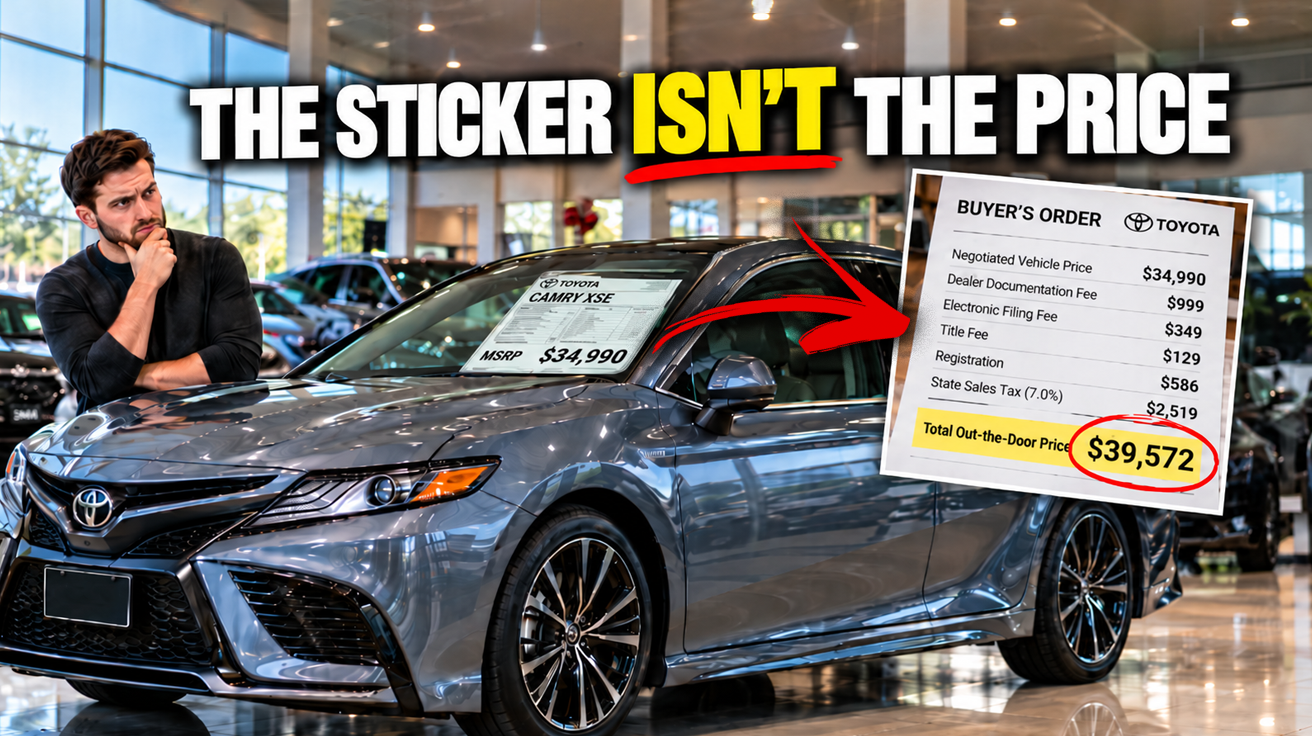
The “out-the-door” price represents the total amount required to complete a vehicle purchase, including every mandatory charge. This isn’t merely the sticker price; it encompasses the negotiated vehicle price, dealer fees, documentation charges, sales taxes, registration fees, and any other non-negotiable costs. Walk into a dealership and demand this consolidated figure upfront. Request the single number—no hidden variables or surprises to derail the deal later.
Refusing to discuss monthly payments until that definitive “out-the-door” price is locked down and in writing is essential. A solid deal can’t be built on shifting sands. This final number is the deal’s robust chassis, the foundation for any trade-in or financing discussion that follows. Like checking oil before a long road trip, verify every cost. If a dealer tries to dance around it, that’s a red flag worth noticing.
4. Dealer Financing and Monthly Payment Negotiation

Scrutinize the annual percentage rate (APR), the total finance charge, the precise loan term, the amount financed, and the total of all payments.
A seemingly low $399 monthly payment can easily obscure a significantly higher total vehicle cost. When a salesperson quickly directs focus to that single number, it’s often a tactic to bypass deeper financial realities. Dealers might stretch the loan term or subtly bump the interest rate—maneuvers that can cost thousands over the loan’s life. This approach is like tuning only the exhaust note and ignoring a worn timing belt.
To avoid this trap, demand a complete breakdown. Scrutinize the annual percentage rate (APR), the total finance charge, the precise loan term, the amount financed, and the total of all payments. Judging an engine’s health solely by its RPM gauge misses the underlying mechanics. Like a road-tripper planning only for gas while neglecting oil changes, focusing on just the monthly figure leads to financial headaches down the road. Always inspect the full financial map.
5. Kelley Blue Book Instant Cash Offer

This concrete offer remains valid for 7 days, requiring a participating dealer inspection to verify the vehicle’s condition.
Obtaining a specific valuation can happen in minutes with a Kelley Blue Book Instant Cash Offer. This isn’t some fuzzy online estimate; it provides a real number that acts as a critical benchmark. For busy professionals, securing this no-obligation offer online quickly means arriving armed before ever stepping onto a dealership lot. It provides immediate leverage by establishing the car’s market worth, like a seasoned driver performing reconnaissance on a stage before the race even starts.
This concrete offer remains valid for 7 days, though it does require a participating dealer inspection to verify the vehicle’s condition. While the final amount can shift if the car’s actual state differs from what was disclosed, having a firm offer in hand completely changes the dealership negotiation dynamic. Walk in already aware of the floor on the trade, rather than playing a high-stakes guessing game.
6. CarMax Vehicle-Buying Offer
This concrete bid shifts the power dynamic instantly, transforming negotiation into a clear challenge for the dealer.
A written CarMax offer provides valuable leverage in any vehicle trade-in negotiation. These are real online or in-store purchase offers, valid for 7 days, presenting a firm price for a vehicle even when not buying another from them. When a dealer tries to lowball a trade, claiming soft market conditions, presenting that firm CarMax offer shifts the conversation entirely.
This concrete bid transforms the power dynamic instantly. While the offer requires final verification of the vehicle’s condition, it changes negotiation into a clear challenge for the dealer. The statement becomes straightforward: “Beat this, or the car gets sold to CarMax.” This isn’t theoretical; it’s a firm offer that makes sales managers suddenly find more room in their budget. It’s leverage that secures cash or a better deal, like a seasoned road-tripper who always carries backup fuel for the unexpected.
7. Independent Dealership Appraisals

Understanding these varied appraisals is like having telemetry data before a big race, clearly showing the floor and ceiling of a vehicle’s value.
Kelley Blue Book’s Instant Cash Offer provides a specific, no-obligation purchase offer, typically available within minutes and valid for 7 days. Savvy buyers know this is just the start. Leverage competitors’ eagerness by requesting two additional written appraisals from other dealerships. This strategy, combined with a CarMax offer, defines a vehicle’s true worth through multiple independent numbers. Dealerships assess value differently, considering condition, local demand, current inventory needs, and reconditioning costs.
Understanding these varied appraisals is like having telemetry data before a big race, clearly showing the floor and ceiling of a vehicle’s value. A written offer provides concrete negotiation leverage, far more useful than any informal verbal estimate. It transforms guesswork into a rock-solid fact. This process lets buyers navigate the trade-in confidently, ensuring they never settle for less than the machine deserves.
8. Market Value Versus Original Purchase Price
The market assesses mileage, current condition, regional demand, gas prices, and even the season—personal attachment doesn’t move that needle.
According to Kelley Blue Book, a vehicle’s current value is determined primarily by present market conditions—not its original purchase price. Buyers might recall shelling out $30,000 for a ride just four years ago, convinced it still commands a significant figure. This common misconception, fueled by personal attachment, means what was paid then holds no bearing on its worth today.
The market is a cold, calculating machine. It assesses mileage, current condition, regional demand, gas prices, and even the season. The loan, road trip memories, or new tires just bolted on don’t move that needle. While improvements like new tires may affect condition or saleability in some cases, they rarely shift market value significantly. Trusting independent valuations makes buyers impossible to manipulate, like a race mechanic trusting telemetry over gut feel.
9. Negative Equity

Address negative equity directly to prevent a financial breakdown further down the road.
When drivers arrive to trade in a ride believing it’s worth $15,000, only to discover they still owe $18,000, that’s negative equity hitting harder than a missed shift. This financial reality means the auto loan exceeds the vehicle’s current market or trade-in value. Rapid depreciation on some models creates this scenario. Rolling that shortfall into a new loan simply increases the amount financed, often leaving buyers owing more than the replacement vehicle is even worth.
To avoid this financial dead end, get the lender’s exact payoff amount. Then, compare it against independent offers from places like Kelley Blue Book or CarMax. Dealers sometimes bundle trade-in figures, obscuring the true value received; negotiate separately. This isn’t a minor dashboard flicker; it’s an engine light screaming on the highway, demanding immediate attention. Address negative equity directly to prevent a financial breakdown further down the road.