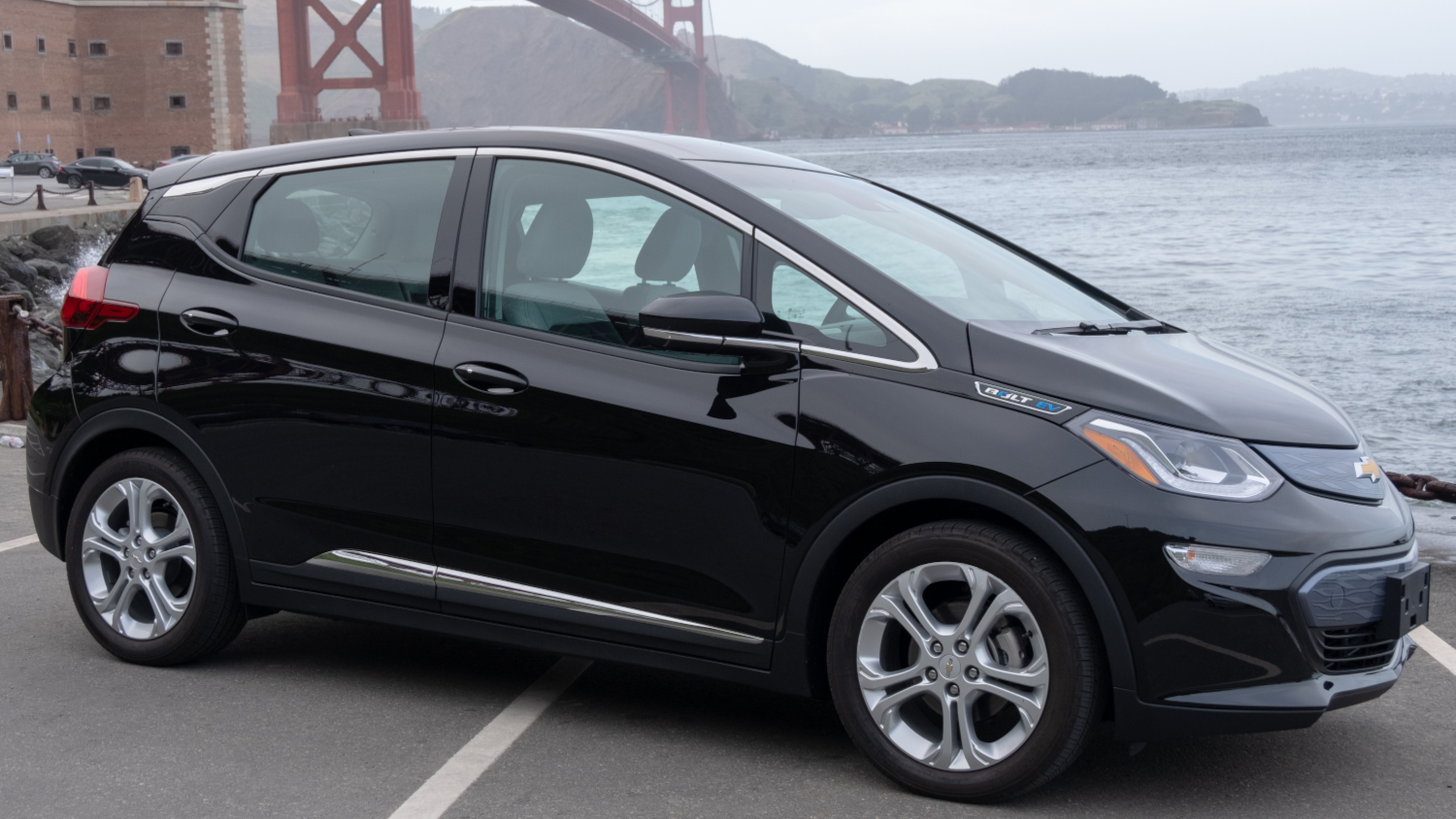
471,616 miles. A 2019 Chevrolet Bolt EV rolled into the Out of Spec Renew garage recently displaying a “battery fault” message, unable to shift into drive — yet carrying a mileage figure that stops most reliable cars cold. Before concluding this proves EVs are indestructible, or that their batteries are ticking time bombs, the fuller picture is worth examining. The documented repair history is more instructive than either extreme.
Half a Million Miles of Ordinary Problems
The mechanical wear on this Bolt tells a story that has very little to do with electricity.
Scrapes marked the rear bumper. A mismatched front bumper sat up front. Suspension work, wheel bearings, a steering rack — the repair résumé of a vehicle that had been everywhere and forgiven little. These are not EV-specific failures. They are the cost of extreme mileage, the same bill a high-usage Camry or Silverado would eventually present. The reported repairs are consistent with what any vehicle approaching half a million miles would require, though no controlled comparison with equivalent gasoline vehicles was documented.
The sharpest facts from this car’s history:
- The Bolt arrived at Out of Spec Renew reportedly unable to shift into drive, displaying a “battery fault” warning
- Its battery had already been replaced under GM’s recall for fire-risk defects tied to certain cells produced at LG Chem’s Ochang, Korea facility
- That recall-replacement pack reportedly logged more than 330,000 miles before developing its fault
- The new replacement pack came from a 2017 Bolt EV and had an estimated 10,000–15,000 miles of prior use
- Mechanical repairs — suspension, wheel bearings, steering rack — were consistent with extreme mileage rather than EV-specific failure patterns
The Recall Context That Actually Explains Everything
Understanding why this battery was replaced the first time changes the entire durability story.
Earlier 2017–2019 Bolt EVs were covered by prior recall actions; in August 2021, GM expanded the recall to include remaining 2019 Bolt EVs, all 2020–2022 Bolt EVs, and 2022 Bolt EUVs — encompassing approximately 140,000 Bolt EV and Bolt EUV vehicles in North America. The defect involved certain cells produced at LG Chem’s Ochang facility, which could overheat and pose a fire risk when charged near full capacity. The recall remedy ranged from software charging limits to full pack replacement, depending on the vehicle and recall phase.
The documented recall replacement was prompted by a manufacturing-related fire risk — not routine battery aging. The later battery fault on this Bolt occurred after exceptionally high mileage; the available evidence does not establish a single cause for that subsequent fault. The genuinely impressive figure here is not 471,000 miles on the odometer, but the 330,000 miles that recall-replacement pack reportedly covered before requiring service. Remarkable — yet it remains one car, driven relentlessly, not a fleet average.
What One Bolt Actually Proves
A ceiling exists, and this car found it — but a ceiling is not the same as a floor, a guarantee, or a typical outcome.
One high-mileage outlier demonstrates what is possible with cars built for extreme endurance. It cannot establish where most EV batteries land over time, because that answer requires data from thousands of vehicles across varied conditions, not a single extraordinary odometer reading. What this Bolt does offer any EV skeptic or prospective buyer — including those buying their first EV — is a concrete, real-world data point: with maintenance, a recall remedy, and consistent use, at least one electric vehicle has covered distances that would retire most cars twice over. That is worth knowing — just not worth overstating.