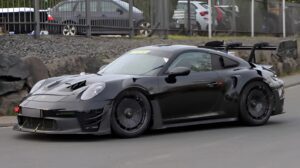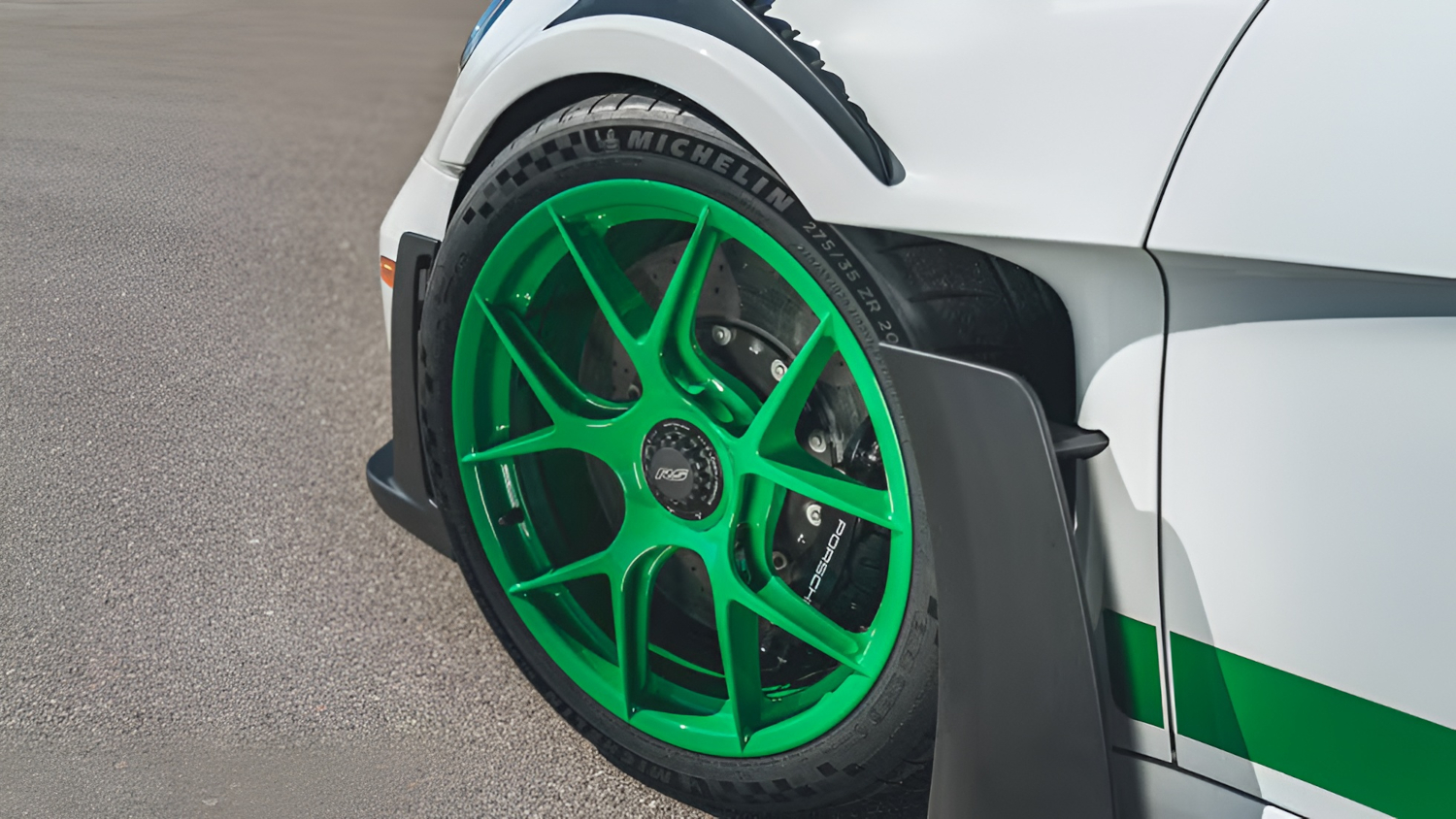


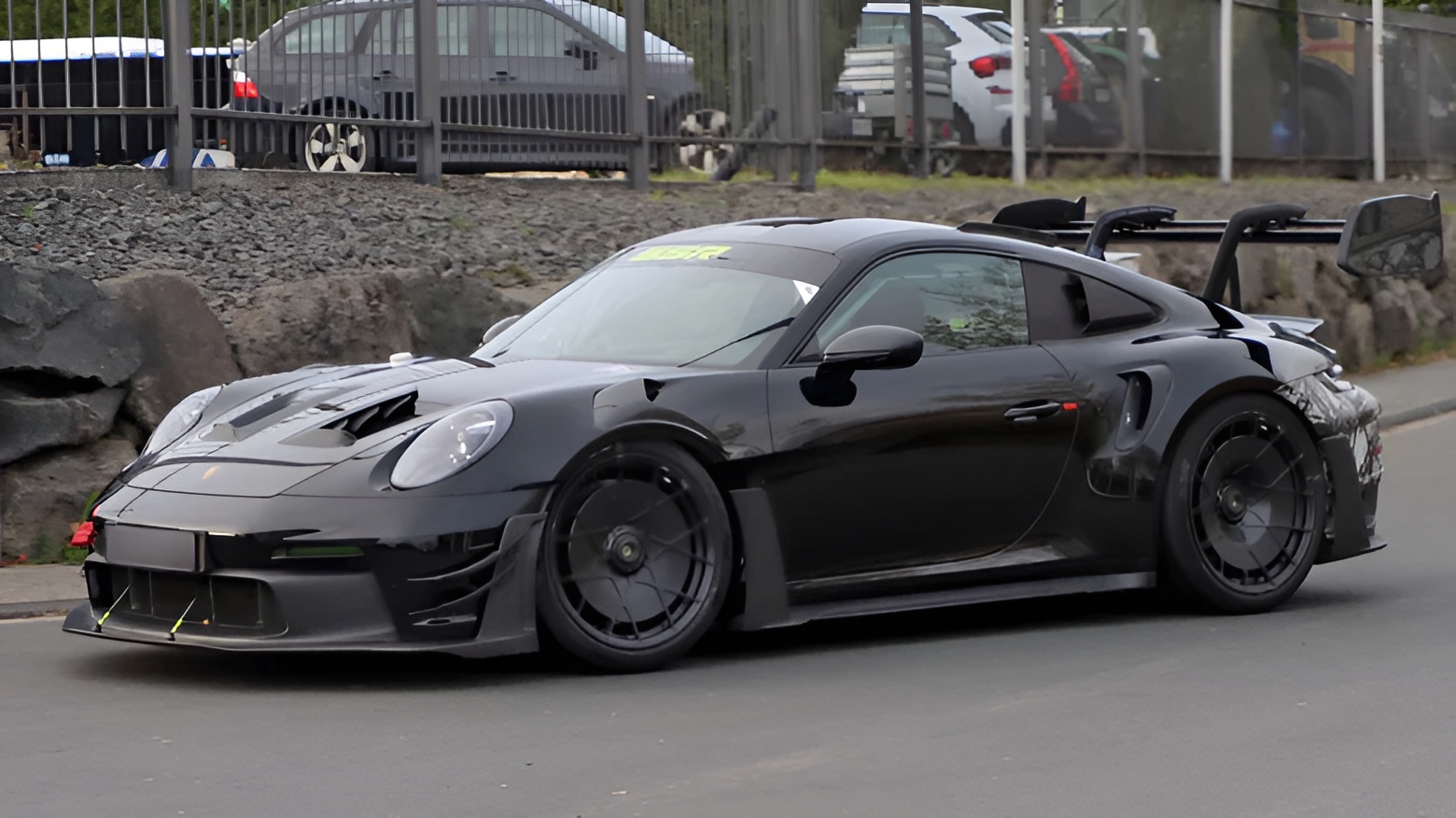
Porsche discontinued the 991.2-generation 911 GT2 RS in 2019 and has yet to replace it. That silence is SSR Performance‘s opening. Project Leo reportedly takes a 992.2 GT3 RS, fits twin turbochargers to its 4.0-liter flat-six, and aims the whole experiment at the Nürburgring Nordschleife — where the car has already been photographed testing. Reported output is more than 800 hp, though SSR has not confirmed that figure as a final specification. The stock GT3 RS produces 518 hp and lapped the 12.944-mile circuit in 6:49.328 with Jörg Bergmeister at the wheel. SSR was reported to have said it intends to go considerably faster.
More Than a Power Grab
Every visible modification on Project Leo traces back to a problem that turbocharging creates, not just the speed it promises.
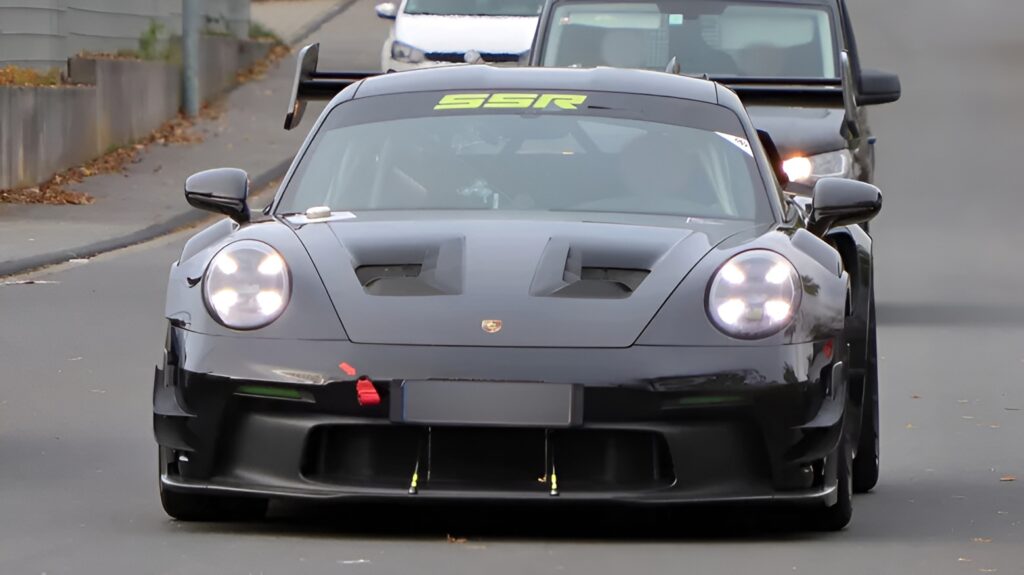
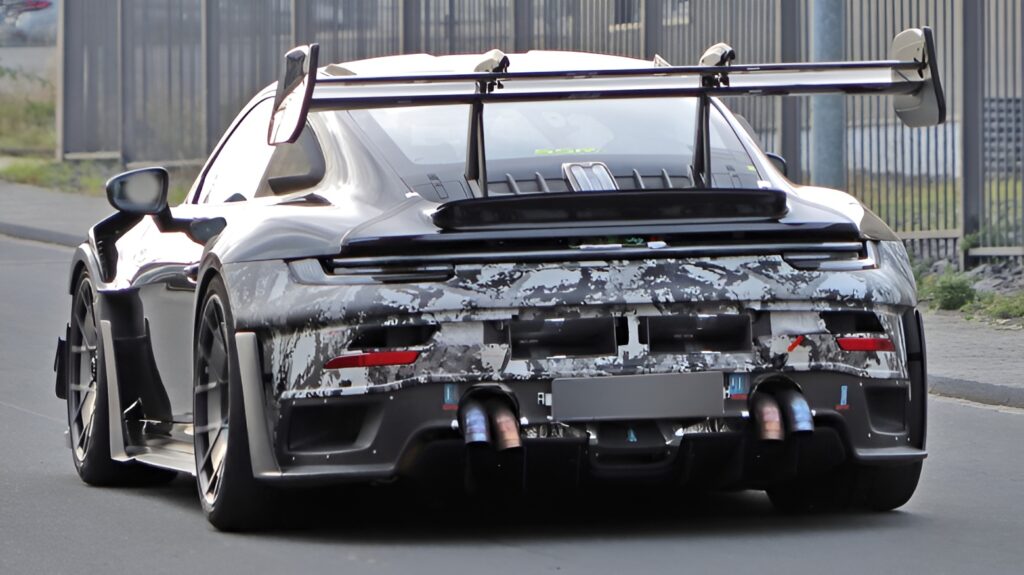
Strapping turbos to a GT3 RS and hoping for the best would be the lazy version of this story. Revised front-fender vents and a large front splitter work to manage airflow at speeds the standard bodywork was not engineered for. Rear quarter panels feature new intake shrouds, and the panels above them appear to function as air intakes rather than conventional windows — an approach that recalls the thermal logic of the 991.2 GT2 RS. Additional rear cooling slots and widely separated exhaust outlets further distinguish the prototype from the production car.
Each modification points to the additional heat, speed, and drivetrain stress that a turbocharging creates, not simply the power it unlocks. There is one trade-off SSR cannot engineer away: turbocharging will almost certainly deepen and mute the GT3’s naturally aspirated flat-six note. That high-revving scream is part of what defines the car. Boost changes the soundtrack.
| Model / Event | Figure |
|---|---|
| Stock GT3 RS power | 518 hp (525 PS) |
| Stock GT3 RS torque | 343 lb-ft |
| Project Leo reported target | more than 800 hp (unconfirmed) |
| GT3 RS Nordschleife lap | 6:49.328, Jörg Bergmeister |
| 991.2 GT2 RS with Manthey Performance Kit | 6:43.300, Lars Kern, 2021 |
| Mercedes-AMG One production record | 6:29.090, Maro Engel, September 23, 2024 |
SSR was reported to have said it intends to “break many, many records.” That ambition is not empty — if the cooling system, tire package, aerodynamic balance, and chassis tune hold together, beating the 6:43.300 Manthey benchmark is a credible analytical target. But the Nordschleife does not reward raw power alone. Braking confidence, corner-exit traction, and stability through high-speed compressions matter as much as output figures.
The Number That Actually Matters
Closing the gap to the Mercedes-AMG One requires far more than horsepower — it demands an entirely different category of engineering.
The AMG One’s 6:29.090, officially measured and notarized over the 20.832-kilometer circuit, represents a different order of challenge. That car deploys Formula 1-derived hybrid technology inside a purpose-built hypercar chassis. Project Leo would need to find more than 14 seconds on a modified production platform — a gap that reflects genuine engineering distance, not simply a horsepower deficit.
Unconfirmed industry speculation also suggests Porsche may be developing a new GT2 RS around an upgraded version of the 911 Turbo S’s 3.6-liter twin-turbo hybrid powertrain, reportedly targeting around 701 hp. That rumor remains unverified and should be treated as such. There is also a category question worth raising: a tuner prototype’s timed run may not qualify under the same homologation rules as a certified production-car record, which limits direct comparison regardless of the Nordschleife lap time achieved.
Project Leo looks purposeful, and the engineering rationale is sound. The Eifel weather sets the schedule, and the Nordschleife delivers its verdict in tenths of seconds. Until a verified lap time exists, this remains a very serious, very compelling question mark.