

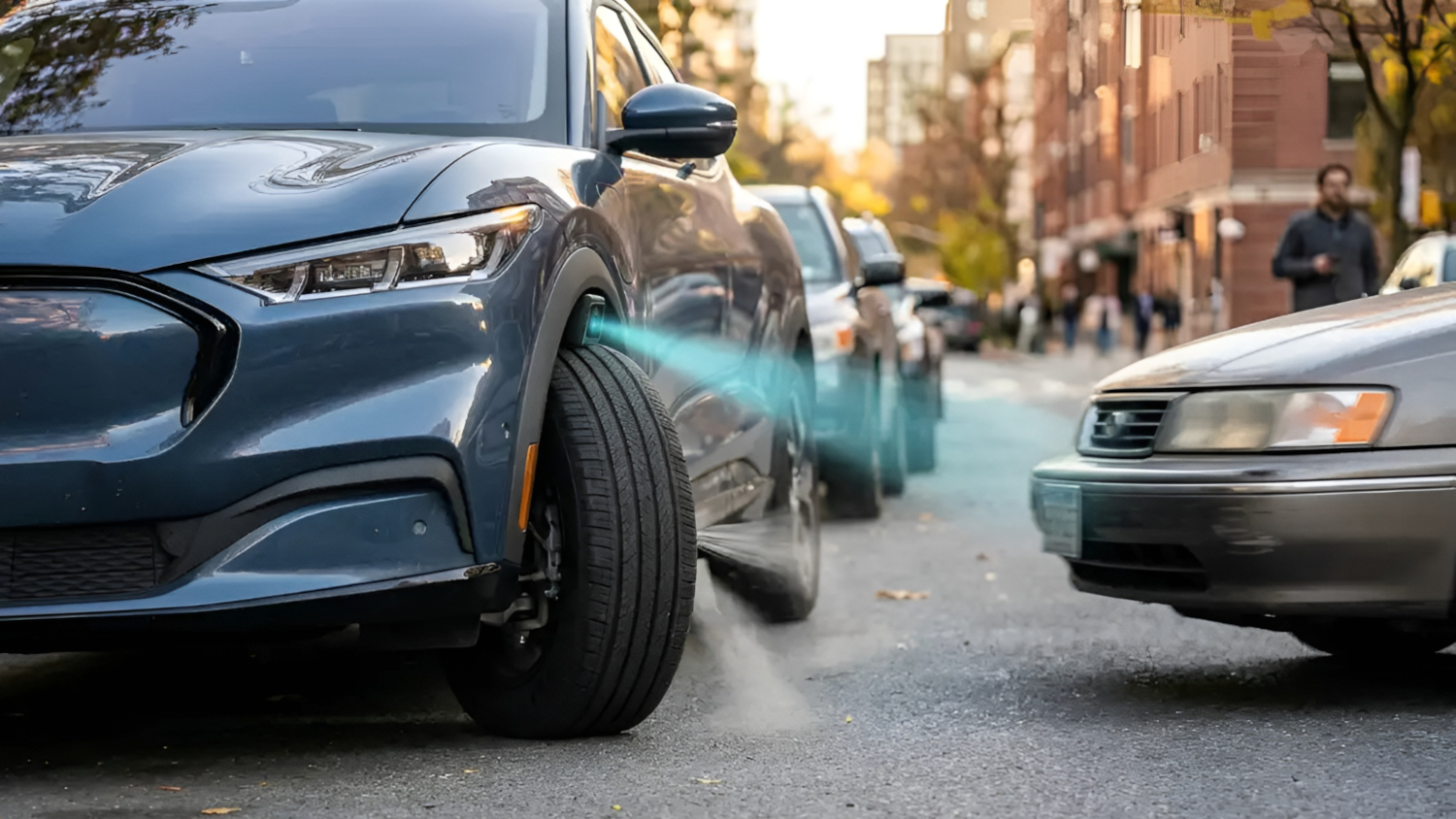
That particular dread — leaving your car in a half-empty lot and walking away hoping it’s still there when you return — is something most drivers know intimately. A recently published Ford patent application proposes a machine-level answer to that anxiety: a parked vehicle that monitors its surroundings using cameras and sensors, detects suspicious activity nearby, and may either alert you or move itself to a safer spot. Worth knowing upfront: this is a patent application. Not a prototype. Not a production announcement.
What the Car Is Actually Watching For
The proposed system responds to specific behavioral cues, not just general unease.
The system reportedly flags distinct threat patterns — someone repeatedly peering through the windows, another vehicle circling the parked car, or a previously busy lot going quiet and isolated. From there, two response modes may activate: the vehicle relocates autonomously, or it identifies a safer position and recommends it to the driver for manual repositioning. Beyond simply moving, the patent proposes deliberate parking geometry as a defense layer:
- Wheel theft: parking on inclines, soft ground, or tight spaces may hinder a thief’s ability to use a jack
- Catalytic converter theft: adjustable air suspension lowers the vehicle, reducing access to components underneath
- Cargo theft: rear end positioned against a wall physically blocks tailgate access
- Rear lighting and equipment: that same wall-positioning may protect externally accessible components
- Driver-selectable priority: the user could reportedly choose between protecting cargo or protecting the wheels
The Questions a Patent Can’t Answer
Self-relocating parked cars appear more than once in Ford’s R&D filings — but the hard problems remain firmly unsolved.
Ford has separately pursued patents for vehicles that reposition after parking based on shade, cabin temperature, and weather conditions, suggesting that post-parking autonomy is a recurring thread in the company’s research rather than an isolated experiment. The unanswered questions, though, are real ones. How does the system distinguish a genuine threat from someone who just really likes looking at trucks? If the autonomous vehicle moves autonomously and strikes something, who carries the liability? How does the owner locate a vehicle that decided to leave on its own? These are genuine engineering, legal, and regulatory problems that a patent application does not resolve — and a granted patent would give Ford intellectual property rights without requiring the company to build or sell the system at all.
Why It’s Worth Watching Anyway
The concept reflects a direction the industry is already moving, whatever its commercial fate.
Vehicle theft remains a persistent problem for drivers across the country, and automakers are actively researching vehicles that perform meaningful functions after occupants have walked away. This concept, wherever it ultimately lands, points toward something already in motion: cars capable of making decisions while no one is behind the wheel.