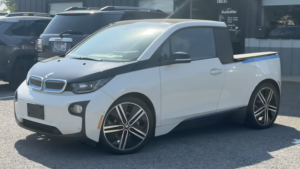


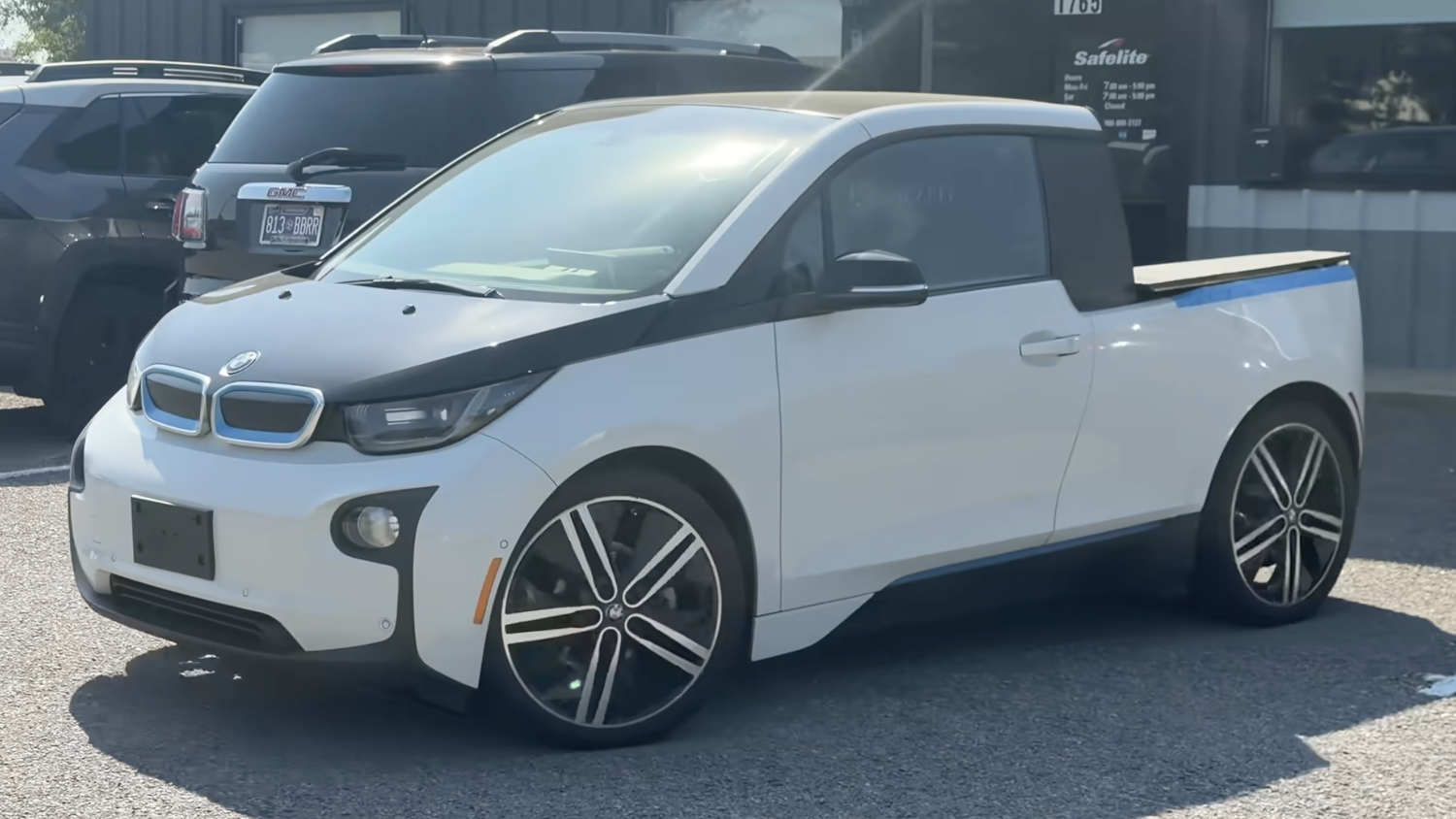
Most people frustrated by the lack of affordable electric pickups go to a forum and complain. Michael Pick, a former Lockheed engineer with a YouTube channel and apparently no fear of carbon fiber, bought a damaged, high-mileage BMW i3 REx at auction — sight unseen — and cut it into a truck. Total budget: under $10,000, reportedly finished several thousand dollars below that target. Combined range: 300-plus miles, according to coverage of the project. The affordable electric utility vehicle the market has yet to deliver exists now, in someone’s garage, made partly from plywood.
Why Cutting an i3 Is Nothing Like Cutting a Normal Car
The i3’s carbon-fiber construction turns what looks like a simple chop job into a genuine engineering challenge.
Removing the rear of a steel-bodied hatchback is a known quantity. The i3 is not a steel-bodied hatchback. BMW constructed its passenger cell from carbon-fiber-reinforced plastic — lightweight, stiff, and genuinely unpleasant to modify. Cut and unfinished composite surfaces require sealing and protection from moisture and environmental damage; get that wrong and a sustainability-conscious platform becomes an expensive repair problem. Pick had to carefully reinforce and seal the remaining structure after removing the rear — a step that separates this from a weekend hack job.
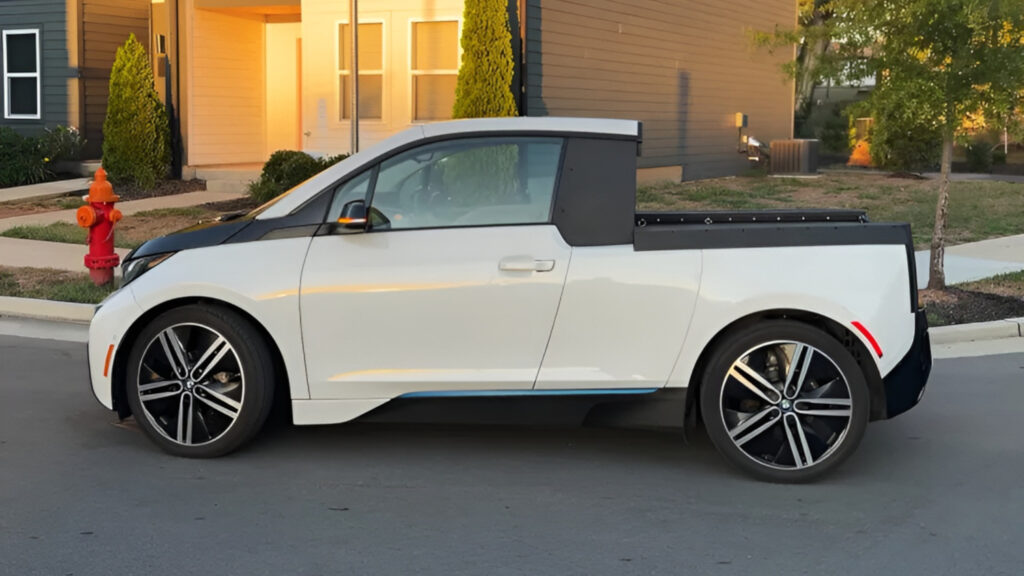
Key project decisions, in brief:
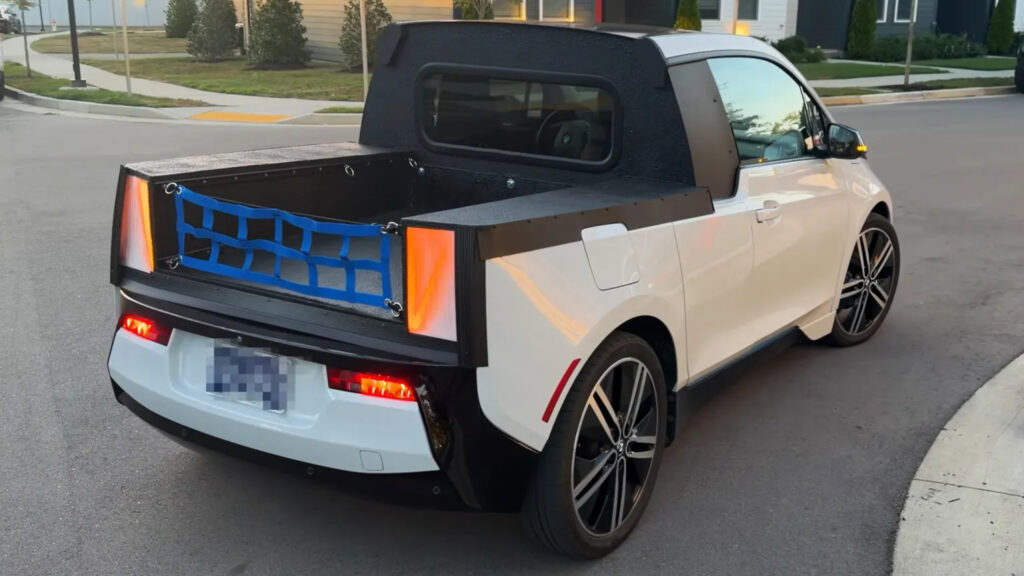
- A steel support frame connects the new cargo area to the remaining carbon-fiber cell
- Bed constructed from epoxy-sealed plywood, finished with a bedliner coating
- The bed is removable — necessary for practical access to the range extender, because the i3 REx’s 650cc two-cylinder generator sits beneath the new cargo area and requires periodic maintenance
- Factory locks, lights, and data connections were retained to avoid complex firmware rewrites
- Reported expenses included a replacement windshield and an upgraded head unit
A Market Failure With a Plywood Punchline
This build is less a novelty project than an indictment of what the electric vehicle market still hasn’t delivered.
Keeping the original electronics was a pragmatic call. Stripping them would have required custom firmware work for every missing sensor and connection. Preserving BMW’s factory systems added complexity but reduced serious software risk — a trade-off any engineer would recognize.
The 300-plus mile figure combining battery and range extender is a reported estimate, not a tested result. Actual range depends on the donor battery’s condition, the conversion’s final weight, and real-world driving patterns. No independent verification was identified in the sources reviewed.
The caveats are real: no crash testing of the modified structure has been identified in available reporting, and this is not a factory-engineered truck. But the fact that a former aerospace engineer sourced an auction car and built something reportedly functional for under $10,000 says plenty about where the market has yet to deliver.