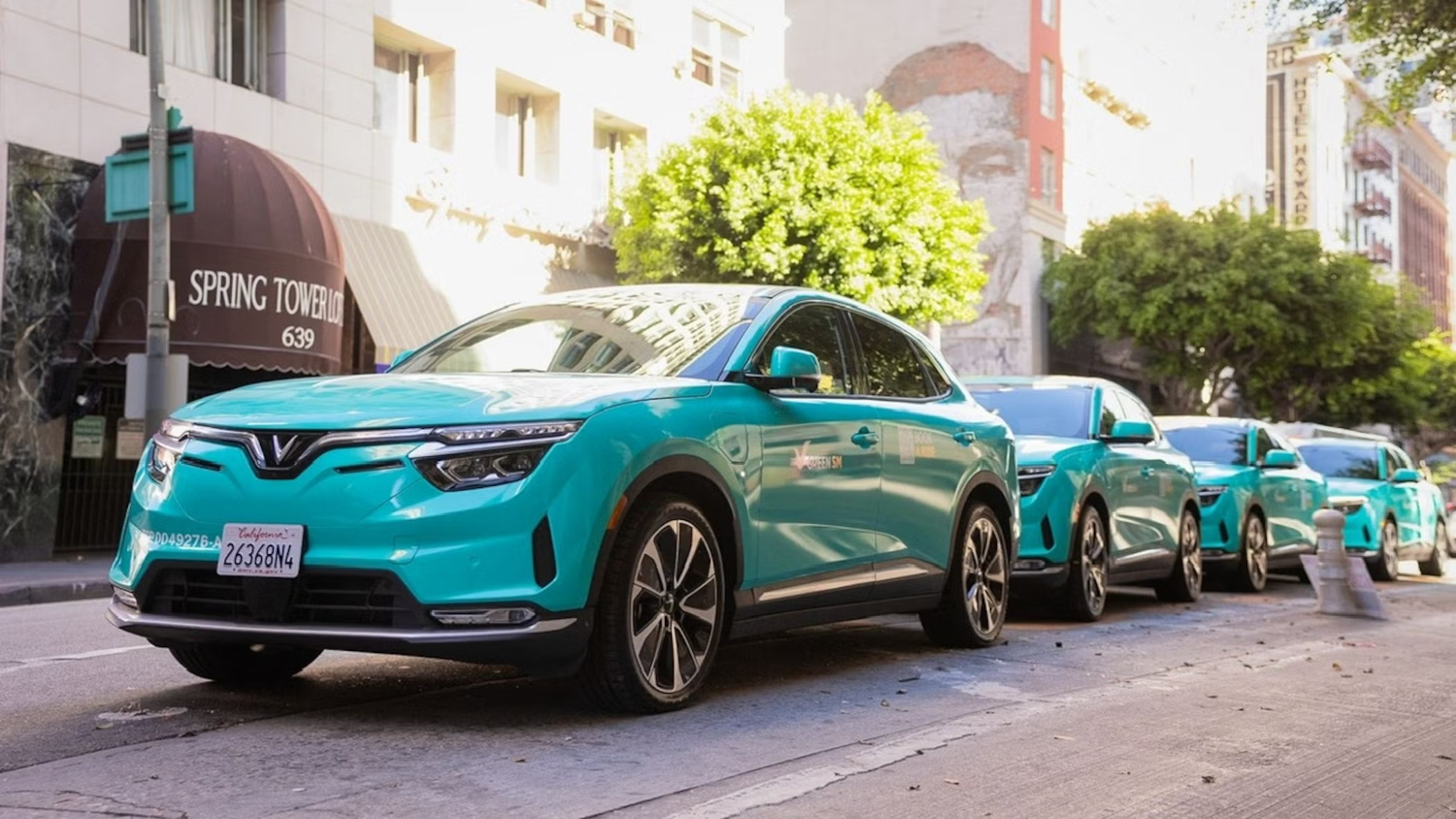



Retail gross profit per used unit at CarMax, the nation’s largest used car retailer, typically sits a little above $2,200 per vehicle—a figure now heavily pressured by steep market depreciation. It and ix other major players are directly impacting wallets and garages through strategies that range from transparent to opaque, from conservative to high-stakes. Anyone who’s ever haggled over trade-in value or puzzled through financing terms knows the game has layers most buyers never see.
1. CarMax

The nation’s largest used-car retailer faces margin pressure and strategic pivots.
CarMax has seen rough terrain recently, with retail gross profit per used unit under significant pressure. This isn’t just a bump in the road; it’s a battle for traction, with per-unit margins compressed by market-wide depreciation. Maintaining sales volume has become as challenging as coaxing power from a fouled spark plug, even with price adjustments.
The company has continued active share repurchases ($201.6 million in one recent quarter) while restructuring operations to target at least $150 million in savings by fiscal 2027. CarMax is enhancing its digital and omnichannel capabilities, allowing customers to complete more of the purchase process online while leveraging its physical store footprint. Chasing a down-trending market means constantly reacting to unexpected shifts, much like trying to set a new lap record when the track’s layout changes mid-race.
2. Carvana
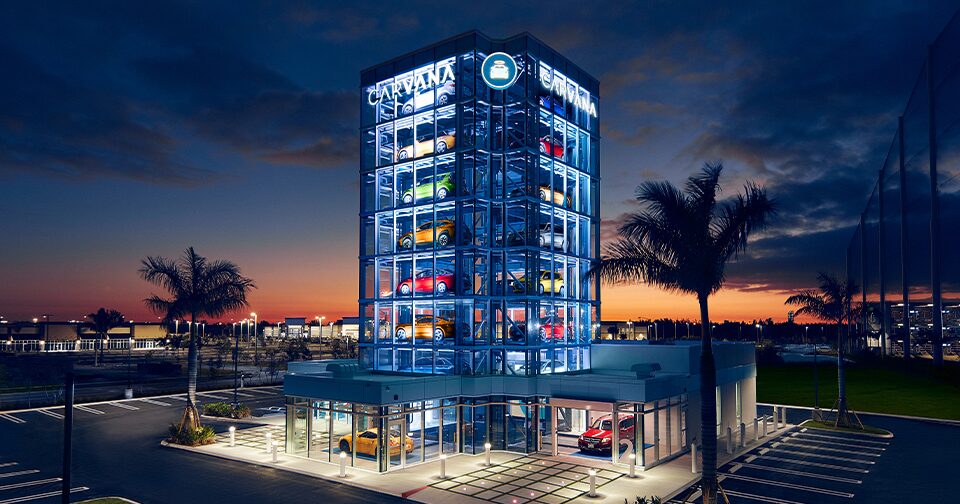
The online giant’s stock volatility masks a finance-driven profit model.
Carvana’s digital storefront bypasses the traditional dealership grind entirely. Customers navigate a direct-to-consumer platform, completing transactions with integrated in-house financing from the couch, then taking delivery at home. For a moment, it felt revolutionary—car shopping without the lot.
Beneath that polished interface lies a finance-focused engine. Over 50% of Carvana’s gross profit often originates not from selling vehicles, but from financing and loan sales, according to independent analysis. The company monetizes receivables through whole-loan sales and securitizations, building a managed loan portfolio estimated at around $12.6 billion by Q1 2023.
That portfolio carries risk: roughly 40% subprime and 60% prime borrowers, per analyst estimates, creating elevated exposure to delinquencies. Loan-related income can account for over one-third of gross profit per unit—sometimes exceeding net income itself. The paper on the loan book occasionally outpaces the profit from the metal on the lot, making the loan itself the primary asset on the balance sheet.
3. Used-Car Financing & Loan Sales

Loan origination has evolved into a critical profit center across the industry.
For many auto retailers, loan origination now functions less like a financing service and more like a high-performance engine powering the entire enterprise. Companies either hold these loans, collecting steady interest income over time, or push them out the door for immediate cash. CarMax’s approach leans toward retention and recurring margin; Carvana’s model favors aggressive monetization.
The mechanics work like this: originate a loan at checkout, then either sell it whole to banks (booking an immediate gain) or bundle loans into asset-backed securities for institutional investors. This financial engineering can see loan-related income multiply reported net income, turning future payment streams into present-day capital. Anyone who’s ever heel-toed into a decreasing-radius corner knows the difference between sustainable speed and a strategy built purely on exit velocity.
4. CarMax Auto Finance (CAF)

The captive finance arm delivers consistent income and manages credit risk methodically.
CarMax Auto Finance generated $174.7 million in income during a recent quarter, proving that for CarMax, real torque comes from financing vehicles, not just selling them. CAF generates revenue from interest margins, gains on loan sales, and related finance operations. With originations exceeding $2.3 billion and a sales penetration rate of 41.8%, CAF provides a consistent income stream—like a well-tuned gearbox directly driving overall profitability.
CAF manages credit risk diligently, maintaining a loan loss reserve with recent provisions of $102 million and a total reserve of $474 million. This structured approach offers significant financial resilience. CAF understands that reliable road trips depend on sound financial engineering, not just flashy paint or chasing quick gains—a contrast to more aggressive loan-sale models elsewhere in the market.
5. DriveTime Automotive Group
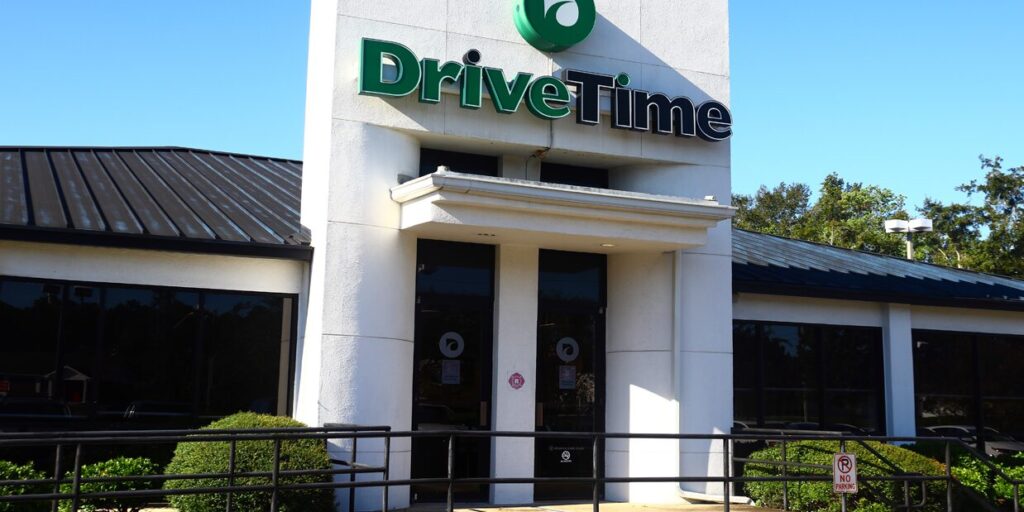
A subprime-focused retailer with deep family ties to Carvana raises transparency questions.
DriveTime Automotive Group operates as a foundational force within the subprime auto lending market. This used-car retailer focuses on subprime and non-prime borrowers, operating its own finance arm. DriveTime has deep historical ties to the Garcia family—the same family that founded and controls Carvana—creating a web of intertwined enterprises.
DriveTime and its affiliates actively purchase and fund auto loan portfolios, including subprime loans. According to independent research, this tangled structure raises questions about potential conflicts of interest and related-party transactions with Carvana. Transparency often gets lost in these arrangements—like a buddy offering to fix a car ‘off the books.’ DriveTime remains a significant, if often hidden, gear in a complex network vital for the broader used-car ecosystem.
6. Bridgecrest

The loan-servicing arm handles high-risk portfolios within the Garcia network.
Bridgecrest operates as the finance and servicing arm for higher-risk vehicle loans, primarily for DriveTime’s customer base. It’s a crucial piece of the Garcia-controlled network, providing infrastructure to manage loans when payments falter. Bridgecrest services and collects payments on auto loans for higher-risk borrowers, handling defaults, tracking delinquencies, and initiating repossessions.
Financial analysts have flagged related-party exposures and complex loan flows involving Bridgecrest, according to independent research—like a persistent check engine light signaling potential accounting opacity and concentrated credit risk. Deep involvement in high-stakes financing places Bridgecrest at the epicenter of scrutiny within the Carvana/DriveTime ecosystem, particularly around loan sales and servicing arrangements among related entities.
7. Small Used Car Dealerships

Independent dealers operate on razor-thin margins in a brutal inventory environment.
Small used car dealerships serve customers often arriving with limited cash and credit, frequently after repossessions or other setbacks. These transactions are less about aspiration and more about fundamental mobility—the essential freedom of the open road. Operating on margins thinner than cheap brake pads, these small lots face an uphill battle for inventory.
Dealers play high-stakes poker at auction, paying steep premiums for questionable quality just to stock sparse displays. Auction competition from larger players and online platforms has intensified price pressure. Every car that sits too long directly impacts the bottom line, forcing aggressive pricing adjustments on already lean profit.
Best way to clear your head after a long week? A tank of gas, a favorite playlist, and two hours with nothing but winding roads and the sound of the engine for company. Understanding the financial machinery behind the market helps anyone navigate it—whether buying a daily driver or simply appreciating the economics that determine what shows up on the lot.