

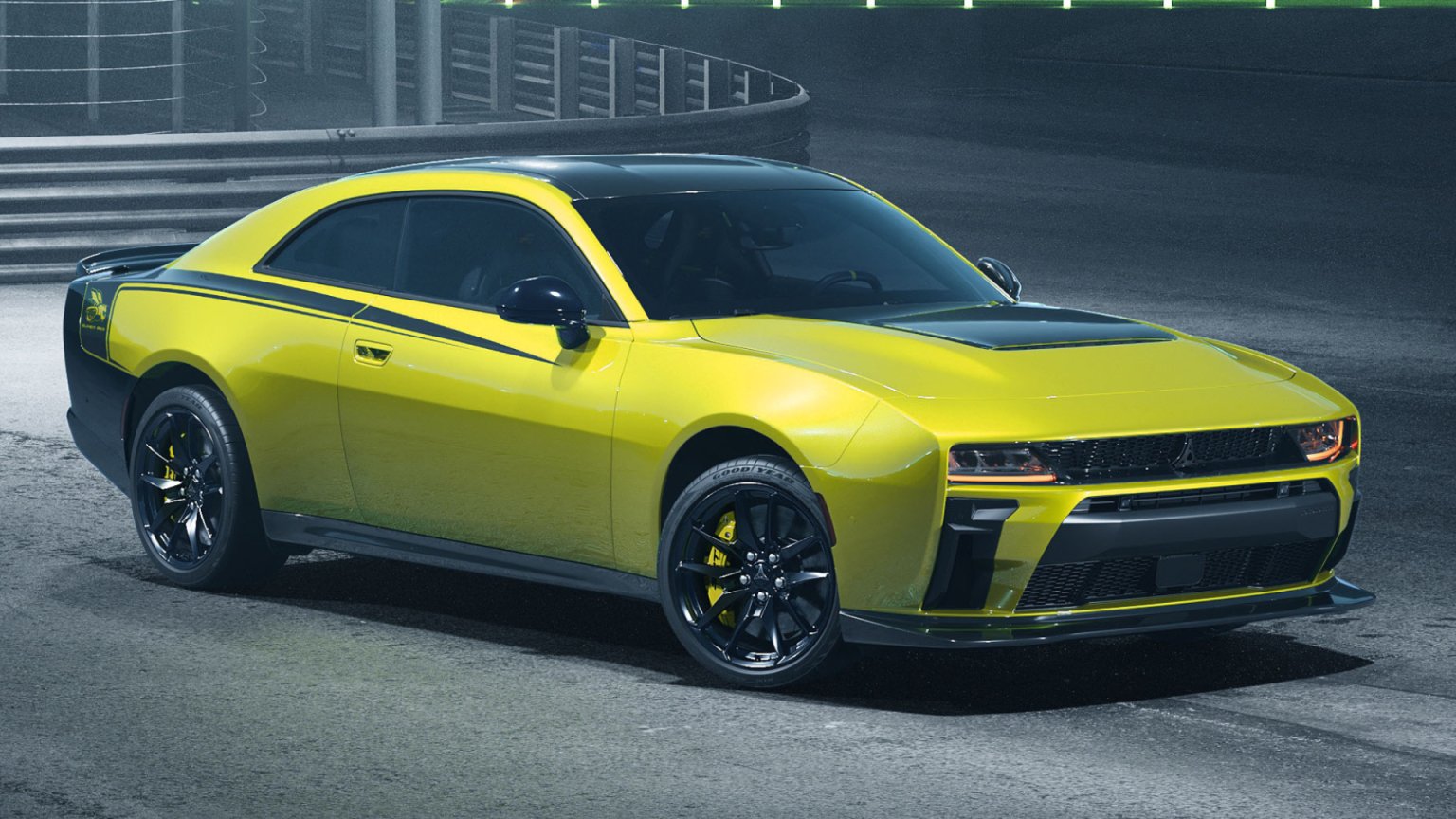
The 2027 Super Bee trades displacement for boost — and the numbers make the case. The old Super Bee ran a 6.4-liter V8 and hit 60 mph in 4.5 seconds, according to Edmunds. The new one uses a twin-turbocharged 3.0-liter inline-six and reportedly does it in 3.6. That’s not a footnote. That’s the whole argument. Dodge has positioned the 2027 Charger Super Bee as its quickest gas-powered SIXPACK Charger yet — 600 horsepower, 531 lb-ft of torque, and a badge that’s carried V8 expectations since 1968. The irony is thick enough to choke on.
What 600 Horsepower From a Six Actually Means
Bigger turbos, standard AWD, and a quarter-mile time that settles the argument.
Larger turbochargers and revised induction and cooling hardware, combined with updated calibration, reportedly account for the jump to 600 horsepower from the Hurricane inline-six. The result: an 11.8-second quarter-mile versus the 2023 V8 car’s 12.4, per Edmunds. An eight-speed automatic handles shifts. Standard all-wheel drive puts the power down, with a selectable rear-wheel-drive mode available for those who prefer to manage traction themselves, according to Motor1.
The numbers reveal something worth noting: the 0–60 gap between old and new (0.9 seconds) is larger than the quarter-mile gap (0.6 seconds). AWD traction off the line likely explains most of that difference — this engine isn’t obliterating the V8 at top end; it’s launching harder from a standstill. Much like engines that have outperformed their reputations, the inline-six makes its case where it counts.
The hardware backing it up, per Road & Track:
- Brembo brakes: six-piston front calipers, four-piston rear
- Adaptive dampers with Track Mode and Drag Mode
- Goodyear Eagle F1 Supercar 3 tires
- Revised suspension and chassis tuning
- Launch Edition designation; pricing and ordering window not yet announced
That brake and cooling specification matters. This hardware is built for repeatable performance, not a single showroom launch — a car that can run the number again without cooking itself in the process.
A Name That Meant V8 Since Nixon Was President
The Super Bee badge carries decades of displacement history. The inline-six doesn’t appear to care.
The Super Bee debuted in 1968 on the Dodge Coronet — a budget muscle cars era entry with a big-block engine and zero patience for nuance. According to sourced reports, it has never worn a six-cylinder in the Charger lineup until now — a shift not unlike the debate surrounding the V-8 Bronco and what enthusiasts lose when iconic nameplates abandon displacement. Purists will grumble. They usually do.
But an 11.8-second quarter-mile doesn’t need much defending.
Pricing remains unannounced, and no ordering window has been confirmed. The question that will follow this car everywhere: if a boosted six reportedly beats the old V8 this convincingly, what happens when Dodge eventually fits a Hemi into this platform? Sourced reports offer no confirmed timeline — but the possibility alone keeps the conversation worth watching.