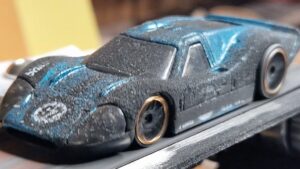


Thirteen thousand, five hundred and forty-nine scale miles. Five days, one hour, ten minutes, and forty-two seconds. The vehicle: a Hot Wheels Ford GT40 Mark IV, 1:64 scale, held against a running belt sander by a plastic clip. YouTube channel Diecast Endurance built the simplest possible dynamometer — a belt sander flipped on its side — and then just let the thing run. This is either the most pointless experiment on the internet or a genuinely fascinating stress test of endurance mythology at miniature scale. Probably both.
A Belt Sander, a Plastic Clip, and 1967 Le Mans Logic
The setup was crude. The historical echo was not.
The GT40 Mark IV casting wasn’t an accident. That’s the car that secured Ford’s second consecutive Le Mans win in 1967 — the victory that extended Ford’s dominance in its famous rivalry with Ferrari and lodged itself permanently in motorsport history. A plastic clip held the diecast body against the abrasive belt, wheels spinning freely, the car bouncing slightly as it ran. The belt acted as both rolling road and slow executioner. Readers curious about the era’s performance legends may also enjoy a look at the Fastest Muscle Cars from the same golden period.
The run lasted five days, one hour, 10 minutes, and 42 seconds, covering 13,549 scale miles at a sustained scale speed of approximately 111 mph. Diecast Endurance broadcast the ordeal across 12 livestream segments before condensing it into a five-minute YouTube edit titled “Run #1 The Ford GT40 MkIV – 5 Days in 5 Minutes – Includes Autopsy.” The ending was straightforward: constant belt friction gradually eroded the plastic wheels until the fronts locked up and the run stopped.
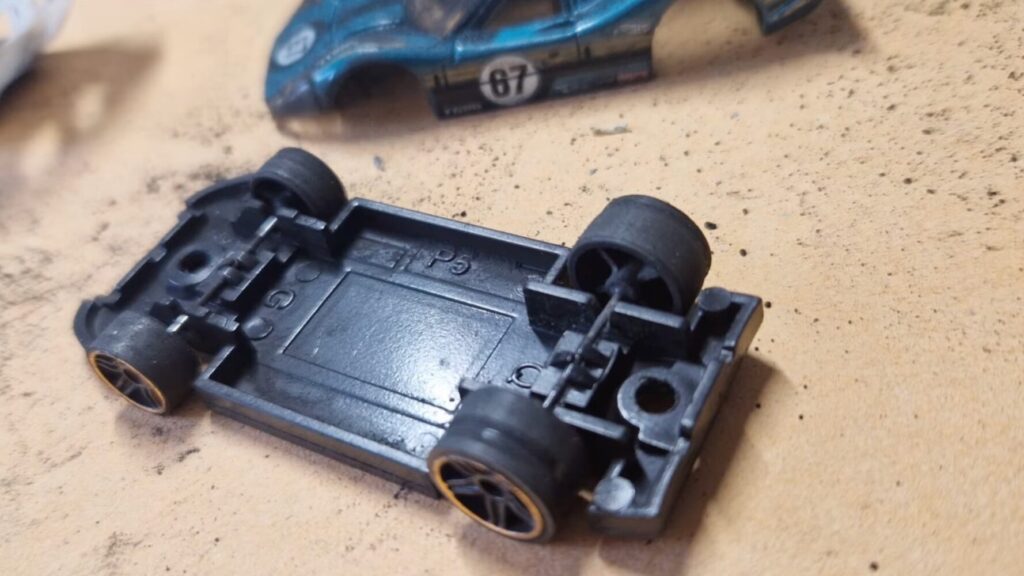
What Failure Actually Looks Like at 1:64
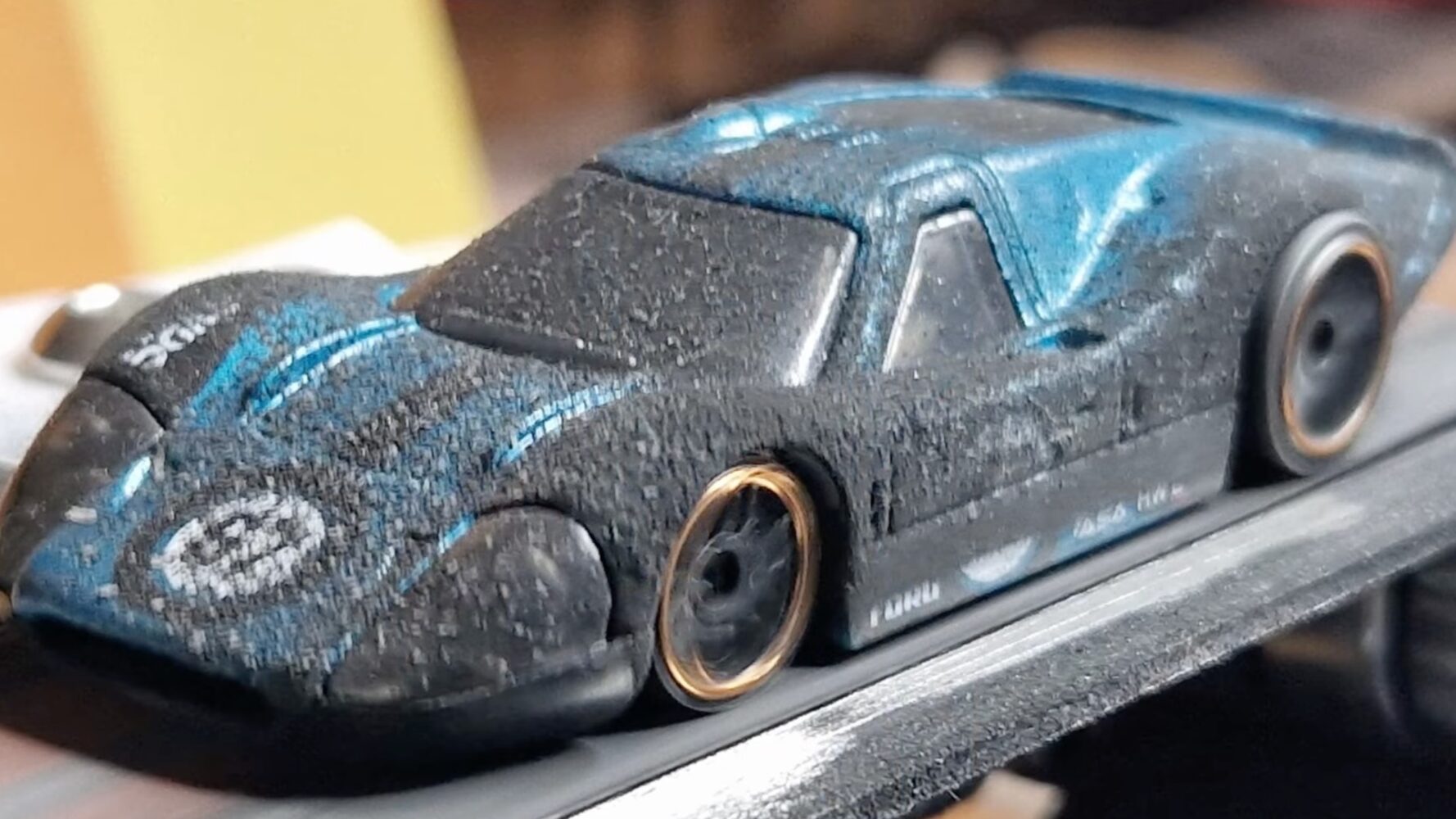
After five days of constant belt friction, the GT40 did not quit clean — it looked like it had raced.
After the run, the damage was clear:
- Deep grooves carved into the tires
- Paint abraded clean off the inner fenders from the wheels bouncing against bodywork
- Microplastic grime deposited across the belt like pit-lane debris
The post-run autopsy, documented on Diecast Endurance’s channel and reported by Wheelfront, described the car as surprisingly tough but ultimately consumable under sustained abuse — much like the machines built to last on real roads under real punishment. That’s an honest eulogy for a diecast.
For context, Diecast Endurance ran a Hot Wheels Toyota Soarer — the first-generation Lexus SC — through the same setup. It hit a calculated scale speed of 214 mph but covered only 7,964.8 scale miles over roughly three days. Higher speed, shorter life. That’s Le Mans logic applied to a toy shelf: pace yourself, or the wheels come off.
The Part That Should Probably Impress You
A bedroom-floor toy just out-endured most real test scenarios, and the numbers are hard to dismiss.
A mass-produced diecast car sustained a simulated 111 mph for five straight days before physically disintegrating — with no bearings, no lubrication, and no pit stops. The experiment, framed by outlets including The Drive and Yahoo Autos as a “weird experiment,” resonated well beyond the diecast collector community precisely because the result was so counterintuitive. A toy built for a child’s bedroom floor completed a sustained endurance simulation that most purpose-built test rigs would consider a reasonable benchmark — earning it a kind of badge of honor in the tradition of machines defined by distance. The GT40 legend, it turns out, scales down rather well.