

The cars on this list failed their owners in different ways. Some — the Pinto, the Corvair, the C/K trucks covered elsewhere on this site — had documented engineering failures that caused deaths in otherwise survivable crashes, and directly produced the safety regulations that govern vehicle design today. Others were commercial and quality disasters: badge engineering exposed, aluminum engines that failed before the loan was paid off, rust that compromised structural integrity within three years. Both categories matter — the safety failures for obvious reasons, and the quality failures because they shifted an entire generation of American buyers toward Japanese imports and permanently changed the domestic auto industry.
18. Chevrolet Vega (Exterior)

The Vega’s styling was genuinely attractive for a domestic economy car in 1971, and the aluminum engine block was a real engineering ambition — Motor Trend named it Car of the Year. The exterior promised something the mechanicals could not deliver. Thin steel body panels began corroding within two years, with rust spreading structurally rather than just cosmetically.
Chevrolet Vega (Interior)
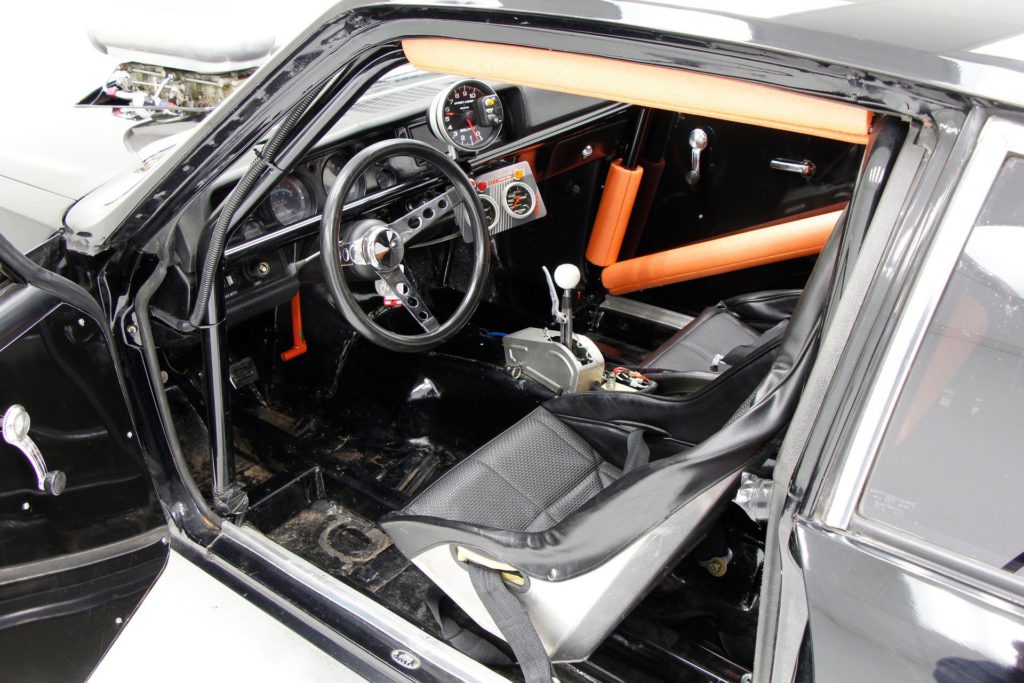
The cabin was well-proportioned and modern for its class. The problem was underneath — the aluminum block without proper cylinder liners warped under normal operating heat, causing oil leaks and engine failure that often arrived before the car loan was retired. Owner surveys from the period documented the pattern consistently. The Vega’s failure was a quality and development problem, not a safety one, but the commercial damage was severe: it accelerated the domestic market’s shift toward Japanese imports that GM spent decades trying to recover from.
17. AMC Pacer (1975-1980) (Exterior)

The AMC Pacer was the widest small car ever built in America — a deliberate design decision to maximize interior space in a compact footprint. The distinctive greenhouse and glass-heavy body created a genuinely different vehicle that Automotive News called “revolutionary” at its 1975 launch. The proportions were intentional rather than accidental, reflecting AMC’s bet that interior spaciousness would matter more to buyers than conventional styling.
AMC Pacer (1975-1980) (Interior)
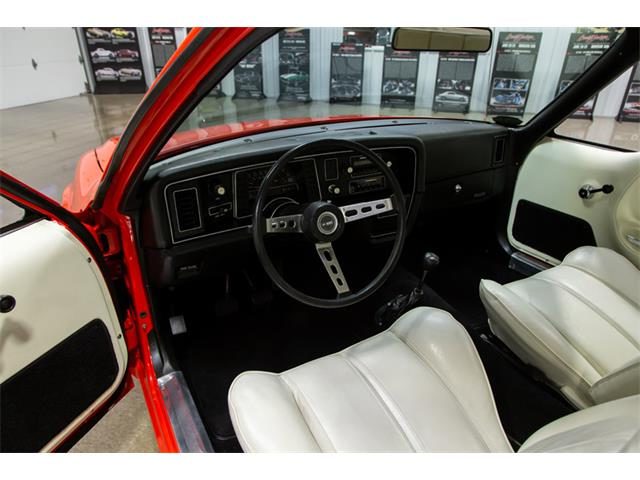
The spacious cabin delivered on the Pacer’s interior promise. Front-heavy weight distribution from the engine placement created handling characteristics that period reviewers including Motor Trend noted as challenging for a small car. The Pacer was originally designed around a planned rotary engine that never materialized, forcing AMC to fit a heavier inline-six that worsened the weight balance the design had anticipated. The result was a vehicle whose handling did not match its innovative appearance.
16. Ford Edsel (Exterior)

The Ford Edsel’s distinctive horse-collar grille polarized buyers immediately at a time when Ford needed them to commit. The vehicle launched in a market segment that was contracting, priced above what Ford’s research suggested buyers would pay for a new nameplate. Time’s retrospective assessment — “the wrong car at the wrong time” — captures the commercial problem accurately. The Edsel was not unsafe; it was a marketing and timing failure of significant scale that became the automotive industry’s standard case study in launch miscalculation.
Ford Edsel (Interior)

Push-button transmission controls and other technology features in the Edsel’s cabin reflected genuine forward-thinking design ambition. The interior offered standard Ford-level appointments with additional features intended to justify the premium positioning. Consumer Reports documented reliability problems at launch that compounded the styling controversy. The Edsel remains the clearest example of a vehicle that failed entirely through commercial miscalculation rather than engineering inadequacy.
15. DeLorean DMC-12 (Exterior)

Stainless steel body panels and gull-wing doors made the DMC-12 the most visually distinctive American car of 1981. Road & Track’s assessment — “stunning but flawed” — was accurate on both counts. The stainless exterior was genuinely innovative but difficult to repair and impossible to repaint conventionally. The gull-wing doors were a signature design feature that carried a specific engineering consequence.
DeLorean DMC-12 (Interior)
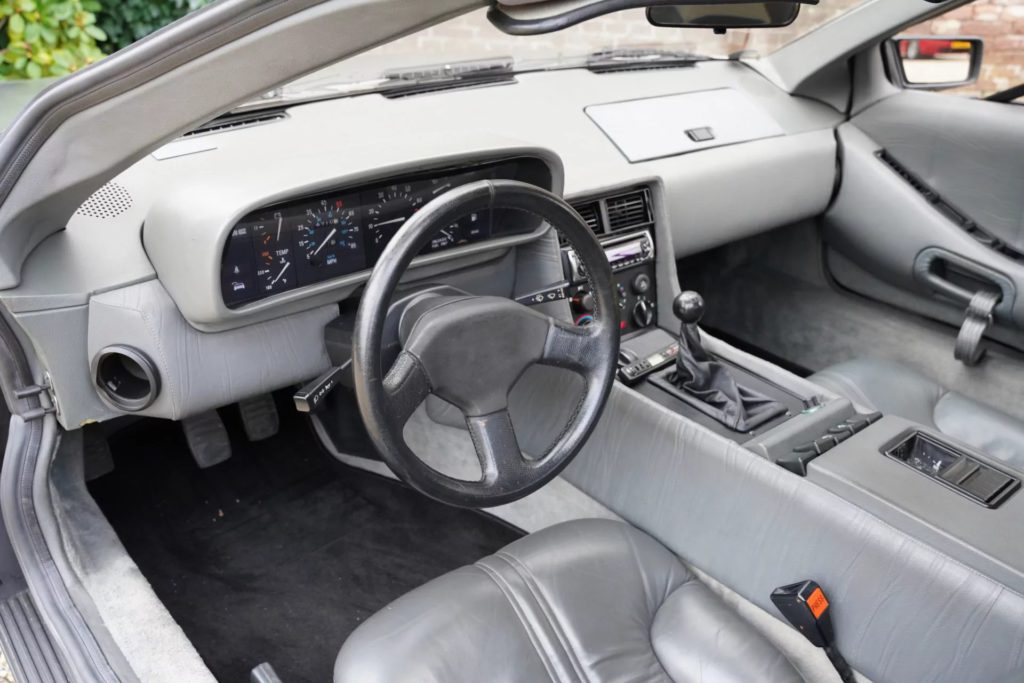
The cabin matched the exterior’s futuristic presentation with distinctive materials and layout. The documented safety concern was specific: the gull-wing doors required vertical clearance to open, which meant that in a rollover that left the vehicle inverted or on its side, occupants could find themselves unable to exit through the primary doors. Emergency release mechanisms were included but the geometry of a rolled vehicle presented a genuine entrapment risk that safety reviewers documented. The underpowered 130-horsepower Peugeot-Renault-Volvo V6 was a separate disappointment that did not match the car’s visual performance promise.
14. 1957 Chevrolet Bel Air (Exterior)

Chrome, tail fins, and gold anodized trim made the 1957 Bel Air one of the most celebrated automotive designs of the postwar era. Popular Mechanics called it the most beautiful car in America at the time, and the assessment was not unreasonable — the Bel Air’s proportions and ornamentation captured postwar optimism more completely than any other American car of the decade. The exterior excellence was genuine. The safety record reflected 1957 standards rather than engineering negligence.
1957 Chevrolet Bel Air (Interior)

The hard metal dashboard, non-collapsible steering column, and absence of seatbelts were standard across the American industry in 1957 — not specific Bel Air engineering choices. Period safety research was already identifying these as injury contributors in frontal crashes, but federal safety standards requiring padded dashboards, collapsible columns, and seatbelts did not arrive until the late 1960s. The Bel Air’s interior was beautiful and period-correct; its safety limitations were industry-wide rather than manufacturer-specific failures.
13. Yugo GV (Exterior)

The Yugo GV’s $3,990 sticker price at its 1985 US launch was its primary selling point — it was genuinely among the cheapest new cars ever sold in America. The simple hatchback body reflected the manufacturing context of a Yugoslav state enterprise with no competitive pressure to improve quality. Car and Driver’s characterization as “charmingly awful” captured the vehicle’s specific combination of low price and consistent unreliability.
Yugo GV (Interior)

The cabin’s basic appointments matched the price point. Build quality problems were consistent and documented — vehicles arrived at dealerships with defects that should have been caught before shipping, and the reliability pattern over ownership was similarly poor. The Yugo’s failure was not safety-specific in the way the Pinto or Corvair were; it was a vehicle that could not meet the minimum reliability standard buyers require regardless of how low the transaction price is.
12. Lincoln Versailles (Exterior)

The Versailles was a Ford Granada in formal dress, selling at Lincoln prices. Badge engineering was not new in American manufacturing, but the Versailles made the relationship between the base vehicle and the premium product unusually visible — the sheet metal differences were modest enough that buyers familiar with both cars could identify the relationship immediately. Automotive News’s “Lincoln’s Edsel moment” framing was apt: it was a commercial miscalculation rather than an engineering failure.
Lincoln Versailles (Interior)

Wood trim and leather made the effort to justify the premium positioning, but the Granada’s underlying architecture was apparent to anyone who had driven both vehicles. The Versailles damaged the Lincoln brand’s credibility at a moment when German luxury imports were making quality differentiation the primary purchase argument. A luxury nameplate that shares identifiable exterior panels with an economy model cannot win that argument, regardless of interior content.
11. Ford Pinto (Exterior)

The Pinto’s compact exterior gave no visual indication of the fuel system problem underneath it. The rear-mounted fuel tank positioned between the rear axle and the bumper had minimal structural protection — a design that NHTSA confirmed created fire risk in rear-end collisions at speeds as low as 20 mph. Motor Trend praised its handling in 1971 without knowledge of what the fuel system configuration would mean in actual crashes.
Ford Pinto (Interior)

Standard 1970s economy car appointments filled the cabin with nothing to indicate the fuel vulnerability below the rear floor. Internal Ford documents revealed the company had calculated that litigation settlements would cost less than the estimated $11-per-vehicle fix. The 1978 recall came after hundreds of burn deaths and the criminal prosecution of Ford — the only time a US automaker faced criminal charges for a vehicle safety defect. Modern fuel systems include reinforced tank positioning and multiple protection layers that the Pinto’s design entirely lacked.
10. Trabant (1957-1991) (Exterior)

The Trabant — an East German vehicle rather than an American one — was built from duroplast, a composite of cotton fibers and phenol resin that was chosen because East Germany lacked sufficient steel. The body did not rust but also could not be recycled and did not deform in crashes the way metal does. The two-stroke engine’s distinctive exhaust output was a characteristic of two-stroke technology rather than a specific engineering choice. Western journalists’ “charmingly primitive” framing during Cold War coverage captured a vehicle produced under manufacturing constraints that had no Western equivalent.
Trabant (1957-1991) (Interior)

The fuel tank sat above the engine in the Trabant’s layout, a positioning that raised fire risk concerns in crashes. The spartan cabin reflected the vehicle’s manufacturing context — a product of a planned economy where consumer preference had no mechanism to drive improvement. No safety cage, no crumple zones, no meaningful crash energy management. The Trabant’s safety limitations were not the result of cost-cutting decisions the way the Pinto’s were; they were the outcome of a manufacturing system that operated without the market and regulatory pressures that produced safety improvements in Western vehicles.
9. Cadillac Cimarron (Exterior)

The Cimarron’s proportions made its Chevrolet Cavalier origins apparent before a buyer reached the price sheet. Cadillac styling details on an economy car body created a specific credibility problem — the brand’s reputation was built on genuine engineering differentiation from GM’s lower lines, and the Cimarron visibly abandoned that principle. Motor Trend’s “cynical experiment” characterization in 1982 reflected how clearly automotive journalists understood what was being attempted.
Cadillac Cimarron (Interior)

Leather seats and wood trim provided the surface-level luxury content the Cadillac badge required. The underlying Cavalier architecture — platform, suspension, drivetrain — was evident to anyone who drove both vehicles. The Cimarron damaged Cadillac’s brand equity at a moment when BMW and Mercedes were establishing European luxury as the benchmark in the American market. Recovering from that positioning took Cadillac a decade and required genuine platform investment that the Cimarron’s existence had been intended to avoid.
8. 1945 Ford Super Deluxe (Exterior)

The 1945 Ford Super Deluxe was a handsome postwar vehicle built entirely to the safety standards of its era — which meant none in the modern sense. Hydraulic drum brakes were the industry standard, stopping distances were significantly longer than modern disc systems, and the rigid steel frame transferred crash energy directly into the occupant compartment rather than absorbing it through controlled deformation. These were not Ford-specific engineering choices; they were industry-wide limitations that the safety research of the following two decades would systematically identify and address.
1945 Ford Super Deluxe (Interior)

A solid steel dashboard, non-collapsible steering column, and no seatbelts defined the 1945 Super Deluxe’s occupant environment — standard for every American vehicle before the 1967 safety regulations that federalized safety requirements. The steering column alone accounted for a significant portion of driver fatalities in frontal crashes before collapsible column designs became mandatory. The Super Deluxe was not a uniquely dangerous car; it was a normal car from an era when crash safety was not yet an engineering discipline.
7. Chevrolet Corvair (1960-1963) (Exterior)

The Chevrolet Corvair’s sleek rear-engine profile was genuinely distinctive — Road & Track’s “European feel” assessment in 1960 was accurate. The handling problem that Ralph Nader documented was specific to the early 1960-1963 models with the swing-axle rear suspension, which produced a camber change under hard cornering that could cause sudden, difficult-to-correct oversteer. The 1965 and later models with fully independent rear suspension addressed the issue, but the regulatory and reputational damage from “Unsafe at Any Speed” had already been done.
Chevrolet Corvair (1960-1963) (Interior)

The cabin was modern and spacious for its class, with intuitive controls and better interior space than most competitors in the early 1960s — an advantage of the rear-engine layout. Documented concerns about exhaust fume intrusion from the air-cooled rear engine added to the safety picture. The Corvair’s case is important because the public attention it generated, combined with Nader’s advocacy, directly produced the establishment of the NHTSA in 1966 and the federal safety standards that still govern vehicle design today.
6. 2009 Kia Rio (Exterior)

The 2009 Rio’s lightweight construction produced the fuel economy its buyers needed but earned safety ratings below most competitors in its class. The compact footprint created crash energy management challenges that the body structure of the period did not fully address. Consumer Reports’ assessment — “adequate performance, concerning safety” — reflected what IIHS testing confirmed. The improvement to a 5-star NHTSA rating in the 2024 Rio represents the structural investment Kia made across its lineup as the brand moved upmarket.
2009 Kia Rio (Interior)

Economy-grade materials and basic controls matched the entry-level positioning. IIHS data showed safety feature content below premium competitors — fewer airbags, less sophisticated stability systems, and structural performance in crash testing that reflected the cost constraints of the vehicle’s price point. The 2009 Rio was not dangerously engineered by intent; it was a budget vehicle where the cost of better safety content had been traded against the price target its market required.
5. AMC Gremlin (Exterior)

The Gremlin’s truncated rear end was a deliberate cost-reduction decision — AMC created the vehicle by cutting the rear section from their existing Hornet platform, reducing tooling investment for a new model. Road & Track called it “determinedly different” in 1970, which was accurate without being a compliment. The Gremlin launched on April 1, 1970 — a date AMC chose deliberately, suggesting some self-awareness about the vehicle’s unconventional appearance.
AMC Gremlin (Interior)

The cabin delivered adequate space for two passengers, less so for rear occupants, with straightforward controls and basic appointments. The truncated rear created a structural concern in rear-end collisions — there was minimal crush space behind the rear seat to absorb impact energy before it reached occupants. The Gremlin’s primary legacy is as a product decision rather than an engineering failure: a manufacturer with limited resources creating a new model at minimum cost, with the results that cost minimization produces.
4. Ford Mustang II (Exterior)

The Mustang II was a calculated response to the 1973 oil crisis — smaller, lighter, and more fuel-efficient than the muscle car generation it replaced. The galloping horse badge sat on a Pinto platform, which brought the Pinto’s fuel system architecture with it. Car and Driver’s “right-sized for the times” assessment in 1974 was diplomatically accurate about the market context, less so about the platform implications.
Ford Mustang II (Interior)

Standard Ford ergonomics and period-appropriate materials filled the cabin with nothing remarkable in either direction. Platform sharing with the Pinto meant the Mustang II inherited the fuel system vulnerability that the Pinto’s 1978 recall addressed — buyers of both vehicles were exposed to the same rear-end collision fire risk. The Mustang II sold well under the circumstances of the fuel crisis, which made Ford’s platform decision commercially successful while extending the period during which the fuel system problem remained in production vehicles on the road.
3. Plymouth Fire Arrow (Exterior)

The Plymouth Fire Arrow was a rebadged Mitsubishi Celeste sold through Plymouth dealers from 1976-1980 — one of the earliest Japanese-American badge engineering arrangements. Rally-inspired styling and aggressive graphics suggested performance credentials the drivetrain did not fully support. Motor Trend called it “enthusiastic but economical” in 1978. Rust became a documented issue as these vehicles aged, reflecting the Japanese manufacturers’ corrosion protection standards of the mid-1970s rather than willful negligence.
Plymouth Fire Arrow (Interior)

Bucket seats and sporty trim created a reasonable enthusiast interior for the budget. The practical ownership problem that emerged over time was parts support — when Plymouth discontinued the arrangement and eventually exited as a brand, the Mitsubishi-based mechanical components became increasingly difficult to source through domestic channels. The Fire Arrow’s legacy is primarily as an early example of badge engineering across national borders, a practice that became standard across the industry in subsequent decades.
2. Dodge Aspen and Plymouth Volaré (Exterior)

The Aspen and Volaré launched in 1976 as Chrysler’s replacements for the Dart and Valiant — conventional American styling with traditional proportions that communicated nothing unusual. Severe rust problems emerged quickly enough that NHTSA issued recalls, with corrosion affecting structural components rather than just cosmetic surfaces. Popular Mechanics called them “promising but premature” — an accurate description of vehicles launched before the quality issues were resolved.
Dodge Aspen and Plymouth Volaré (Interior)

Standard Chrysler ergonomics and mid-level materials filled the cabin. The slant-six engine was actually one of the more reliable components of these vehicles — it was the body and chassis corrosion that generated the NHTSA attention, not powertrain failures. The Aspen and Volaré were among the most recalled vehicles in American automotive history at the time of their production, with multiple campaigns addressing the rust and related safety concerns. They represent the quality nadir of Chrysler’s pre-bankruptcy era, the period that made the company’s 1979 government loan necessary.
1. Chevrolet Corvair (Exterior)

The Corvair’s rear-engine exterior was genuinely distinctive and European in character — the kind of design ambition that American manufacturers rarely attempted. The handling problem was real and specific: early models used a swing-axle rear suspension that produced dangerous oversteer characteristics under hard cornering. Ralph Nader’s investigation documented the issue with GM’s own engineering records, showing the company was aware of the handling dynamics and had chosen not to address them with the stabilizer bar that would have resolved the problem.
Chevrolet Corvair (Interior)

The spacious, modern cabin benefited from the packaging advantages of the rear-engine layout — more front interior space, better front-seat legroom. The rear engine placement that created the interior advantage was the same configuration that produced the suspension geometry problem underneath. The Corvair’s lasting significance is not the car itself but the regulatory framework its controversy generated — NHTSA, federal crash standards, mandatory safety equipment — all of which directly protect every driver on American roads today. For what those protections look like in practice, the safety features in modern vehicles trace directly to the lessons these vehicles taught.