


Formula 1’s technical regulations exist in direct response to what engineers have done before. The FIA bans technologies not because they failed but because they succeeded too completely — producing performance advantages so large they compromised competitive balance, or safety margins so thin they put drivers at risk. The ten innovations below each changed the sport measurably before regulators intervened. Several of them shaped the engineering principles that current F1 cars are still built around.
10. Ground Effect
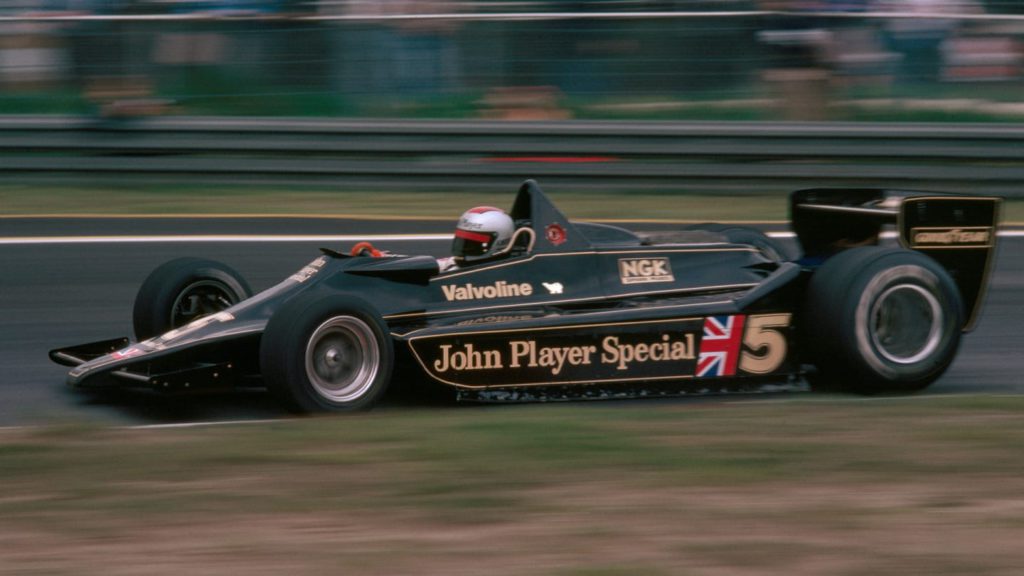
Lotus applied aircraft aerodynamic principles to create wing-shaped sidepods and sliding skirts that generated substantial downforce through underbody airflow rather than conventional wings. The underbody tunnels produced low-pressure zones beneath the car, providing downforce with minimal drag penalty — effectively free aerodynamic load. Cornering speeds increased dramatically, but the system produced dangerous oscillations and tire loading at high speeds. The FIA banned ground effect in 1983. The technology proved durable enough that F1 regulations post-2022 have reintroduced a controlled version under the current technical framework, validating the aerodynamic concept while managing the safety concerns that ended the original era.
9. Tyrrell X-Wings
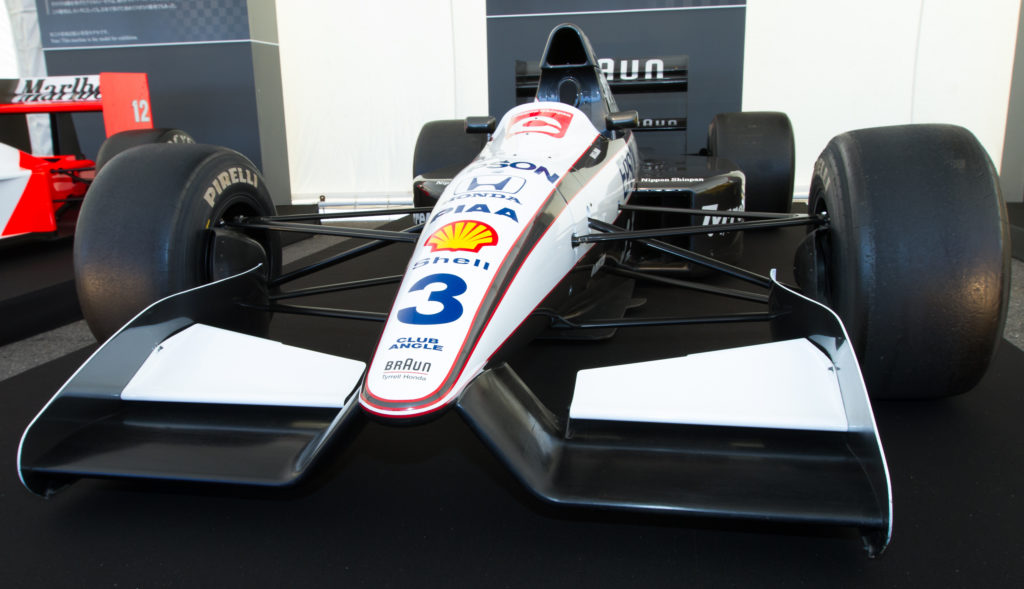
Tyrrell mounted upright wings directly to the sidepods to generate additional downforce without significant drag penalties — a bolt-on solution that other teams copied once its effectiveness became apparent. The wings improved mid-corner grip and required no major structural changes to implement. Adrian Newey declined to use them at McLaren, considering them inelegant engineering. The FIA banned them in 1998, citing both the safety concerns around visibility and pit lane proximity, and the visual disruption they created. The X-wings stand as evidence that aerodynamic innovation does not require sophisticated manufacturing — sometimes straightforward attachment points and well-positioned surfaces are sufficient.
8. Active Suspension
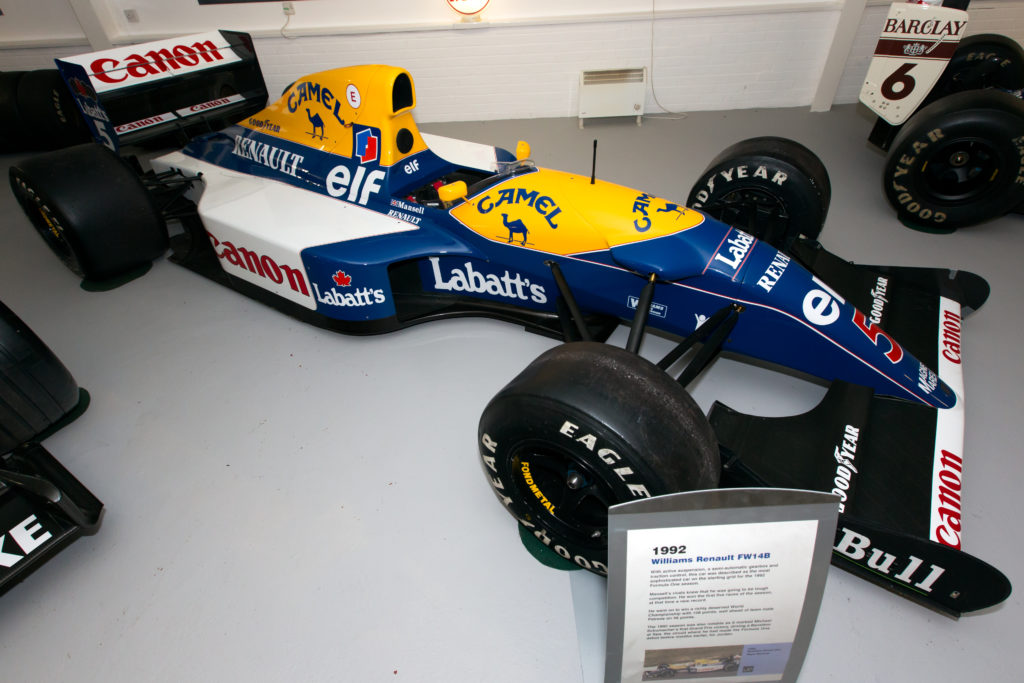
Lotus experimented with hydraulically-controlled active suspension in the 1980s, but Williams perfected it with the FW14B, which dominated the 1992 season. The system maintained optimal ride height and tire contact regardless of G-forces, keeping aerodynamic performance consistent through corners where passive suspension would compromise both. The car provided lower drag coefficients and performance advantages that were effectively unchallengeable with conventional suspension design. The FIA banned it in 1994 alongside other electronic driver aids, restoring driver input as the primary performance variable. The parallel exists across many automotive technologies — innovations that proved too effective for the competitive balance regulators intended to maintain.
7. Mercedes DAS System
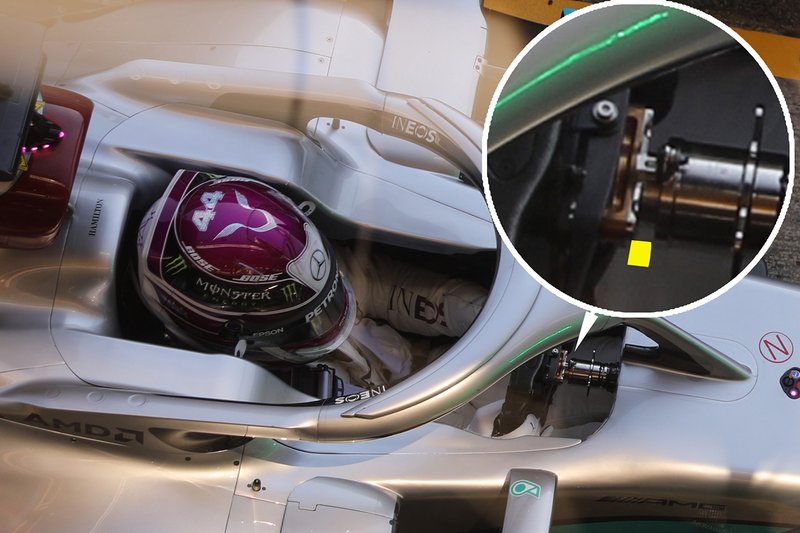
The Mercedes DAS system used push-pull steering wheel movement to adjust front wheel toe angle in real time — enhancing tire temperature management on out-laps and providing subtle aerodynamic benefits during straight-line running. The system was legal in 2020, with the FIA confirming its compliance before the season began. Red Bull protested unsuccessfully during the year. The FIA updated regulations to prohibit such systems for 2021, meaning Mercedes had one season to extract competitive value from an innovation that required significant development investment. The DAS is a clear example of a regulation change closing a loophole before it could compound into a sustained advantage.
6. Traction Control
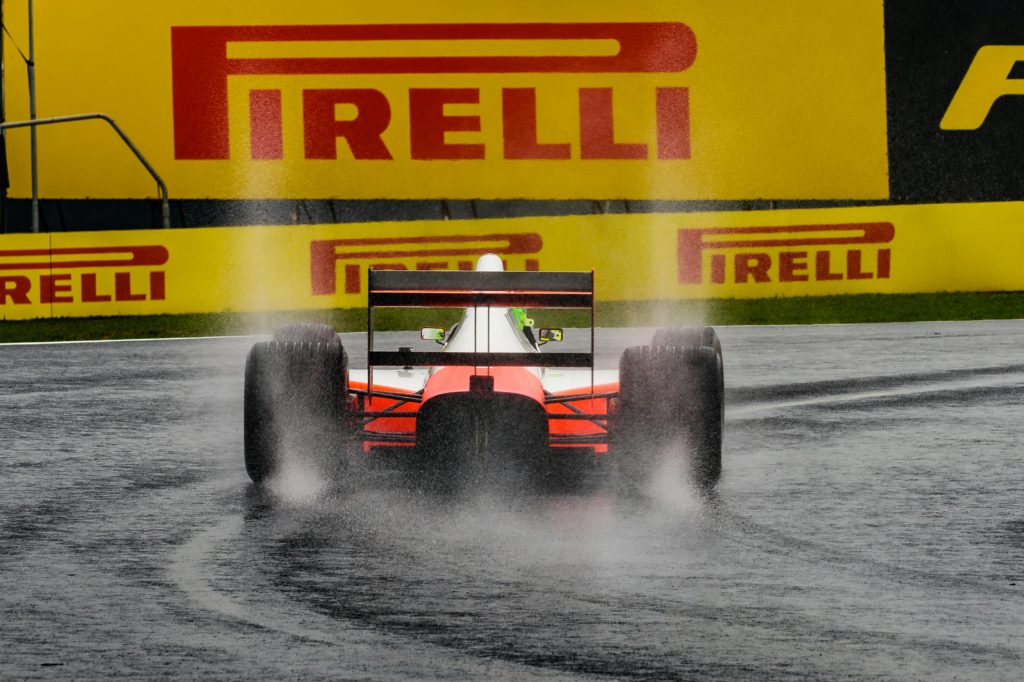
Traction control’s regulatory history in F1 reflects the sport’s ongoing tension between technology and driver skill. The FIA banned it in 1993, reintroduced it in 2001, then banned it again in 2008. Benetton faced allegations of covert use in 1994 during Schumacher’s championship season — the FIA found evidence of hidden software in the system but could not prove it was activated during racing. The system provided genuine competitive and safety benefits in wet conditions, but the FIA’s final ban in 2008 prioritized driver skill as a differentiating factor. The three-decade regulatory cycle around traction control captures how difficult it is to draw a consistent line between acceptable electronic assistance and prohibited driver substitution.
5. Brabham BT46B Fan Car
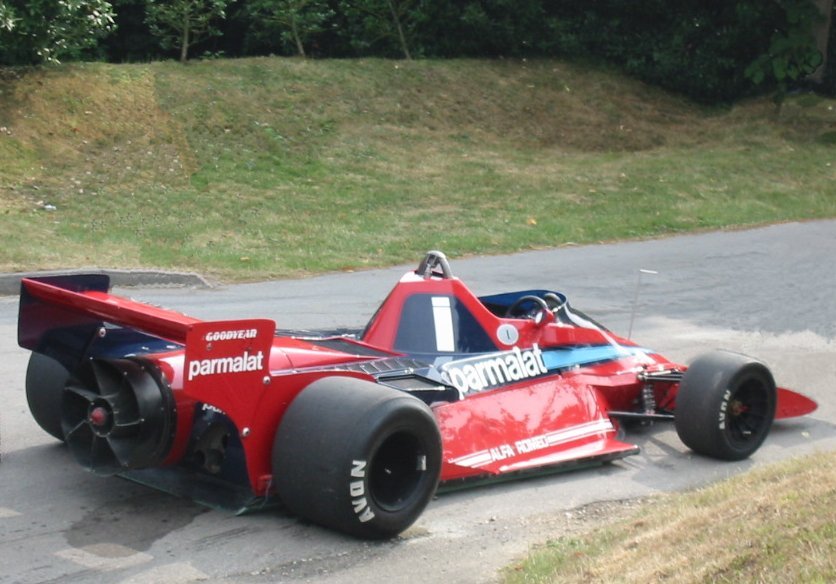
Gordon Murray designed the BT46B with a large rear fan that extracted air from beneath the car, generating ground effect suction through active means rather than passive aerodynamic shaping. Brabham registered it as a cooling device — technically accurate but clearly secondary to the downforce function. Niki Lauda dominated the 1978 Swedish Grand Prix with it. Competitors protested immediately, and rather than contest a prolonged legal battle, Bernie Ecclestone voluntarily withdrew the car from competition. The BT46B was never officially banned — Brabham simply chose not to race it again. It remains one of the most technically elegant regulatory loophole exploitations in F1 history, and its significance to engineering creativity extends well beyond racing into the broader category of vehicles that challenged conventional thinking.
4. BMW Rocket Fuel

BMW’s qualifying fuel formula used an 80% toluene blend derived from aviation chemistry that produced over 1,300 horsepower in short qualifying bursts. The mixture burned hotter and more energetically than conventional fuel, closing the performance gap with Renault’s turbo program and enabling BMW-powered Brabham to win the 1983 championship. The fuel required extreme handling protocols — it was genuinely toxic and posed serious risks to mechanics and drivers during refueling operations. The FIA restricted fuel compositions on safety grounds before the escalating formula chemistry created a serious incident. The BMW toluene blend represents the turbo era’s outer boundary of what fuel engineering could produce when chemical optimization had no regulatory ceiling.
3. McLaren Brake Steer System

McLaren’s brake steer system gave drivers a third pedal that applied braking force to individual rear wheels, reducing understeer and enabling tighter cornering lines through differential rear-wheel braking. Charlie Whiting initially deemed it legal, ruling it a braking aid within the regulations. Ferrari protested, arguing it functioned as a steering system. The FIA reclassified it as a four-wheel steering device and banned it in 1998, ending McLaren’s advantage from the innovation. The reclassification argument was legitimate — the system did actively alter the car’s directional behavior — but the speed of the response reflected both the competitive sensitivity involved and Ferrari’s political influence within the sport’s governance at the time.
2. Renault Mass Damper
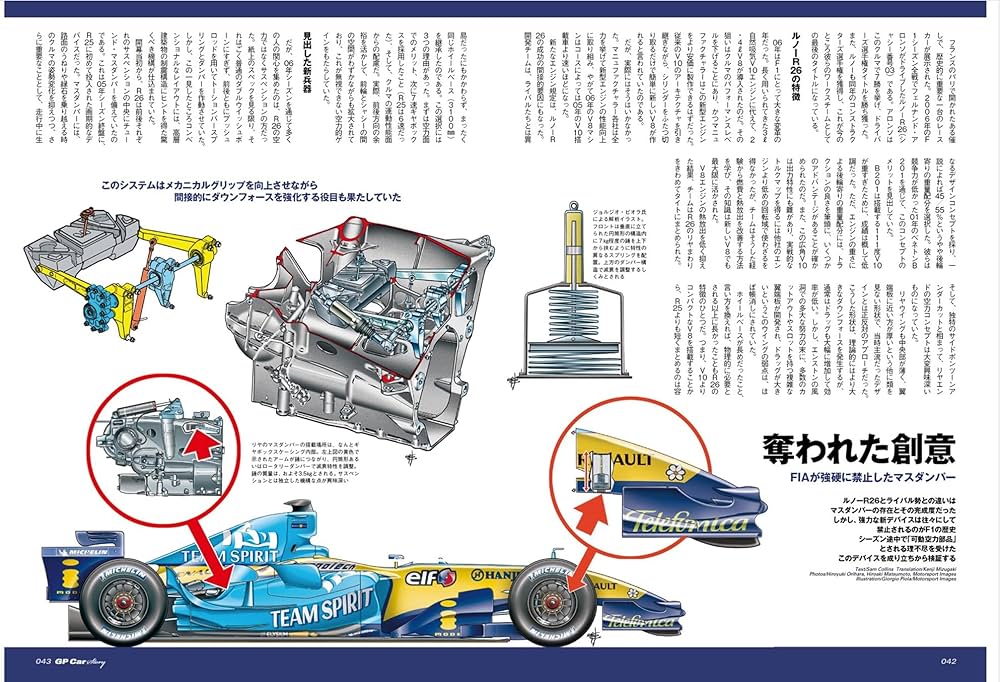
Renault’s mass damper was a cylinder containing a free-moving weight that absorbed vertical oscillations in the front of the car, reducing tire bounce and improving contact patch consistency. The system added nine kilograms but improved performance significantly — particularly effective with Michelin tires, which were sensitive to the tire temperature variations that bounce produced. Teams could tune each damper for specific circuit characteristics. The FIA banned it in July 2006, ruling it a “movable aerodynamic device” because the weight’s movement altered the car’s aerodynamic behavior as a secondary effect. The mass damper ban remains controversial among engineers — it was a mechanical solution to a mechanical problem, and the aerodynamic classification required a generous interpretation of what “aerodynamic device” actually means.
1. Tyrrell P34 Six-Wheeler
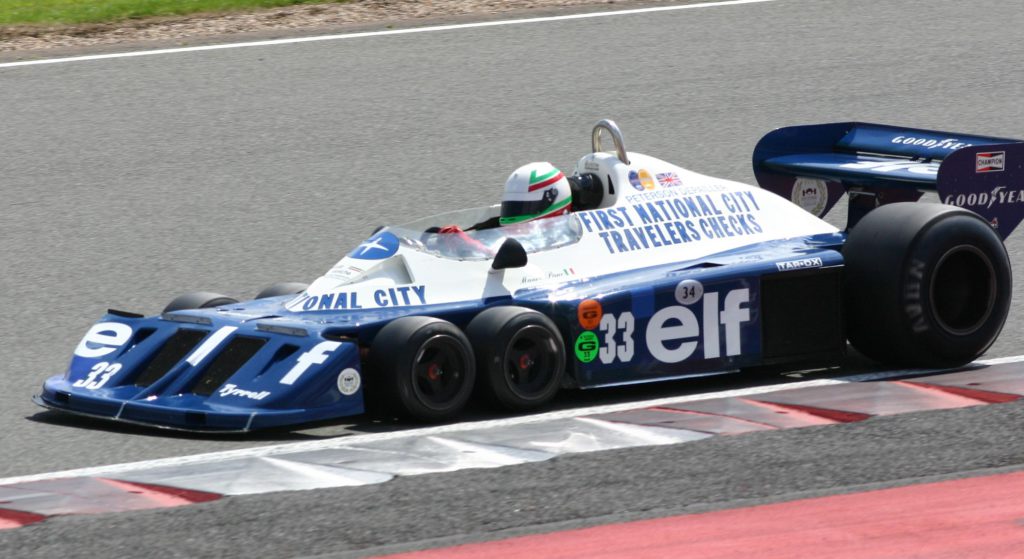
Derek Gardner’s P34 used four small front wheels instead of two standard ones, reducing frontal area while increasing the front contact patch and improving braking performance. The concept was aerodynamically and mechanically sound — the car won the 1976 Swedish Grand Prix and ran competitively through the season. The fatal problem was tire supply: Goodyear had no commercial incentive to develop and maintain specialized tires for a single car configuration, and without ongoing tire development the P34’s front tire performance degraded relative to conventional cars. March, Ferrari, and Williams all explored multi-wheel configurations before the FIA mandated four-wheel configurations starting in 1983. The P34’s failure was not the concept but the supply chain reality — a genuinely innovative engineering solution that the tire manufacturers’ business model made unsustainable.