

The average new battery-electric vehicle managed 292 miles of EPA-rated range in 2024 — a certification figure, not a guarantee of real-world performance in winter or at highway speeds. CATL’s lithium-air research points toward a theoretical figure of 2,000 kilometers — 1,243 miles. That gap is staggering. It’s also where the word “theoretical” starts doing a tremendous amount of work, so it’s worth paying close attention to it.
This is not a product announcement. No publicly demonstrated or commercially announced CATL vehicle with that range has been identified, and no commercial launch schedule exists. What exists is a research direction — and an extraordinary one worth understanding clearly.

Breathing Air, Not Hype
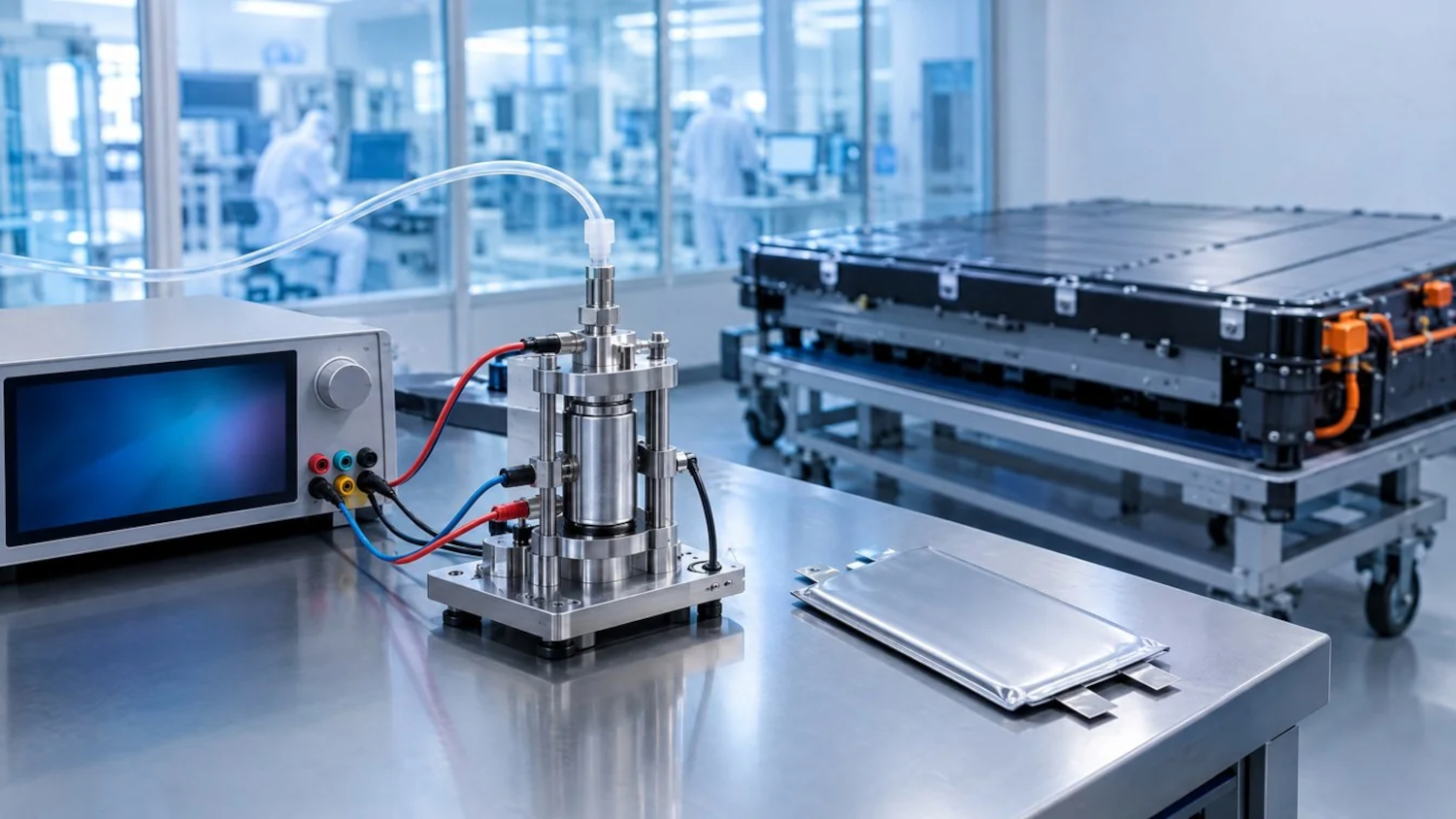
Lithium-air cells use atmospheric oxygen as a reactant, which is why the theoretical energy density looks extraordinary — and why the real-world math gets complicated fast.
Conventional lithium-ion batteries store everything they need inside the cell. Lithium-air cells, by contrast, pull oxygen from the surrounding atmosphere as a reactant, which theoretically means less material to carry. That’s the source of the frequently cited 3,505 Wh/kg figure — a measure of the lithium-peroxide reaction’s electrochemical potential, not the rating of an automotive battery pack.
A complete pack also needs cooling systems, air-management hardware, protective housing, and electrodes. Each component chips away at that theoretical specific-energy estimate.
Here’s what the evidence actually supports:
- The 3,505 Wh/kg figure is cell-level chemistry, not a usable pack-level specification.
- A 2024 laboratory study published in Advanced Energy Materials achieved 757.5 Wh/kg over 241 cycles in a pouch-cell format — meaningful progress, not commercial readiness.
- Major obstacles include chemical instability, lithium-peroxide buildup, poor rechargeability, limited cycle life, and sensitivity to moisture and carbon dioxide.
- CATL’s reportedly nearer-term priorities are sodium-ion and all-solid-state batteries; lithium-air is the long game.
- No production vehicle, no announced timeline, no confirmed specification.
Range Anxiety Needs More Than a Bigger Number
Even if lithium-air clears every technical hurdle, the real-world case for 1,243 miles still has to answer hard questions about weight, cost, and safety that don’t yet have answers.
Range anxiety isn’t purely about miles — it’s about charging infrastructure, winter degradation, highway speeds, and trust. Promising four times today’s average range is a headline solution to a problem that is fundamentally structural. The actual fix requires a pack that is safe, durable, affordable, and compact enough to fit under a real car — a combination of demands that lithium-air chemistry has not yet demonstrated outside controlled laboratory conditions.
CATL’s lithium-air research is the kind of long-range bet that serious battery companies must make. It is not a press release. It is a research direction with a formidable obstacle course still ahead, covering cycle life, recharge efficiency, moisture and carbon-dioxide sensitivity, thermal management, and cost.
If lithium-air ever clears that course, it changes the conversation around EVs entirely. For now, 1,243 miles lives in a laboratory. For a clearer picture of what’s actually approaching the market, the sodium-ion and all-solid-state timelines are the ones worth watching.