

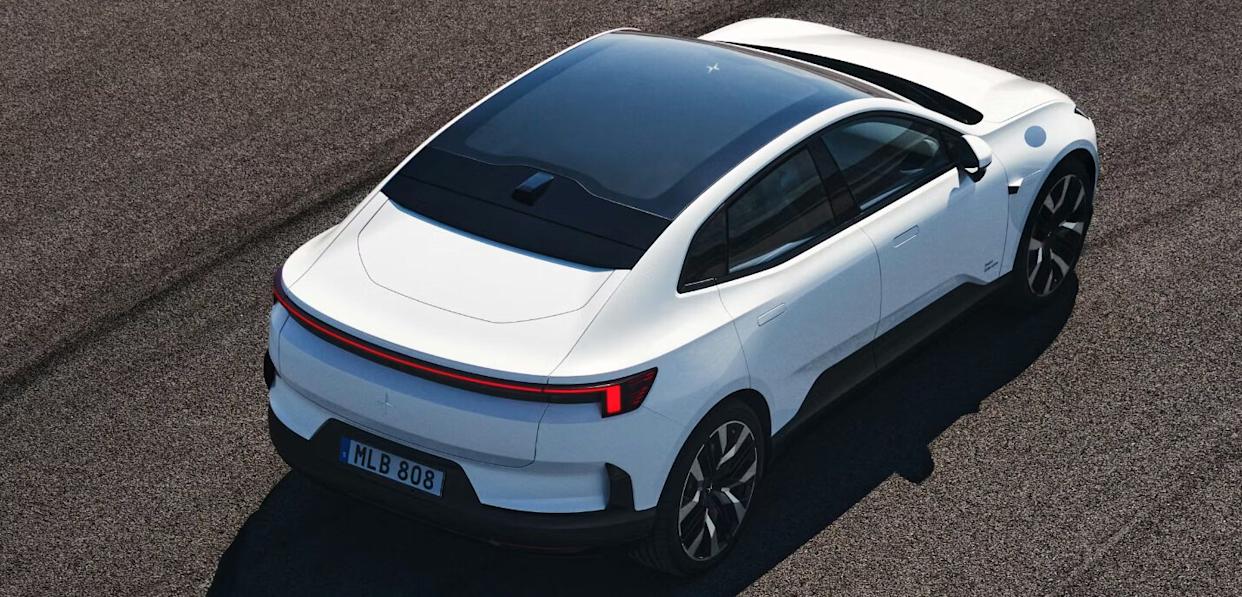
Backing out of parking spaces just became a trust exercise in Swedish engineering. The Polestar 4 eliminates its rear window entirely, replacing decades of glancing over your shoulder with a digital screen displaying camera feeds. You’ll either embrace this leap into automotive minimalism or spend months reaching for glass that isn’t there.
When Glass Becomes Digital
The Polestar 4’s rear-view mirror connects to a high-definition camera mounted above the rear spoiler. This setup promises wider viewing angles than conventional glass while shaving weight and improving aerodynamics. Polestar claims the digital system eliminates blind spots that plague traditional rear windows, especially when rear passengers or cargo block the view.
The camera feed displays on a screen where you’d expect to see a mirror, creating what engineers call an “unobstructed digital view” of traffic behind you. Think of it as the automotive equivalent of removing physical buttons for touchscreens—except this time, the stakes involve highway merges and parallel parking.
Beyond the Showroom Floor
Early automotive reviewers note an adjustment period for drivers adapting to the digital system. The human brain expects that rectangular piece of glass after decades of learned driving behavior. Removing it challenges fundamental assumptions about how we navigate traffic.
The technology works brilliantly until it doesn’t—camera malfunctions, dirt accumulation, or system failures could leave drivers with compromised rear vision. Backup cameras have become standard, but eliminating the rear window makes that backup system your primary vision.
The Bigger Picture
Polestar’s move signals a broader industry shift toward screens replacing physical elements. Tesla pioneered aggressive digital interfaces; now Swedish designers are questioning whether glass itself is obsolete. You’re witnessing automotive design philosophy split between traditional driving experiences and radical digital reimagining.
The real test comes in three years when these vehicles hit used car lots. Will drivers embrace windowless futures, or will this innovation join the graveyard of automotive experiments that sounded brilliant in boardrooms but failed in driveways? The Polestar 4 bets your comfort zone is more flexible than you think.