

Only a fraction of automotive concepts ever roll off the assembly line. Yet, these unbuilt machines often reveal more about a manufacturer’s true ambition than any production car. Ford continuously pushed boundaries with vehicles that were wild, raw, and often too ahead of their time. These eleven audacious, unreleased Ford concepts showcase sheer engineering daring and the radical futures they hinted at. The design flourishes that shaped later models are waiting to be discovered. These are the roads less traveled.
1. Ford Mystere

A gleaming sculpture that influenced Ford’s 1957 production cars without ever turning a wheel.
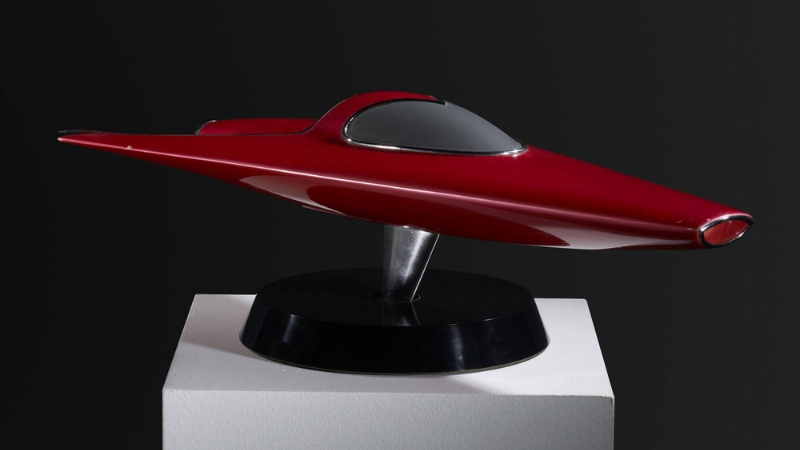
Bill Boyer crafted the Mystere in Ford’s Advanced Styling studio in 1954, intending it for the 1955 Detroit Auto Show. The debut was delayed, and it first bowed to public scrutiny at the 1956 Chicago Auto Show instead. This machine was a fever dream of chrome and glass, designed purely as a styling statement. A tilting glass bubble canopy dominated its profile, drawing crowds who peered inside to reconcile the fantastical interior with the reality of its static display.
Despite promotional descriptions of a rear-mounted gas turbine, the actual display car had no engine, drivetrain, or suspension. The Mystere was the automotive equivalent of a rock star’s stage costume: all flash, no real propulsion. Swiveling seats and a steering wheel that could be used from either front position gave it a futuristic appeal straight out of science fiction. This non-running fantasy car proved a brilliant marketing exercise, influencing many of Ford’s 1957 production car design cues without ever needing to turn a key.
2. Ford Gyron
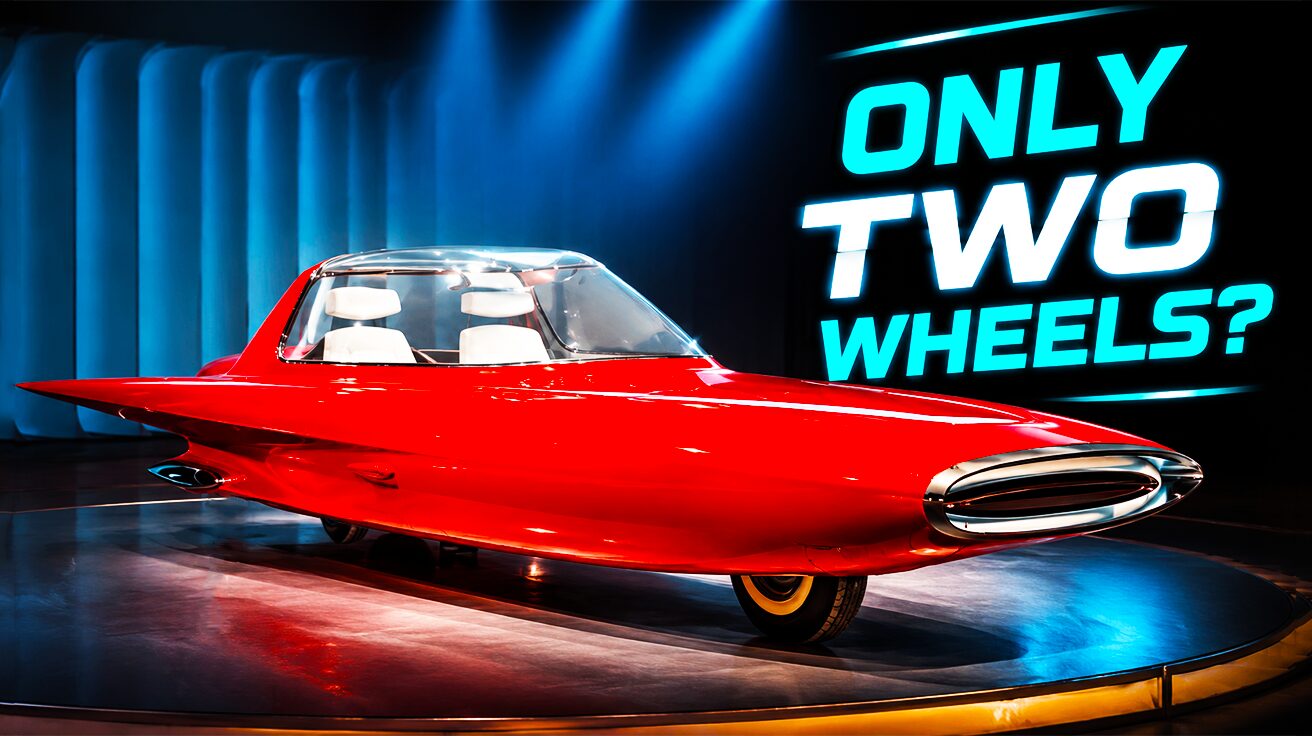
A two-wheeled balancing act that challenged conventional automotive physics—until fire consumed the original.
At the 1961 Detroit Motor Show, a vehicle defying conventional automotive physics emerged. Ford’s Gyron, a two-wheeled gyrocar balanced by internal gyroscopes, debuted as a bold research exercise. Its delta-shaped body featured a steering dial between the seats and foot pads for braking. Stabilizing jockey wheels extended at low speeds or when parked, keeping it upright like a motorcycle with training wheels.
This 1961 concept pushed boundaries, showing two wheels could offer surprising balance. The original full-scale prototype was tragically lost in the Ford Rotunda fire in 1962. This innovative vision disappeared before production could be seriously considered. Some ideas are simply too wild, never making it past the concept stage—reminding enthusiasts how quickly dreams can turn to smoke.
3. Ford Mach 2

GT40 engineering aimed at the masses, with a price tag and production plan that suggested Ford was serious.
This mid-engined concept was developed under Roy Lunn, a key GT40 engineer, showcasing serious production intent. Power came from a 289 cu in V8 engine sourced directly from the Mustang, promising accessible performance. Semi-monocoque steel construction and independent rear suspension were race-bred tech, wrapped in a fiberglass body that sat a mere 47 inches high. Weighing around 2,650 lb, the Mach 2 offered a compelling power-to-weight ratio for its era.
Ford targeted an ambitious price of $7,500 and planned an initial build of 500 units in the first year, signaling a genuine attempt to put this machine on the road. The low-slung chassis promised sharp road feedback, a true spiritual successor to the Cobra. This wasn’t just a design exercise; it was Ford’s road-going GT40, a missed opportunity that still stings decades later.
4. Ford Comuta
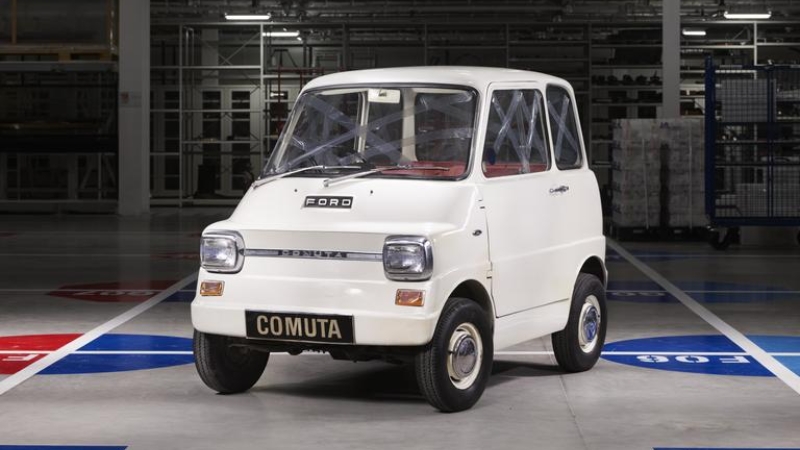
An electric urban lifehack from the late 1960s that predicted compact EV mobility decades early.
The Comuta was an early glimpse into future city transport, remarkably compact at just 6 ft 8 in long. Three of these machines could fit into a single standard parking space. It seated two adults and two children, powered by dual electric motors on the rear axle and four 12-V batteries, achieving a 37-mile range and a 37 mph top speed.
This tiny pioneer was less a car and more a four-wheeled urban problem-solver, predicting a future where compact electric mobility would be essential. Ford’s early commitment to this concept mapped out the congested cities of tomorrow decades ahead of schedule, even if the broader market wasn’t ready to follow.
5. Ford Barchetta

An affordable roadster concept that could have beaten the Mazda MX-5 to market by six years.
A small, open-top Ford concept appeared at the 1984 Geneva Motor Show, years before the Mazda MX-5 redefined the affordable roadster segment. This Barchetta, designed by Ford of Europe and Ghia, was built in Turin on the Fiesta XR2 platform, using an 86-hp 1.6 L engine and front-wheel drive. Its wedge body, flush lighting, and a clever scissor-style fabric top generated enormous public excitement for sunny weekend drives.
The Barchetta could have owned its segment with pure analog fun, its 1.6 L engine providing a soundtrack for carving coastal roads. Instead, the opportunity vanished. Its faint echo surfaced in the 1991 Australian Mercury Capri, a reminder of a road not fully explored.
6. Ford Cobra ME 230
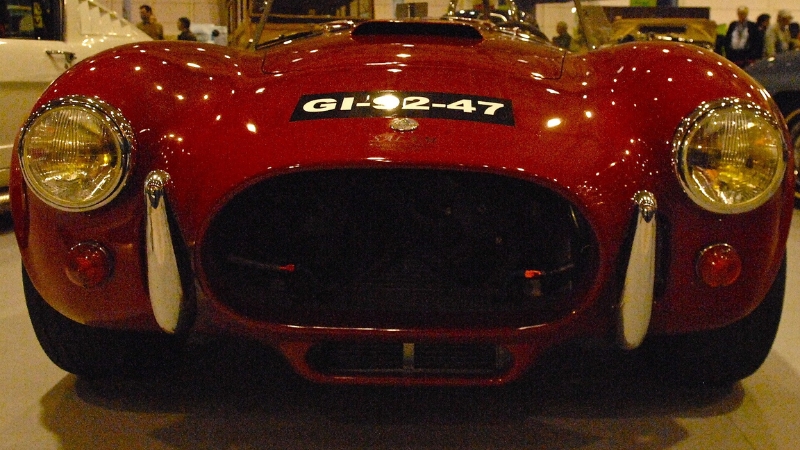
Ford’s final mid-engine concept from 1986, delivering 230 hp and design DNA that lived on in the Probe.
As Ford’s final mid-engine concept from 1986, the Cobra ME 230 delivered serious performance. Assembled by Chausson, this two-seater packed a 2.5 L turbocharged four-cylinder generating 230 hp. Ford claimed 0–60 mph in 6 seconds, a 130 mph top speed, and a 0.33 drag coefficient.
Inside, the Cobra ME 230 featured power lumbar bucket seats, leather trim, and controls arranged for straightforward access. This cabin was built for pure driving, not posing. Its aggressive yet refined lines clearly foreshadowed design elements on the more mainstream Ford Probe, leaving an unmistakable mark on Ford’s production lineup.
7. Ford Capri RS 2800

A motorsport-ready Capri variant killed when Ford shut down its entire AVO division before a single customer delivery.
Ford’s Advanced Vehicle Operations (AVO) team planned a potent Capri variant, aiming to dominate the European Touring Car Championship. This successor to the RS 2600 and RS 3100 would feature a 2.8 L V6 from the United States, targeting 2,000 units per year. Enthusiasts were ready for its debut, envisioning it tearing up circuits.
That motorsport dream became an instant ghost story. Ford abruptly shut down the entire AVO division, killing the Capri RS 2800 before a single customer car was delivered. This unbuilt legend remains a stark reminder that compelling designs sometimes remain trapped in the realm of “what if,” never getting the chance to prove themselves on track or road.