

Buying a new car means signing a fixed contractual obligation that will persist through changes in employment, income, and life circumstances. Rolling into the dealership without a battle plan is financial malpractice. Many buyers focus only on the monthly payment, overlooking crucial factors like total interest or depreciation. This list exposes the telltale signs that suggest hitting the brakes on a new car purchase, helping distinguish between true need and fleeting want. Master the art of the strategic exit from an old ride.
Sign 1: Your Current Car Still Runs

If the existing vehicle starts reliably and its repair costs remain lower than replacement payments, trading up creates a larger financial obligation rather than solving a transportation problem.
A transmission repair typically ranges $3,000–4,000, a sum that often pushes drivers toward replacement. Yet swapping a functioning vehicle for new-car payments commits buyers to roughly $626 monthly—the average payment when negative equity is financed into a new loan. Over five years, that totals $37,560 in payments alone, dwarfing most significant repairs.
Essential maintenance—brakes, tires, battery—costs far less than financing a replacement. When the dashboard lights up, signaling a gut-punch repair, the instinct is to trade rather than fix. A reliable, well-maintained machine remains a long-term investment. Compare a written repair estimate with the first-year cost of the replacement: loan payments, interest, insurance changes, taxes, registration, and depreciation. The repair bill may be economically preferable.
Sign 2: Considering Only the Monthly Payment

A monthly payment can conceal the vehicle’s out-the-door price, APR, loan term, taxes, fees, add-ons, and total finance charges.
Average new-vehicle prices now hover near $49,000. Dealers often spotlight a monthly figure, masking the loan’s true cost. Sign up for a 72-month loan at 7% on a $40,000 vehicle, and the total payments approach $49,100. Dealer fees and taxes add thousands more. Insurance premiums climb hundreds annually.
Anyone who’s financed a car knows the monthly offer reveals nothing about total ownership cost. After six years, private-sale value might land between $12,000 and $16,000, leaving substantial negative equity. Compare the APR, loan length, amount financed, and total cost—not just the payment. A longer loan term reduces the monthly hit while increasing total interest and extending the period spent underwater.
Sign 3: Already Upside Down on Your Current Car

Negative equity exists when the loan payoff exceeds the vehicle’s current market value; rolling that shortfall into a replacement loan transfers the old debt into the next vehicle.
Nearly one in four new-vehicle sales with a trade-in involve negative equity. Pull into a dealership eyeing a new ride, and discover the existing car is a financial anchor. The sales manager often offers a seemingly easy solution: roll that old debt into the new loan.
This quick fix transforms a new car into a debt magnet. Roll $4,000 in negative equity into a $40,000 loan, and the buyer immediately finances $44,000 on a car worth $40,000 upon delivery. This initial deficit compounds quickly. Obtain the lender’s payoff amount and compare it with a current valuation from Kelley Blue Book or similar services. The basic calculation is vehicle value minus loan payoff. Avoid navigating these financial roadblocks blindfolded.
Sign 4: Life Situation May Change

An auto loan is a fixed contractual obligation that continues through changes in employment, income, housing, health, or family circumstances.
Committing to an auto loan means payments are due monthly for five or six years, regardless of personal upheaval. Job prospects may shift gears unexpectedly. Housing situations can take unplanned exit ramps. Assess life stability like a mechanic checking a chassis before a major rebuild; any structural weaknesses could lead to disaster down the road.
Before committing to that new car, consider the long haul. Anyone who has taken a detour knows a planned two-hour drive can turn into a six-hour expedition. Financial plans need to absorb similar shocks. Determine whether the payment, insurance, fuel, maintenance, registration, and emergency repairs would remain affordable if income fell or other expenses increased. Prudent planning for the duration of a loan means ensuring finances can handle unexpected turns.
Sign 5: Wanting the Image or Feeling More Than the Function

Distinguish a functional need—such as required cargo space, towing capacity, accessibility, or dependable transportation—from preference for styling, brand image, technology, trim, or the experience of owning something new.
Does the buyer really need that perfectly polished paint and fresh car smell, or just a reliable ride? Chasing the latest model year and its associated status often overshadows real-world capabilities. That initial thrill of driving off the lot dissolves in rush hour. Consider the buyer eyeing a top-trim crossover for its “lifestyle” image, when the actual need is for practical cargo space or modest towing.
Compare lower trims, older model years, and used alternatives that meet the same practical need. New-vehicle ownership also exposes the buyer to depreciation; purchased vehicles lose value over time, while the buyer retains the vehicle’s eventual equity. True satisfaction stems from a vehicle’s utility and how it serves actual life—not its superficial appeal. Buying for feeling over genuine function inflates the price without improving transportation.
Sign 6: Repair Costs Not Compared with Replacement Costs

Get a written estimate from a qualified repair shop for bringing the current vehicle into dependable condition, then compare it with the first-year cost of the replacement vehicle.
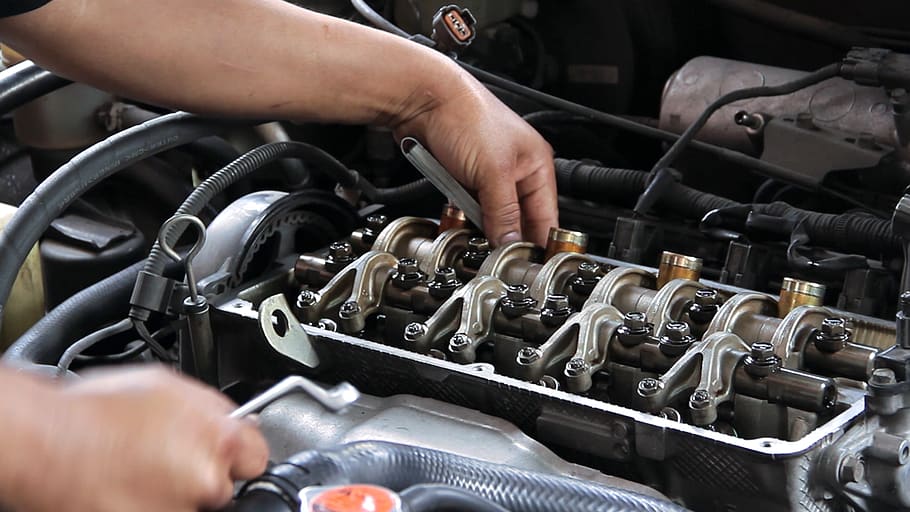
Many drivers eyeing a major repair see it as throwing good money after bad. Yet the financial reality of a new car often dictates otherwise. New-vehicle depreciation hits the moment the buyer drives off the lot, irrespective of how pristine it remains. Consider the current workhorse needing an $1,800 engine overhaul.
While that repair bill feels like a punch to the gut, it rarely matches the financial drain of new-car payments, insurance hikes, and registration fees. Trading a running vehicle for a depreciating asset is often filling a leaky bucket—constantly pouring cash into a vanishing resource. The comparison should include loan payments, interest, insurance changes, taxes, registration, maintenance, and depreciation. A repair bill may be economically preferable to replacing a functioning vehicle, but the decision should account for safety, reliability, remaining service life, and the likelihood of additional major repairs.
Sign 7: Deal Not Researched Before Visiting the Dealership

Obtain financing preapproval from a bank or credit union, research the vehicle’s market price, request a written out-the-door price, and obtain independent trade-in estimates before negotiating at the dealership.
Walking onto the dealership lot without any pre-approved financing or market research is heading into a rally race without checking tire pressure. Dealers can mark up financing rates, adding thousands over the life of a loan. They also push optional add-ons like GAP coverage, service contracts, window etching, and protection products that are optional and can add substantially to the amount financed.
Before stepping foot on the sales floor, secure financing pre-approval from a bank or credit union. Research the vehicle’s true market price. Request a written out-the-door price. Anyone who has ever found themselves deep in negotiations knows the value of leverage. Dealer add-ons such as GAP insurance may cost $400–900 from the dealer but only $60–120 per year from an independent insurer. Consumers may decline dealer add-ons or compare prices elsewhere. Securing the best deal ensures the journey begins on the right foot.
Sign 8: No Automatic Three-Day Cancellation Period

Federal law generally does not require dealers to provide a three-day right to cancel a completed vehicle purchase; buyers should verify the applicable state rules and contract terms before signing.
Most states do not legally mandate a three-day right to cancel a new-car purchase. Buyers own the vehicle the moment that contract is signed, subject to the dealer’s written return policy and applicable contract terms. This is not returning a streaming service; it is a solid commitment.
Some states or dealers may provide limited cancellation rights, so verify the applicable state rules and dealer policy before signing. Buyers caught by immediate remorse may realize they have committed to a vehicle that does not fit their life. Check the dealer’s return policy and ensure conviction is as solid as a well-tuned engine before those keys change hands.