

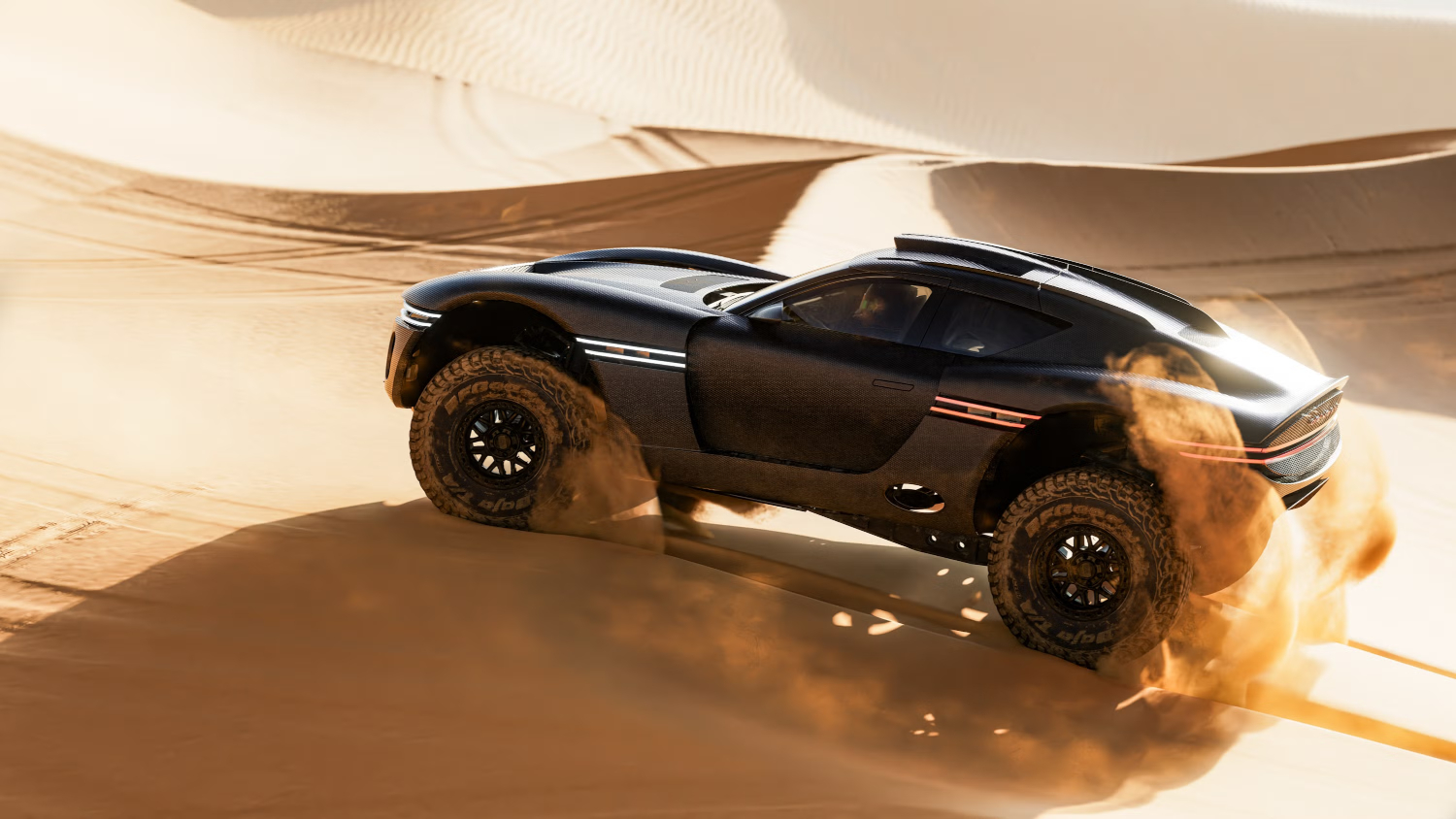
Genesis — the Korean luxury brand recognized for understated sedans and tasteful SUVs — is now seriously exploring whether it can build a 1,100-horsepower desert weapon that looks like it escaped a Mad Max sequel. Hyundai CEO José Muñoz confirmed during the November 2026 Los Angeles Auto Show period that Genesis is working with its designers to bring the X Skorpio toward production, with 2030 as a tentative target. No final approval. No price. No confirmed markets. Just a compelling concept and strong early demand signals — among other vehicles worth waiting for.
This Is Not a Luxury Crossover
The X Skorpio is something far stranger — and far more extreme — than anything Genesis has attempted before.
First revealed in the UAE in January 2026, the concept is built around a tubular frame with an integrated roll cage, draped in carbon fiber, Kevlar, and fiberglass bodywork. Its twin-turbocharged V8 produces approximately 1,100 horsepower and 850 pound-feet of torque — Genesis lists the official figure as 1,115 PS. The central design motif is a black scorpion. High-riding, two-door, and built for brutal desert terrain, the gap between this machine and a Genesis G80 sedan is not a gap — it’s a canyon.
What Genesis has confirmed so far:
- Twin-turbo V8 producing ~1,100 hp and 850 lb-ft of torque; concept revealed in the UAE, January 2026
- Tubular chassis, integrated roll cage, composite bodywork — a U.S.-market version would require substantial engineering to meet applicable safety, crashworthiness, and regulatory requirements
- Genesis reportedly received initial orders shortly after the concept’s UAE debut, per Car and Driver
- Muñoz says Genesis will “give it a try” following strong dealer and consumer response
- 2030 is a tentative production target; no final approval, pricing, or confirmed markets announced

The Bureaucratic Desert Is Harder to Cross Than Any Dune
Getting the X Skorpio road-legal in the United States may prove as demanding as the terrain it was built for.
That is where the concept meets real-world friction. Its race-oriented tubular construction and purpose-built powertrain would require substantial re-engineering to satisfy U.S. crashworthiness and safety standards — a challenge roughly analogous to submitting a rally car for road-registration approval, not unlike what Audi faces teasing a 987-HP Supercar variant toward production. Genesis CCO Luc Donckerwolke originally positioned the vehicle for wealthy Middle Eastern customers, according to Car and Driver. The recent pivot toward U.S. consideration is new and light on specifics.
Muñoz told Automotive News that Genesis is “working with designers to try to put [the X Skorpio] into the market.”
Even if production receives the green light, the final vehicle may not retain the concept’s full output or exact configuration. That 1,100-horsepower figure remains exploratory, not guaranteed.
Genesis Is Playing the Long Game
The X Skorpio is less a commercial sure-thing than a calculated statement of ambition for a brand still defining its ceiling.
This is a halo play. A limited-run desert machine generates the kind of cultural attention that no sedan launch can replicate. The commercial case is narrow: wealthy enthusiasts purchasing an expensive recreational vehicle with limited everyday usability. The demand signal, however, is real — Genesis reportedly drew strong interest from dealers and prospective buyers almost immediately after the UAE reveal, according to Car and Driver.
Genesis has not approved production. The 2030 date remains exploratory. Specifications may shift considerably before any production decision is made. What Muñoz has confirmed is that the brand is genuinely trying — and for a marque that has spent two decades building credibility from scratch, that commitment alone is worth watching.