

Every highway crash scene has a ritual most drivers never think about. A maintenance or emergency vehicle pulls over, doors open, and workers step out beside fast-moving traffic to place cones by hand — one at a time, minutes of exposure, vehicles passing close. Chinese engineers are testing a different approach: mobile cones that deploy from the truck themselves, roll into formation, and close the lane before any worker sets foot on the road.
The technology is in testing across several Chinese developers. It isn’t one unified product or national program. But the demonstrations are real, and the problem they address is well-documented.
Sensors, Not Boots on Asphalt
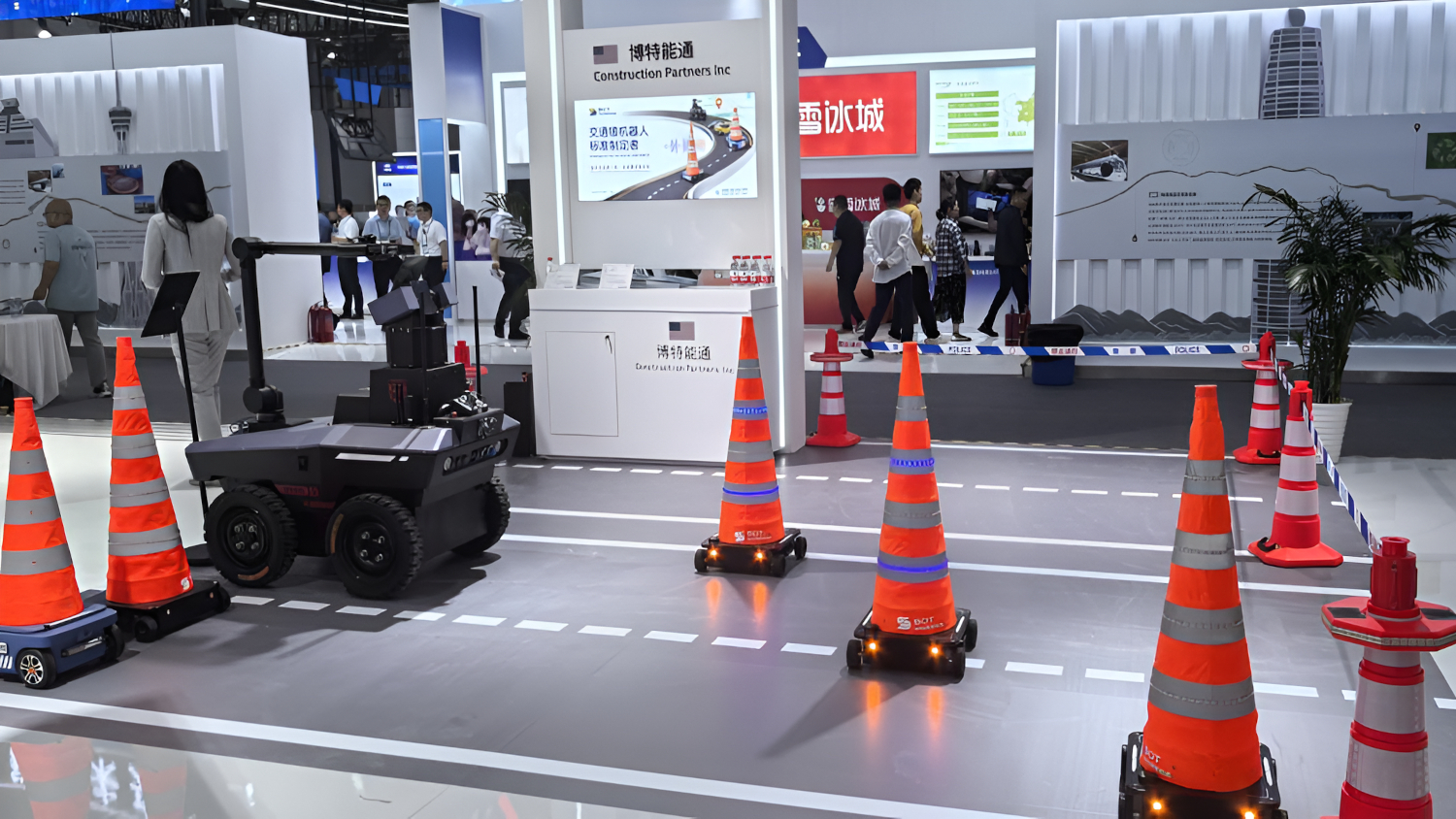
Reported prototypes combine remote control and onboard navigation to position cones without manual placement.
Demonstrated units deploy from a specialized vehicle and navigate into position autonomously. Reported control options include:
- a phone app or dedicated terminal
- 4G/5G remote operation
Some prototypes reportedly incorporate autonomous onboard navigation — using visual recognition, gyroscopes, and radar — to hold spacing and match lane geometry, whether straight or curved. These sensor capabilities are attributed to specific reported prototypes and should not be assumed universal across all designs.
Developer representative Yu Xianchao, quoted by Tide News, says the equipment can complete a highway lane-closure response in under 10 seconds under suitable conditions — a developer-reported capability, not an independently validated result. Traditional manual placement, by comparison, can take several minutes depending on incident scale and cone count.
Units across multiple demonstrated designs reportedly include flashing warning lights and solar-assisted power systems. Some designs can reportedly return to a vehicle or charging base after deployment, though the available evidence does not confirm every prototype can do this independently across all operating conditions.
What Robots Can’t Read
Faster automated deployment protects workers during initial setup, but it does not replace the trained personnel, judgment, and equipment that manage the full scene.
Warning vehicles, signage, and human decision-making about shifting road conditions remain critical elements of any highway incident response. Even the most capable demonstrated prototypes address only the initial cone-placement phase.
Developers behind the reported prototypes include Ningbo Anglin Intelligent Equipment and Hefei Bote Nengtong, among others — separate companies with distinct products, not a coordinated national rollout. No independent, large-scale safety data has been identified in public reporting. Variables that remain unresolved in available evidence include:
- rain, debris, and low-light conditions
- communications loss
- uneven pavement
If you wonder what’s actually at stake here, it isn’t the novelty of cones that move on their own. It’s the workers who would otherwise spend those first, most exposed minutes standing beside live highway traffic — and the possibility that they won’t have to.