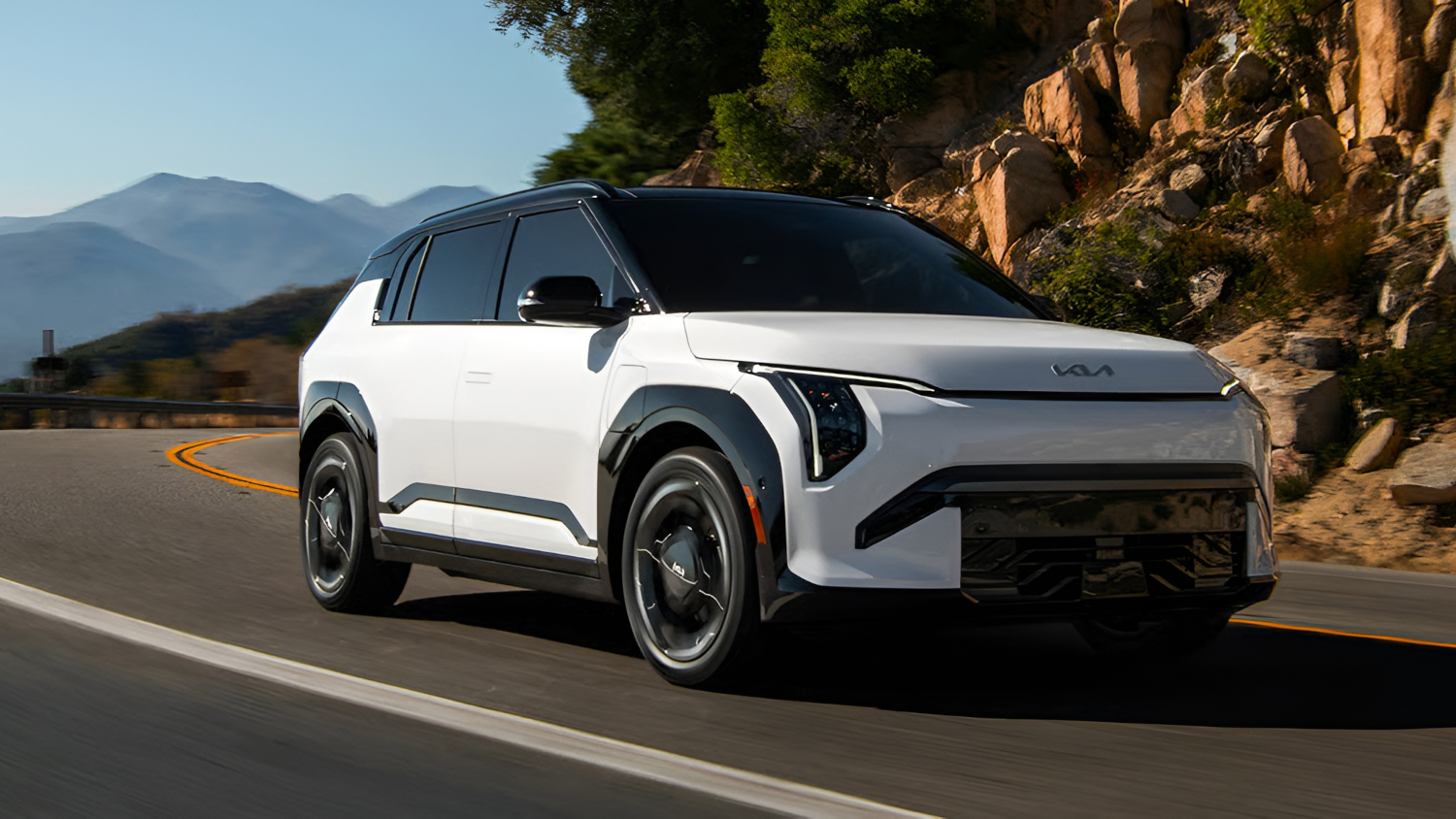


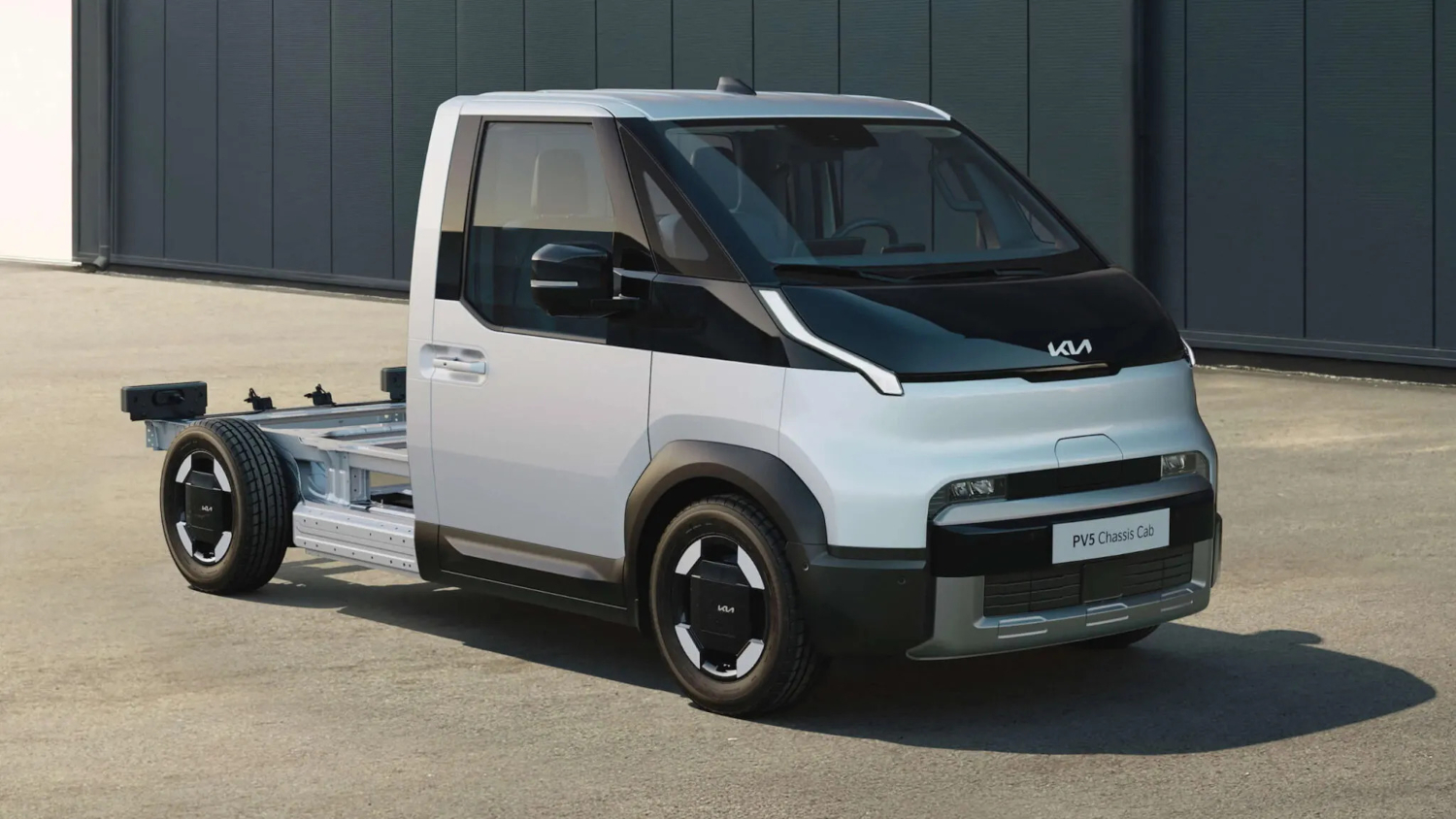
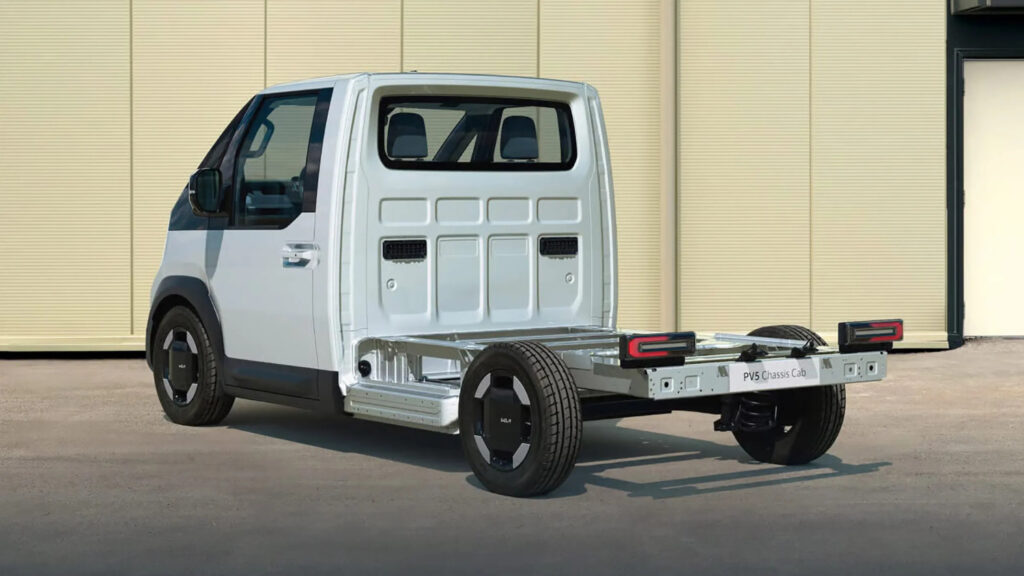
Strip the rear bodywork off a van and you’ve got a blank slate. Kia’s PV5 Chassis is betting that blank slate is worth more than the finished van itself. The idea is straightforward: one electric platform, multiple rear bodies, one set of running costs. Tipper today, refrigerated van tomorrow, food truck if that’s your business. The chassis has a 2,995 mm wheelbase, and its exposed steel frame — complete with taillights mounted directly to the beams — sits ready for whatever a converter bolts on. Whether that promise survives contact with payload math and conversion timelines is a different conversation entirely.
A Platform That Trades Bodywork for Flexibility
One electric architecture underpins everything from tippers to ambulances, making the PV5 Chassis one of the more genuinely versatile commercial vehicles to reach the UK market.
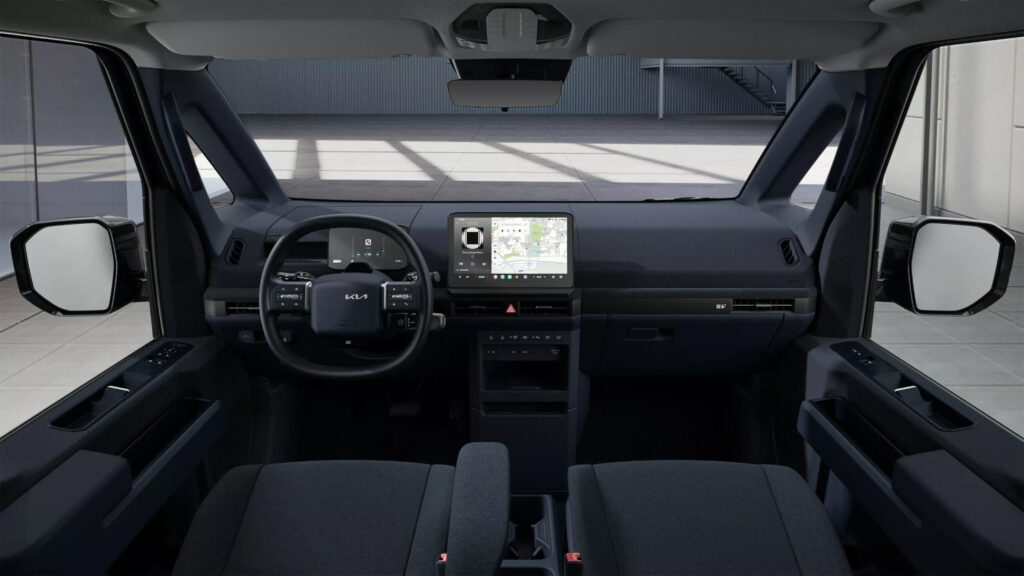
UK buyers currently receive the Long Range specification only — a 71.2-kWh battery, 161 hp, and a Kia-estimated WLTP range of 259 miles. UK conversion reporting indicates charging of up to 120 kW, with a claimed 10-to-80% time of around 30 minutes under suitable conditions. The cab retains key features from the enclosed PV5 versions:
- a 12.9-inch infotainment screen
- a 7.5-inch digital instrument display
- heated seats and steering wheel
- wireless charging
- a driver-assistance package
It’s a proper working vehicle up front. Behind the cab sits exposed chassis rail — and that’s the entire point.
What the Numbers Actually Mean
- Range: Kia estimates 259 miles WLTP, but body weight, payload, and weather will reduce that figure in real-world operation.
- Payload: The ceiling is 1,005 kg — and every kilogram of conversion bodywork counts against that before a single item is loaded.
- Charging: Around 30 minutes to 80% assumes a compatible 120 kW charger nearby and a battery at operating temperature.
- Conversions: TGS Automotive Group, Kia’s UK conversion partner, plans to launch tipper, dropside, and box van options from Q4 2026.
The platform’s maximum payload stands at 1,005 kg — before the conversion body, the kitchen fit-out, the water tanks, and the refrigeration unit have each taken their share.
The Food Truck Angle Is Real – and Still Mostly Concept
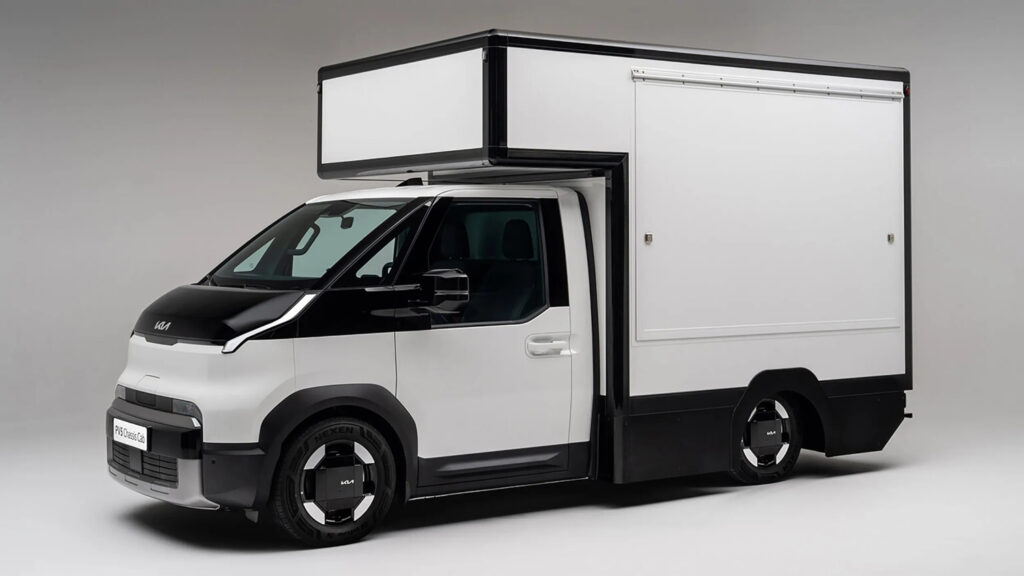
Kia has demonstrated an integrated-kitchen vehicle, but a standardized food-truck product with confirmed pricing and specifications does not yet exist.
Kia has shown an integrated-kitchen demonstration vehicle, positioning the PV5 Chassis as a possible base for mobile food businesses. The potential is visible — the structure is there, the power source is there — but the finished product is not yet on the menu. No production specification, pricing, kitchen equipment list, or confirmed launch date has been established for a standardized food-truck conversion, according to available reporting.
That gap matters considerably for any operator running the numbers. A catering body, serving counter, refrigeration unit, water system, and associated equipment could consume a significant portion of that 1,005 kg payload ceiling before a single portion of food is loaded. Payload headroom, not range, may prove the more pressing constraint.
The PV5 Chassis is modular, capable, and clearly designed with multiple commercial roles in mind. For a food-truck operator weighing up the platform, however, the practical checklist remains long: confirmed conversion specifications, realistic post-fitout payload, and a fast charger that’s actually on the route. The blank slate is genuinely interesting. What gets built on it is the real story.