

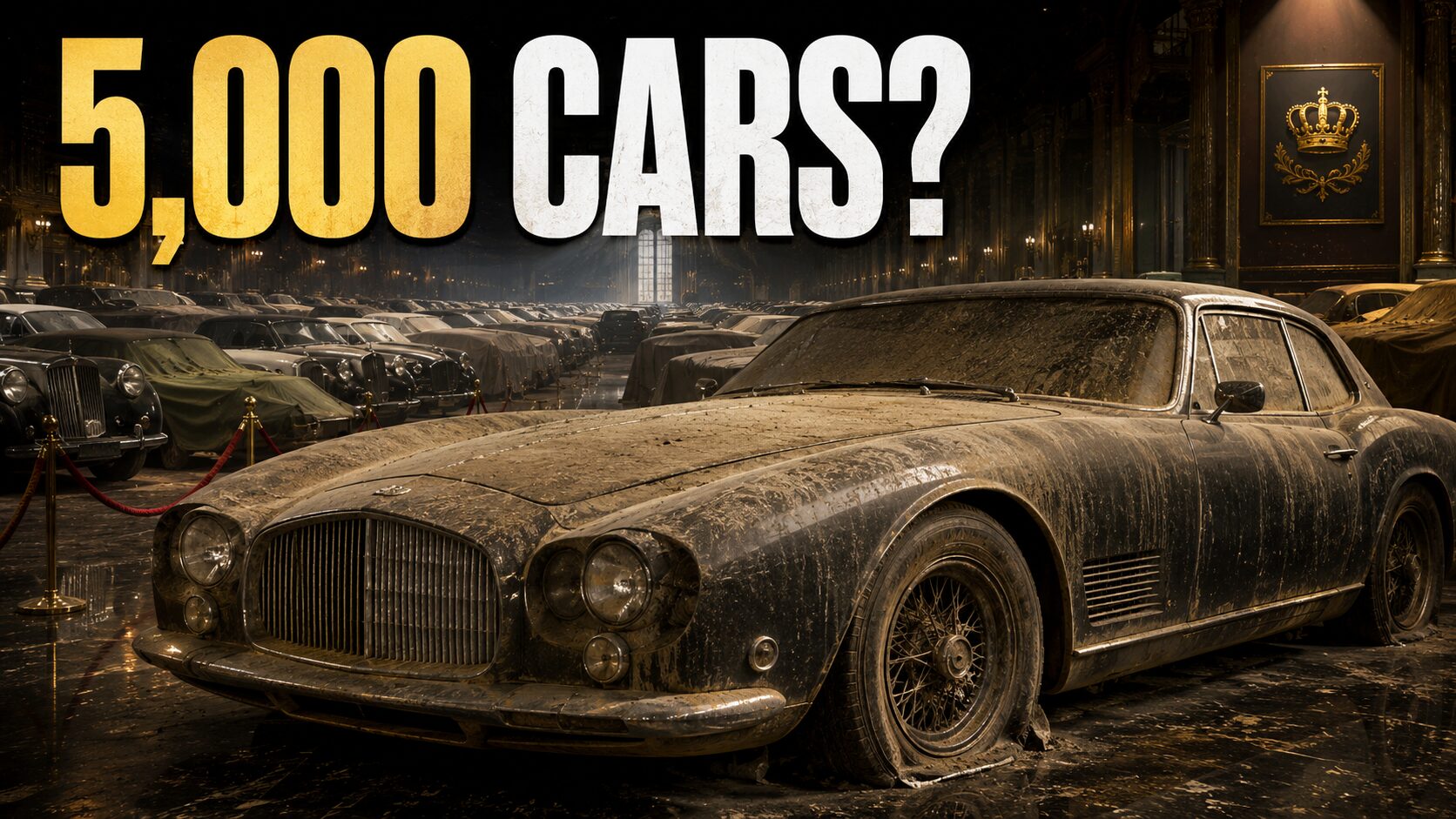
One royal garage reportedly holds over 5,000 vehicles—a figure that makes even Jay Leno’s 340-car lineup look modest. The difference between a curated collection and a full-blown automotive obsession isn’t subtle: it’s measured in sacrifices, storage facilities, and the willingness to let rare metal sit untouched for decades. These five historical collections reveal what happens when passion for cars collides with unlimited ambition and zero restraint. The architects behind these hoards didn’t just love cars—they built monuments from steel and rubber that still shape collector culture today.
1. Michel Dovaz’s “Sleeping Beauties”

Barn-find patina became high art when this wine critic refused to restore his treasures.
Swiss wine critic Michel Dovaz started buying old cars in the 1950s and never stopped, eventually parking 50–60 pre-war and early post-war luxury machines—Bugattis, Lancias, Alfa Romeos, Delahayes—in barns and sheds south of Paris. Some sat motionless for three decades under tarps, chassis rusting into the dirt while birds nested in engine bays. Dovaz rejected restoration, letting time sculpt each car into an unvarnished artifact.
German photographer Herbert Hesselmann documented the collection in 1983, revealing Ferraris and Hispano-Suizas that looked like automotive archaeology. That refusal to polish away history created a new collector aesthetic: originality over perfection, patina over paint. The “Sleeping Beauties” nickname stuck, and subsequent auctions dispersed the cars worldwide—each one carrying Dovaz’s fingerprints of benign neglect.
2. Tom Hartley Sr.’s Untouchable Stock
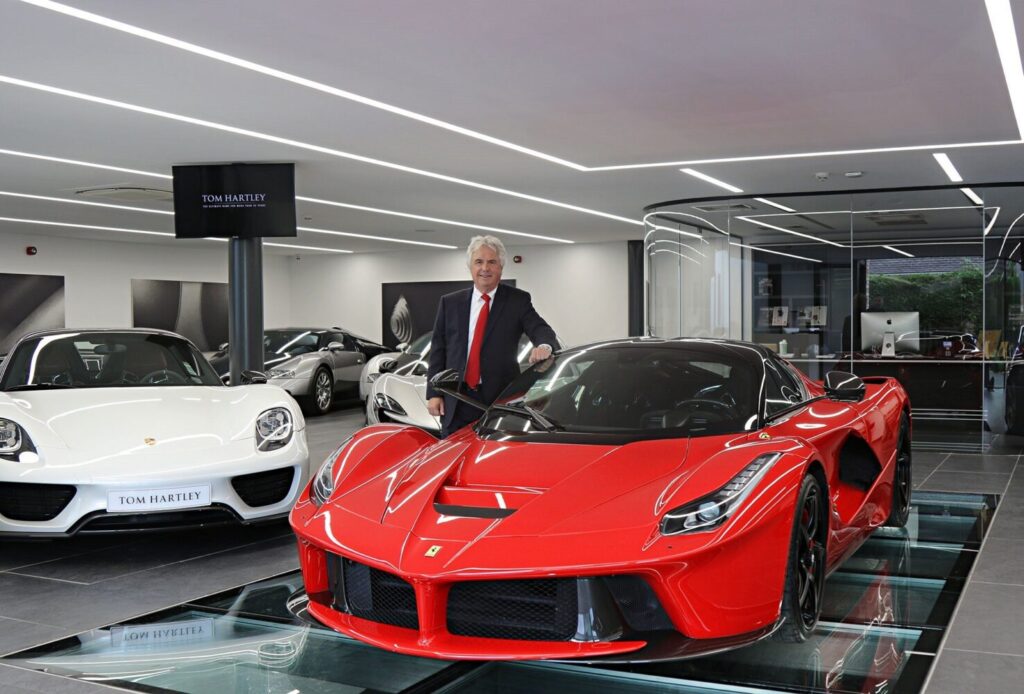
Even millionaire buyers couldn’t pry certain cars from this self-made dealer’s personal vault.
British luxury dealer Tom Hartley Sr. sold his first Porsche at age 11 and became a self-made millionaire by his mid-teens through relentless trading. Decades later, his Derbyshire showroom handles multimillion-pound exotics—Rolls-Royces, Bentleys, Bugattis, McLaren F1s—but not everything carries a price tag. Hartley maintains a distinct private collection worth tens of millions, pulled from regular inventory and locked away as “own stock.” Stories circulate of buyers arriving to purchase a car, only to be turned away because Hartley decided overnight he couldn’t part with it.
His son, Tom Hartley Jnr., runs a separate blue-chip operation that underscores the family’s grip on high-end collecting. That tension between profit and attachment—holding a 250 GTO when seven figures are on the table—defines obsessive collecting better than any auction catalog.
3. Harold LeMay’s 3,000-Vehicle Sprawl
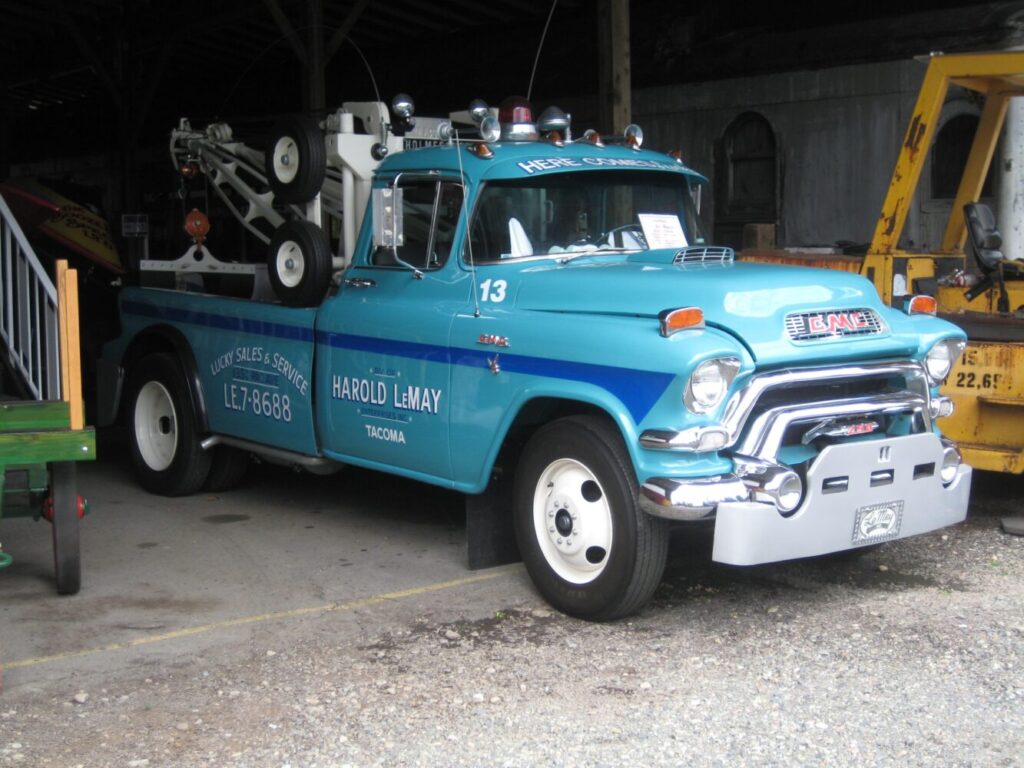
One man turned Tacoma into an automotive graveyard that eventually became America’s largest car museum.
Tacoma waste-management entrepreneur Harold E. LeMay accumulated an estimated 3,000+ vehicles by his death in 2000—Model Ts, muscle cars, fire trucks, farm equipment, motorcycles, military rigs—scattered across properties in Spanaway and Tacoma. Fields, barns, and custom warehouses overflowed with metal. LeMay’s wife, Nancy, joked that one more purchase would force her to sell the kitchen table, but he kept buying anyway, treating each acquisition as a snapshot of American road culture.
Unlike trophy hunters chasing Ferraris, LeMay hoarded everyday machines that told working-class stories—delivery vans, agricultural tractors, forgotten sedans. He memorized the history of nearly every vehicle, functioning as a personal vault. After his death, the collection became the foundation for LeMay – America’s Car Museum, which positions itself among the largest automotive museums in North America. The scale proves that obsession doesn’t require exotic badges—just an inability to say no.
4. Sultan of Brunei’s Royal Excess

Thousands of cars, hundreds of Rolls-Royces, and a decade of tropical neglect.
Sultan Hassanal Bolkiah’s Brunei royal collection reportedly peaked at 5,000–7,000 vehicles valued around $4–5 billion, including hundreds of Rolls-Royces and Ferraris, plus multiple McLaren F1s. Many were one-off commissions: the Pininfarina-designed Ferrari FX shooting brake, bespoke Bentley Javas, custom Rolls-Royce limousines never catalogued for public sale. The sheer concentration—over a dozen F1s represents roughly 10% of total production—turned the collection into automotive mythology.
But economic shifts in the late 1990s triggered neglect. Photos from the early 2000s showed Ferraris on flat tires and McLaren F1s baking in tropical humidity, paint oxidizing under warehouse dust. Discreet sales followed, dispersing unique Brunei cars into private collections worldwide. The lesson cuts both ways: monumental scale demands constant vigilance, and even royal wealth can’t outrun entropy when attention drifts. A car that never sees asphalt doesn’t truly live—it just occupies space until the next owner rescues it.