

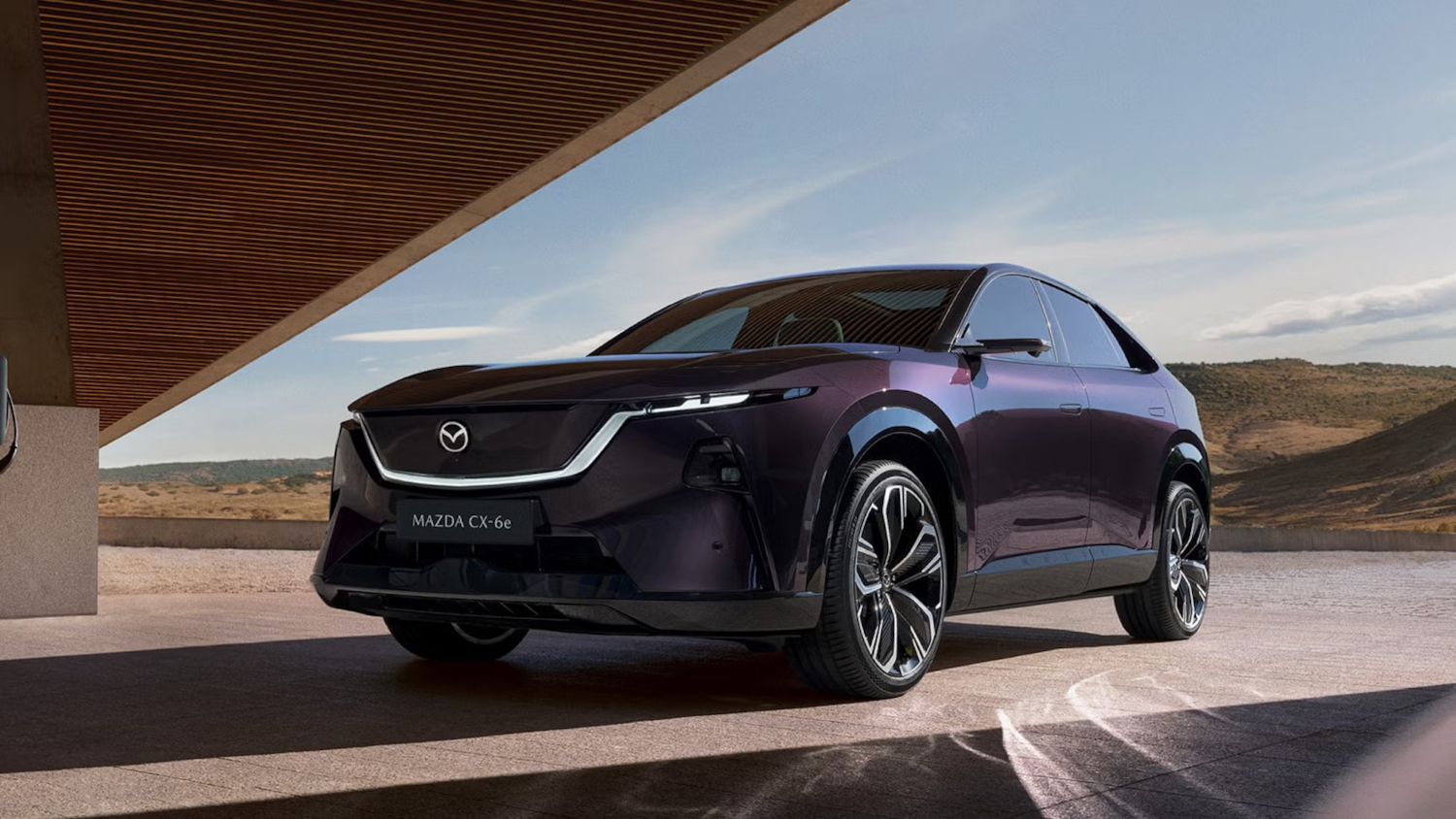
Consider the legitimate problem first: electric vehicles run nearly silent at low speeds, creating a genuine hazard for pedestrians and cyclists who may not detect an approaching car without audible cues. Regulators and manufacturers have wrestled with this for years, producing requirements for acoustic vehicle alert systems across multiple markets.
Mazda’s answer in the CX-6e was an exterior speaker — confirmed in Australian market materials and the European configurator — capable of preset alerts, typed text converted to speech, and live voice broadcast. On paper, a driver could tell a distracted cyclist “passing on your left” without leaning on the horn. Useful in theory.
According to Car and Driver, Australian journalists stress-tested the system and found something Mazda likely didn’t intend to advertise: the interface reportedly accepts insults and profanity, reads them aloud through the exterior speaker, and applies no apparent content filter. Whatever gets typed, the car says.
What the CX-6e Actually Is
Solid EV credentials sit underneath a feature that’s attracting attention for entirely the wrong reasons.
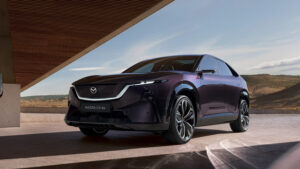
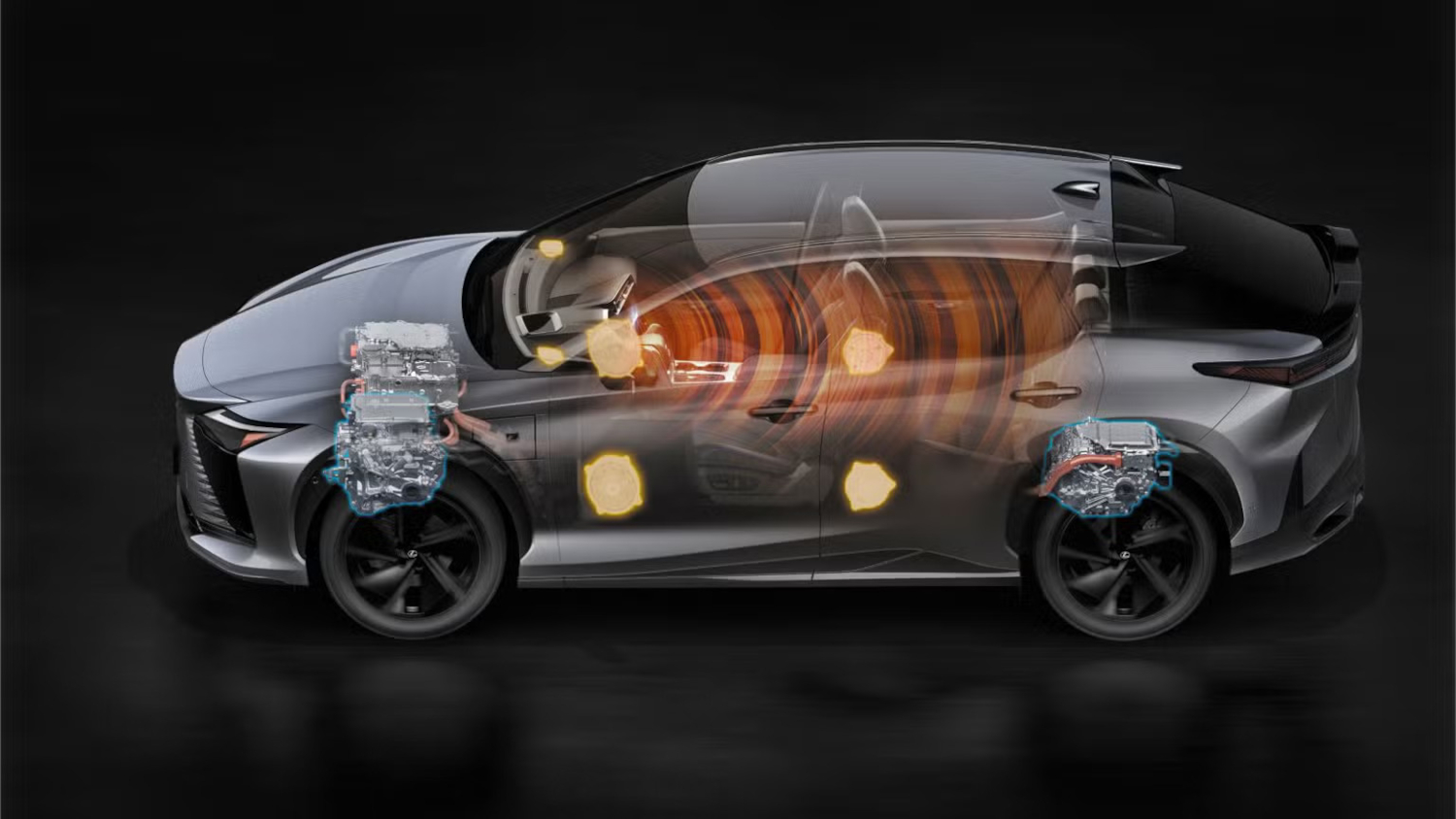
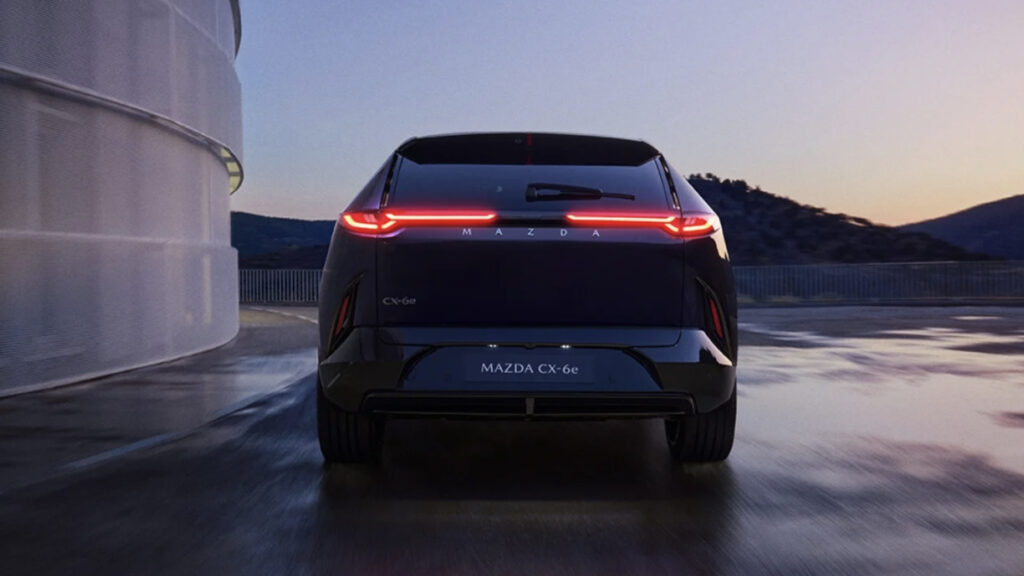
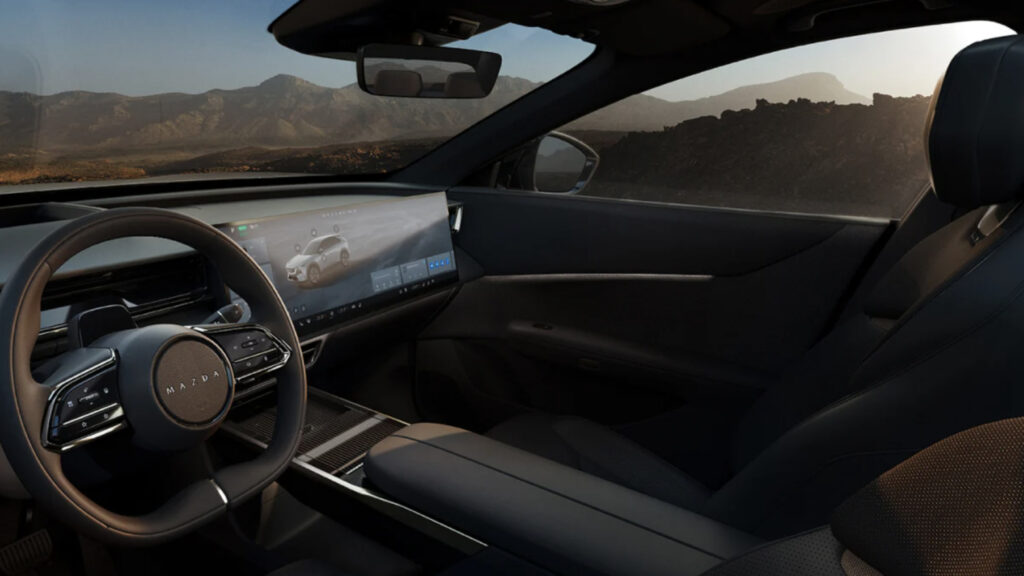
Before this becomes a one-note story about a megaphone on wheels, the vehicle beneath the headlines deserves a proper introduction. The CX-6e is a midsize electric crossover built around a 78-kWh lithium-iron-phosphate battery with rear-wheel drive, producing up to 190 kW and 290 Nm of torque — figures confirmed by Mazda Australia. Inside, a 23-speaker audio system handles cabin entertainment. Outside, a 20-watt speaker confirmed in both Australian and European market materials handles everything else.
Reported capabilities — per Car and Driver, not Mazda’s own equipment descriptions — include:
- Preset alerts
- Typed text-to-speech conversion
- Live driver voice broadcast
That distinction matters: the speaker’s existence is verified; the full scope of its software behaviour is reported, not officially documented by Mazda.
A Megaphone With Plausible Deniability
No confirmed content filter, no Mazda statement, and no software update have emerged — leaving an open mic pointed at the street.
A pedestrian-warning system that reportedly reads profanity aloud is less a safety feature than a public address system with a charitable origin story. The gap between the intended use and the demonstrated use is roughly the width of human road frustration — and anyone who has sat in gridlock on a Friday afternoon knows that gap is considerable.
Mazda has not confirmed any content filtering, software restriction, or over-the-air update addressing the issue — though reports speculate an update remains possible. Feature specifications may also differ between Chinese, Australian, and European builds, meaning not every CX-6e owner necessarily has identical text-to-speech capabilities. That is a reasonable caution based on differing market materials, not a confirmed technical difference.
What it doesn’t resolve is the broader question: connected vehicles keep accumulating features that depend entirely on driver restraint to function as intended. The CX-6e’s speaker is a small, loud illustration of what happens when that restraint doesn’t show up.