

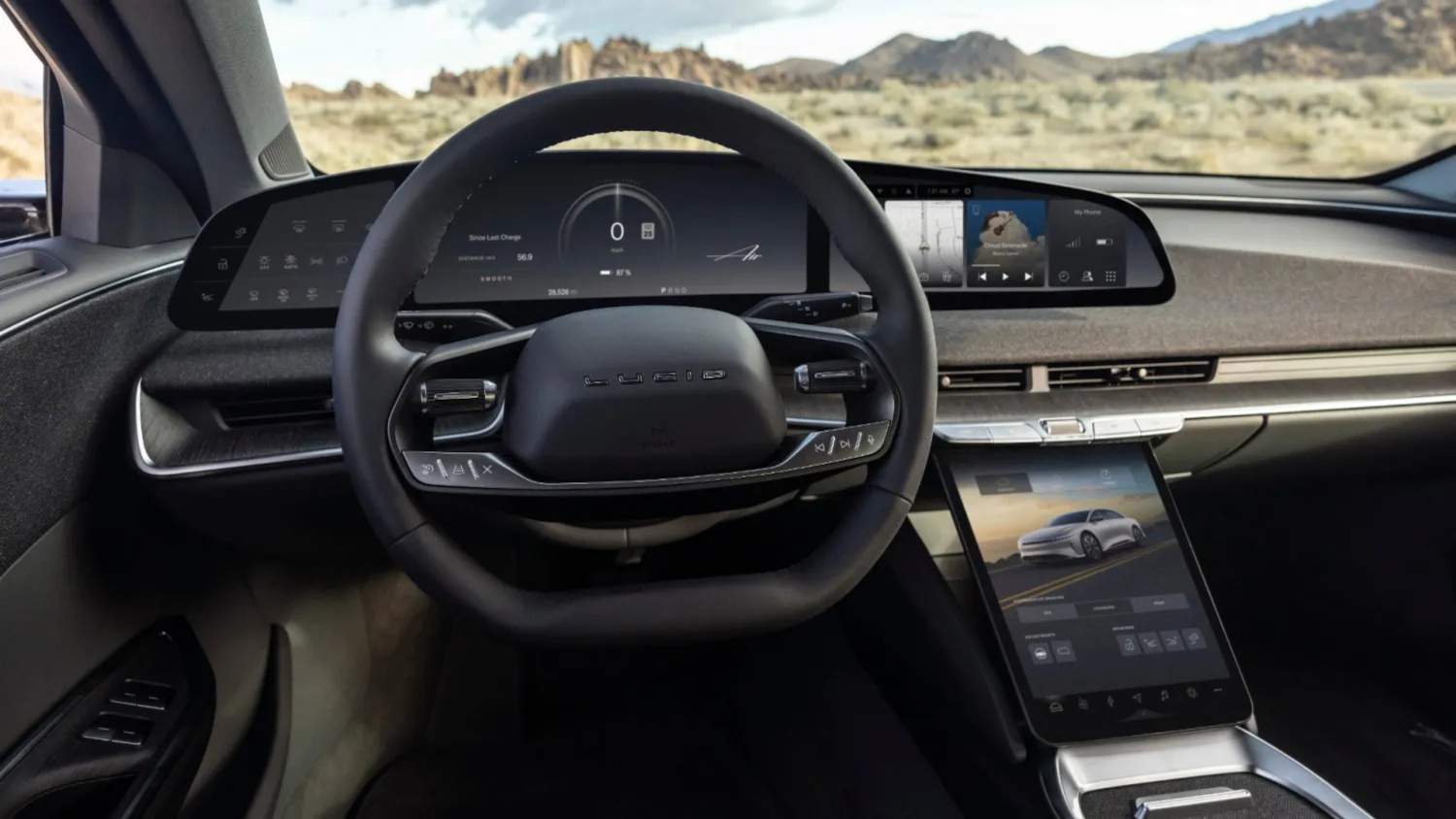
The software-defined car was supposed to mean your vehicle gets better over time, much like the phone already in your pocket. Lucid’s Air UX 3.0 — rolled out September 29, 2026, as part of software version 2.11.0 — largely delivers on that idea. The redesigned interface brings the Lucid Gravity SUV’s card-based, swipe-gesture system to the Air sedan. Own a 2025 or newer Air, and it arrives over the air, without a separate hardware charge. Own a 2022, 2023, or certain 2024 model, and a new infotainment processor comes first — at $950 installed in the U.S., taxes not included. The asterisk is real.
What Actually Changed
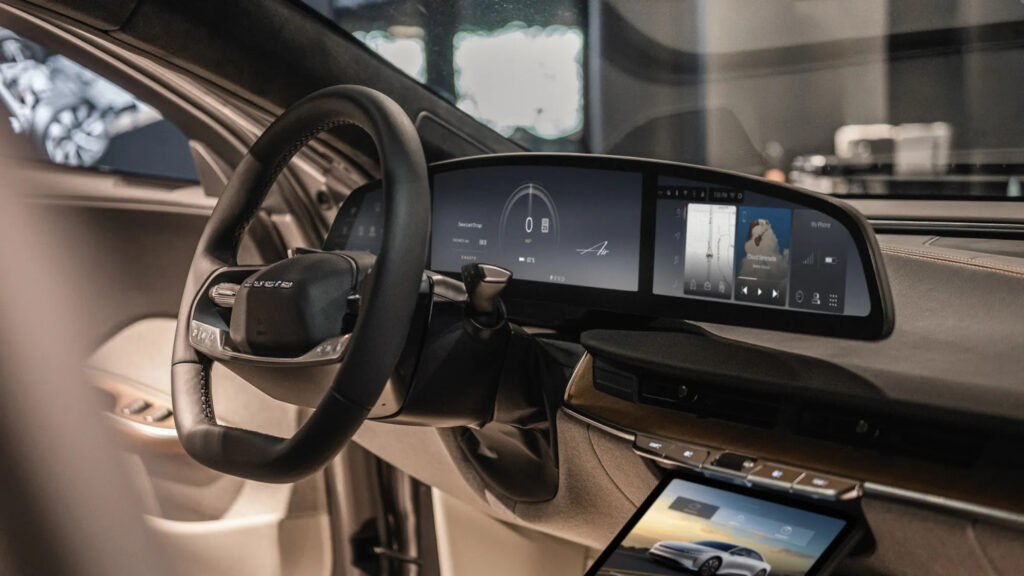
The redesign rethinks how the Air’s three-panel display handles everyday tasks, though real-world performance awaits independent testing.
Customizable cards now populate the Right Cockpit Panel of the Air’s 34-inch curved display, surfacing vehicle controls, calls, saved routes, and nearby charging stations without the usual menu archaeology. Swipe down from the top of the center Pilot Panel and Quick Controls appear — no nested settings required. The interaction model borrows the same swipe gestures anyone who has used a smartphone for the past decade will recognize immediately. Temporary cards populate the Home screen on the right side of the display; tap one and the full application opens on the Pilot Panel. Whether the redesign is genuinely faster in practice remains unconfirmed, according to available reporting — no independent testing had been completed at rollout.
The Details That Matter to Owners
Five changes shape the day-to-day ownership experience across connectivity, routing, and security.
Older Air owners face a clear cost decision. Model-year 2025 and newer vehicles receive UX 3.0 over the air via software version 2.11.0, with no additional hardware charge. Model-year 2022, 2023, and some 2024 models require a processor upgrade at $950 installed in the U.S.; Lucid said pricing for other markets would be provided separately. Eligibility within the 2024 model year varies by existing hardware configuration. Tesla Owners facing similar OTA software constraints will find this cost decision familiar.
Beyond the access question, the update delivers meaningful changes across three areas:
- EV routing now lets drivers set charging network preferences, adapter compatibility, and a minimum battery buffer at arrival.
- Profile management adds PIN protection, faster user switching, and primary-profile control over which keys are linked to which user.
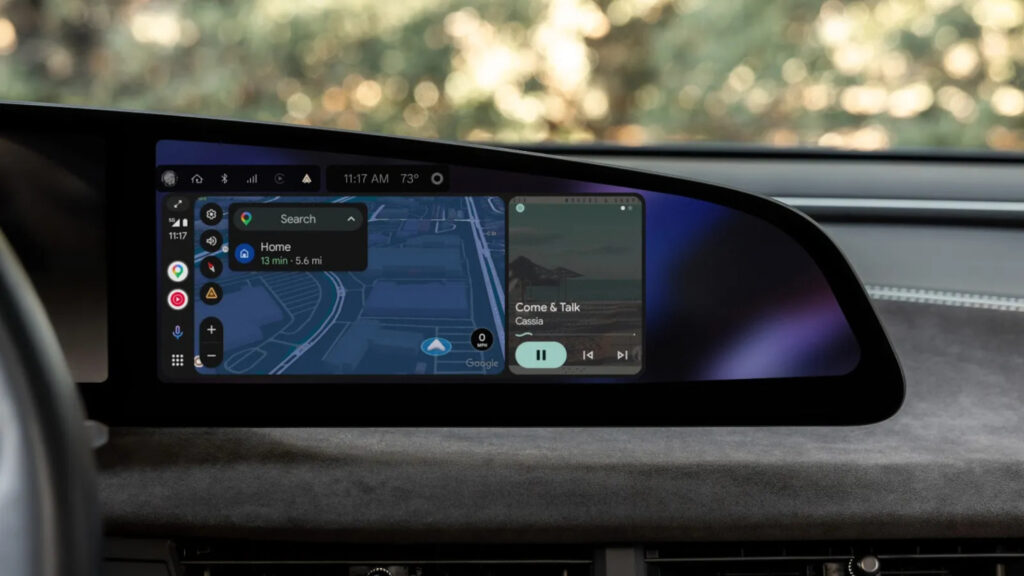
- Apple CarPlay and Android Auto gain expanded display real estate on the Right Cockpit Display, multitasking support so smartphone mirroring stays visible during music or call management, and both wireless and USB connections.
Lucid describes Air UX 3.0 as a redesigned experience drawn from the Gravity’s interface. No independent owner assessments were available at rollout.
Gravity’s Shadow
Air UX 3.0 narrows the software distance between the Air and the Gravity — the hardware distance stays exactly where it was.
The update closes the interface gap between the two vehicles through shared design principles:
- Card-based navigation
- Swipe gestures
- Centralized quick controls
- A stronger emphasis on personalization
Vehicle capability and underlying hardware remain separate matters entirely. Navigation favorites and automatic dark mode round out the feature list, according to available reporting on Lucid’s release details. If you own a 2024 Air, confirm your specific vehicle’s eligibility directly with Lucid before scheduling a service appointment — hardware requirements vary within that model year.