

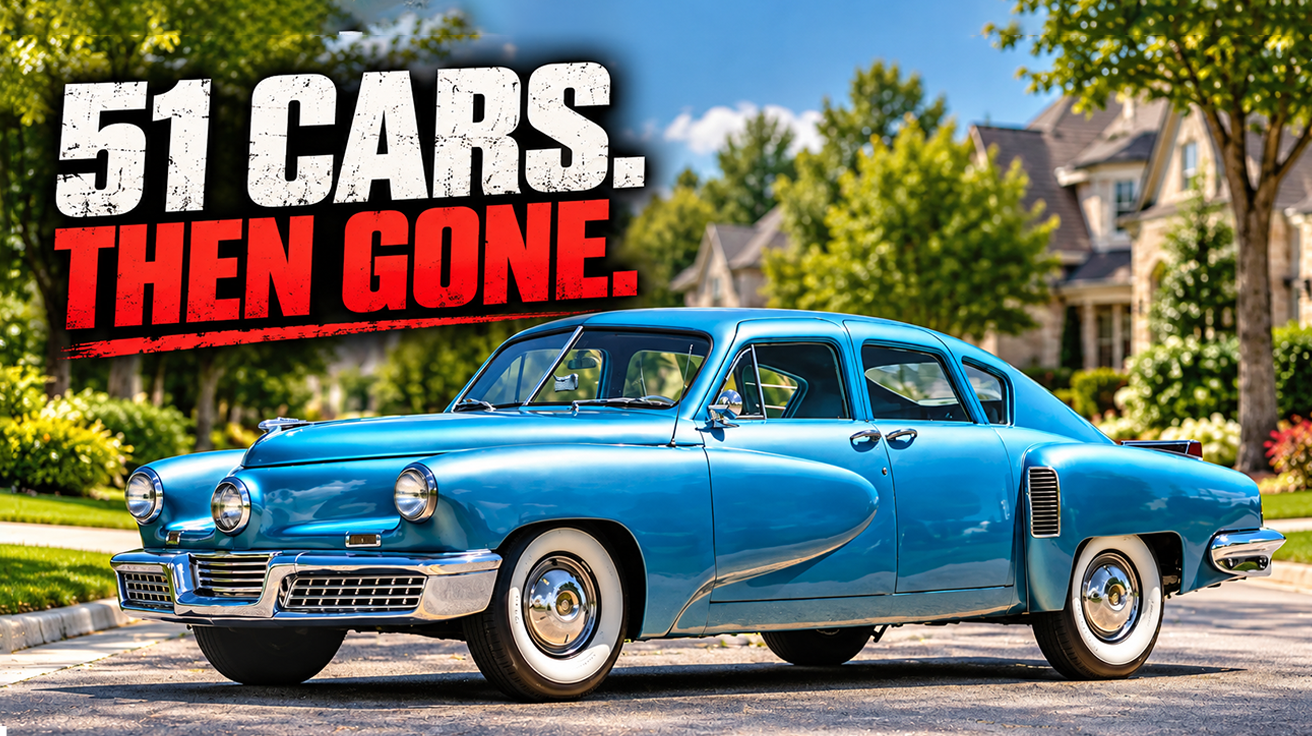
The automotive graveyard holds names that once promised the world, only to end as footnotes. Understanding the final vehicles produced by defunct American automakers offers a raw look at engineering ambition crashing into market realities. Each of these machines represents a company’s desperate gambit, a roadside diner suddenly shuttered on what was supposed to be a thriving highway. These cars embody that final, irreversible moment for an entire brand, revealing the unforgiving nature of industry where even grand designs can unravel. Prepare to examine the machines that truly signify when the road ran out.
1. Tucker 48
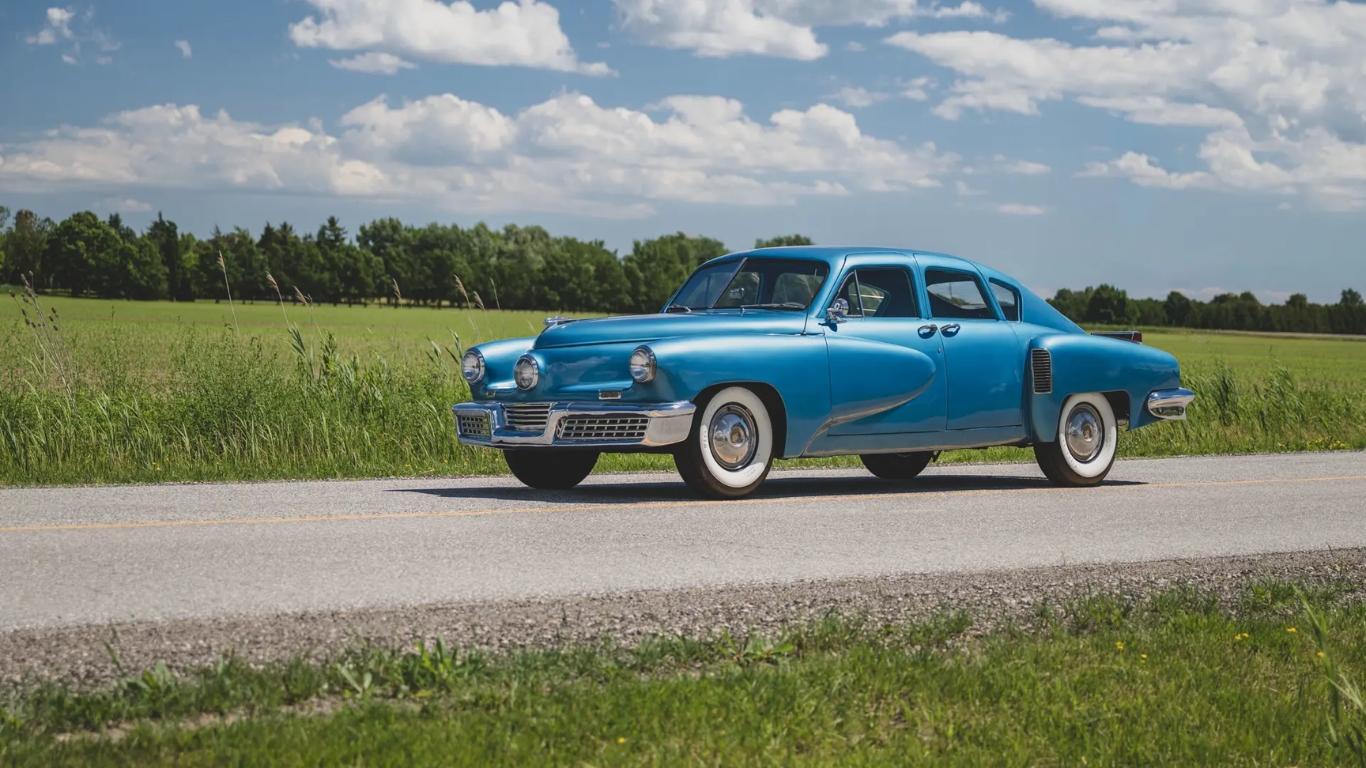
Engineering genius couldn’t outrun legal and financial roadblocks.
Only 51 total cars rolled off the line before the Tucker Corporation effectively collapsed on March 3, 1949. This vehicle sported a rear-mounted Franklin O-335-derived flat-six engine generating 166 horsepower. Standard disc brakes offered stopping power that felt otherworldly in 1948. The pop-out windshield, designed to eject during a collision, showcased forward-thinking safety engineering.
An early owner carving through a pre-interstate backroad experienced power and security that far outstripped contemporaries. The Tucker arrived with pioneering features years ahead of its time, a brief meteor strike against Detroit’s conservative post-war establishment. Chassis variations exist among the surviving examples, each a testament to protected collector status rather than daily utility. Rolling up to a Cars and Coffee in one of these would still break every internet connection within a 50-foot radius.
2. Kaiser Manhattan
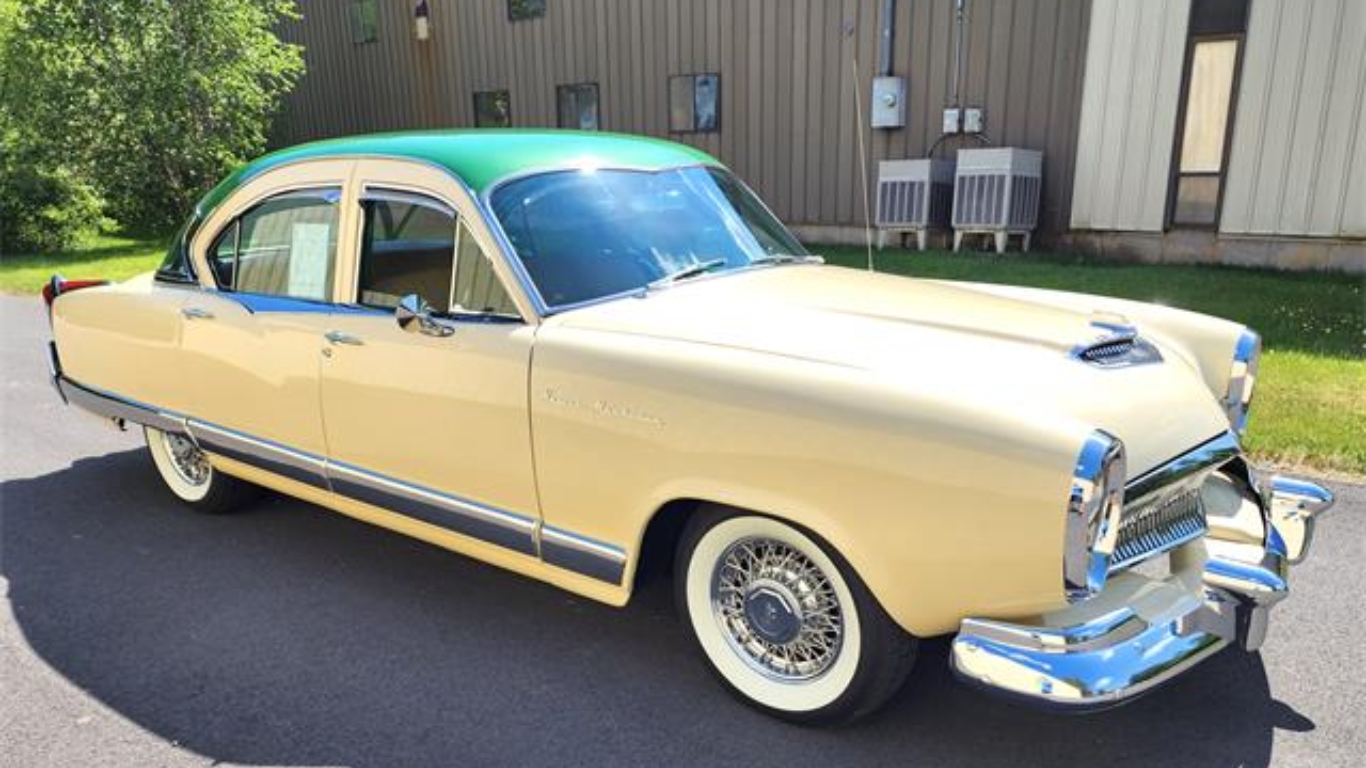
A supercharged final punch when most brands fade with a whimper.
The 1955 Kaiser Manhattan, the last American-market passenger car for the company, rolled off the line with defiance rarely seen. A supercharged 226.2 cubic-inch inline-six engine, boosted by a McCulloch VS57 centrifugal supercharger, made 140 hp. Cruising down a highway, its power surprised many, a genuine sleeper car in a world of growing horsepower.
Only 1,231 supercharged units saw production, with 1,021 shipped to Argentina to continue as the Kaiser Carabela. The Manhattan’s distinctive wraparound windshield with its ‘widow’s peak’ offered a glimpse into forward-thinking design. Despite surprising grunt, Kaiser Motors faced an uphill battle. This was the last American-built Kaiser, a final, proud technical flex before the lights dimmed on its domestic assembly line.
3. Gaylord Gladiator
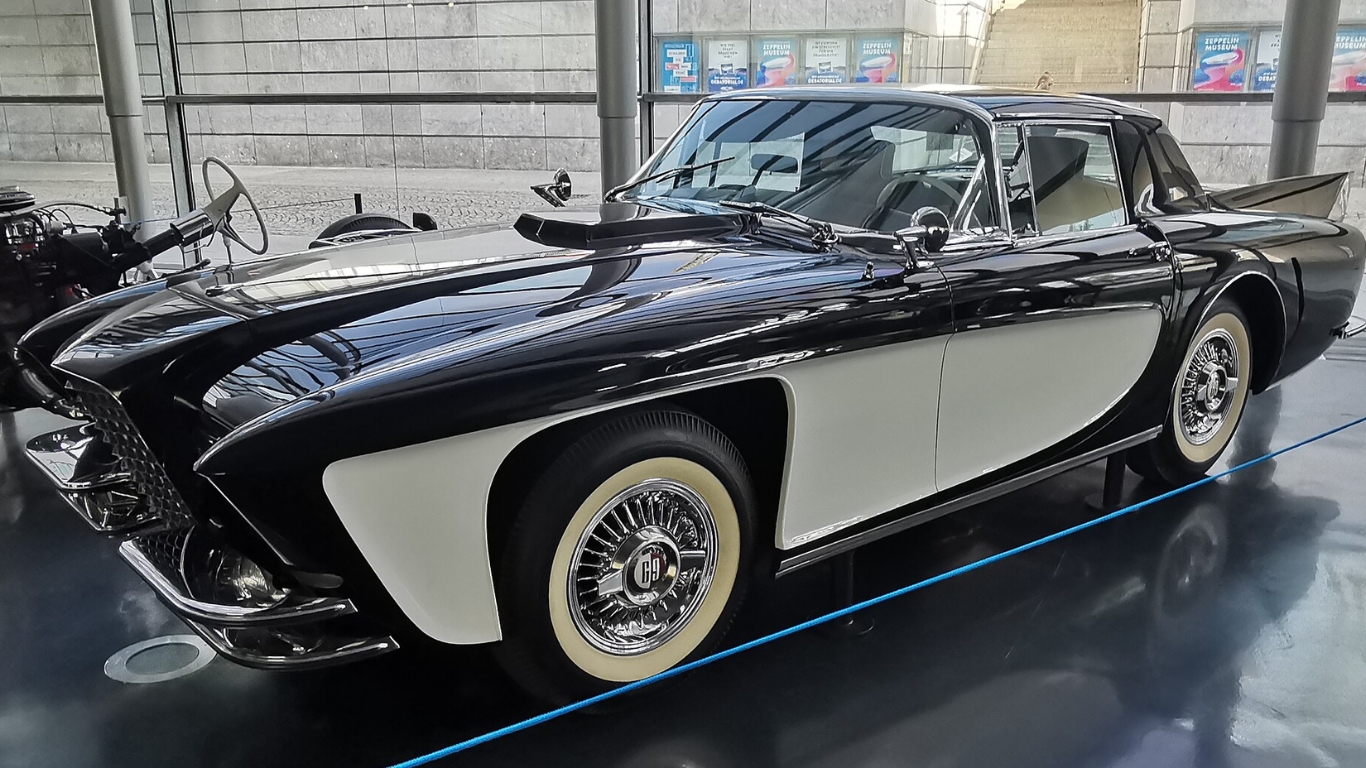
Bespoke luxury for the few who viewed production lines as personal affronts.
Only three cars were ever built, making the Gaylord Gladiator as elusive as verification itself. Designed by Brooks Stevens, this luxury sedan was commissioned for the discerning few who wanted rolling statements, not mere transport. Its heart, a Cadillac 365 cubic-inch V8 delivering 305 hp, pulled like a freight train.
An initial price tag around $17,500 in the mid-1950s positioned the Gladiator as an audacious American luxury statement. The cabin offered power windows, power seats, and an interior wrapped in leather and exotic wood. Today, this kind of bespoke craftsmanship commands over $200,000, a collector’s trophy proving true luxury ignores trends.
4. 1956 Packard Patrician
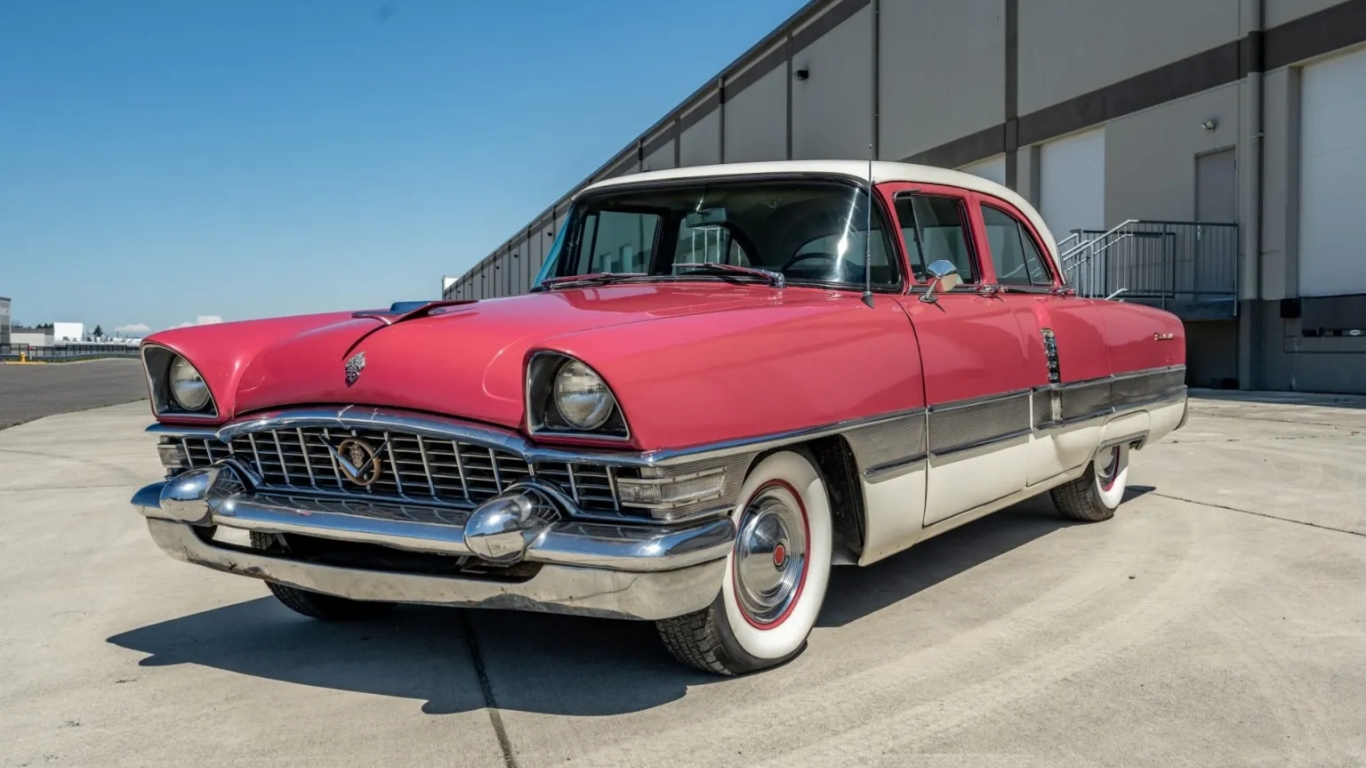
The last gasp of true Packard grandeur before badge engineering arrived.
Packard’s Patrician sedan for 1956 marked the final Detroit-built senior model, a gasp of American luxury once a peer to Rolls-Royce. This top-line four-door housed Packard’s own 374 cubic-inch V8, the era’s largest American V8. It delivered 290 hp in Patrician trim, with 310 hp in the Caribbean.
Twin-Ultramatic transmission and torsion-level suspension offered a ride as smooth as fresh blacktop. The end arrived on June 25, 1956, when the last Packard, a black Patrician, rolled off the Conner Avenue line. This felt like a final curtain call, ending an era where luxury meant bespoke engineering. Later ‘Packard-bakers’ never matched that original glory.
5. 1957 Hudson Hornet
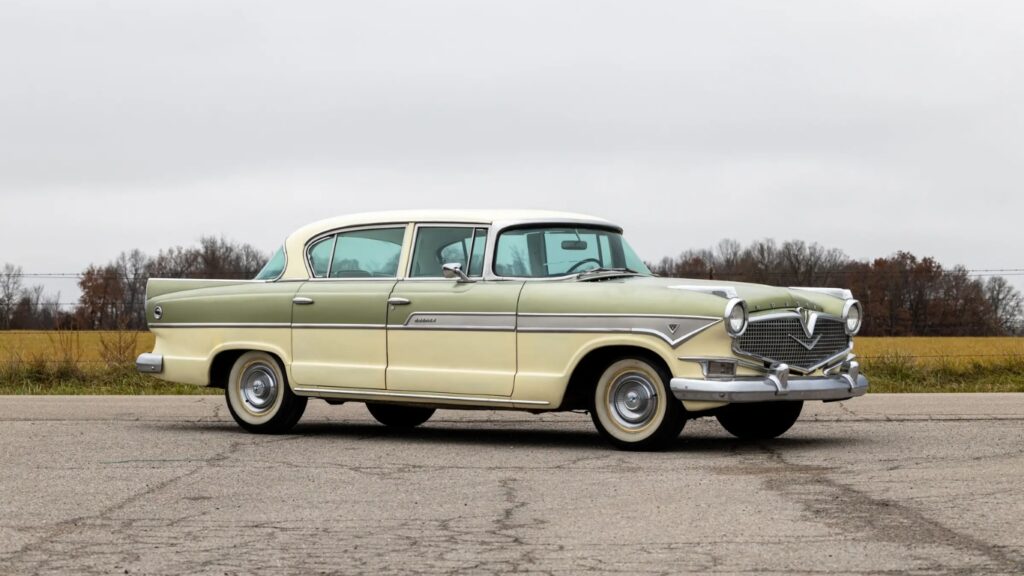
Corporate mergers diluted distinct identity into rebadged mediocrity.
Sales for the 1957 Hudson Hornet reached only 4,100 units, stark illustration of how corporate mergers often dilute distinct brand identities. Following the merger with Nash-Kelvinator to form American Motors Corporation (AMC), the Hornet shed its unique personality. This final iteration, built on a 121.25-inch wheelbase, felt less like evolution and more like forced assimilation.
This last Hudson rolled off the line powered by AMC’s new 327 cubic-inch OHV V8, churning out 255 hp and 345 lb-ft of torque. Unitized construction and coil springs at all four corners came standard, offered as either a four-door sedan or the elegant Hollywood hardtop coupe. Despite modern specifications, seasoned Hudson enthusiasts knew this wasn’t the real deal. Driving one felt like a detour through someone else’s playlist.
6. 1957 Nash Ambassador
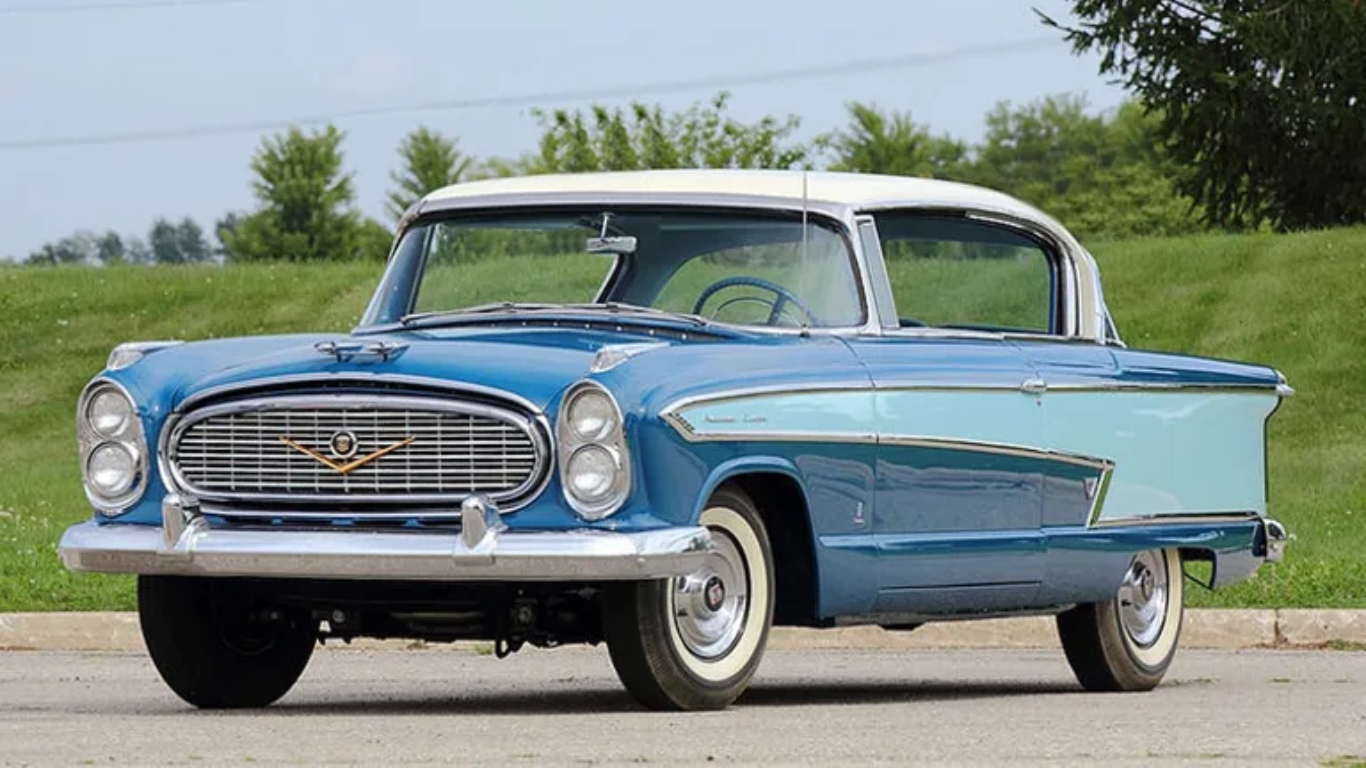
Shared platforms couldn’t erase Nash’s distinct comfort-oriented character.
1957 marked the final model year for Nash. The Ambassador, sharing basic structure with the Hudson Hornet under AMC-era platform sharing, retained Nash styling cues. Quad headlights, arranged vertically, became standard equipment—a styling cue soon to define American cars. This was a notable feature for a brand nearing its end.
The Ambassador used AMC’s 327 cubic-inch V8 delivering 255 hp and 345 lb-ft of torque, providing comfortable cruising power. Smooth, comfortable ride quality and rational engineering made it a trusted companion for the long haul. Production remained modest, with fewer than 3,600 units for large Nash cars that year. Nash exited the automotive landscape in 1957 with quiet practicality.
7. Powell Sport Wagon / Pickups
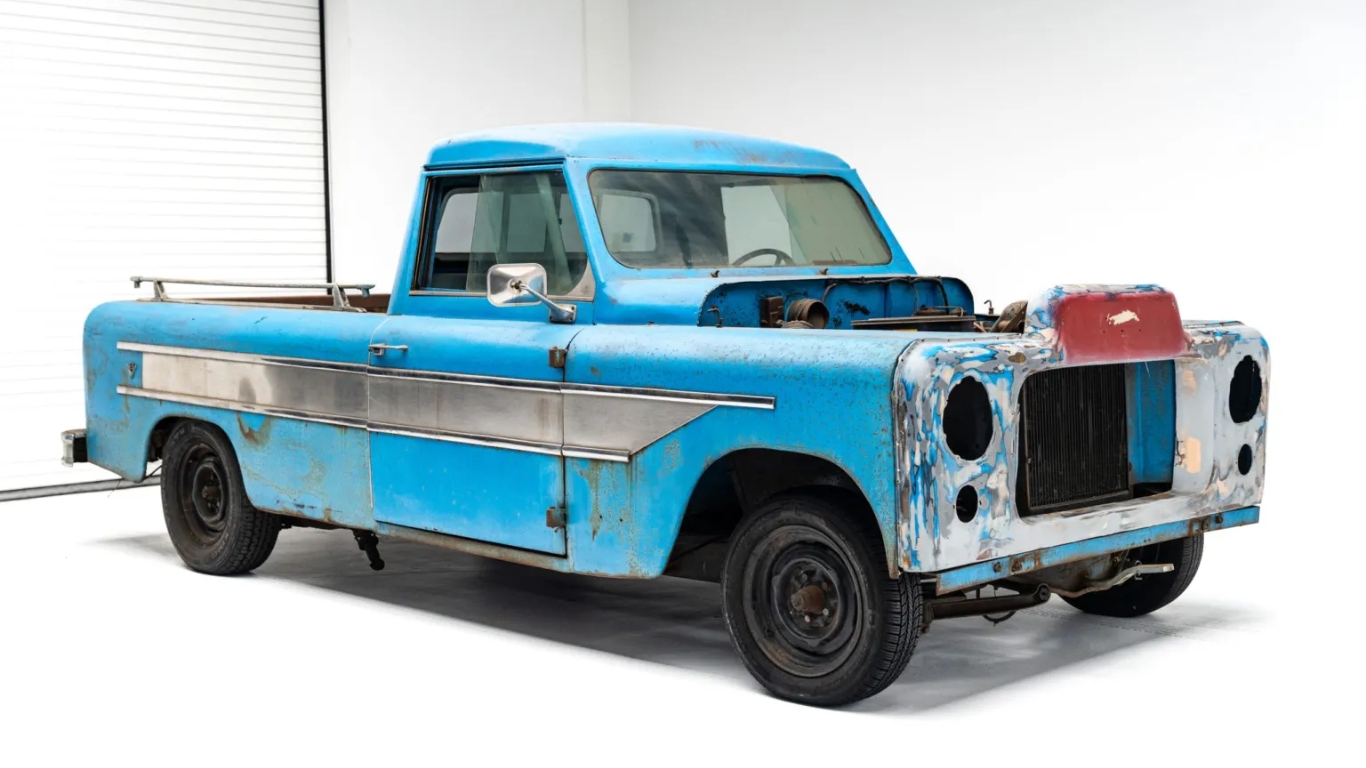
Resourceful ingenuity turned junkyard Plymouth chassis into functional workhorses.
Approximately 1,500 vehicles were produced by Powell Manufacturing Company between 1954 and 1957. These trucks and wagons, built from refurbished 1940-41 Plymouth chassis from junkyards, prioritized rugged capability. Powell rebuilt them with reconditioned Plymouth flathead inline-six engines and three-speed manual gearboxes.
A signature feature was an optional long storage tube in the bed, a pull-out drawer perfect for fishing rods or rifles. Ranchers could easily access gear without digging through packed beds. The program hinged on a finite supply of old Plymouth chassis. When that supply dried up, the entire enterprise simply ended.
8. 1958 Packard Sedan (Studebaker-based)
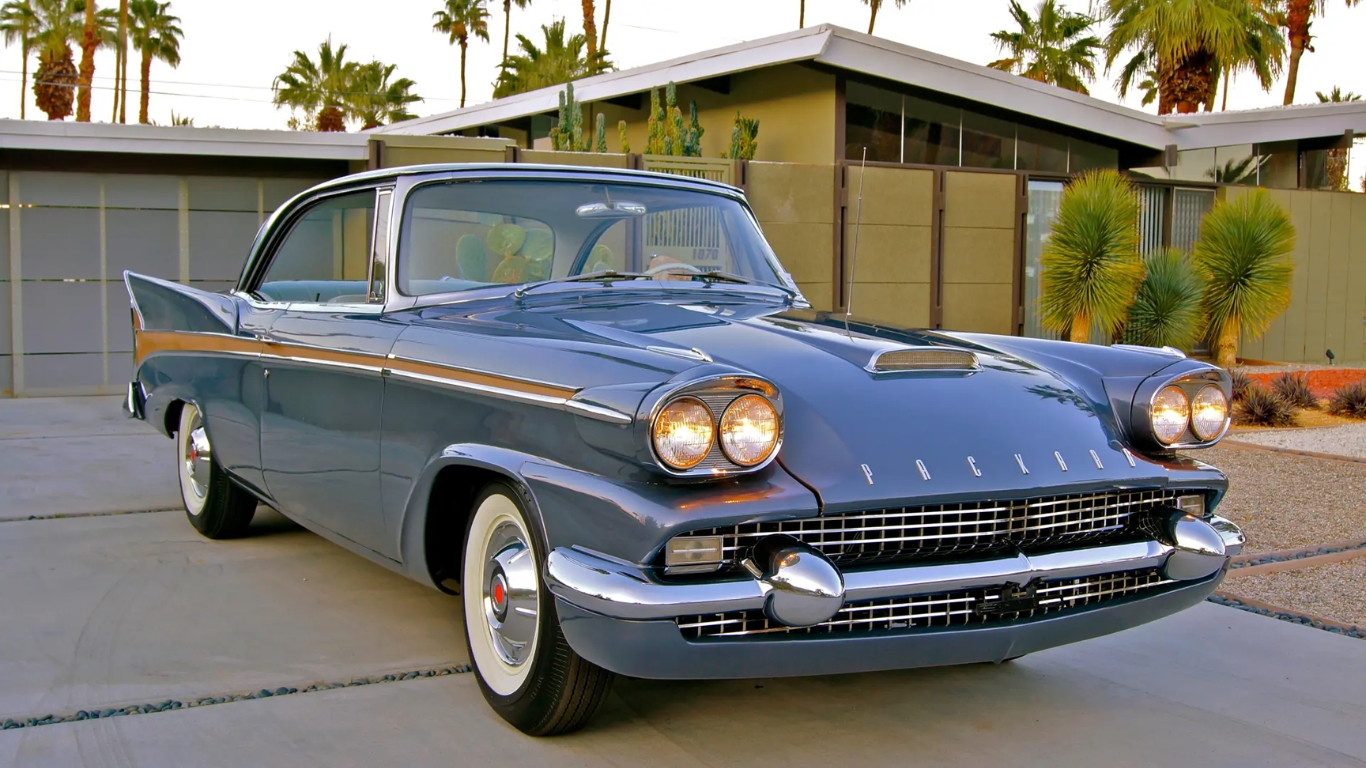
Badge engineering reduced legendary luxury to derisive “Packard-bakers.”
After Packard’s Detroit plant closed, the 1957–1958 models produced in South Bend, Indiana, earned the derisive moniker “Packard-bakers.” This term defined their Studebaker underpinnings, a significant departure from original Detroit-built luxury. For 1958, the lineup included sedans, hardtops, wagons, and the Packard Hawk.
Sedans and hardtops featured Studebaker’s 289 cubic-inch V8 delivering 225 hp. The Hawk boasted a supercharged 275 hp. Total production was only 2,622 cars, with just 1,200 Town Sedans. The last Packard, serial number 58L-8134, a Mountain Blue Metallic sedan, rolled off the line on July 25, 1958. This strategic rebadge diluted the brand’s prestige into shadow status.
9. 1961 DeSoto
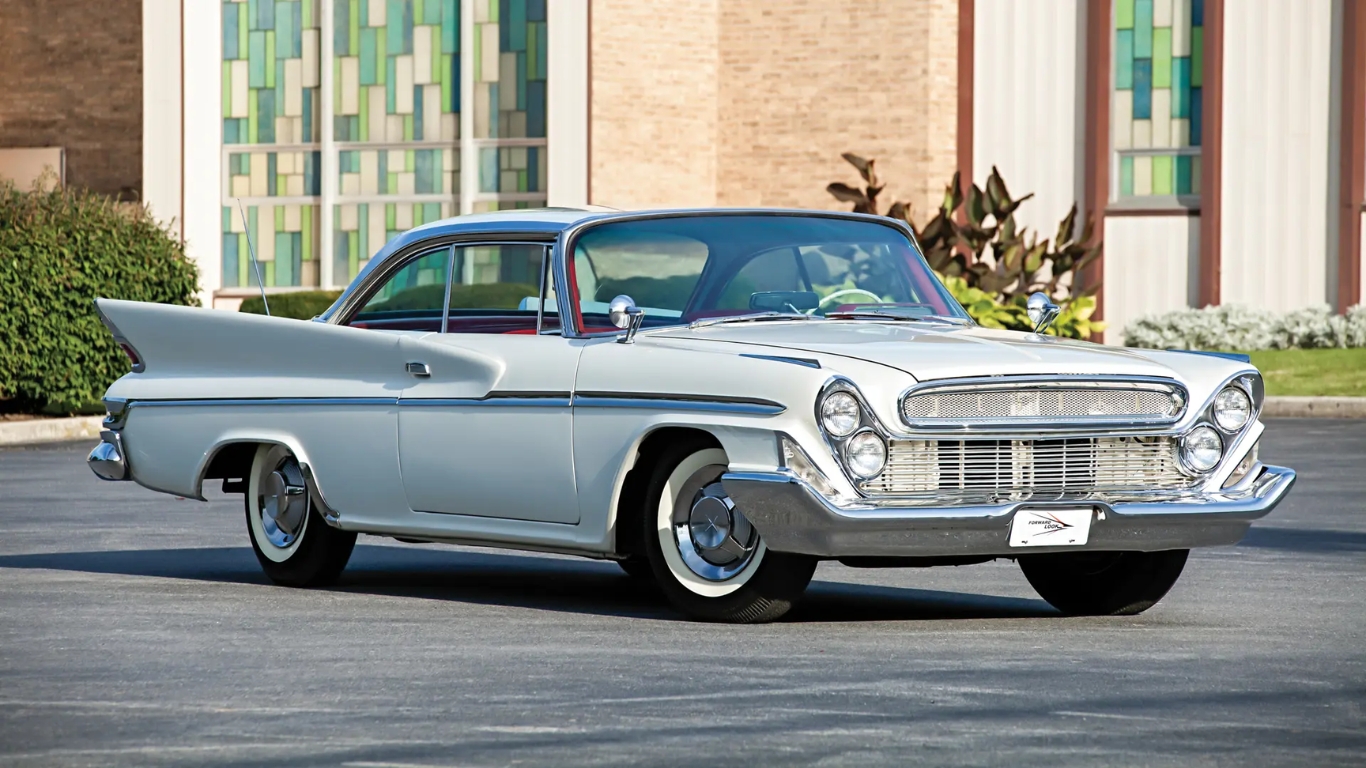
Squeezed between Plymouth and Dodge, DeSoto lacked distinct identity.
DeSoto’s 1961 production ceased on November 30, 1960, a strategic cut by Chrysler rather than quality failing. The 1928-era brand struggled for identity within a crowded lineup. Sharing its platform with the Chrysler Windsor and Dodge components, its distinctiveness faded. Just 3,034 cars were made for the brief 1961 model year.
Underneath, this final DeSoto was technically solid. It packed a 361 cubic-inch V8 delivering 265 horsepower, offering reliable road power. Smooth cruising found that effortless rhythm for hours. The last DeSoto built, serial 6113135102, was a Surf Turquoise Metallic two-door hardtop. Its demise was purely strategic, a corporate cut.
10. Checker Marathon / A11
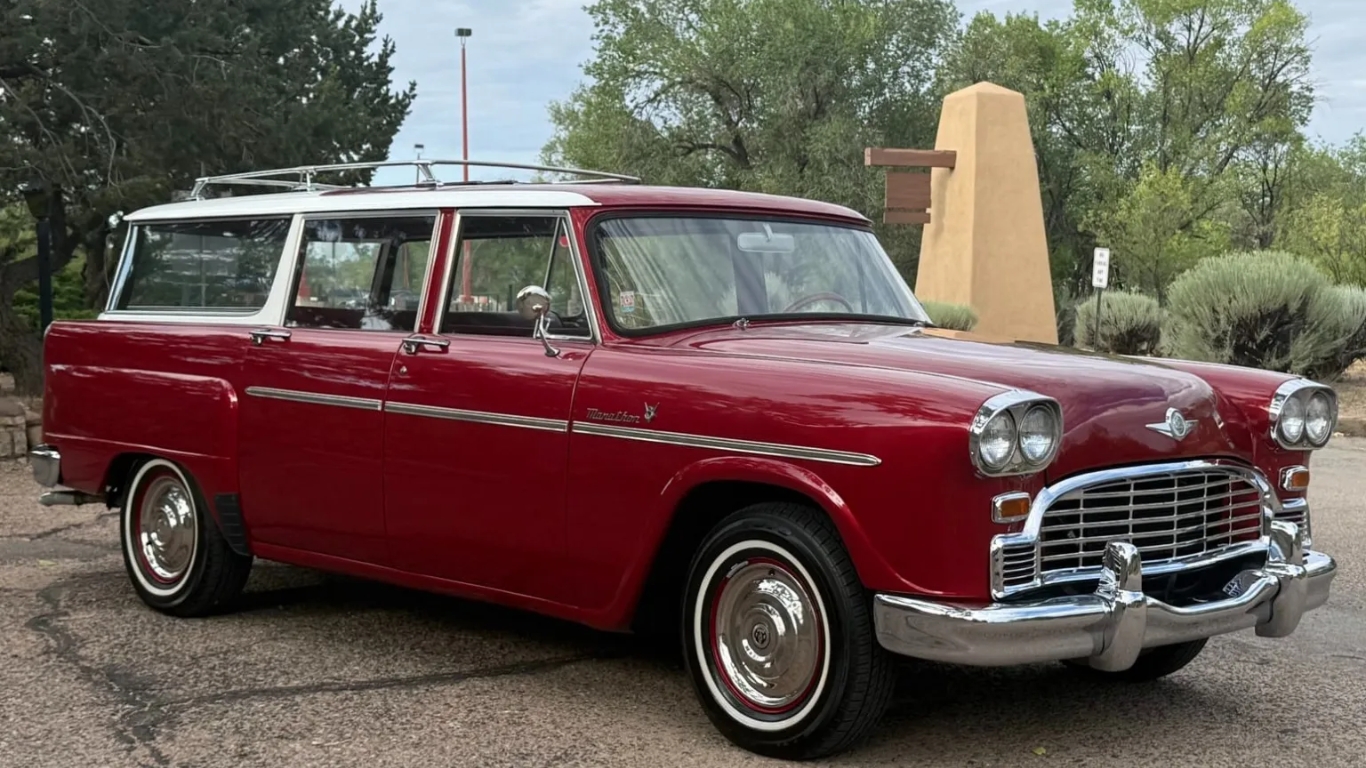
Durability over design: unchanged for 22 years of urban taxi service.
Checker Motors Corporation refused significant design changes for over two decades, prioritizing durability and urban functionality. Its primary taxi model, the A11, launched in 1963, rode on a rugged, unaltered body design from the mid-1950s. Wide doors and comfortable rear seats were purpose-built for continuous passenger service.
This unwavering commitment ended in July 1982, with just 2,000 cars built in its final year. The very last assembled Checker was a 1982 A11 taxi, dressed in iconic green and cream livery. This untouched example rests in the Gilmore Car Museum, showing fewer than 10 miles. It stands as testament to an automotive philosophy valuing resilience over fleeting style.
11. DeLorean DMC-12
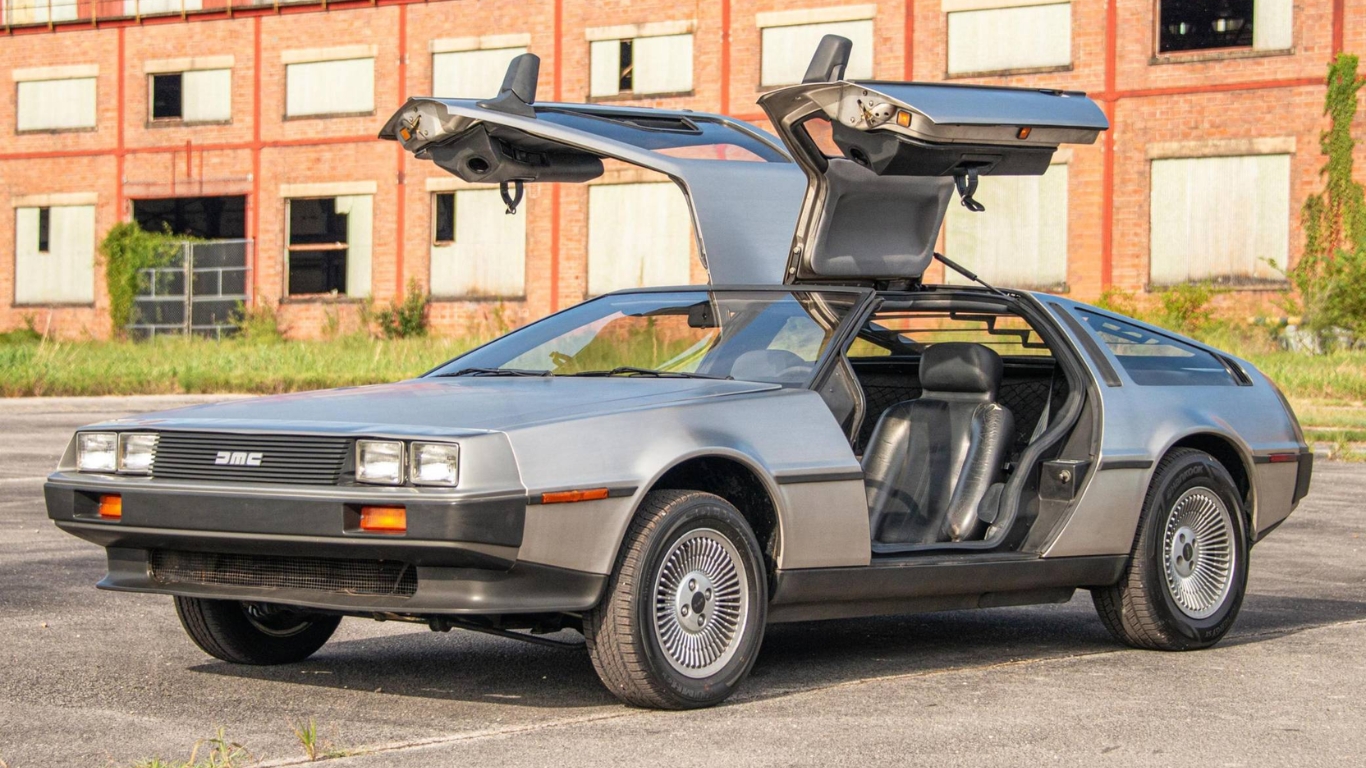
Hollywood icon built around 130 horsepower and financial scandal.
Around 9,000 DeLorean DMC-12s were built from 1981 to 1982, a vehicle that looked faster than it was. Giorgetto Giugiaro’s design featured brushed stainless-steel panels and gullwing doors promising cinematic speed. However, the rear-mounted 2.85-liter PRV V6 engine delivered only 130 hp in U.S. trim.
Despite its modern-day equivalent price of $100,000, raw speed was absent. Performance was modest, and quality control issues were common. The company quickly went into receivership in 1982 due to financial scandal. An iconic silhouette doesn’t guarantee longevity.
12. 1983 Imperial
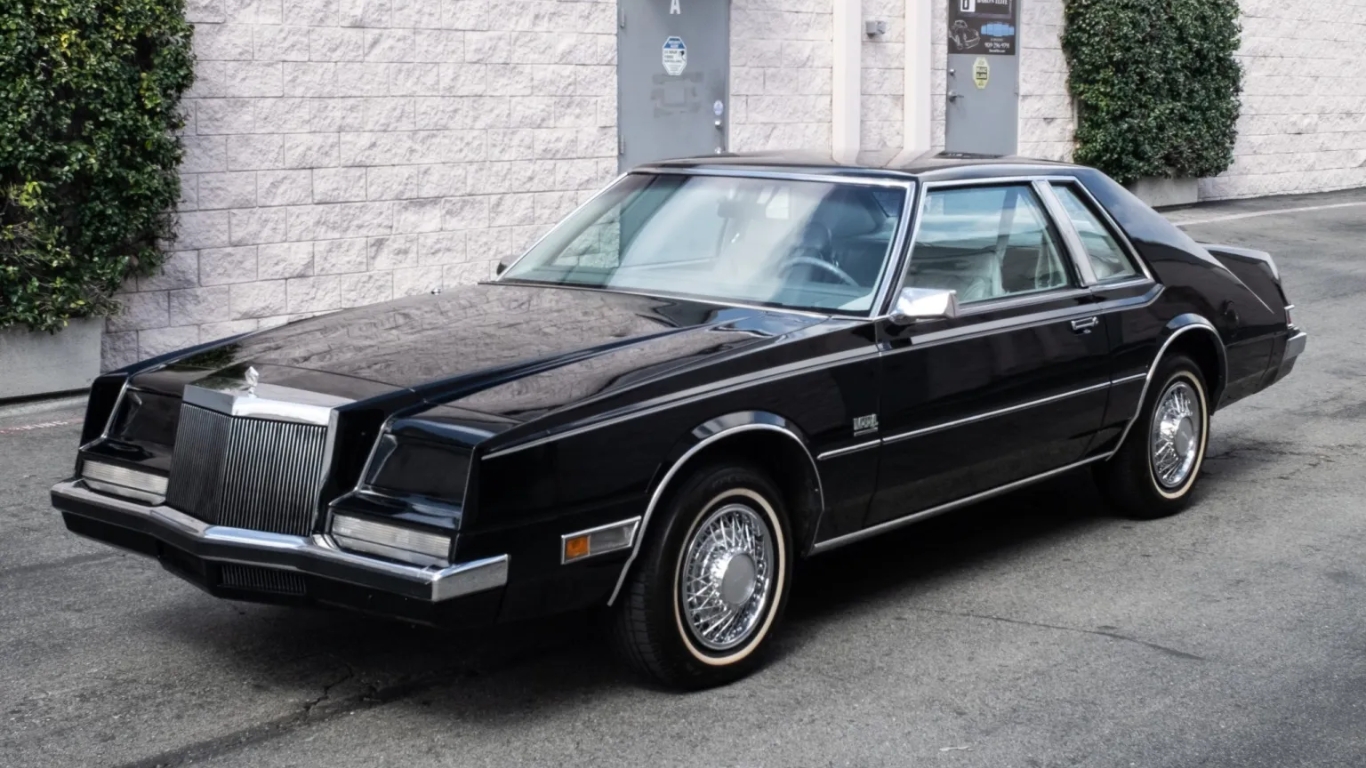
Ambitious electronics betrayed luxury promises with unreliable complexity.
Chrysler launched the 1983 Imperial to compete with Cadillac and Lincoln. This large coupe was burdened by an electronic fuel injection (EFI) system. While technically ambitious, it proved notoriously unreliable. Complex service requirements made technicians question the very meaning of luxury.
A luxury car expects smooth journeys, not engines that freeze mid-route. This problematic EFI system swiftly drove customers away. Production for 1983 plummeted to only about 1,500 units, a mere whisper of Chrysler’s intentions. The brand faded with the whimper of a hard-to-start engine.
13. 1988 AMC Eagle Wagon
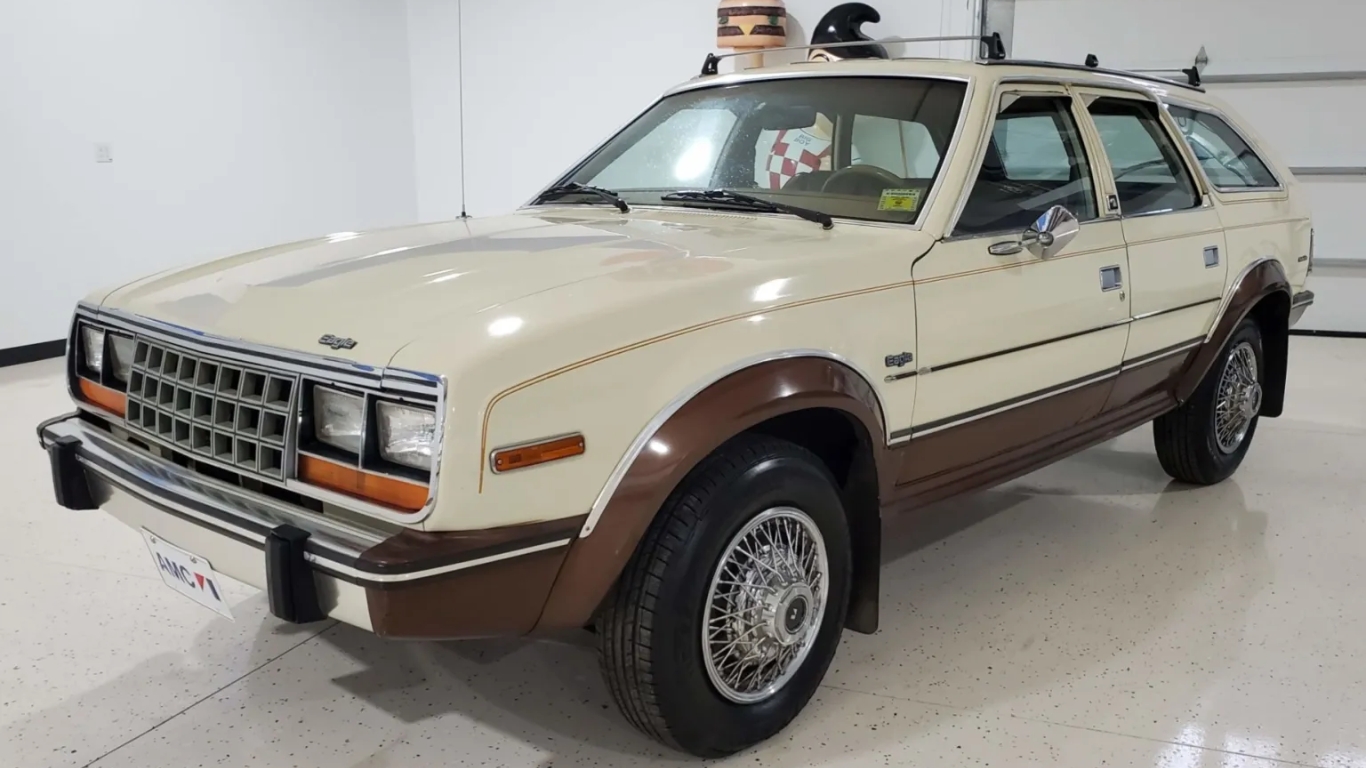
Full-time 4WD wagon pioneered the crossover decades early.
The 1988 AMC Eagle Wagon was the last vehicle to wear the AMC badge, quietly rolling out after Chrysler’s acquisition. This car operated like a mechanical prophet, pioneering the modern crossover segment. Its full-time four-wheel drive and elevated ride height blended sedan comfort with go-anywhere capability.
For late 1980s drivers, the Eagle Wagon offered unmatched utility, often clad in distinctive faux wood paneling. Traditional wagon loading capacity combined with confident 4×4 capability on unpaved roads. Final year production plummeted to 2,300 units, a ghost among Detroit’s giants. No grand send-off existed for AMC, just this quietly brilliant vehicle years before the first Hummer H1.
14. Sterling 827
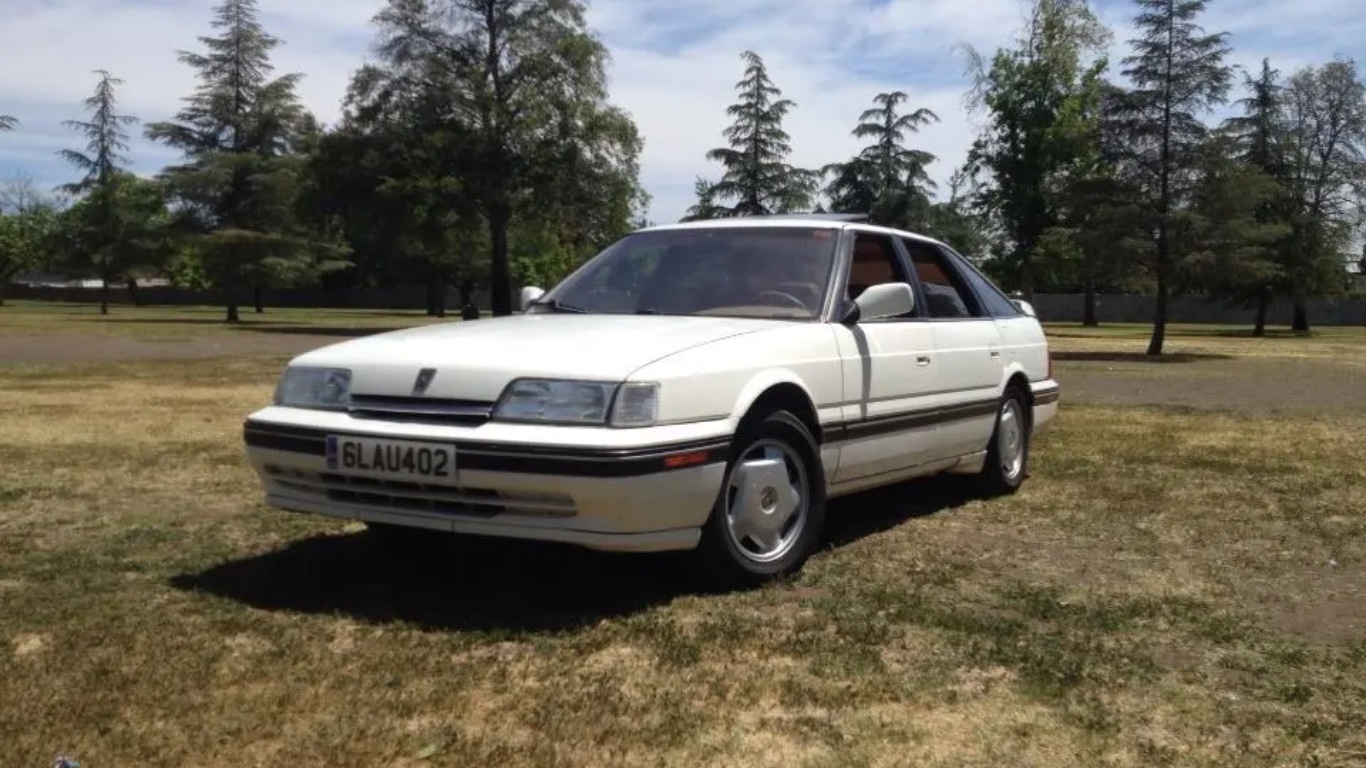
Honda reliability met British electrical nightmares in four short years.
The grand vision for British luxury meeting Japanese reliability began with promise, but the Sterling 827 quickly became shorthand for automotive electrical nightmares. Intended as a collaboration between Rover and Honda, this sedan delivered persistent wiring faults. Power windows overheating and catching fire during drives shredded customer trust.
Despite a robust 2.7-liter Honda V6 engine, electrical gremlins proved fatal. Persistent issues created constant roadside drama. It vanished after just four years. Once a brand’s trust is torched, even a solid engine cannot save it.
15. Geo Metro
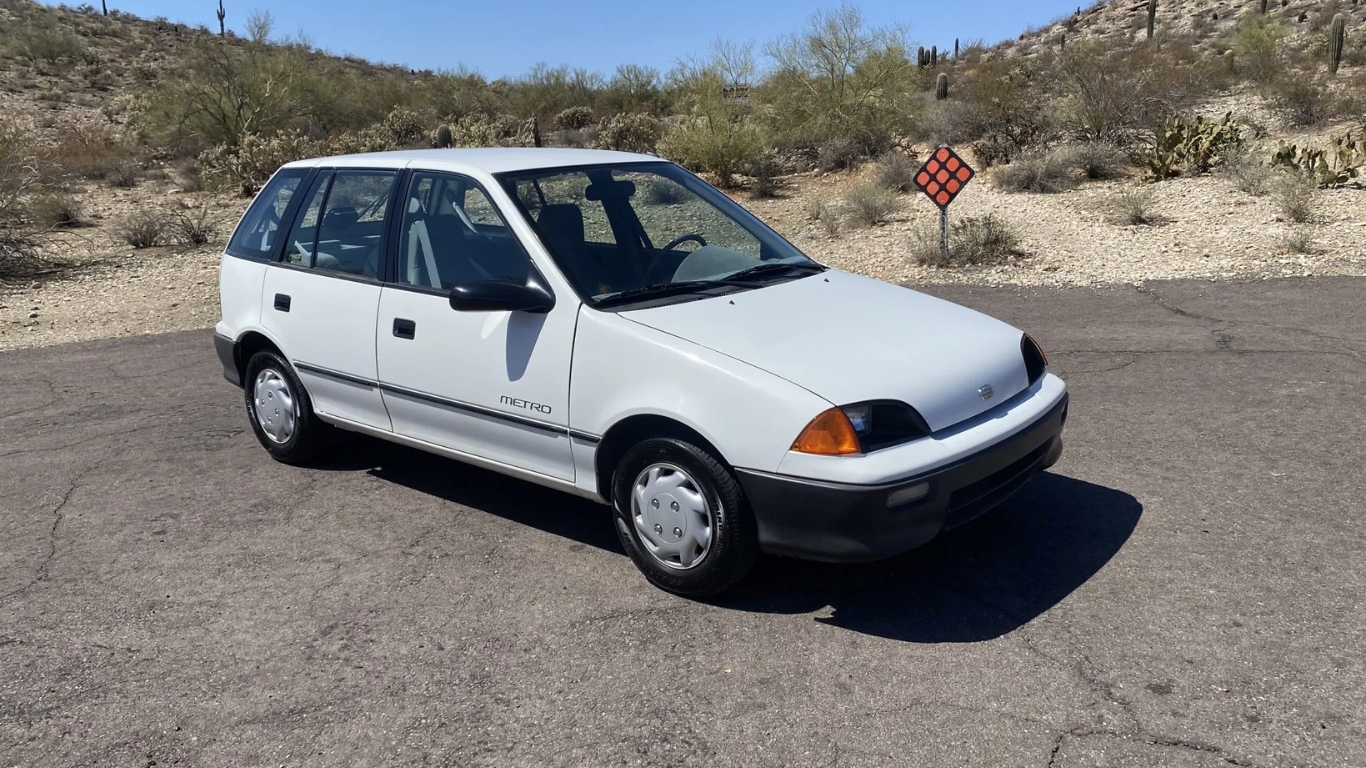
Badge engineering experiment prioritized fuel economy over flash.
General Motors created the Geo brand to sell small, fuel-efficient Japanese-developed cars without diluting the Chevrolet badge. By 1997, Geo’s run ended, leaving only the Metro, Prism, and Tracker. This strategy allowed GM to tap into a market prioritizing economy over traditional American automotive excess.
The Metro stands as Geo’s true final model, retaining its old generation longest and remaining nearly unchanged after Geo’s discontinuation. Unlike the Prism, which became a rebadged Chevrolet Corolla, the Metro held onto unpretentious simplicity. Metro drivers weren’t chasing horsepower; they wanted tanks lasting weeks, not days. Reliable and unpretentious, it quietly faded from the market.
16. Saturn
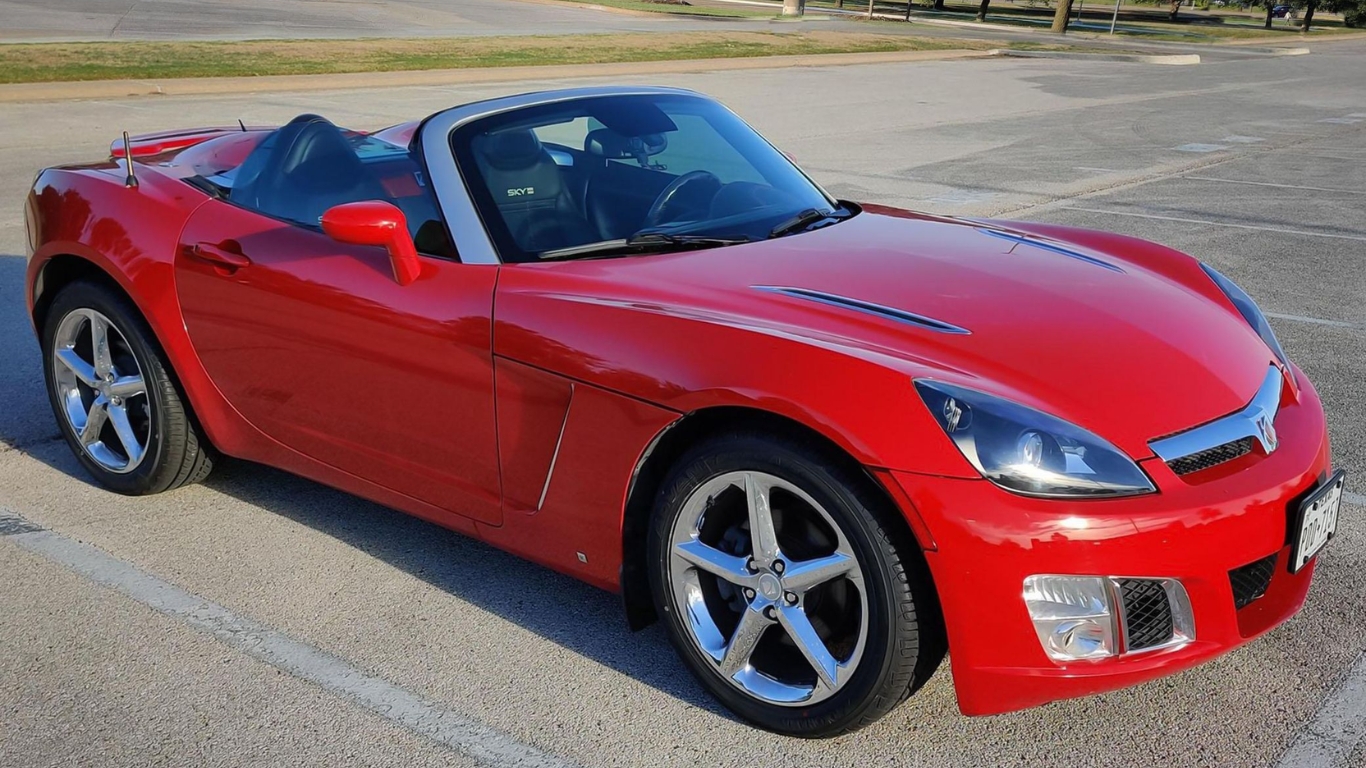
GM’s boldest experiment dissolved without ceremony or final model.
The exact identity of the last Saturn ever built remains an industry ghost story, a final chassis number lost to corporate collapse chaos. Saturn was one of General Motors’ boldest experiments, an attempt to build a new kind of American car company from the ground up. Dent-resistant polymer body panels resonated deeply with consumers tired of parking lot dings.
By 2009, its lineup still offered variety, including the Sky Roadster, the Aura XR with 250 hp, the compact Astra, and the versatile Outlook and Vue. Despite a dedicated following and a lineup pulling its weight, Saturn became a casualty of GM’s 2009 restructuring. No last parade existed, no final edition to commemorate its run. The unresolved question of which specific Saturn was the absolute final car leaves a void.
17. 2010 Pontiac G6
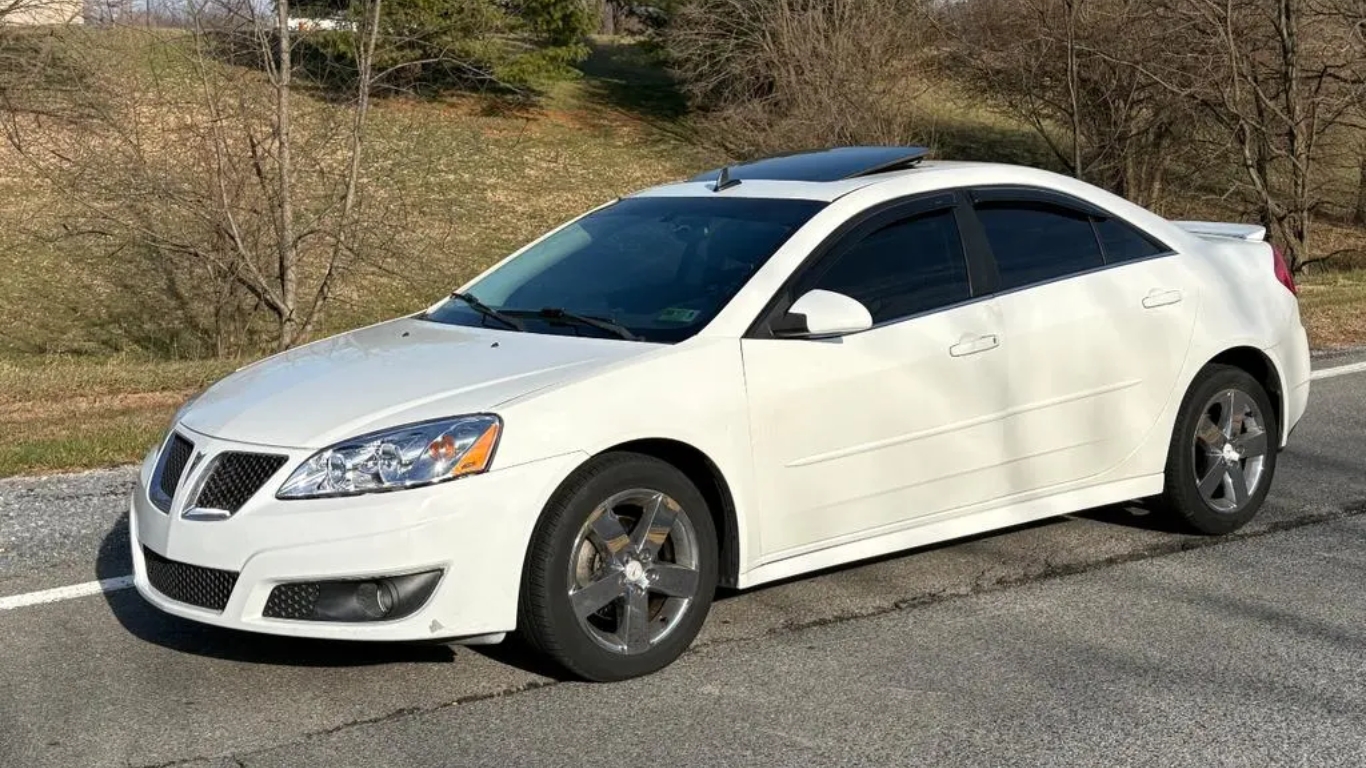
GM’s “excitement division” ended with fleet-spec mediocrity.
Pontiac, once hailed as General Motors’ “excitement division,” met its end not with a final thunderous roar but with a quiet sigh. The brand that gave the world the GTO and Trans Am faded with a vehicle built for the most ordinary tasks. The last vehicle produced was a 2010 Pontiac G6, finished in Summit White and configured specifically as a fleet vehicle.
Under the hood, a 3.5-liter V6 engine delivered 219 horsepower and 219 pound-feet of torque, adequate for daily duty. Its interior was strictly utilitarian; no commemorative plaques or special trim existed, only signatures of Ohio factory workers etched into the structure as a final farewell. This uncelebrated departure marked a poignant end for a marque that once defined American performance.
18. 2011 Mercury Grand Marquis LS Fleet
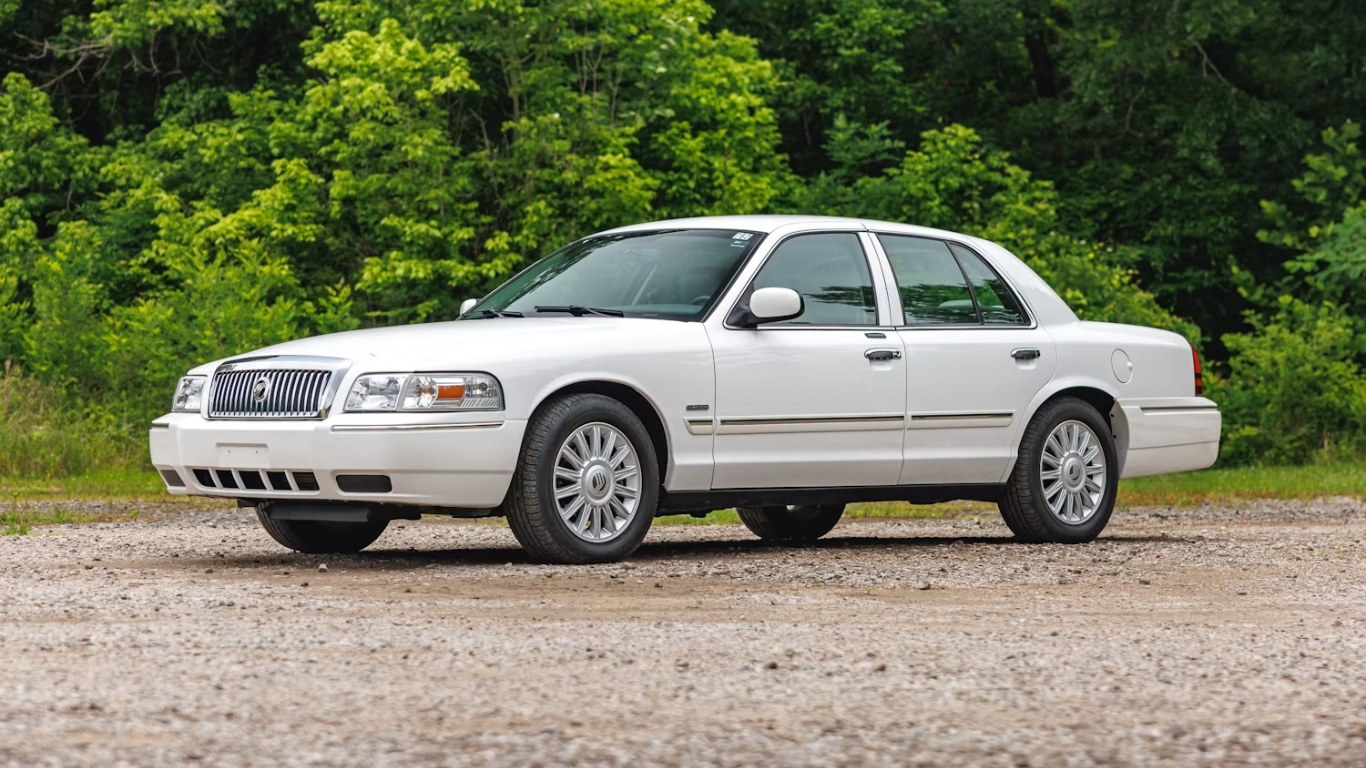
Body-on-frame durability outlasted market preference for agile crossovers.
Mercury once occupied a distinct space, offering a step up from base Fords without the full leap to Lincoln’s luxury. The 2011 Grand Marquis LS Fleet model stood as the final testament to this legacy. Only 248 units of this sedan rolled off the line in its closing year, a stark contrast to the 2.7 million Grand Marquis vehicles sold over its history.
Built on the venerable Panther platform, this body-on-frame, rear-wheel-drive machine powered by a robust V8 embodied an era when American sedans were built like tanks. Its durability made it the weapon of choice for police departments and taxi fleets. This dedication to old-school longevity also exposed its limitations as market preferences shifted. The demise of Mercury, culminating with this final Grand Marquis, reflected a changing automotive landscape.
19. 2014 Saab 9-3 Aero Turbo 4
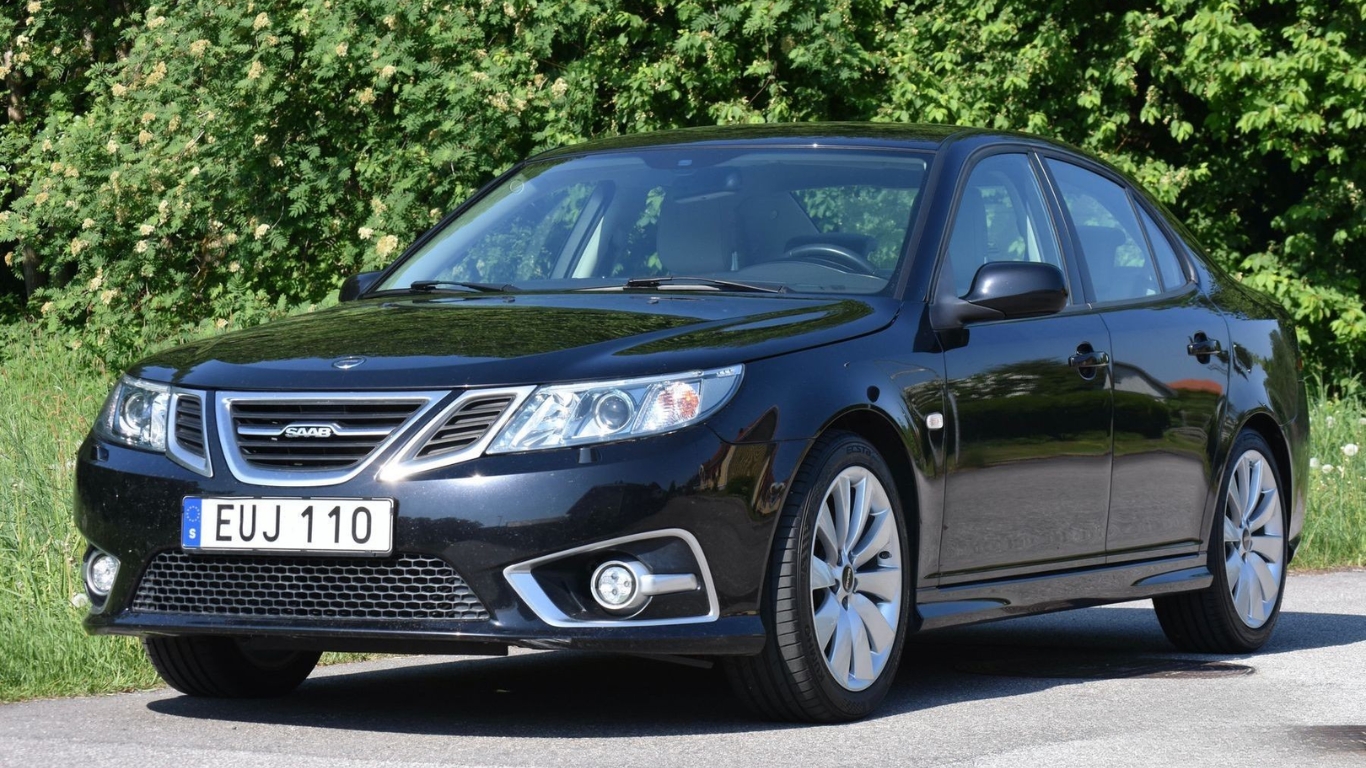
Aircraft-inspired turbocharged feel ended under NEVS post-bankruptcy.
The 2014 Saab 9-3 Aero Turbo4, the brand’s true final production car, later sold at auction for $48,200. This highlights desire for distinctive engineering in a market often swayed by fleeting trends. Saab’s approach prioritized tactile feedback and chassis stability, unlike many numb contemporary vehicles.
The cockpit-like interior featured instruments and controls that felt purpose-built, reminiscent of a fighter jet’s console. This final Saab, produced by NEVS after the company’s bankruptcy, became the brand’s last stand. Taking it on a spirited drive feels like a final, defiant victory lap. It marks a poignant, official full stop for a marque that consistently dared to be different.
20. Local Motors Rally Fighter
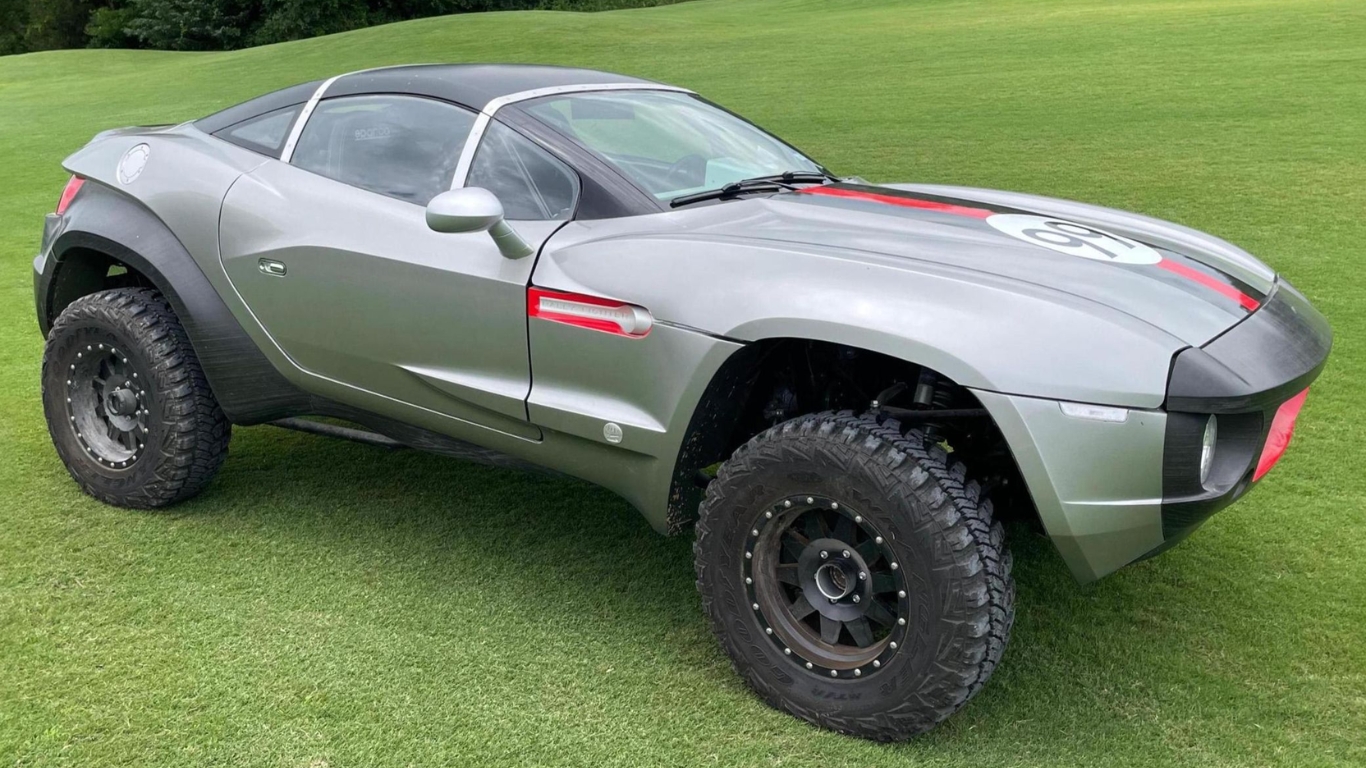
Community-designed desert runner packed 430 hp before autonomous pivot.
Local Motors launched the Rally Fighter, a community-designed desert runner that attacked Baja with authority. This loud, rough machine sported a 6.2-liter LS V8 engine delivering 430 hp to its rear wheels, with high ground clearance. Its muscular body embodied pure driving soul.
Raw, unfiltered connection through rear-wheel drive was usually reserved for trophy trucks. Muscular body and towering ground clearance weren’t for show; they were blueprints for conquering trails where lesser vehicles merely aspire to survive. This vehicle was a loud, rough beast with soulful character demanding full attention and rewarding it with pure, unadulterated grunt.
21. Local Motors Olli
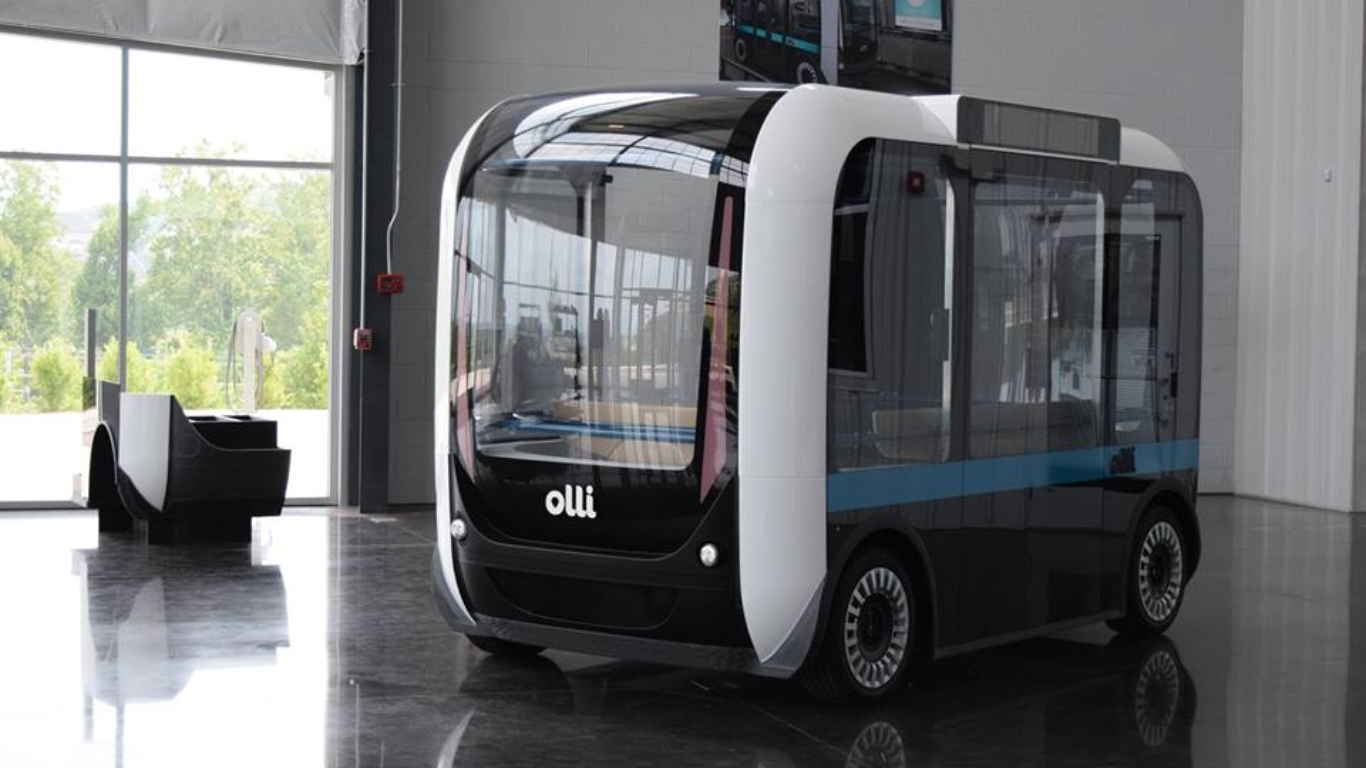
Self-driving shuttle traded tire smoke for silent, programmed efficiency.
Then came Olli, the company’s final project: a boxy, slow, autonomous vehicle. This small, boxy self-driving electric shuttle had no steering wheel, designed for low-speed local transport rather than enthusiast driving. It represented Local Motors’ shift away from conventional enthusiast vehicles toward autonomous mobility.
Spotted quietly gliding through corporate parks, this silent servant was engineered purely for utility rather than visceral thrills. For enthusiasts, the Olli felt like explaining the joy of a manual gearbox to an elevator, trading the Rally Fighter’s passion for silent, programmed efficiency in urban transit.