

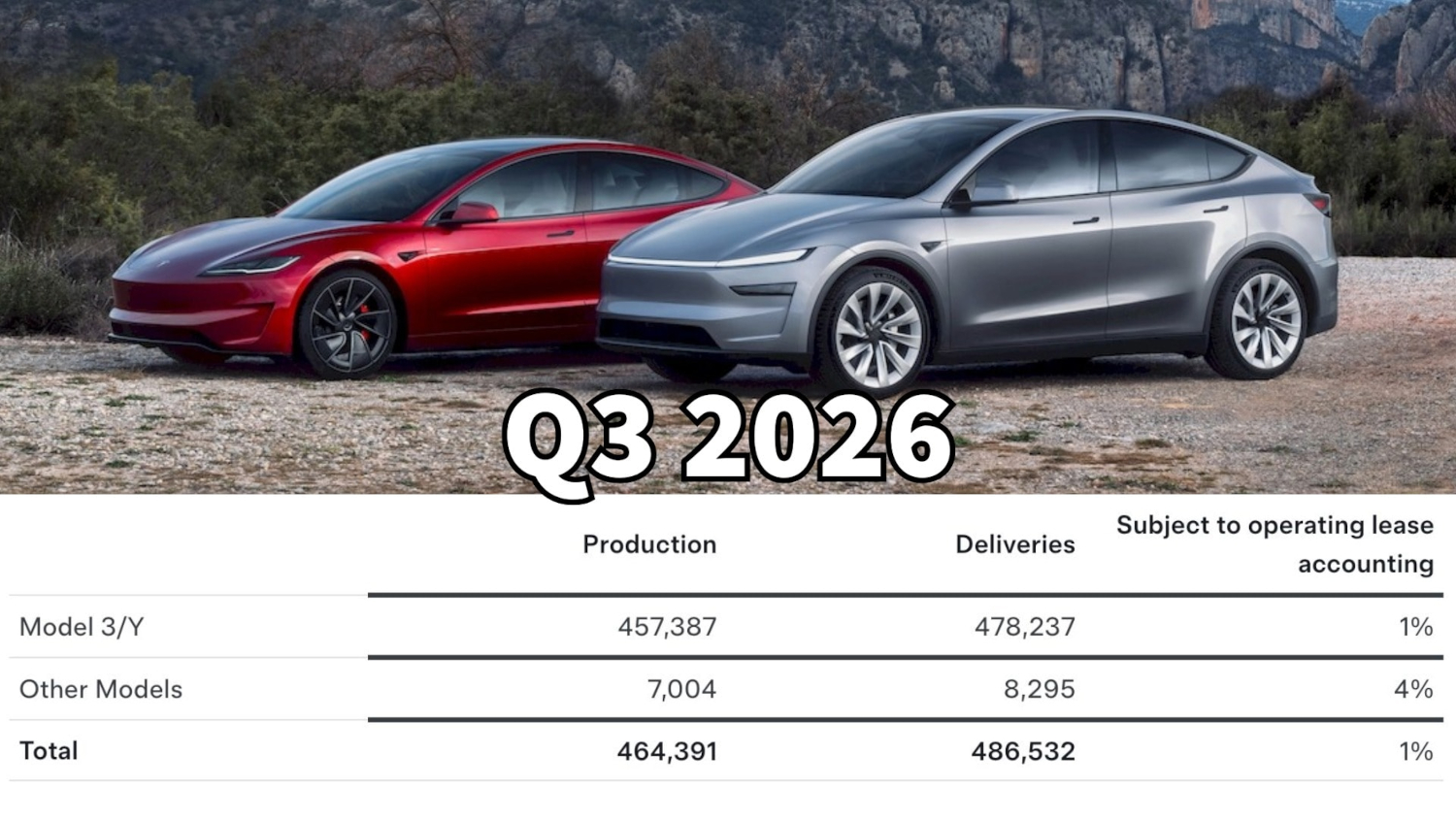
Tesla delivered 486,532 vehicles in the third quarter of 2026, surpassing analyst consensus of approximately 461,974 — Tesla’s own company-compiled figure — by about 24,558 units, a 5.3% beat that sent shares higher in early trading, according to initial reports. Sequentially, that marks a 1.3% improvement over Q2’s 480,126 deliveries.
The year-over-year math, however, is less flattering. Q3 2025 saw 497,099 deliveries, meaning Tesla remains 2.1% below where it stood twelve months ago. A beat and a decline, wrapped in the same press release.
More Deliveries Than Cars Built: Read That Carefully
Delivering more vehicles than it produced raises an important question about whether Tesla is recovering demand or simply clearing inventory.
Tesla produced 464,391 vehicles during the quarter — 22,141 fewer than it delivered. That gap matters. When a company ships more cars than it builds, the result is consistent with drawing down existing inventory rather than manufacturing its way to growth. Whether that reflects genuine demand acceleration or a inventory drawdown timed well won’t be clear until Tesla publishes margin and inventory data on October 21.
The verified numbers from Tesla’s IR release:
- 486,532 vehicles delivered; 464,391 produced
- Beat Tesla’s company-compiled consensus of ~461,974 by approximately 5.3%
- Deliveries up 1.3% from Q2 2026; down 2.1% from Q3 2025
- Model 3 and Model Y: approximately 98% of all deliveries
- Other Models (Cybertruck, Semi, S/X combined): 8,295 deliveries — Tesla provides no public model-by-model split
Two Models, One Story
With 98% of deliveries concentrated in just two vehicles, Tesla’s lineup diversity remains more aspiration than reality.
Model 3 and Model Y accounted for 478,237 of those deliveries. The Other Models category — which likely includes the Cybertruck, Semi, and whatever remains of the S and X, according to industry analysts — contributed just 8,295 deliveries. Tesla does not break that figure down publicly, so specific Cybertruck momentum claims remain analyst interpretation rather than disclosed fact.
On the demand side, analysts pointed to rising fuel costs tied to geopolitical tensions — including the Iran conflict — as a potential tailwind for European EV interest, per CNBC reporting citing IEA commentary. Whether that explains any improvement in European registrations remains unclear without verified regional data.
This was Tesla’s second consecutive quarter beating expectations. Two beats, though, don’t erase a year-over-year decline, and sequential growth of 1.3% suggests a holding pattern more than a comeback. The October 21 earnings call will show whether this delivery beat reflects real demand recovery or an inventory drawdown timed well. Margins, regional breakdowns, and inventory levels will tell the fuller story — and either walk through the door this result opened, or shut it firmly.