

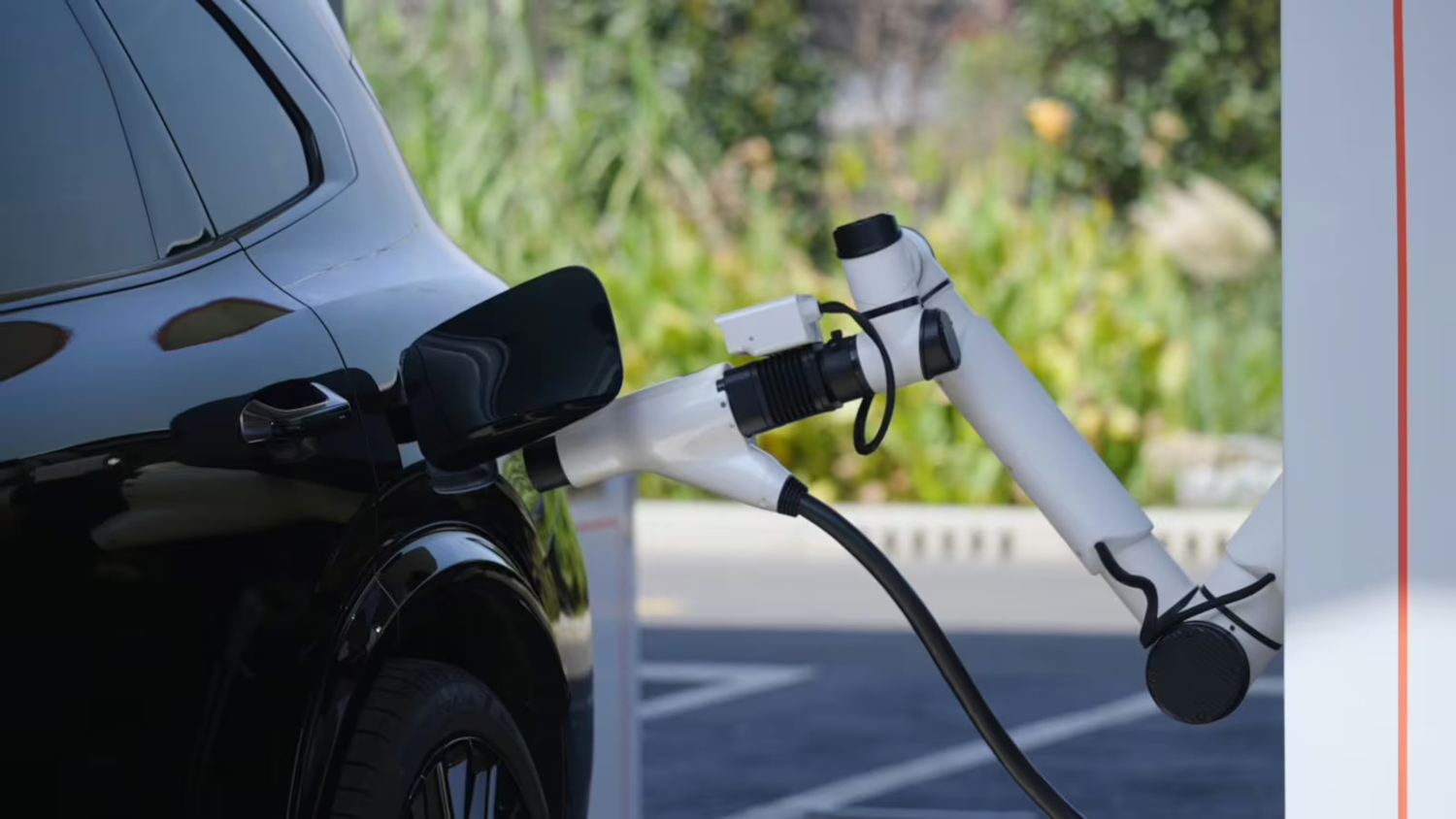
Charging from 10% to 70% in 4 minutes 30 seconds is a genuine engineering achievement. Geely announced exactly that on September 23 in Ningbo, China — alongside a new battery architecture, an upgraded Galaxy E5, and a 2.2-megawatt charging infrastructure that makes most public fast chargers look like a garden hose. The timing isn’t accidental. China’s domestic auto market has declined for 11 consecutive months through August 2026, according to Reuters. When buyers stop showing up, automakers need a reason to make them care again. Charging speed is Geely’s answer.
What “Four Minutes” Actually Gets You
The announced result applies to two specific vehicles — not every car Geely sells.
That 4-minute-30-second figure covers 10% to 70%, not empty to full. Charging slows as a battery approaches capacity — that’s physics, not a Geely problem. Charging from 10% to 97% takes 8 minutes 40 seconds, according to Geely’s announcement. The result reported for the Lynk & Co 10 and Zeekr 001 was achieved using a 12C battery — C-rate describes how fast a battery accepts charge relative to its capacity; a higher number means faster charging. The Galaxy E5, unveiled the same day, uses a 6C battery and takes roughly 8 minutes 25 seconds for the same 10%-to-70% window, according to specialist reporting. That distinction is the whole story. Don’t let the headline bury it.
Key specs to know:
- Infrastructure runs at approximately 2.2 megawatts (2,250 kilowatts) — far beyond conventional public fast chargers
- Geely says its AI manages heat, energy delivery, and battery health at high power
- The 4-minute-30-second result was reported for the Lynk & Co 10 and Zeekr 001 with 12C batteries
- Geely positioned the system as a direct competitive response to BYD’s fast-charging push, per Reuters
The Infrastructure Problem Nobody’s Talking About
Building the charger is straightforward compared to building the network around it.
A 2.2-megawatt charger demands specialized equipment and substantial grid capacity. Geely has not publicly quantified the capital required, and no rollout plan, station count, or deployment timeline appears in available reporting. This is the EV equivalent of a studio-perfect master track versus what actually plays through your phone speaker on the subway: the source material is excellent; the delivery system determines what you actually experience.
Geely’s announced times describe a complete vehicle-and-charger system performing under the specified test conditions. Real-world results depend on building that network at scale — something that remains, for now, an open question. Whether Geely can match the announcement with deployable infrastructure is the question worth watching.
The technology is documented, and the reported achievement is supported by Geely’s announcement and independent Reuters reporting. But that 4-minute-30-second charge requires the right car, the right battery, and a charger that remains well beyond what most drivers can access today.