

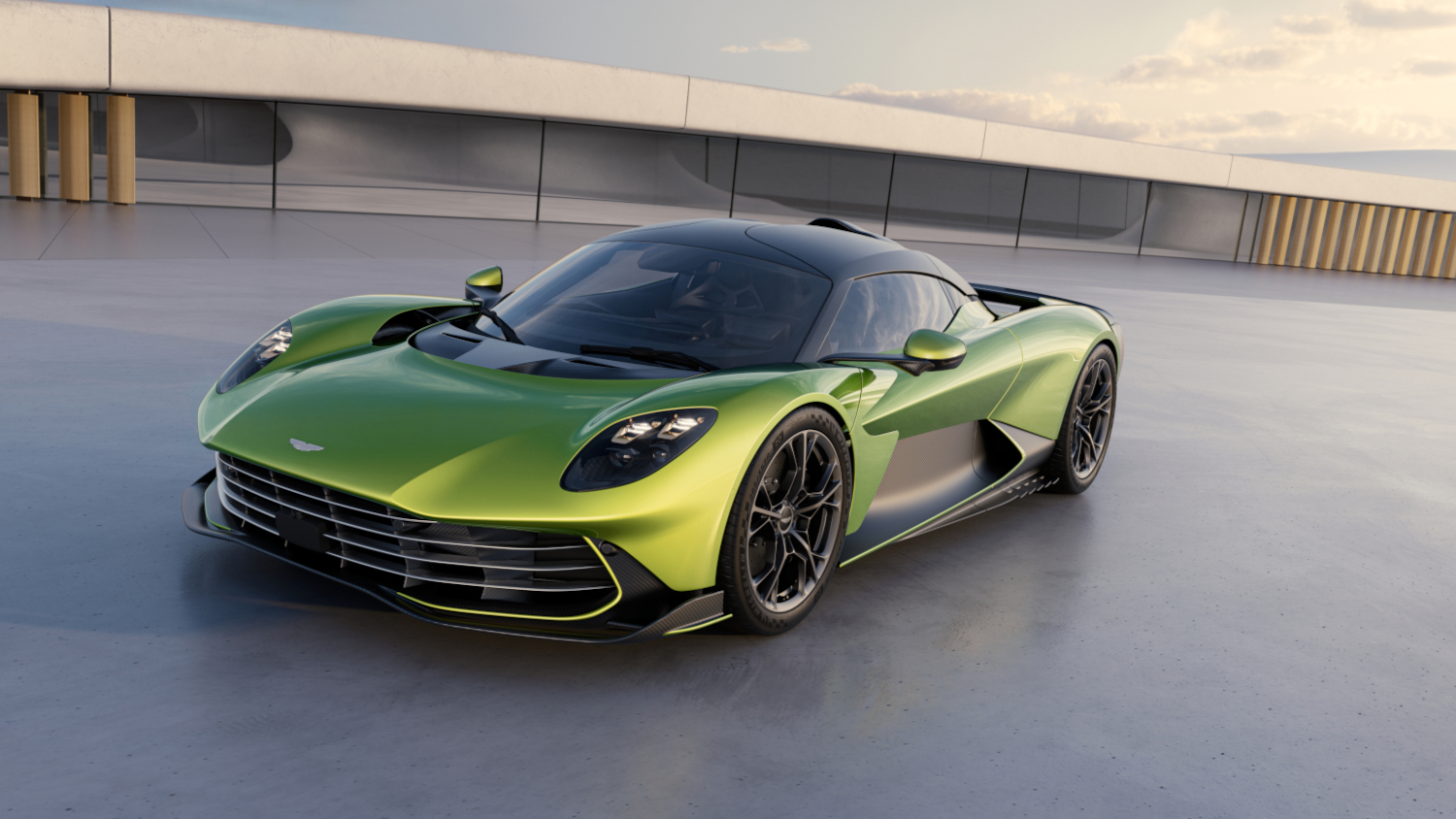
Wanting open-air drama from a 217-mph hybrid supercar is reasonable. Getting it without compromising the engineering underneath is the hard part. Reports from Carscoops, Autoblog, and Motor1 suggest Aston Martin may be preparing a convertible version of the Valhalla for a possible debut as early as November 2026. Aston Martin has confirmed nothing about the model. What makes this worth tracking isn’t the convertible concept itself — it’s the reported roof solution, which is genuinely unusual, and the possibility that the Spider could be produced in smaller numbers than the already-limited 999-unit coupe.
A Targa Panel, Not a Folding Roof – Here’s Why That Matters
Reports point to a removable targa panel rather than any motorized folding mechanism — a choice driven by the Valhalla’s compact mid-engine packaging.
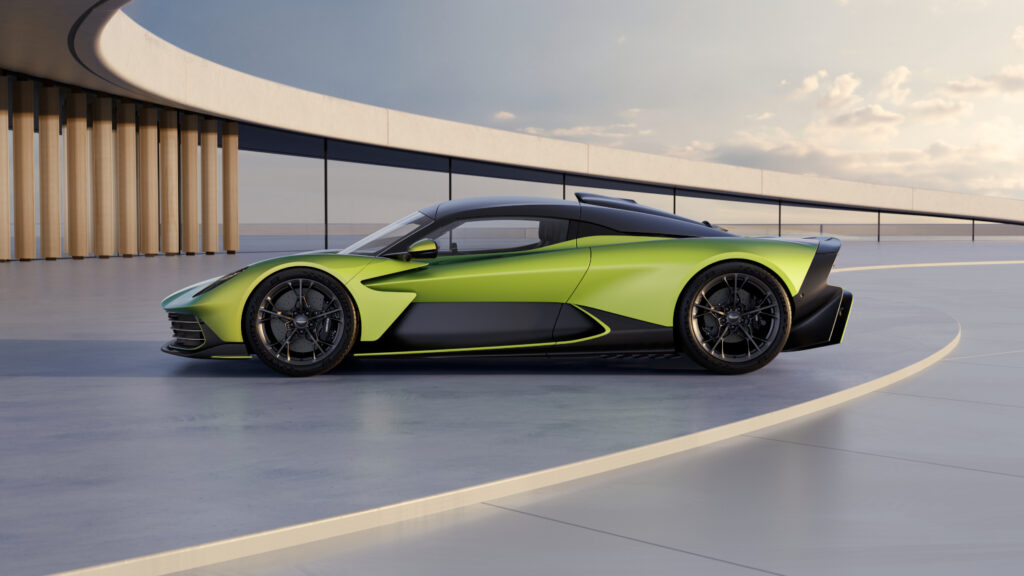
Multiple reports indicate the Spider would use a manually removable targa panel rather than a power-retractable hardtop or soft top. Unlike a folding roof, this approach requires no motors, complex hinges, or dedicated storage cavity in the bodywork. According to reports from Carscoops and Autoblog, the Valhalla’s compact mid-engine layout is not believed to offer sufficient space to store a removable roof panel onboard — meaning owners would likely leave the panel behind before driving open-air. The carbon-fiber monocoque gives engineers a strong structural foundation — a heritage of construction shared by machines like the 918 Coupe. Even so, removing the roof section would be expected to require additional reinforcement to compensate for the loss of overhead rigidity — and that reinforcement typically adds mass. Aston Martin’s published dry weight for the coupe is approximately 1,655 kg. Reports suggest the Spider could approach 1,700 kg, though no confirmed figure exists.
What reports say about the Valhalla Spider so far:
- Possible debut as early as November 2026, per industry reports — no official date confirmed
- Removable targa panel with no onboard storage; the roof panel would be left behind
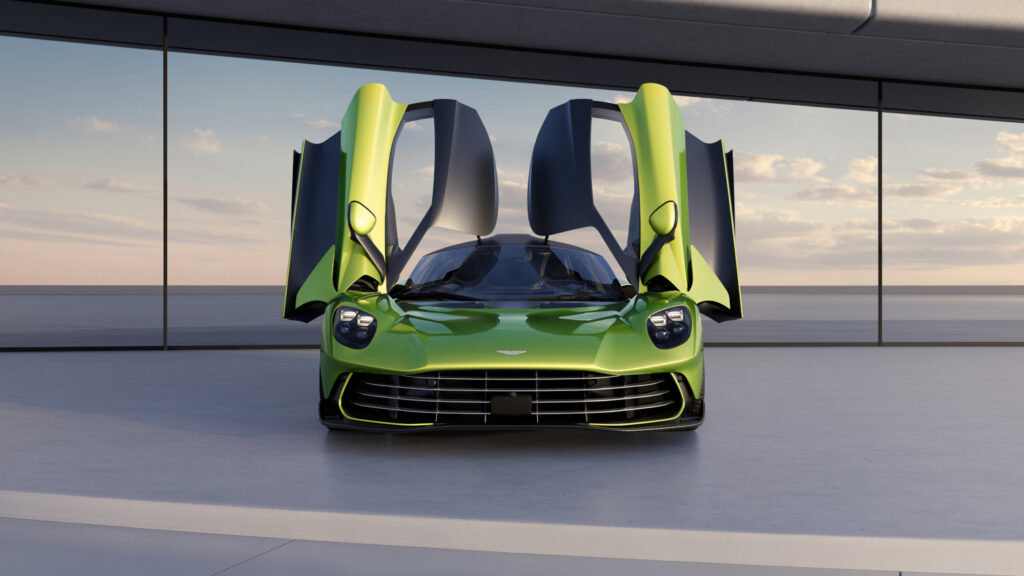
- Powertrain expected to carry over: AMG-sourced 4.0-liter twin-turbo V8 plus three electric motors, approximately 1,064 hp and 811 lb-ft of torque, AWD, eight-speed dual-clutch — unconfirmed by Aston Martin
- Production reportedly smaller than the coupe’s 999-unit run, though no allocation has been announced
Converting a machine this extreme to open-top configuration is never without cost. The trade-off reportedly lands on owner convenience — a panel you store at home rather than a button you press at the lights.
The coupe reaches 62 mph in 2.5 seconds and tops out at 217 mph, per Aston Martin’s published specifications. A marginally heavier Spider could affect some acceleration or handling measures, though no Spider performance figures have been released. On the collector side, a smaller production run combined with the full hybrid powertrain and a distinctive targa configuration could make the Spider the more worth waiting for Valhalla variant — the automotive equivalent of a limited pressing where fewer copies tend to appreciate faster. No pricing or allocation policy has been announced.
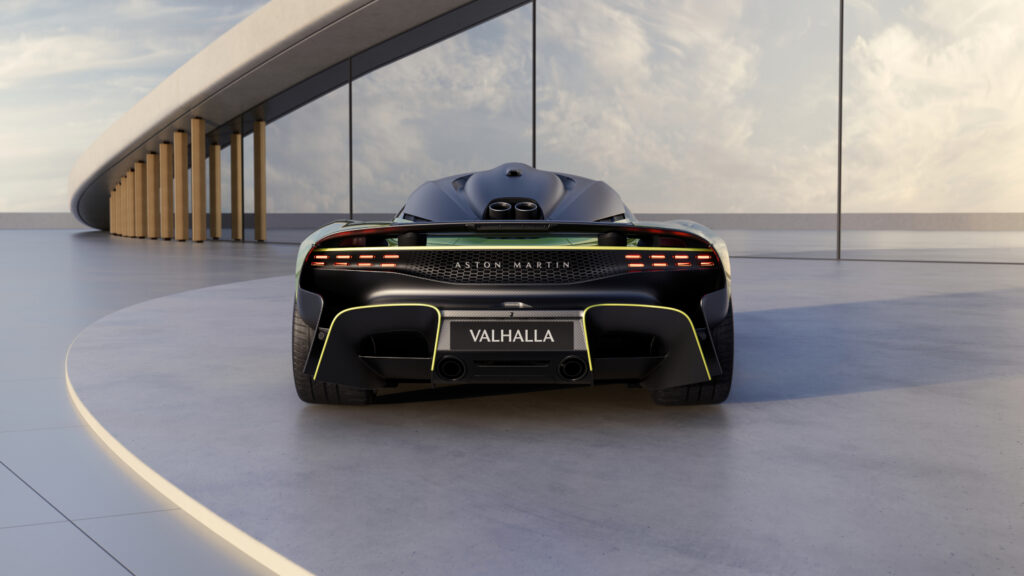
What Aston Martin Still Needs to Confirm
The unknowns that matter most — name, allocation, weight, performance, pricing — remain entirely unaddressed by Aston Martin.
Aston Martin has not officially confirmed the Spider’s name, production allocation, final weight, roof-panel design, performance figures, or pricing. If the model is on your radar, the time to pay attention is now — on cars produced in numbers this limited, order windows on comparable hypercars have historically closed well before broader public awareness catches up. Rivals are already staking claims in this space, with Lotus building a hybrid V-8 supercar of its own that will compete directly for the same buyers.