

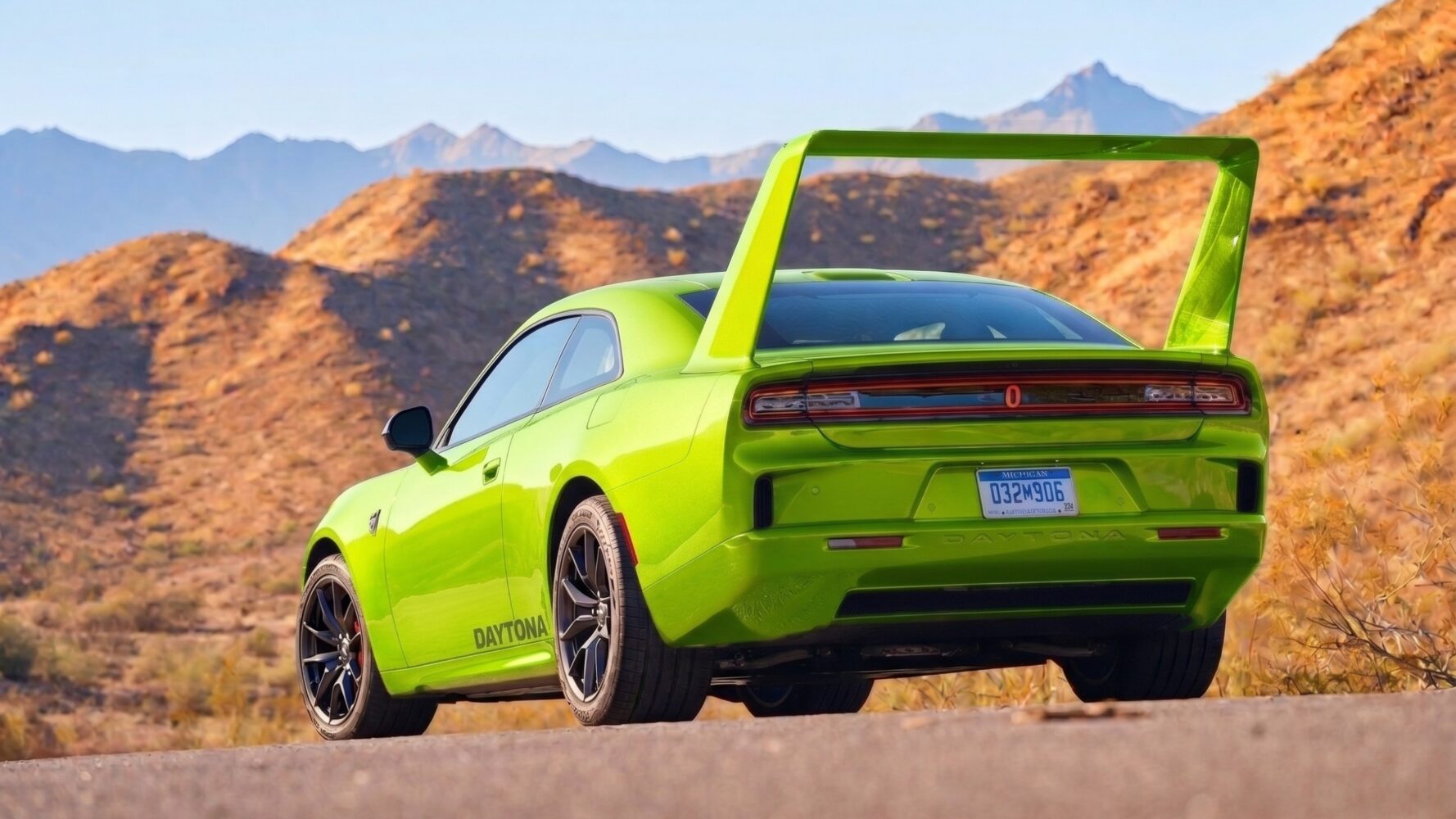
Behind closed doors in Detroit, Dodge recently showed select journalists a neon-green prototype bristling with retro NASCAR aggression. The standout feature? A massive Superbird-era wing anchored on side pylons rising off the new Charger SRT’s tail. The reveal came immediately after Stellantis executives pitched their broader turnaround plan, signaling a rapid strategic pivot as the automaker responds to lukewarm reception of its electric Charger lineup.
Emergency Refresh Before Full Launch
Corporate pivots don’t usually happen this quickly.
Dodge is prepping a visual refresh for its new Charger lineup before the entire range even hits showrooms—a timeline The Drive describes as an “emergency undertaking.” The closed-door preview banned photography and disabled electronics, but journalists got enough of a look to understand the significance. When asked about early Charger reception, Dodge CEO Matt McAlear told The Drive it’s “way too early” to call the launch a success or failure.
That diplomatic response, paired with an unusually fast refresh timeline, suggests the automaker is responding quickly to feedback.
The prototype details reveal aggressive styling changes:
- Smoked headlight housings with amber LED accents replace the current full-width lightbar design
- A prominent hood scoop suggests serious airflow needs for what Dodge representatives said will be a gasoline engine
- The side-mounted wing pylons directly echo the 1969 Charger Daytona and 1970 Plymouth Superbird
- Aggressive front splitter and wide wheels complete the track-ready aesthetic
Powertrain Remains Mystery
V8 return or Hurricane six-cylinder pushed to new limits?
The powertrain remains “completely unclear” beyond its use of gasoline, according to The Drive. McAlear has promised Dodge will “push the limits” of its Hurricane inline-six, but Stellantis CEO Antonio Filosa offered another hint when explaining Ram’s V8 return. About 40% of truck buyers demand a V8 before they’ll consider a brand, Filosa noted to The Drive.
Whether this winged SRT uses a high-output Hurricane six or signals the Hemi’s potential return remains speculation, as Dodge has not confirmed engine details beyond gasoline power.
Superbird DNA in Modern Muscle
Racing heritage meets contemporary performance demands.
Those original aero cars dominated NASCAR superspeedways with 23-inch-tall wings designed to reduce drag and increase stability at high speeds. The new wing may not need Talladega-level aerodynamics, but it serves an important visual function. For Mopar enthusiasts who associate Dodge with supercharged V8s and drag-strip performance, this Superbird-era wing callback taps into brand heritage that electric powertrains haven’t yet matched.
The speed of this course correction reveals how quickly automakers will pivot when core customers push back. Dodge’s willingness to refresh before full launch demonstrates the challenges performance brands face in balancing electrification with enthusiast expectations.