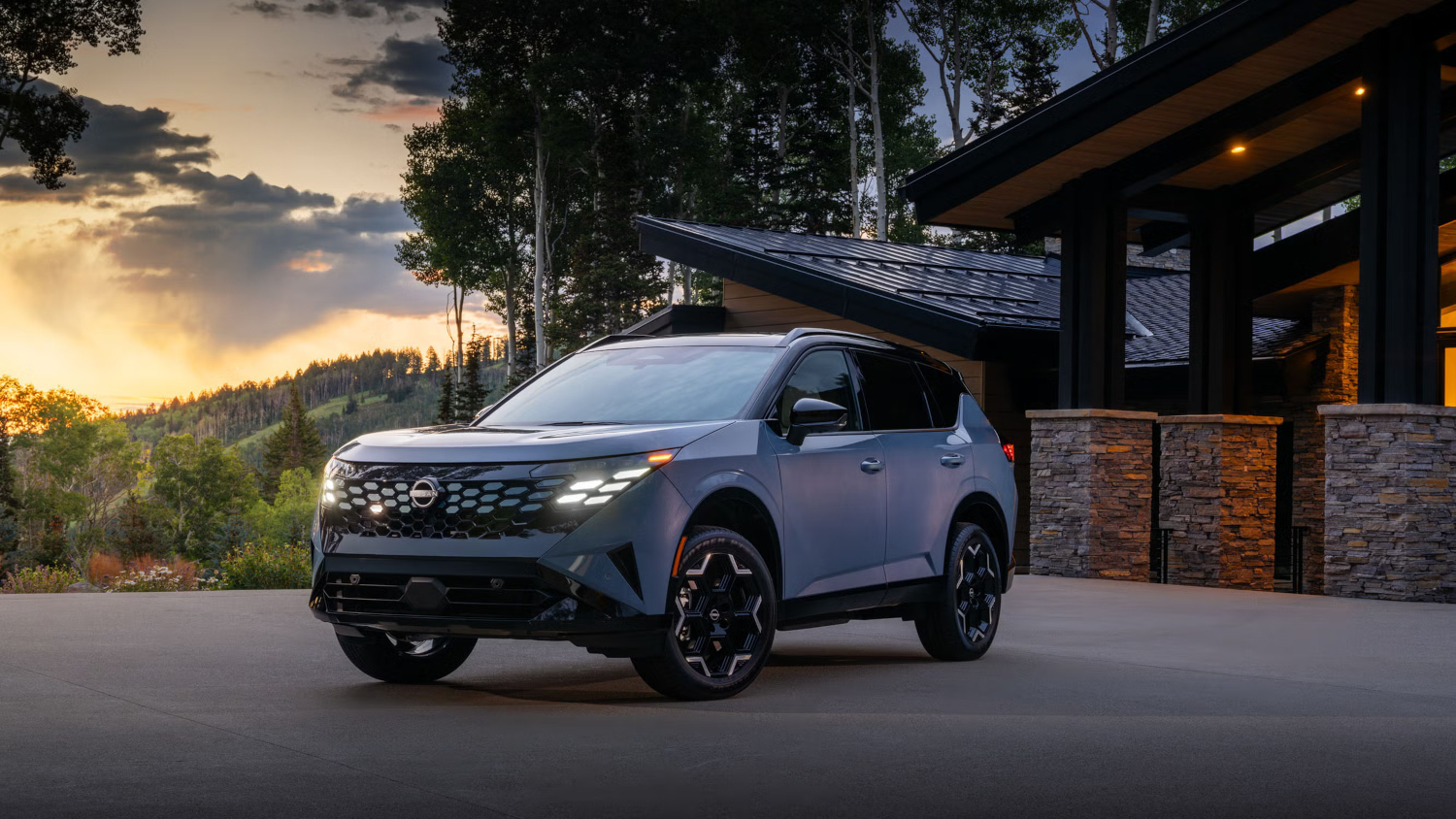


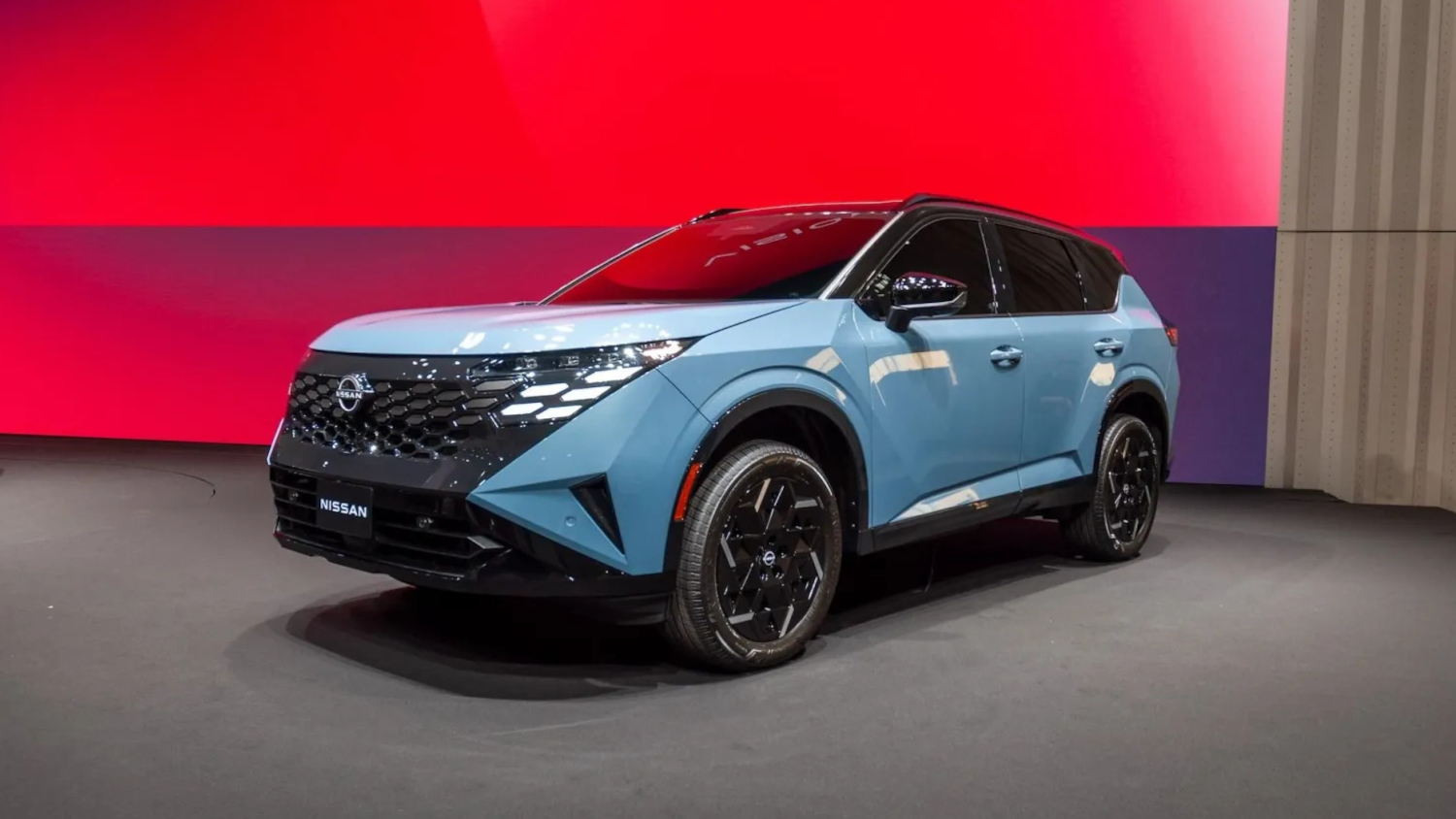
Most hybrid shoppers walk into a dealership and head straight for the sticker. Best mpg wins. By that logic, Nissan shouldn’t even show up to this fight. The 2027 Rogue Hybrid — starting at $37,065 including destination, with standard AWD and an estimated 40 city / 36 highway / 38 combined mpg — trails the Toyota RAV4 Hybrid on efficiency and costs more at the base. Nissan knows this. Its bet is that a quieter, smoother, more EV-like driving experience matters more to real buyers than a number on a window sticker. This launch is also the cornerstone of a broader turnaround: Nissan is cutting its global lineup from 56 models down to 45, reviving the Xterra, and needs the Rogue Hybrid to pull mainstream buyers back.

A Hybrid That Drives Like an EV
Nissan’s e-POWER system keeps the gas engine off the wheels entirely — and that changes everything about how this car feels.
In a conventional hybrid like the RAV4 or CR-V, the gasoline engine and electric motors share driving duties — an arrangement that typically runs through a CVT, producing the rubber-band surge of revving loudly without matching acceleration that many hybrid drivers dislike. The Rogue Hybrid works differently. Its 148-hp three-cylinder engine never touches the wheels. It runs only as a generator, charging a 1.67-kWh lithium-ion battery. Two electric motors — 202 hp front, 134 hp rear, 225 hp combined — handle all propulsion.
“Number one complaint of people with hybrid vehicles today,” says Ponz Pandikuthira, Senior Vice President and Chief Planning Officer for Nissan North America, “they almost always have a CVT mated to them, and they hate that whiny response.” The Rogue Hybrid also includes e-Pedal Step, a one-pedal driving mode that lets you modulate most of your speed through the accelerator — a genuine fatigue-reducer in stop-and-go traffic.
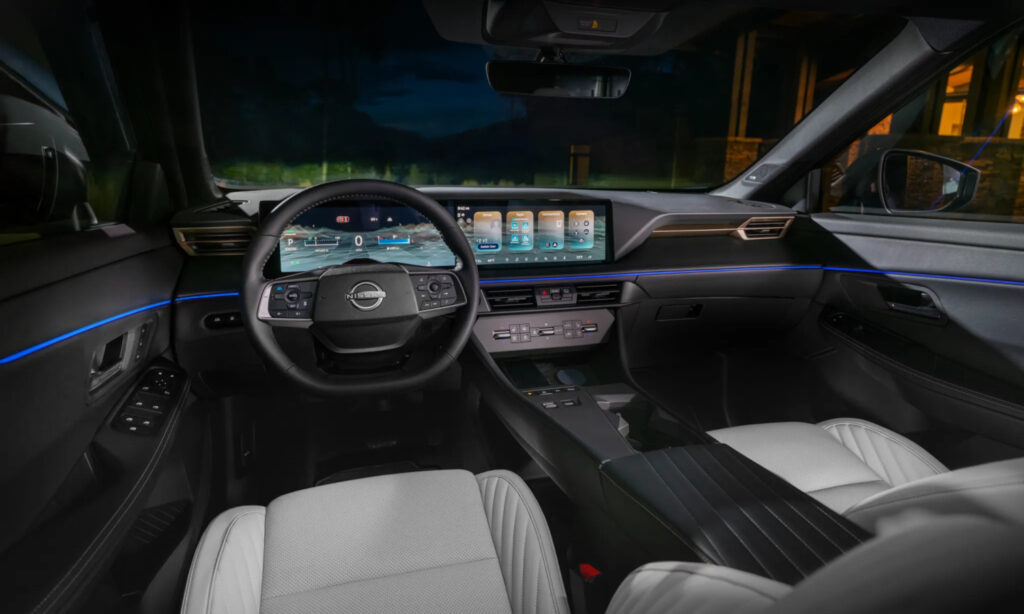
Specs and pricing at a glance:
- Powertrain: 225 hp combined output; gas engine functions as generator only; 1.67-kWh lithium-ion battery
- Fuel economy estimate: 40 city / 36 highway / 38 combined (SR AWD)
- Pricing: SV AWD $37,065 / SR AWD $39,065 / SR AWD with Tech Package $43,065 / Platinum AWD $45,065
- Availability: SR AWD Tech Package launches fall 2026; all other trims arrive early 2027
- Interior: dual 12.3-inch screens under single glass pane, physical climate and audio knobs, rear doors open nearly 90 degrees, five LATCH points for child seats
The Efficiency Gap Is Real – So Is the Counterargument
Nissan concedes the mpg math openly, then makes a case for why city drivers may not feel that difference at the pump.
The Toyota RAV4 Hybrid delivers roughly 43 mpg combined in FWD trim. The Rogue Hybrid lands at 38. That gap is not a rounding error. Pandikuthira doesn’t dodge it: “When you pick the series hybrid execution style, just the physics of that solution will not let you get the highest fuel economy. But it will be the highest urban usable fuel economy.” His argument is that in genuine city driving — constant stops, regenerative braking doing real work — the series layout recovers energy more efficiently than the official cycle suggests. Whether that holds in practice is something only real-world owners will confirm.
The refinement pitch is more concrete. Pandikuthira describes the cabin noise gap versus rivals as the difference between “quiet conversation in a library versus a loud living room.” On long highway drives or in city gridlock — the kind of trips where backseat conversations compete with drivetrain drone — that quietness is fatigue reduction, not a luxury add-on. Nissan backs it up with deliberate interior choices: no piano-black trim that fingerprints instantly, physical knobs for climate and volume controls, and an optional 10-speaker Bose system.
Can Refinement Beat a Better Spec Sheet?
Nissan enters this segment more expensive and less efficient than its main rival — its case rests entirely on whether buyers feel the difference behind the wheel.
Toyota’s reliability reputation in this class is well-established and difficult to argue against on paper. Nissan is asking buyers to pay more, accept lower mpg figures, and trust that what they feel behind the wheel justifies the trade. That’s a harder sell than a spec-sheet win.
For drivers whose routines lean heavily toward city traffic rather than open interstate, the Rogue Hybrid’s real-world numbers may close that efficiency gap meaningfully. The SR AWD Tech Package hits dealers fall 2026 at $43,065 — and that’s when Nissan’s refinement bet faces its first honest test. For shoppers still weighing their options, a broader look at models worth waiting for in 2025–2026 may help put the timing decision in perspective.