

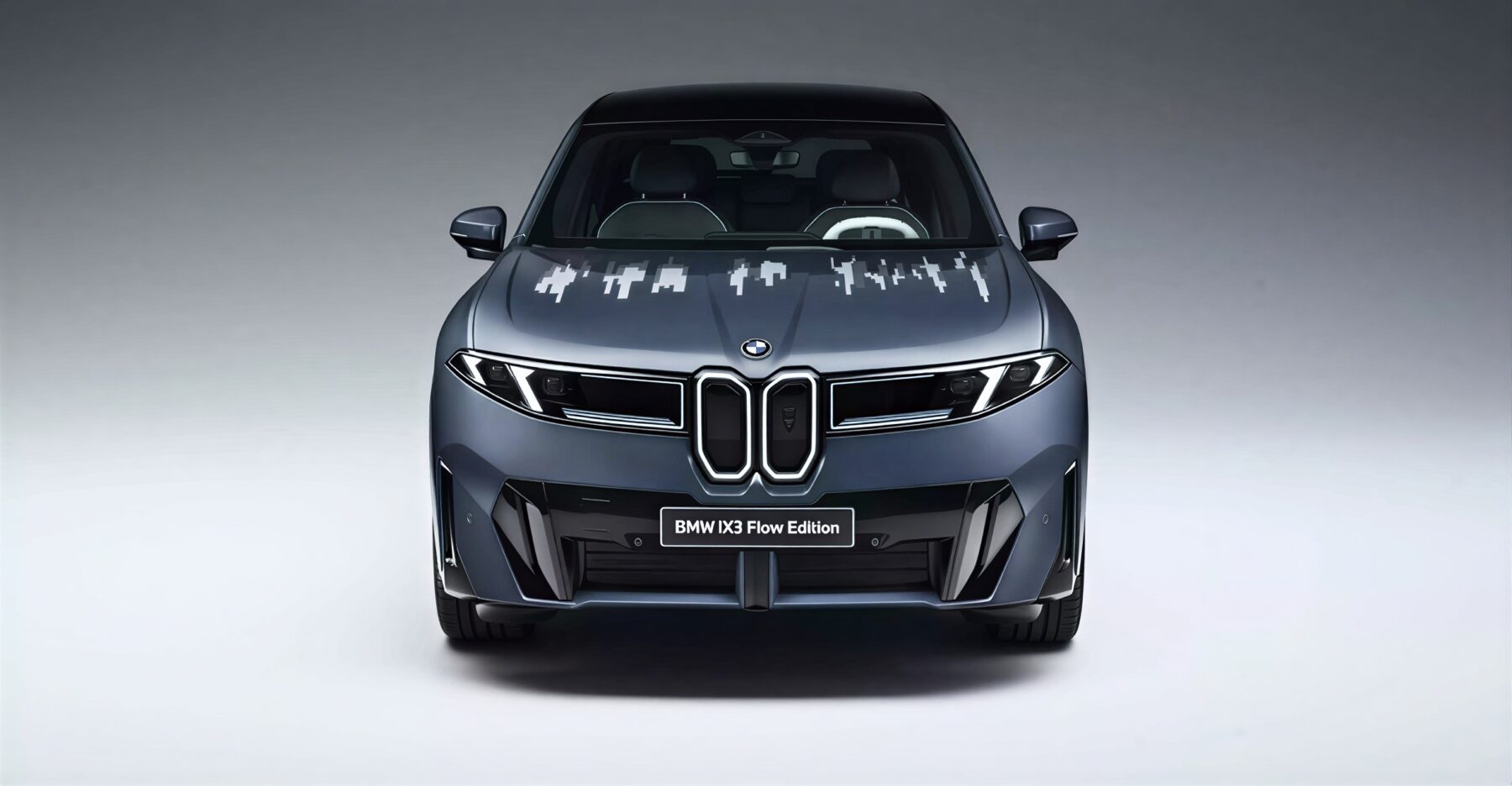
Color-changing cars have lingered in concept car purgatory for years, but BMW just made them real. The iX3 Flow Edition, unveiled at Beijing’s Auto China 2026, embeds E Ink Prism technology directly into the hood panel rather than wrapping it like a giant phone case.
This isn’t another flashy demo destined for museum duty—it’s BMW’s clearest signal that programmable surfaces are heading to actual driveways. The hood displays eight pre-configured animations showing outlines of iconic Chinese buildings, selectable through the infotainment system.
While limited to grayscale patterns for now, the structural integration represents a massive leap from BMW’s previous attempts at morphing metal.
Engineering Evolution Beyond the Gimmick
Unlike wrap-based concepts, the iX3’s embedded system solves durability and manufacturing challenges that kept color-changing tech in the lab.
BMW’s journey toward practical color-changing panels reads like iterative product development rather than science fiction. The 2022 iX Flow wrapped an entire SUV in electrophoretic film that shifted between black and white. The 2023 i Vision Dee pushed further with 240 individual segments displaying 32 colors across the entire body.
Both looked incredible and seemed utterly impractical for real-world use. The iX3 Flow Edition steps back from that maximalist approach, focusing on a single hood panel with embedded technology.
The electrophoretic system uses microcapsules containing pigment particles that shift via low-voltage electrical charges, consuming power only during transitions. Perfect for EVs that monitor every electron.
Beyond Visual Theater
Thermal management benefits could improve EV efficiency by reducing cabin cooling demands and extending battery range.
The real value proposition isn’t Instagram-worthy hood animations—it’s thermal management. Lighter surfaces reflect sunlight to reduce cabin heat during summer driving, potentially cutting air conditioning load. Darker modes can absorb heat during cold weather, assisting cabin warming.
For EVs where every efficiency gain translates to range, this becomes genuinely useful rather than merely decorative. BMW also hints at enhanced visibility applications, particularly for emergency vehicles that could shift between high-contrast patterns for maximum attention.
Asian Markets Get First Access
The iX3 Flow Edition targets Asian markets where BMW is expanding EV production and customization preferences run high.
BMW positions the iX3 Flow Edition as demonstrating “readiness for series production,” though specific launch timelines remain unconfirmed. The vehicle appears based on the standard-wheelbase iX3—not sold in China—alongside long-wheelbase variants planned for India, Thailand, Indonesia, and Malaysia.
This geographic focus makes strategic sense. Asian markets often embrace technological customization features that Western buyers consider excessive. If programmable surfaces find their footing anywhere, it’ll likely be in markets where personalization meets premium positioning.