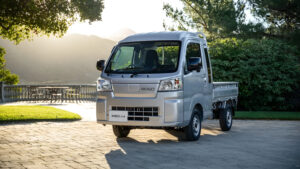


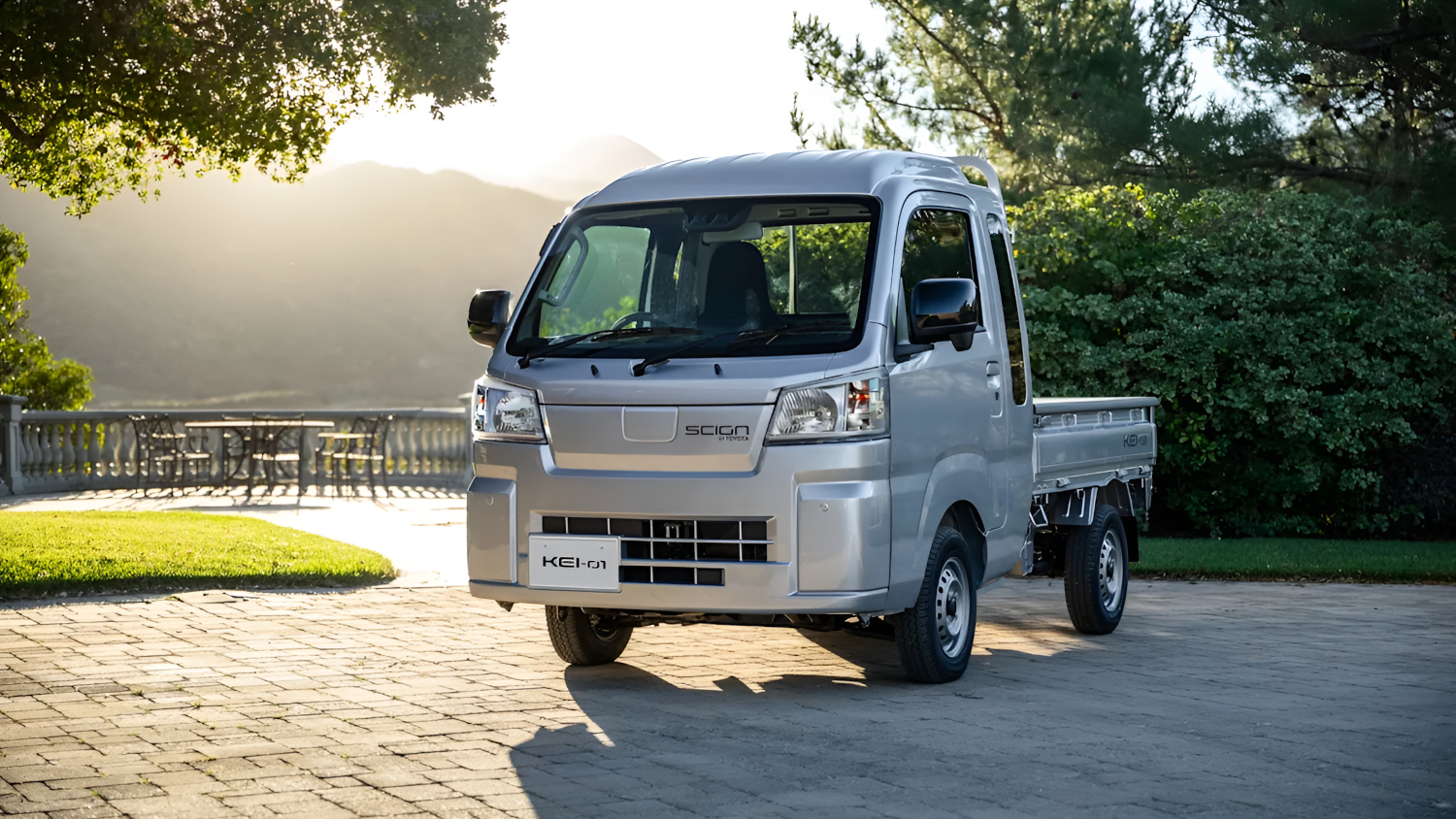
While Millennials remember Scion as the brand that sold boxy hatchbacks to college students before Toyota discontinued it in 2016, the actual comeback vehicle is something far stranger and arguably more useful. No turbocharged hatch. No lifestyle coupe. Toyota is relaunching Scion with a right-hand-drive mini truck that tops out at 25 mph and hauls up to 600 pounds. It’s fleet-only, at least at launch — and that restraint might be exactly what makes it worth watching.
What the KEI-01 Actually Is
A kei truck engineered for work corridors and controlled environments, not open-road commutes.
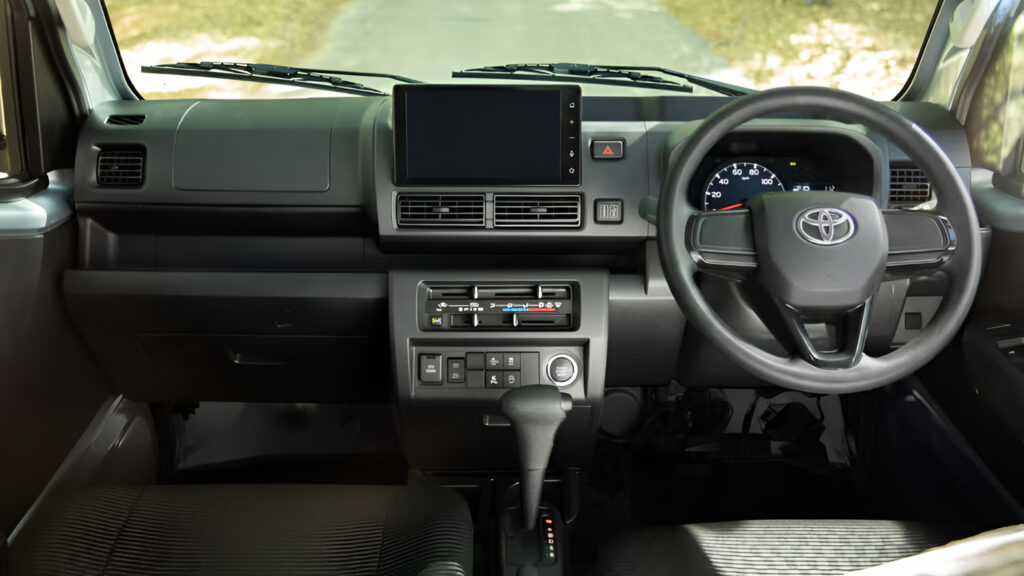
At just over 11 feet long and under 5 feet wide, the KEI-01 is more compact than most vehicles already parked in American driveways. It runs a 660cc three-cylinder gasoline engine paired with a CVT and four-wheel drive — no horsepower figure has been announced yet. The right-hand-drive layout draws directly from Japanese kei-truck tradition, adapted here with an extended cab, raised roofline, and enough comfort for a full shift: heat, air conditioning, push-button start, reclining seats, and a rear-view camera. Classified as a low-speed vehicle under FMVSS No. 500, the 25-mph ceiling is the regulatory framework that defines the truck’s U.S. road eligibility — and shapes its entire value proposition.
- Top speed capped at 25 mph; classified as a low-speed vehicle under FMVSS No. 500
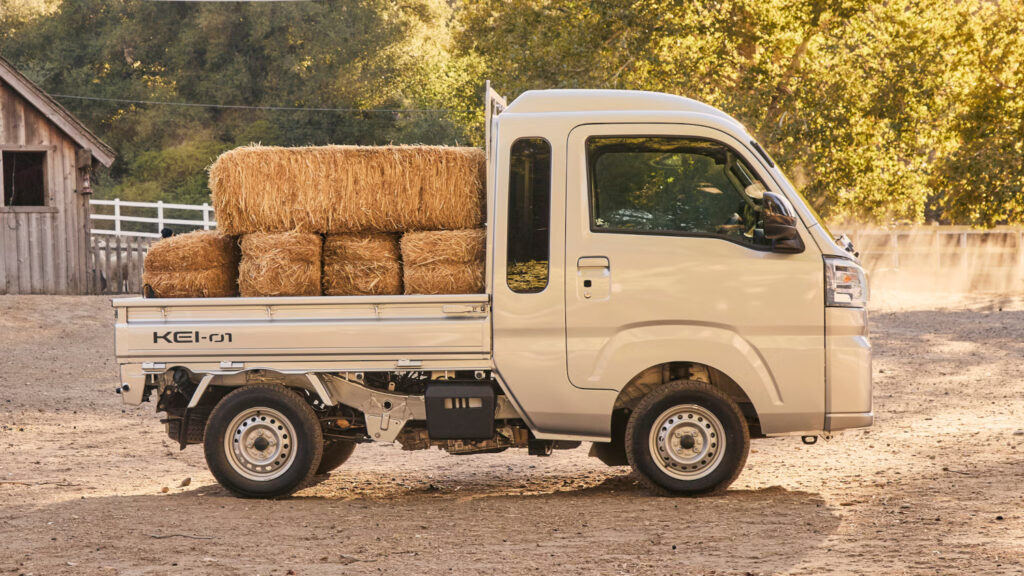
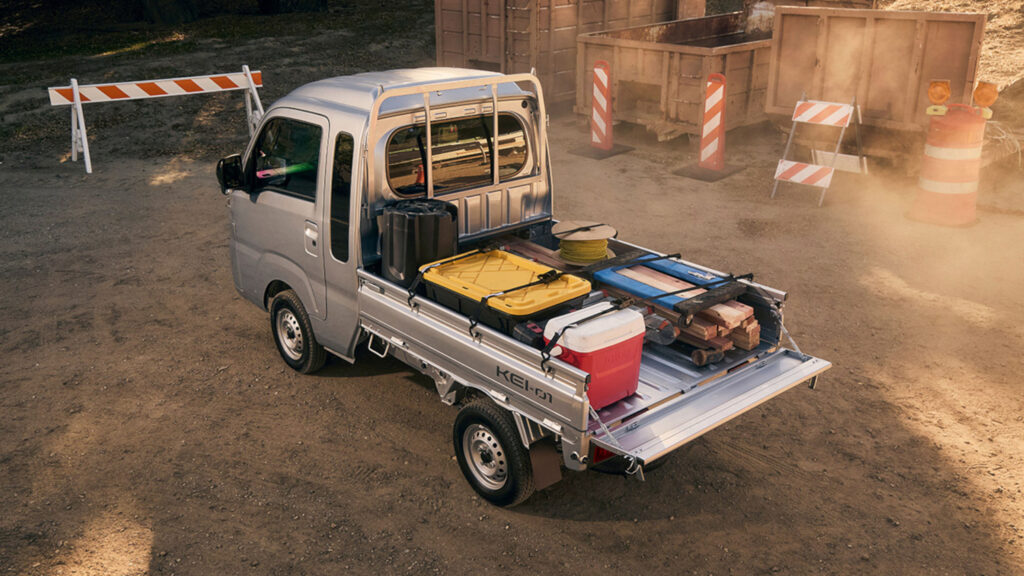
- Bed carries up to 600 lbs with three-way folding sides for side or rear loading
- 660cc three-cylinder engine, CVT, four-wheel drive; horsepower unannounced
- Assembled at Toyota’s Indiana plant; $34 million investment, approximately 50 new jobs
- Fleet-focused pilot at launch through participating Toyota dealers; U.S. deliveries second half of 2027; pricing not announced
Toyota is positioning Scion as a “Freedom Lab” for mobility exploration — a bold label for a 25-mph utility truck, though the underlying vehicle concept is well-matched to its intended audience.
Who It’s Actually For (And Who It Isn’t)
The KEI-01’s size and speed restrictions become genuine advantages inside the right fence line.
If your operation moves supplies across a university campus, services a working ranch, or navigates tight municipal corridors, highway capability is irrelevant. Toyota identifies the following as its core targets — environments where a compact, maneuverable truck with a 600-pound bed outperforms a full-size vehicle that can’t fit the space:
- Farmers and ranchers
- Municipalities
- Universities
- Corporate campuses
- Delivery operators
Worth noting for fleet managers: the right-hand-drive configuration, standard on Japanese kei trucks, may require a brief adjustment period for U.S. drivers. The KEI-01 is not a compact pickup competitor. It is a purpose-built utility vehicle that happens to carry Toyota’s reliability reputation into a category American fleets haven’t had easy access to before.
Toyota is running a deliberate test. Market conditions, customer demand, and operational outcomes from the 2027 fleet pilot will collectively influence whether the KEI-01 eventually moves toward limited retail availability. For now, it’s a precise tool for specific jobs — and Scion’s most practical second act yet.