

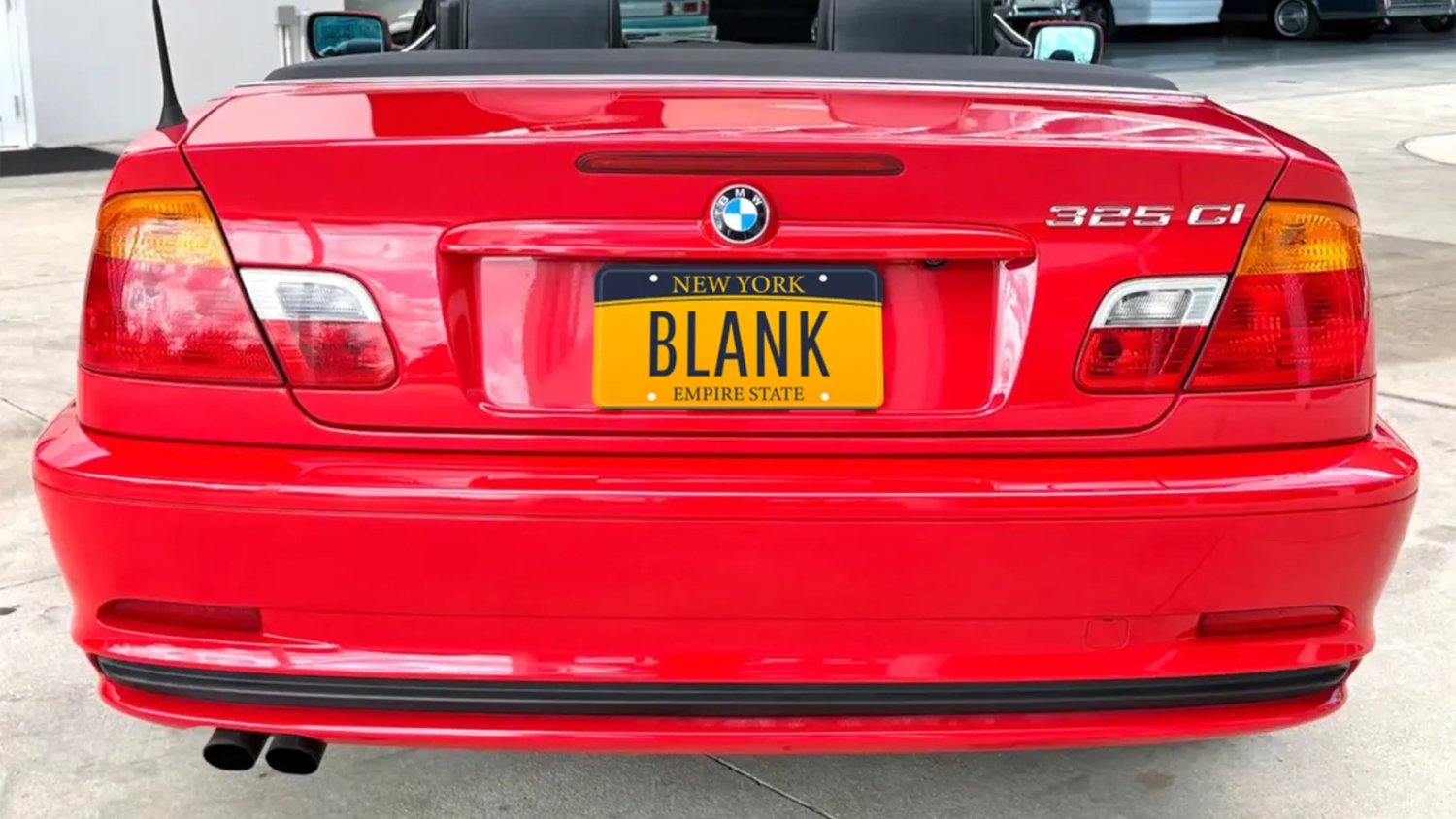
Carole Blank Brown updated her vehicle registration with a new Upper East Side address. Routine paperwork. The kind of errand forgotten by lunch. What followed was anything but forgettable: more than 400 parking violations — blocking fire hydrants, double-parking, obstructing driveways, operating without a license plate — all reportedly landing on her record. Total damage: over $40,000. Her vehicle, a red BMW convertible, was nowhere near any of them, Brown said.
The culprit wasn’t fraud. It was apparently a form field.
When NYC traffic enforcement issues a citation with no plate number recorded, the system seemingly stored “BLANK” as the plate value. Once Brown updated her registration, the city’s database appears to have matched that stored placeholder to her legitimate vanity plate — though neither the city nor a primary source has publicly confirmed the exact mechanism. Hundreds of orphaned tickets with “BLANK” in the plate field suddenly had an apparent owner.
According to New York Times reporting from November 2026, Brown contacted 311, obtained copies of the disputed citations — reportedly paying $400 for them — and appeared before four administrative judges over two days, with additional hearings required as new tickets kept materializing.
The NY State DMV has since said it will not reissue the “BLANK” combination to another registrant. Brown surrendered the plate and switched to “KNALB” — her surname spelled backward.
A Fix That Barely Fixes Anything
Pulling one plate combination from circulation doesn’t address the database logic that reportedly created the problem in the first place.
This isn’t a quirky one-off. Joseph Tartaro‘s California “NULL” plate produced a similar outcome — approximately $12,049 in fines for unrelated citations, apparently the result of a comparable bureaucratic logic gap. Both cases suggest that ticketing systems may not reliably distinguish between a literal vanity plate value and a missing-data placeholder, though the precise software or administrative causes in each case have not been confirmed by primary sources.
The DMV’s decision not to reissue “BLANK” is the administrative equivalent of patching one pothole on a crumbling road. Brown’s citations reportedly kept appearing even after she changed plates, suggesting that existing database associations don’t dissolve cleanly once formed. Until enforcement systems can flag citations with no valid plate before assigning liability, another driver with an ill-chosen combination may walk into the same trap.
The practical takeaway is blunt: if a vanity plate doubles as something that sounds like an empty form field — “NO PLATE,” “NOTAG,” “NULL” — it may be worth reconsidering. The reporting on Brown’s case makes clear that clever combinations can carry an unexpectedly steep administrative price, and the humor of the situation lands exclusively with everyone who isn’t footing the bill.