

The Hemi V8 has a reputation built on cubic inches and muscle-car mythology. What the brochures skip is the part where your Ram or Durango develops a persistent tick, and a shop quote lands on your kitchen table like a small mortgage. Dave Miller, who runs Hemi Garage Hacks and self-reports more than 2,000 Hemi rebuilds, says he may know exactly why — and the answer reportedly comes down to less than one millimeter.
The 0.88mm Gap That May Be Costing You Thousands
Miller’s theory points to a lubrication shortfall in post-2009 Hemi engines that he says the original redesign may have inadvertently created.
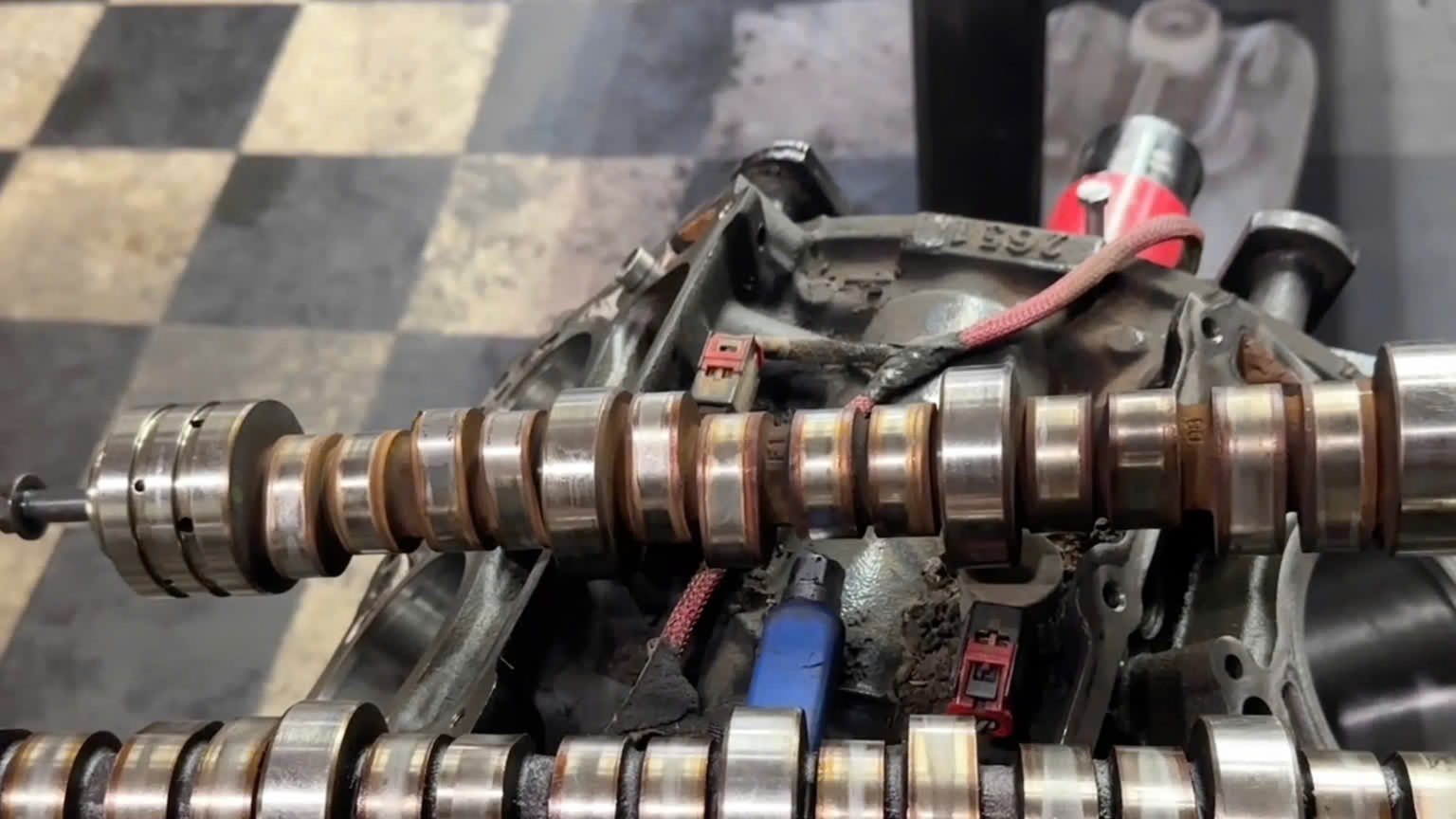
Miller’s hypothesis centers on Chrysler’s 2009 Hemi redesign. That update added variable valve timing, revised the block and cylinder-head architecture, and expanded use of the Multi-Displacement System — the cylinder-deactivation setup that shuts down four cylinders under light load. According to Miller, a borescope inspection revealed that 2003–2008 engines have a small oil opening that feeds the lifter roller near the top of its travel. The 2009-and-newer engines, he says, lack that opening. The oil band on the newer lifters reportedly sits approximately 0.88 millimeters short of the oil gallery, potentially starving the needle bearings inside the roller assembly. When those bearings run dry, the roller stops spinning cleanly and drags across the camshaft lobe instead of rolling over it — grinding metal into the oil and generating that characteristic tick.
Miller’s proposed failure chain, as reported by CarBuzz and Autoblog:
- Affected engines: 2009-and-newer 5.7L and 6.4L Hemis, plus supercharged 6.2L variants across Dodge, Jeep, Ram and Chrysler vehicles — though whether all share the identical lubrication shortfall remains unconfirmed
- The sequence Miller describes: reduced lubrication → needle-bearing wear → roller seizure → cam lobe destruction → metal debris circulating through the engine
- His proposed fix: modified lifters designed to route oil directly to the roller; bench-tested at roughly 20 psi without reducing overall oil pressure, per his own reported results
- Repair scope if damage is advanced: rebuilds can require pulling the intake, alternator, timing cover and cylinder heads — an expensive teardown whose exact extent depends on how far the damage has progressed
- Verification status: Miller’s own assessment and testing; no independent real-world validation has been confirmed as of reporting
A Credible Hypothesis That Still Needs Independent Proof
Miller’s bench results are promising, but the theory requires validation from independent engine builders or a manufacturer before it can be treated as a confirmed diagnosis.
The modified-lifter concept is worth watching. Automotive history, however, is full of fixes that worked perfectly on the bench and met their limits somewhere around 80,000 real miles and a Texas summer. Until independent specialists or an established manufacturer validates these lifters across extended operating conditions, the concept remains experimental — not a reason to panic-buy replacement parts.
Equally important: a Hemi tick is not automatically proof of this specific failure. Oil pressure, oil condition, general lifter operation and camshaft wear all require proper inspection. A qualified technician with a borescope can assess lifter-roller condition before secondary damage reaches the camshaft — which is a far less costly intervention than a full valvetrain rebuild.
If your 2009-or-newer Hemi is ticking, get it inspected promptly rather than filing the noise under normal engine character. Miller’s self-reported experience across thousands of teardowns makes his theory worth taking seriously, even if it isn’t the final word. That tick deserves a proper diagnosis — not a dismissal.