

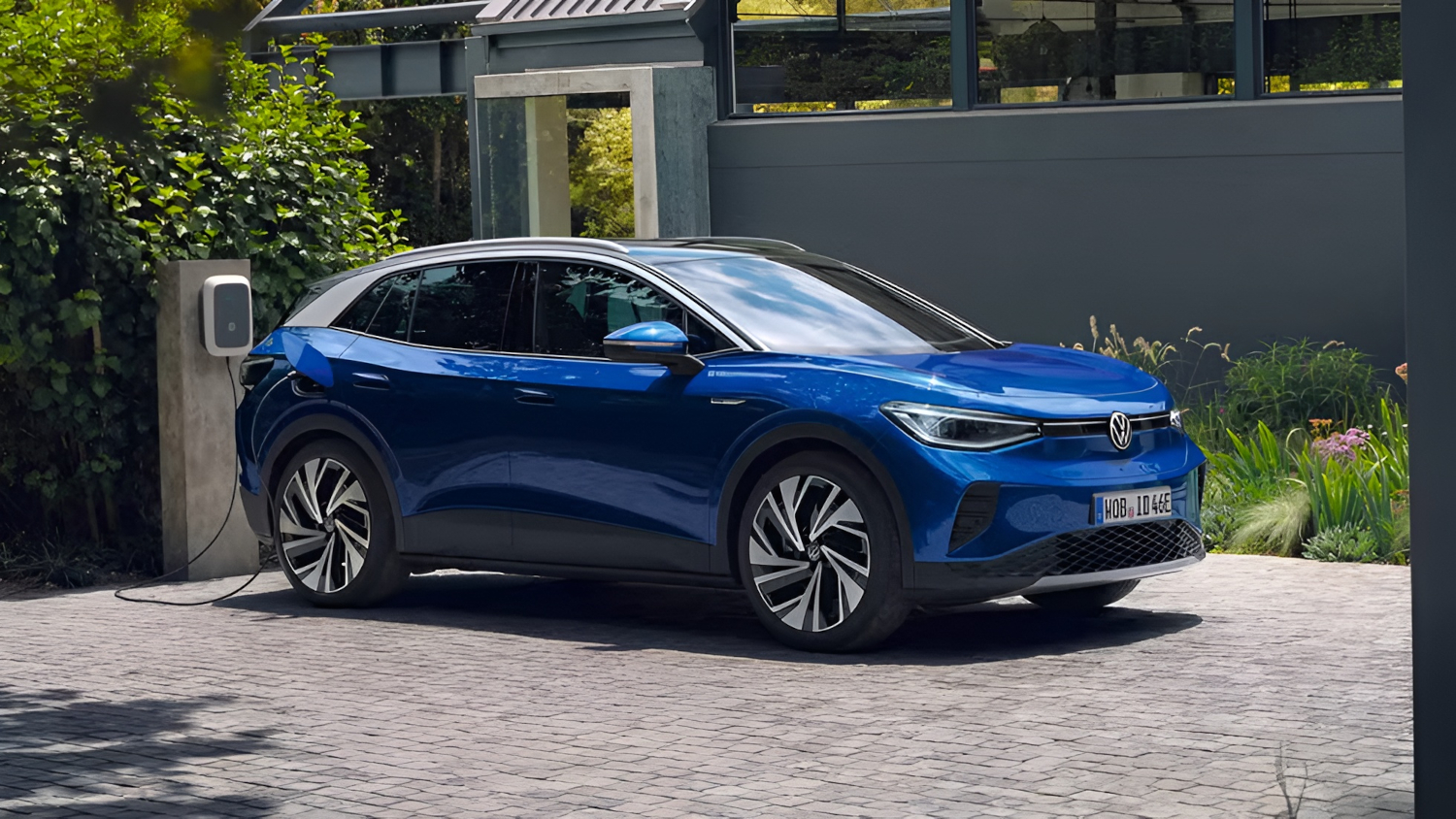
Part of the EV pitch is control — charge at home, skip the gas station, manage your own energy. Now Volkswagen is reaching into 22,524 ID.4s and dialing that control back. The company has issued NHTSA recall 26V630, covering 2023–2026 model year ID.4s whose high-voltage batteries may experience thermal propagation — an escalating battery fire risk that can result in fire — when certain charging profiles combine with a battery state of charge above 80 percent. The uncomfortable part: according to NHTSA recall documents, Volkswagen says the root cause remains unknown.
What the Recall Actually Covers
The interim charging restriction is now in place — but a permanent remedy has not been developed.
Certain charging profiles combined with a state of charge above 80 percent appear to create the risk. For connected vehicles, Volkswagen may enforce the limit through a remote vehicle configuration or software-based setting, depending on the vehicle’s setup and online connectivity. Owners without remote eligibility will need to set the restriction manually using their vehicle’s charging controls. Warning stickers are also coming — a low-tech reminder that the high-tech problem remains open.
What ID.4 Owners Need to Know Now:
- Recall 26V630 covers 2023–2026 ID.4 models — 22,524 vehicles total
- Risk is thermal propagation and potential fire when certain charging profiles combine with a state of charge above 80 percent
- The 80-percent cap applies remotely for some vehicles, manually for others
- Interim owner letters are scheduled to mail beginning November 27, 2026
- No permanent remedy exists yet; root cause remains under investigation
The Real-World Math – and the Bigger Picture
Reduced range is a practical consequence owners will feel on every charge until Volkswagen completes a fix.
Planning a long drive this weekend? An 80-percent ceiling means potentially reduced range between charges, with the precise mileage impact varying by vehicle and driving conditions. NHTSA documents also flag possible degraded performance when recall conditions are present. That translates to a real consideration on road trips, not a theoretical one — a calculus that anyone buying their first EV should weigh carefully.
Zoom out and something more structural comes into view. Software-defined vehicles now let manufacturers push capability limits directly to your car while hardware investigations run in parallel. Like a streaming platform quietly adjusting a feature overnight — no shop visit, no appointment required. In a genuine safety crisis, that responsiveness matters. It is also, increasingly, the new reality of owning a connected vehicle.
According to NHTSA recall documents, Volkswagen says the root cause of the battery fire risk has not yet been determined.
No Fix Yet – Here’s What to Do
Until a permanent remedy is announced, following the interim charging guidance is the clearest protection available.
- Check your VIN through Volkswagen or NHTSA recall resources.
- Whether the 80-percent limit arrives remotely or you set it manually through your vehicle’s charging controls, follow it.
- Watch for recall correspondence beginning late November 2026.
- Treat the software restriction as exactly what it is — a precaution, not a repair — and wait for Volkswagen to announce a confirmed remedy.
Volkswagen is acting before the root cause is confirmed, which is the responsible call. But an unresolved root cause is not a closed recall. Owners deserve a permanent fix, not just a lower ceiling. Until then, 80 percent is where it stops.