

A kid walks up to a parked Tesla on Halloween night. The lights flicker. Something growls through the exterior speaker. Nobody’s in the car. That’s not a malfunction — that’s Tesla’s 2026.38.3 update, which began rolling out October 6, 2026, across Model S, 3, X, Y, and Cybertruck. Software-defined vehicles have long promised to reshape the driving experience without touching a single bolt. This update shows exactly what that looks like in practice.
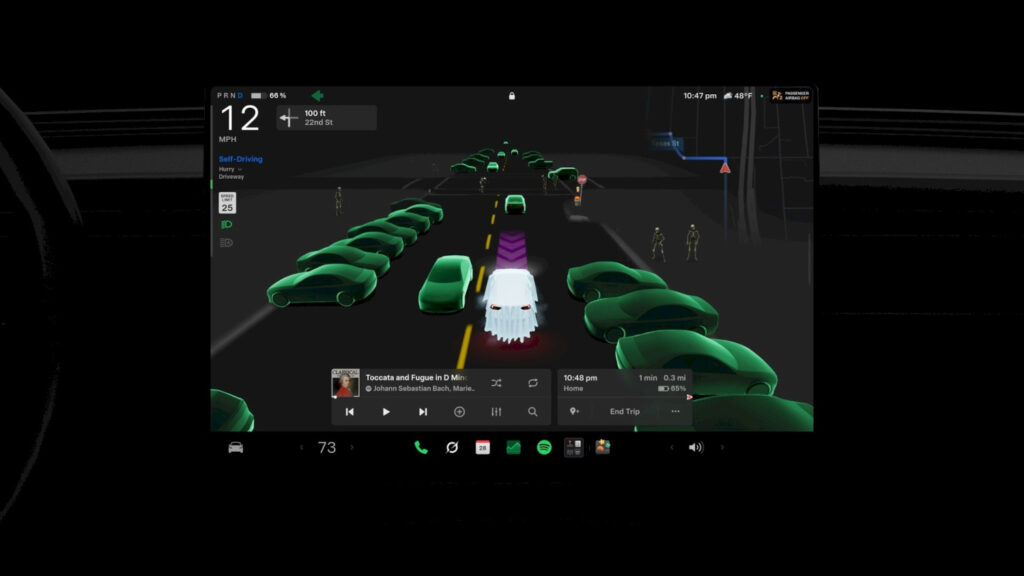
The Haunted Feature Set
Halloween Mode packs interactive tricks, themed visuals, and a remote voice tool that turns any parked Tesla into a seasonal spectacle.
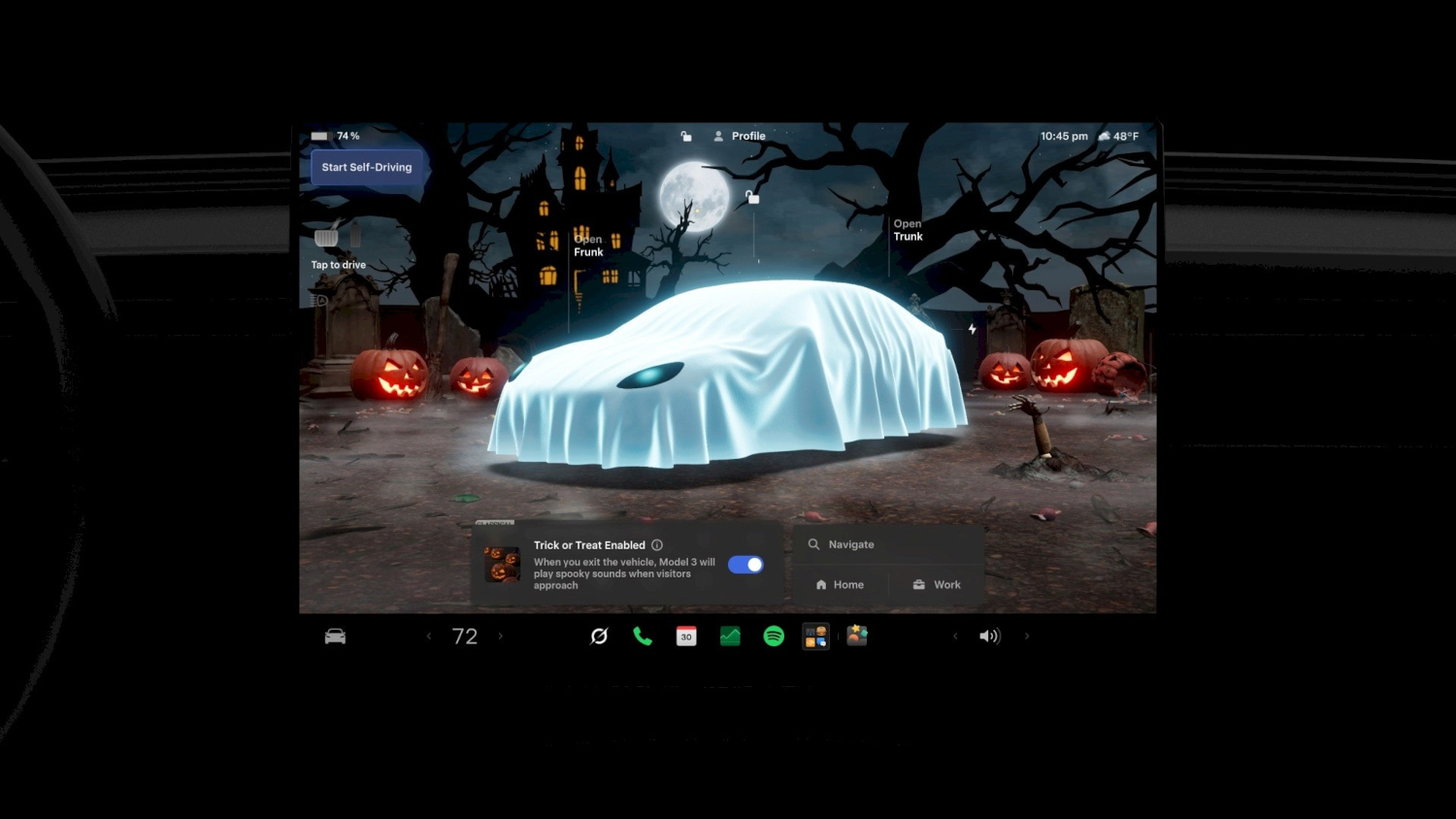
Tesla described the package as turning your vehicle into a “haunted house on wheels.” Trick or Treat Mode triggers spooky sounds and light flickers as visitors approach a parked car, a festive surprise not unlike what other automakers have attempted. Remote voice lets you speak through the Tesla app while the car reproduces your message in a scary voice — equal parts Ring doorbell and haunted mansion, all without leaving the couch.
While driving, the experience shifts too:
- nearby cars render green; pedestrians appear as skeletons; vehicle avatar becomes a ghost
- FSD route visualization reportedly switches from blue to purple, according to secondary reporting
- A haunted light show, Halloween-themed Photobooth, and ghost costume for the vehicle avatar are available while parked
- Dynamic Headlight Leveling auto-adjusts low-beams on supported Model 3 and Cybertruck units
Hardware plays a role here. Some enhanced parked visualizations and Photobooth effects may depend on AMD Ryzen infotainment hardware; feature availability varies by vehicle and software branch. Older Intel-based vehicles may receive a more limited experience, based on secondary reporting.
The Fine Print Nobody Reads Until It Costs Them
Emergency Drive Away and security trade-offs are the two details every Tesla owner should read before activating anything in this update.
Here’s where it gets serious. Activating Trick or Treat Mode reportedly disables Sentry Mode while the mode is active — meaning the car is performing, not protecting. Owners should weigh that trade-off carefully before leaving a vehicle parked on a busy street.
The update also introduces Emergency Drive Away — the ability to shift into Drive while a Supercharger cable remains connected. Tesla is explicit: this is emergency-only. Driving away while connected can damage both the vehicle and charging equipment, at substantial repair cost. If you’re running the FSD software branch, Halloween Mode was not included at launch; secondary reporting indicates Tesla expects a follow-up update to add it.
Knowing the infotainment hardware tier, confirming the software branch, and reserving Emergency Drive Away for genuine emergencies are the three steps that keep the fun from turning costly. The novelty is real — the fine print just deserves equal attention.