

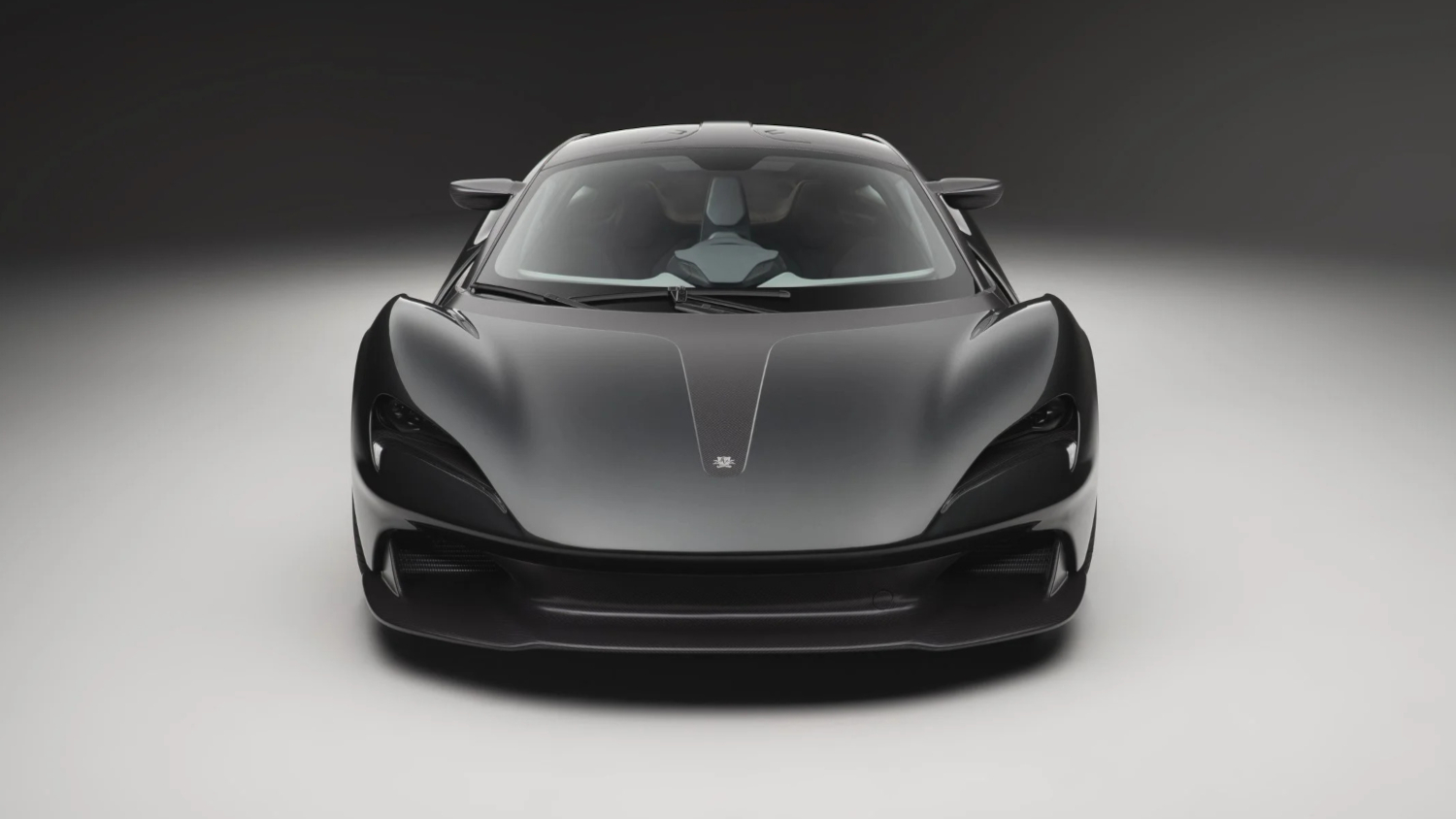
The standard Lanzante 95-59 is already a statement. Over 850 hp, a central driving position, a carbon-fiber body, and a base price reportedly around £1.02 million before taxes. Subtle, it is not. Yet somehow, the optional High Downforce Kit makes it look restrained by comparison. The HDK transforms this refined road car into something that looks like it escaped from the Le Mans grid — without adding a single horsepower. That’s either a masterstroke of design philosophy or an expensive exercise in aesthetics. Probably both.
Carbon, Fins, and a Wing That Means Business
Choosing fixed aerodynamic surfaces over a standard road-car setup is a deliberate racing-world signal — and it changes how the 95-59 communicates its intent from every angle.
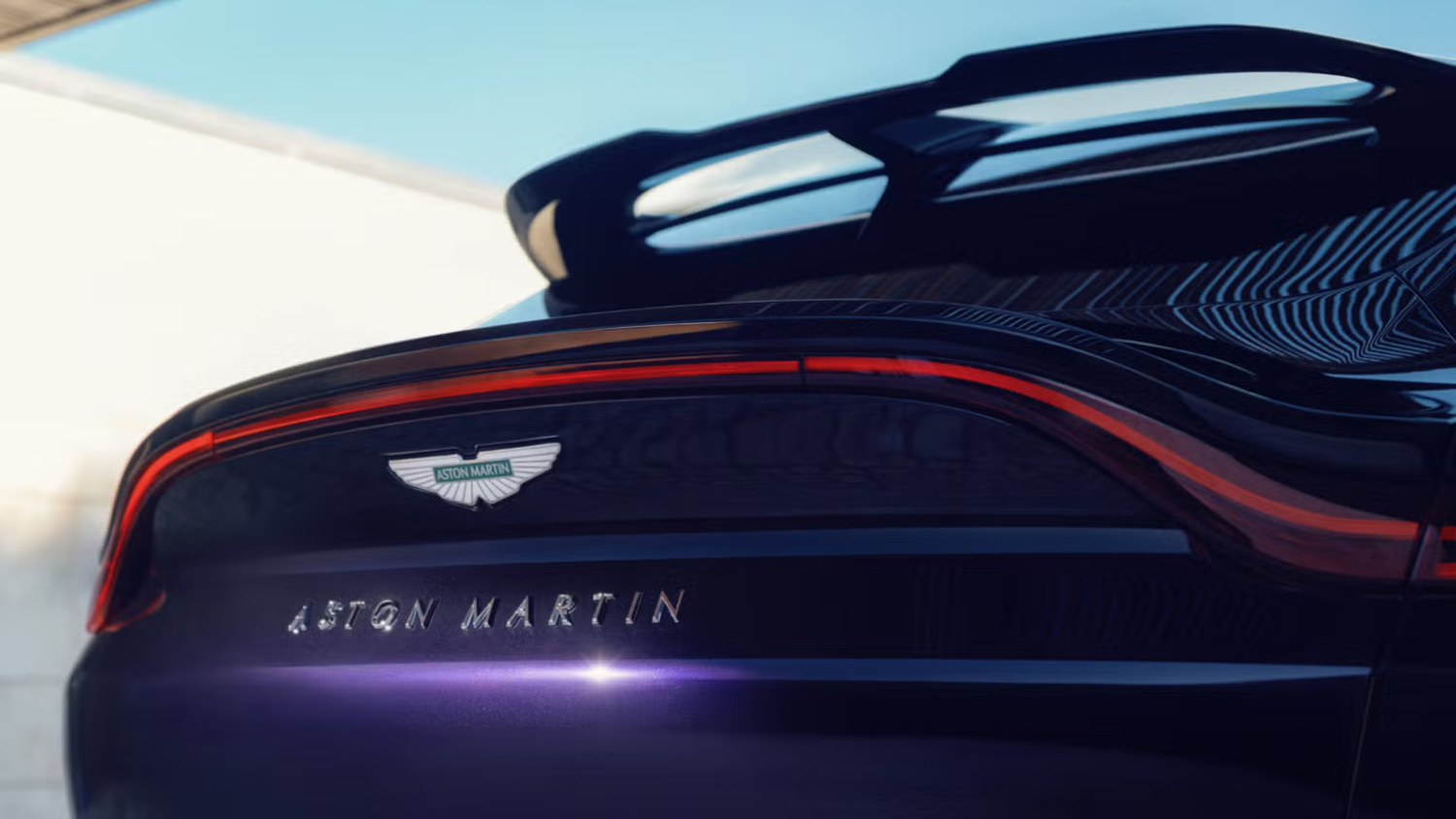
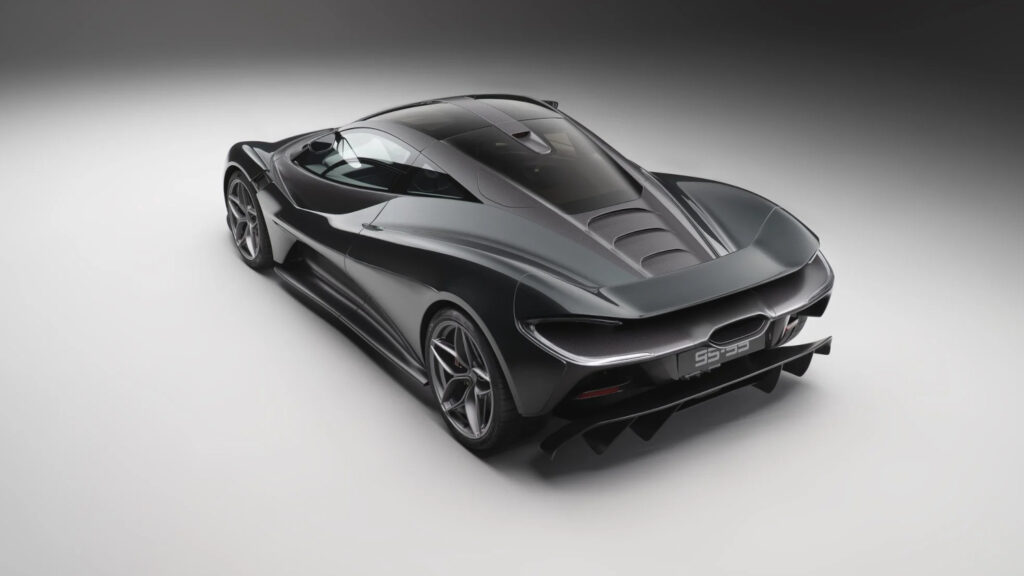
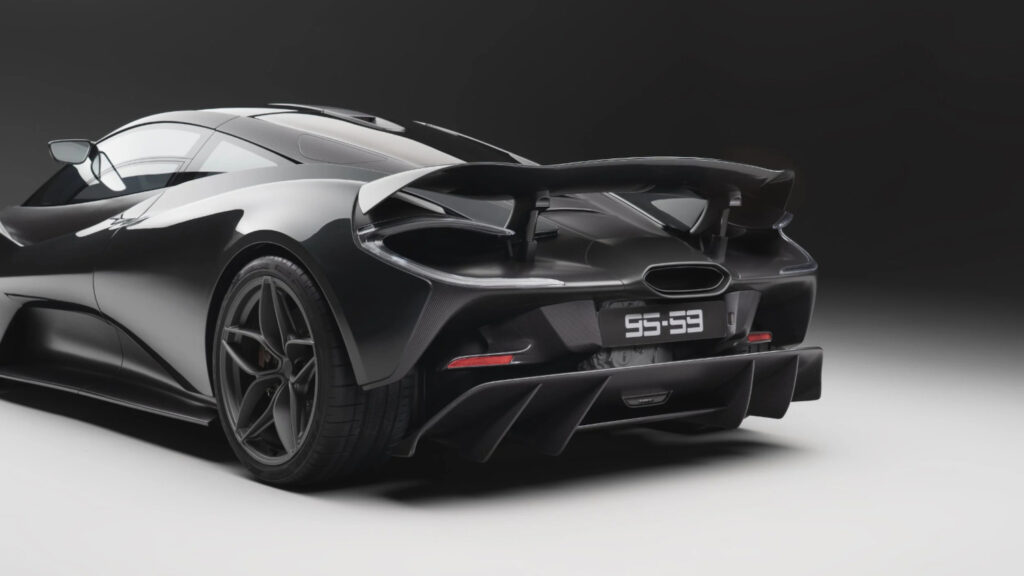
From the front bumper backward, the HDK is a comprehensive rework. A large carbon-fiber splitter anchors the nose, paired with enlarged air intakes and a reshaped hood that pushes the whole front end lower and wider. The sides gain revised door skins, carbon skirts, and tall aerodynamic fins that climb dramatically toward the rear wheels. Then there’s the rear. A roof-mounted air scoop feeds cooling air to the twin-turbo V8, while a fixed carbon wing sits on tall uprights with extended side fins. A carbon diffuser and center-lock wheels complete the transformation. It’s a lot — and every piece of it is deliberate.
What the HDK Adds at a Glance
The package is broad in scope, yet leaves the powertrain entirely untouched.
- Available as an option across all 59 planned 95-59 cars, not a separate limited run
- Engine output unchanged: 4.0-liter twin-turbo V8, 850+ hp, 880 Nm (approximately 650 lb-ft)
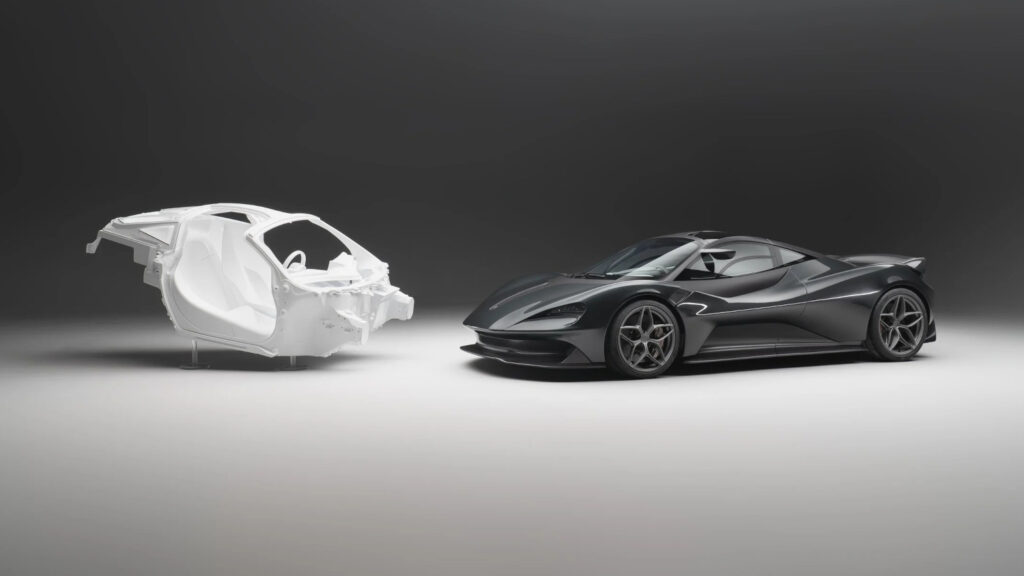
- Built on a re-engineered carbon monocoque derived from the McLaren 750S, with a three-seat central driving position
- Exterior designed by Paul Howse, formerly of McLaren, credited with work on the P1 and 720S, per Lanzante
- HDK pricing undisclosed; the standard 95-59 is reportedly approximately £1.02 million before taxes
From Tribute to Participant
The HDK’s fixed aerodynamic surfaces borrow directly from the visual language of endurance racing, pushing the 95-59 well beyond road-car convention.
The standard 95-59 is a road-going supercar shaped by its racing heritage. The HDK adds fixed surfaces — a large splitter, tall fins, a static rear wing — the kind of hardware that reads immediately as track machinery rather than refined road transport. There’s a meaningful difference between wearing a band’s vintage tour shirt and actually being onstage. The HDK moves the 95-59 firmly into the latter category, visually at least.
Here’s the honest caveat: as of the time of writing, Lanzante has not published downforce figures, weight impact, or lap times. No such data was identified in any published material reviewed. The HDK’s clearest verified effect remains visual transformation. That’s not a criticism — it’s a fact worth knowing before writing the check.
Exclusivity Is Already Guaranteed
With production capped at 59 cars and the HDK available across the full run, scarcity is built into the project regardless of which specification an owner chooses.
With only 59 cars planned and the HDK available across the entire production run, scarcity isn’t the real question here. Lanzante’s documented history with McLaren’s F1 GTR racing program gives the project a credibility that pure badge engineering never could. The remaining open questions — final aero specifications, weight penalty, and HDK pricing — will ultimately determine whether this package becomes the default choice or a polarizing one. Until those numbers arrive, the HDK makes its case the only way it currently can: visually, and very convincingly.