

The 10th-generation Ford F-Series earned MotorTrend Truck of the Year for 1997, signaling a pivot when truck buyers stopped accepting “utility or comfort” as a binary choice. Ford delivered a rounded, aerodynamic F-150 with independent front suspension that rode more like a daily driver than a workhorse. This era spawned performance machines, luxury experiments, and heavy-duty packages that redefined what pickups could accomplish on both job sites and road trips.
1. Ford F-250 Light Duty / F-150 7700

The 7-lug wheel pattern became the handshake nobody else could match.
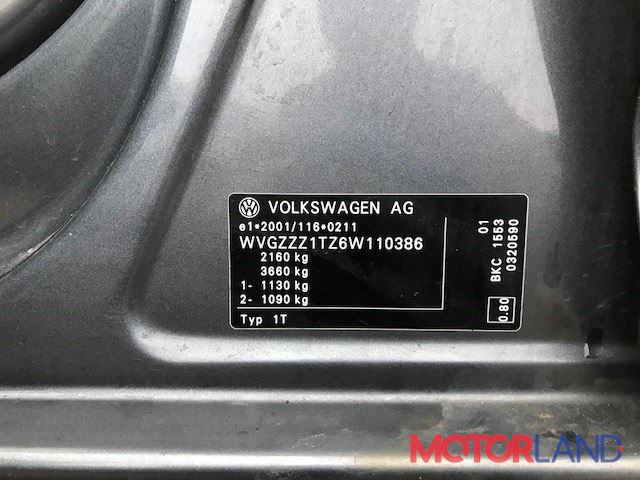
The 7×150 mm bolt circle on Ford’s F-250 Light Duty (1997–1999) remains a technical oddity, incompatible with standard 5-lug F-150s and 8-lug Super Dutys. This transitional “heavy half-ton” used the 10th-gen F-150 chassis but added a strengthened frame, upgraded suspension, and a Sterling 10¼-inch semi-floating rear axle.
For builders needing more muscle without a full Super Duty, the F-250 Light Duty delivered. Standard power came from the 4.6 L Triton V8 (around 220 hp and 290 lb-ft), with the optional 5.4 L pushing closer to 235 hp and 325 lb-ft. Properly equipped, these trucks could tow up to roughly 10,000 lb GVWR and handle payloads approaching 3,600 lb. When Ford’s true Super Duty lineup launched in 1999, this chassis carried over as the F-150 7700 package (7,700 lb GVWR) through 2003. Same hardware, different badge—an unsung workhorse for anyone who knew where to look.
2. 10th-Generation Ford F-150 (Core Models)
Ford traded the boxy workhorse for curves that made traditionalists nervous.
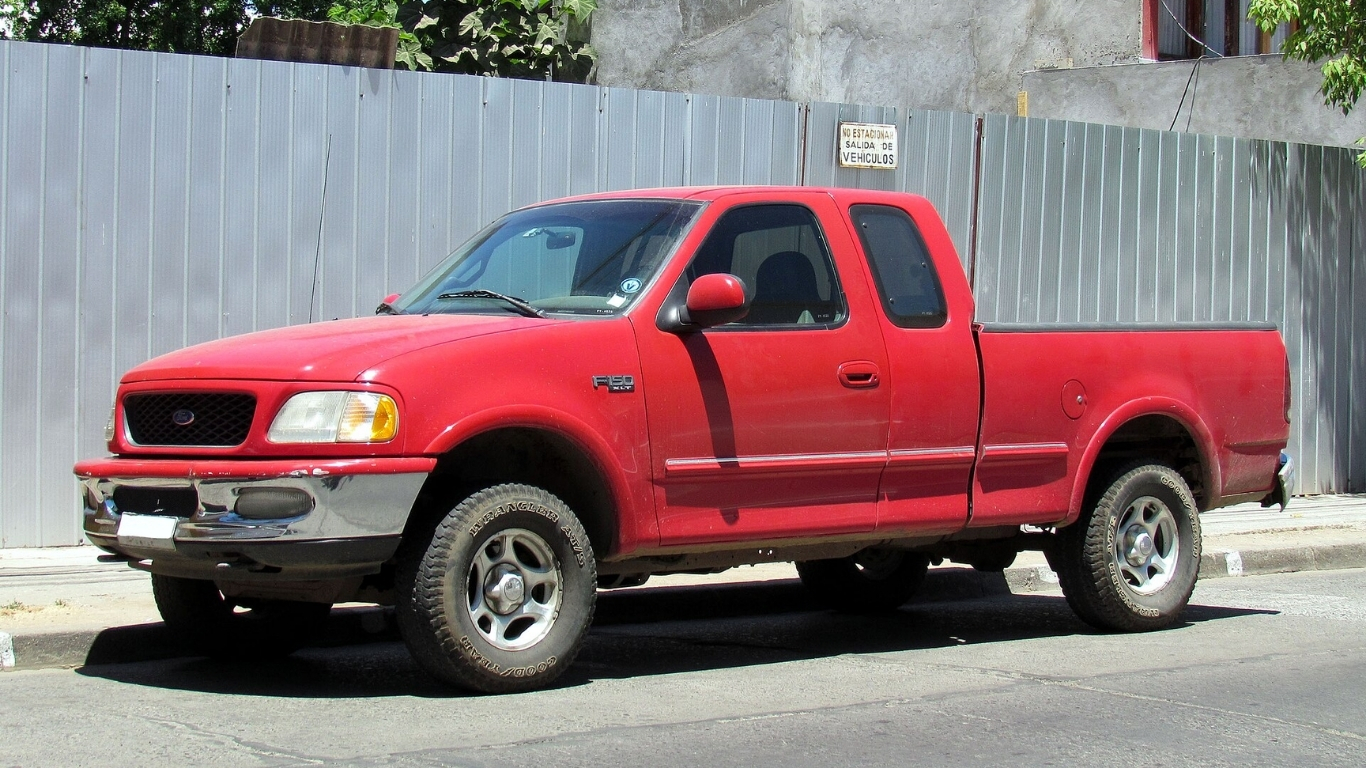
The 1997 F-150’s aerodynamic bodywork drew skepticism from truck purists who labeled it “too soft” or “overly suburban.” Ford cleverly targeted daily drivers and families anyway. The shift from Twin-I-Beam to independent front suspension (A-arm IFS) delivered a ride quality closer to an SUV than a spine-compressor, smoothing out the commute without sacrificing capability.
Power came from a 4.2 L V6 and 4.6 L or 5.4 L Triton V8s, producing between 205–260 hp depending on displacement and year. This F-150 quickly became a market force, selling over 750,000 units annually and earning MotorTrend Truck of the Year for 1997. You saw these trucks packed for family road trips and loaded with camping gear, not just hauling lumber. Comfort and capability coexisted in a package that reshaped the modern pickup landscape, despite its controversial start.
3. 1999–2004 Ford F-150 SVT Lightning
Factory superchargers turned pickups into drag-strip terrors.
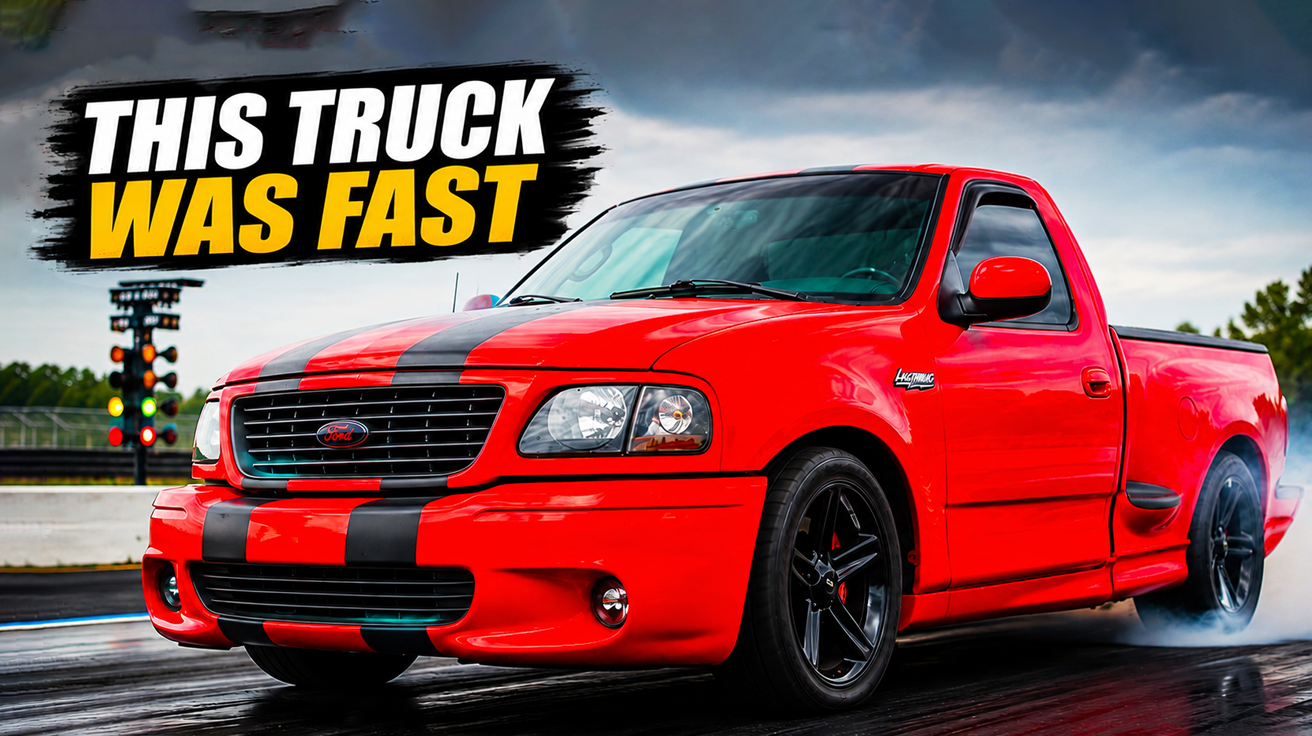
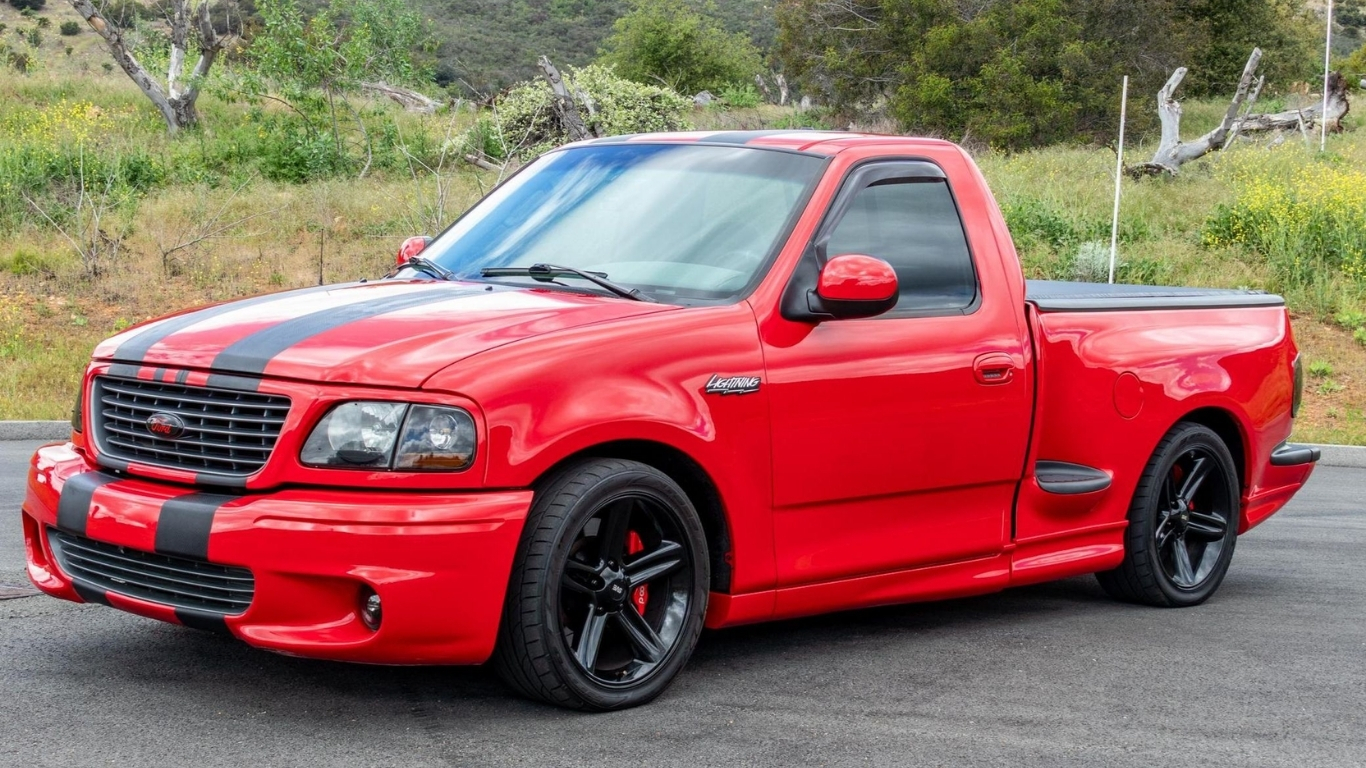
The second-generation SVT Lightning packed a 5.4 L Triton SOHC V8 with forged internals and an Eaton Gen IV roots-type supercharger. Early models (1999–2000) delivered 360 hp and 440 lb-ft of torque; 2001 onward bumped that to 380 hp and 450 lb-ft. An 8.4:1 compression ratio, water-to-air intercooler, and 8 psi of boost enabled 0–60 mph runs in 5.2–5.8 seconds and top speeds around 139–140 mph.
Merging onto the highway felt like dropping the hammer in a drag car—instant torque shoved you back into the seat. Yet the Lightning retained a practical 5,000 lb towing capacity, proving performance could still handle real work. Anyone who’s hammered third gear on a backroad knows the grin that follows; the Lightning made that a daily option in a pickup bed.
4. Ford F-150 Harley-Davidson Edition (10th Generation)
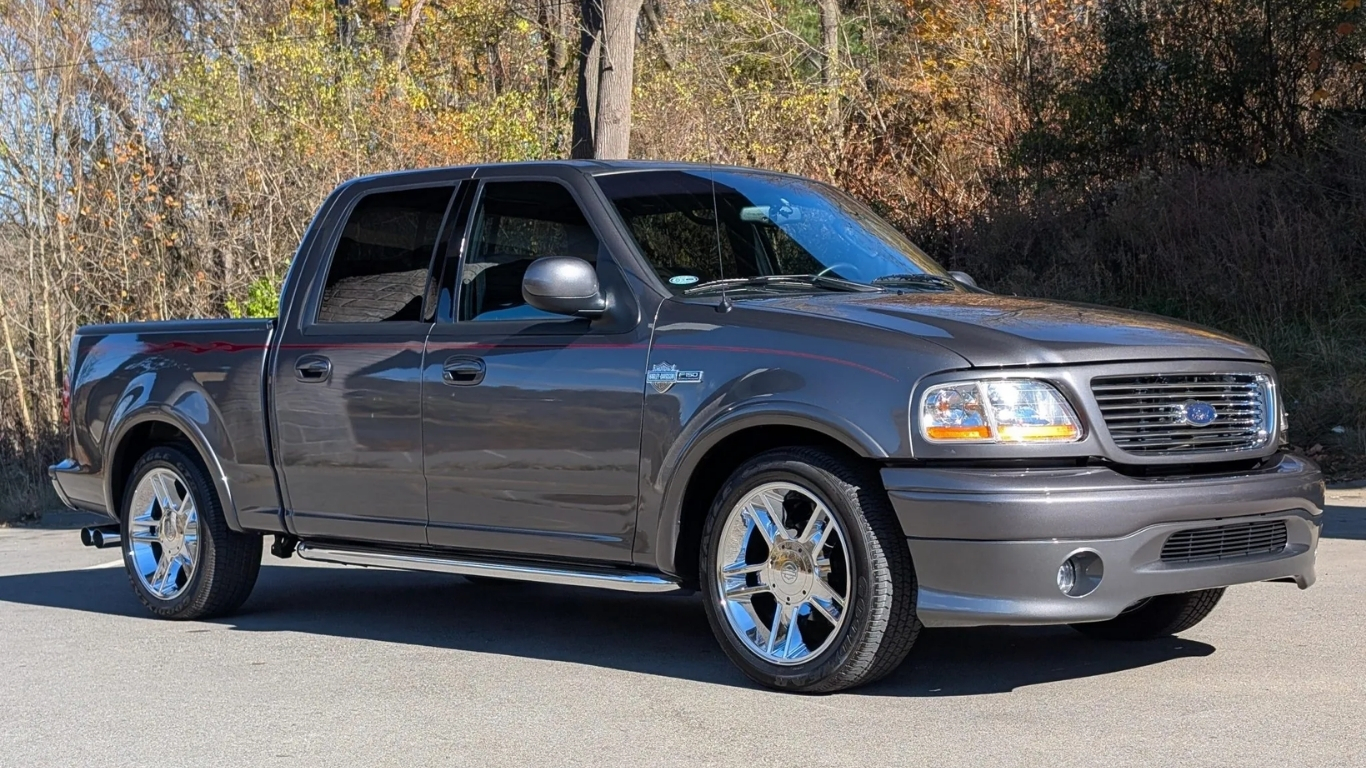
Black paint, chrome wheels, and a supercharged attitude.
Fusing two iconic American brands, the 10th-gen F-150 Harley-Davidson Edition arrived with black exterior paint, distinctive chrome or polished wheels, and leather trim adorned with Harley logos. Later versions escalated the formula, packing a supercharged 5.4 L Triton V8 closely related to the SVT Lightning’s blown mill. Outputs climbed to 380 hp and 450 lb-ft of torque, proving serious power existed beneath the polished surface.
Rolling up to a rally with chrome gleaming and that supercharged V8 rumbling made a statement before anyone spoke. This truck merged rugged utility with motorcycle culture’s distinct vibe, a rolling declaration that hauled gear and turned heads in equal measure.
5. Lincoln Blackwood
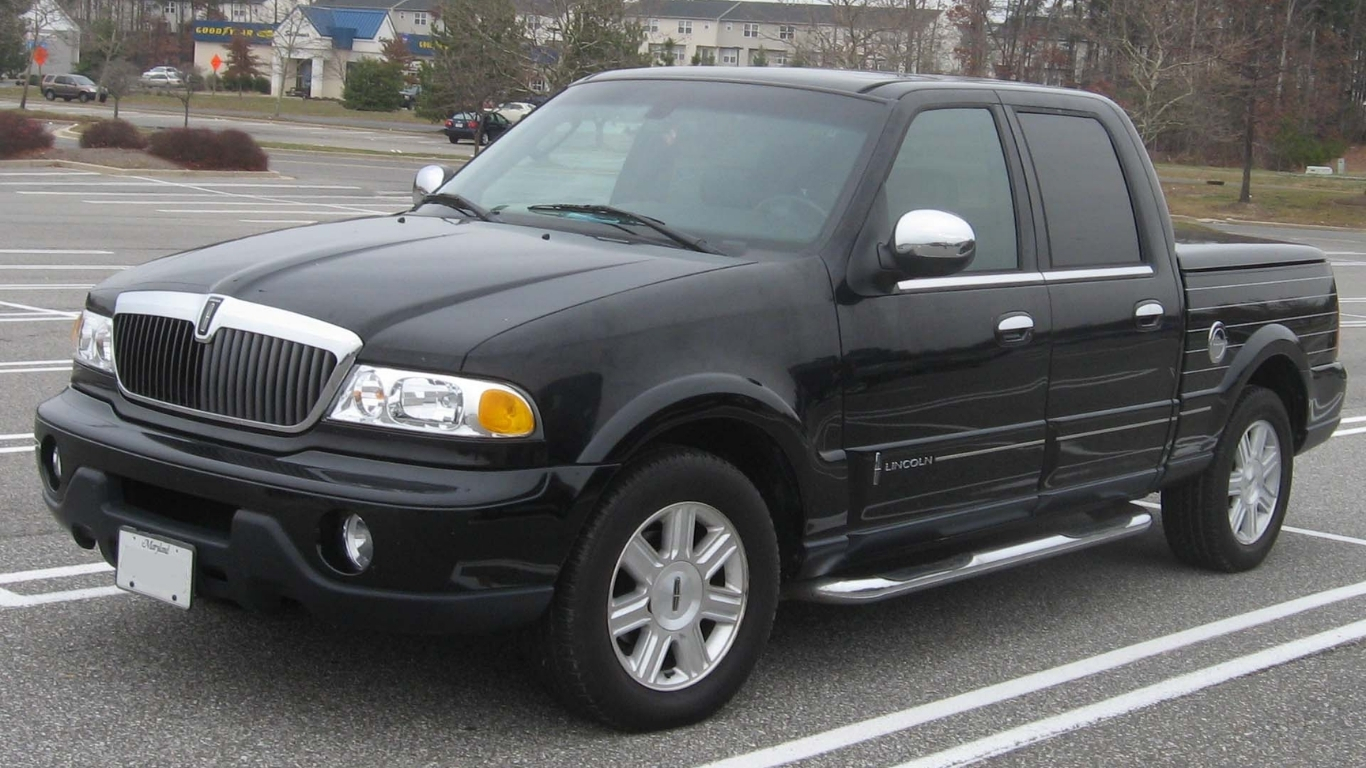
A velvet-lined jewelry box with a bed.
Lincoln’s Blackwood attempted to fuse truck capability with premium amenities on the 10th-gen F-150 platform. It featured an SUV-like cabin and a distinctive, fully trimmed cargo bed with a covered design that transformed a workhorse into a suburban status symbol.
Loading a muddy mountain bike into that covered bed felt awkward—luxury and practicality clashed. The Blackwood’s short production run and limited commercial success highlighted the difficulties of blending high-end finishes with true pickup functionality. It stands as an ambitious early experiment that paved the way for later luxury trucks without quite nailing the execution itself.
6. Ford F-150 King Ranch (10th Generation)

When work trucks started offering leather you’d find in a luxury sedan.
Introduced for 2001, the F-150 King Ranch fundamentally redefined what a work vehicle could be. Ford’s decision to name it after the iconic Texas ranch signaled a pivot toward trucks as legitimate luxury conveyances, not just dressed-up workhorses.
Premium leather upholstery and distinctive interior and exterior trim elevated it far beyond the utilitarian XLT or Lariat. After a long day hauling gear, settling into that refined cabin turned a dusty job into a comfortable commute. This truck ushered in the era of the half-ton offering SUV-level amenities, proving that raw capability and genuine plushness could coexist on any road trip. The luxury pickup segment, now a multi-billion dollar market, owes its origins to trailblazers like the King Ranch.
7. 2004 Cadillac Escalade EXT
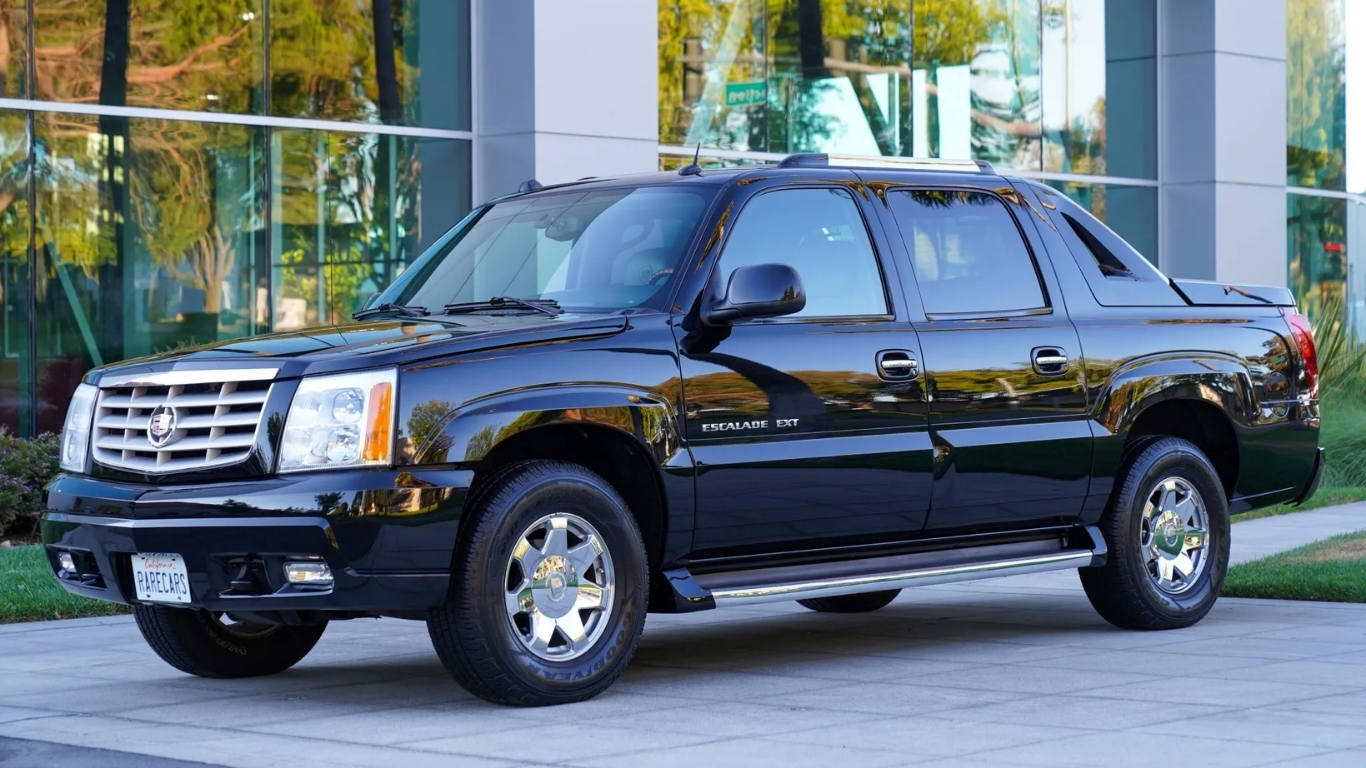
GM’s answer to “What if an Escalade had a bed?”
The Escalade EXT blended luxury and utility on GM’s full-size SUV platform. The innovative Midgate system expanded bed length from 63 inches to nearly 97.6 inches when the rear wall folded, increasing cargo volume from 41 cu ft to 95 cu ft. This converted a five-passenger SUV into a capable cargo machine that could handle Michelin-starred valet stands and weekend gear runs without breaking character.
A high-output 6.0 L Vortec V8 delivered 345 hp at 5,200 rpm and 380 lb-ft of torque at 4,000 rpm through a 4-speed automatic and all-wheel drive, enabling a 7,400 lb maximum tow rating. Averaging 12–13 mpg city from its 31-gallon tank, the EXT prioritized statement over mileage. It carved a unique niche as a practical yet opulent luxury truck—proof that pickup beds and premium cabins could coexist, even if fuel economy took a backseat.