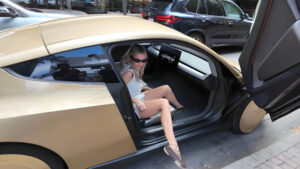


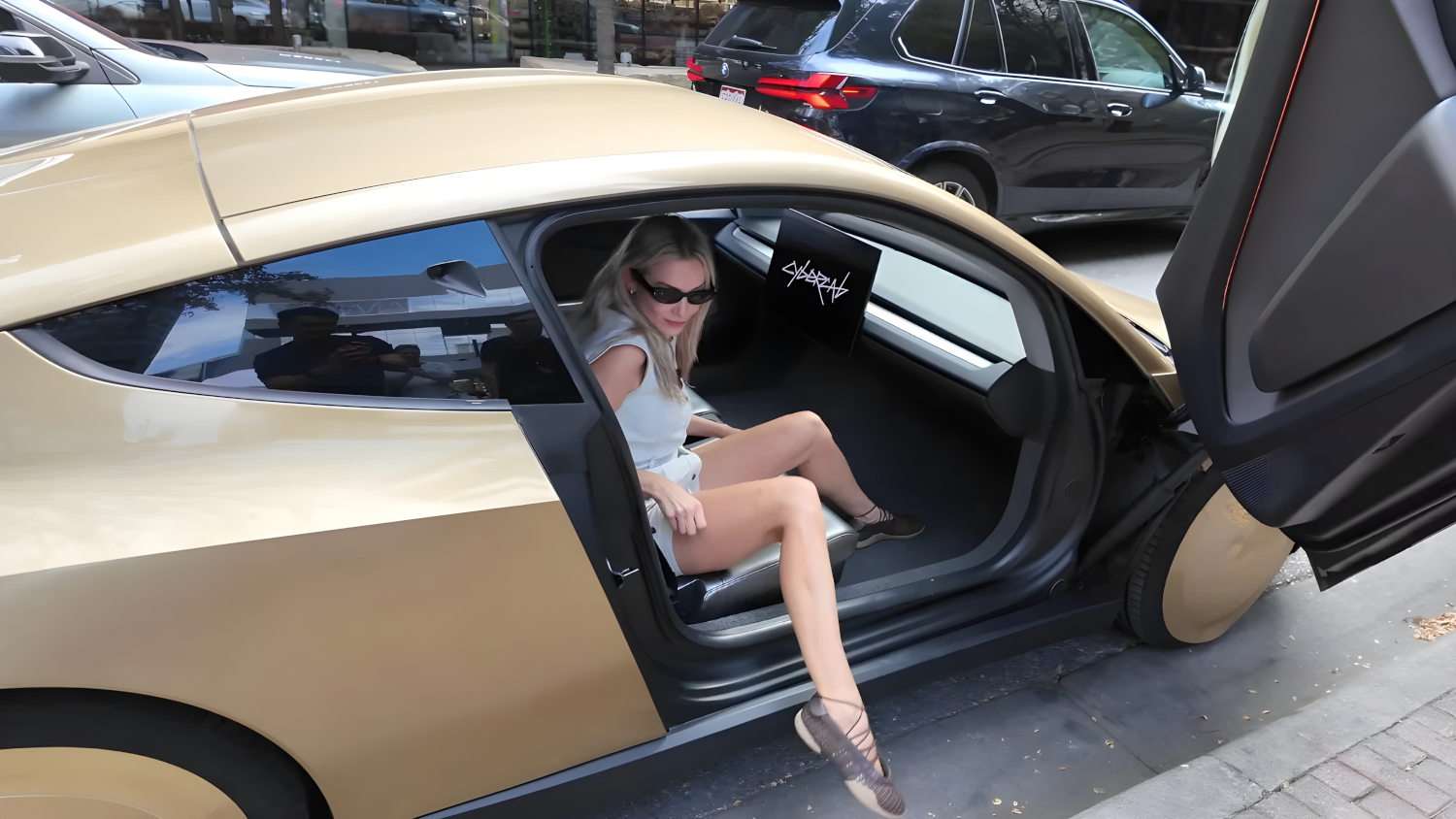
Buy a $30,000 car. Make $30,000 a year. Repeat indefinitely while you sleep. That’s Elon Musk’s pitch for the Cybercab robotaxi — and it sounds exactly like the kind of thing that’s either genius or a fever dream. Kim Java, a Georgia-based Tesla content creator, rode one in Austin and asked the question nobody in the hype cycle bothered with: does the math actually hold up once real costs enter the picture? Consumers may soon be able to buy one, and Musk’s pitch is already shaping expectations.
What the Cybercab Actually Is – And Where You Can Ride One
Tesla’s purpose-built robotaxi has no steering wheel, no pedals, and a profit promise that deserves a closer look.
The Cybercab carries two passengers and operates exclusively within Tesla’s autonomous network — no human driver, no manual override. Tesla unveiled it in October 2024 at a Warner Bros studios event, then promptly missed its own launch timeline so badly that YouTuber Marques Brownlee had bet he’d shave his head if it arrived on time. His hair survived. Paid rides launched in Austin around September 3, 2026, in a geofenced zone alongside autonomous Model Y vehicles. As of mid-2026, there is no formal retail price — only Musk’s stated target of $30,000 or less by around 2027 — and U.S. safety regulators are actively reviewing how a steering-wheel-free vehicle got certified for public roads.
The Costs Kim Java Wants Answered Before Signing Anything
Four variables — platform fees, maintenance, cleaning, and dead-mile charging time — could quietly swallow the headline profit figure.
Kim identifies the real friction points:
- Tesla’s estimated platform cut of roughly 30% of trip revenue
- Tire wear and mechanical maintenance at commercial-grade mileage
- Cleaning between passengers cycling through all day
- Charging stops plus repositioning drives that generate zero income
Utilization is never 100%, and those gaps add up fast.
“I really need to see what the numbers look like on the back end. Like I want to know how long do the tires last? What’s involved with maintenance?” — Kim Java
Independent modeling using Austin’s current reported fare structure — $3.00 base plus $1.40 per mile — offers some early answers. According to third-party calculators, at roughly 148 paid miles daily a Cybercab could gross around $108,000 annually. After an estimated 30% platform fee and approximately $24,000 in operating costs, projected net profit lands near $51,000 — above Musk’s claim. A more realistic moderate scenario, however, at 250 miles per day, puts net profit closer to $19,800 annually. Conservative assumptions barely clear $30,000 gross before costs hit. No actual private-owner earnings data exists yet. These are projections, not receipts.
Possible, Yes. Guaranteed, Absolutely Not.
Kim’s verdict isn’t a debunking — it’s a question Tesla still hasn’t answered.
Kim’s position is cautiously open-minded: $30,000 per year in profit is theoretically reachable, but entirely contingent on utilization, cost control, and a platform fee Tesla hasn’t formally disclosed. Age restrictions — no riders under 13, with teens requiring an adult — also narrow the addressable customer base compared to Uber or Lyft. The Teslaconomics analyst account frames roughly $30,000 per year as a “reasonable base case” under favorable assumptions, while acknowledging that no real-world owner data backs it yet.
This is exactly how every gig-economy promise has worked — Airbnb, DoorDash, rideshare driving. The headline number is real for someone, somewhere, under ideal conditions. Whether that someone is you depends entirely on numbers Tesla hasn’t published yet.