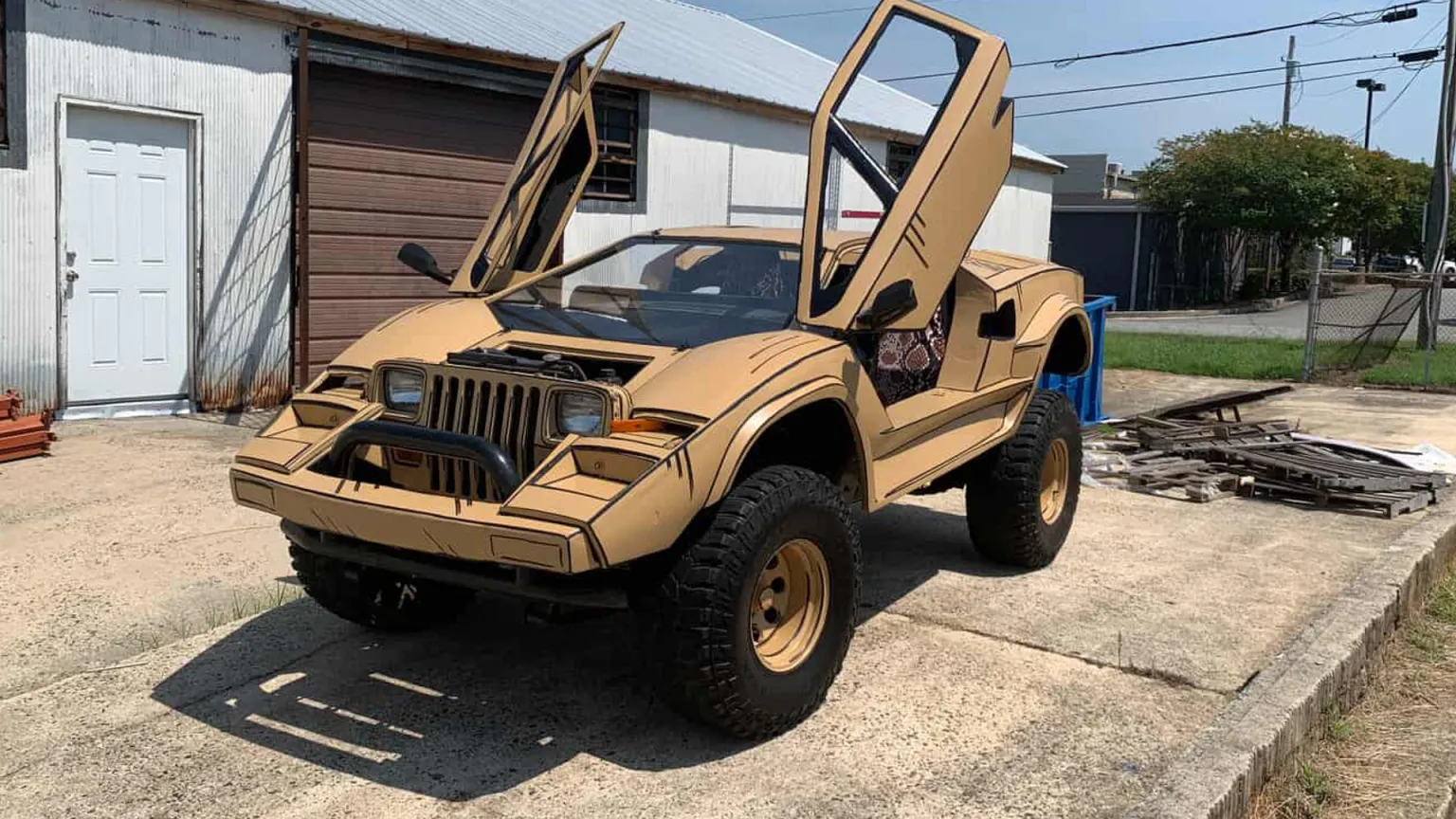


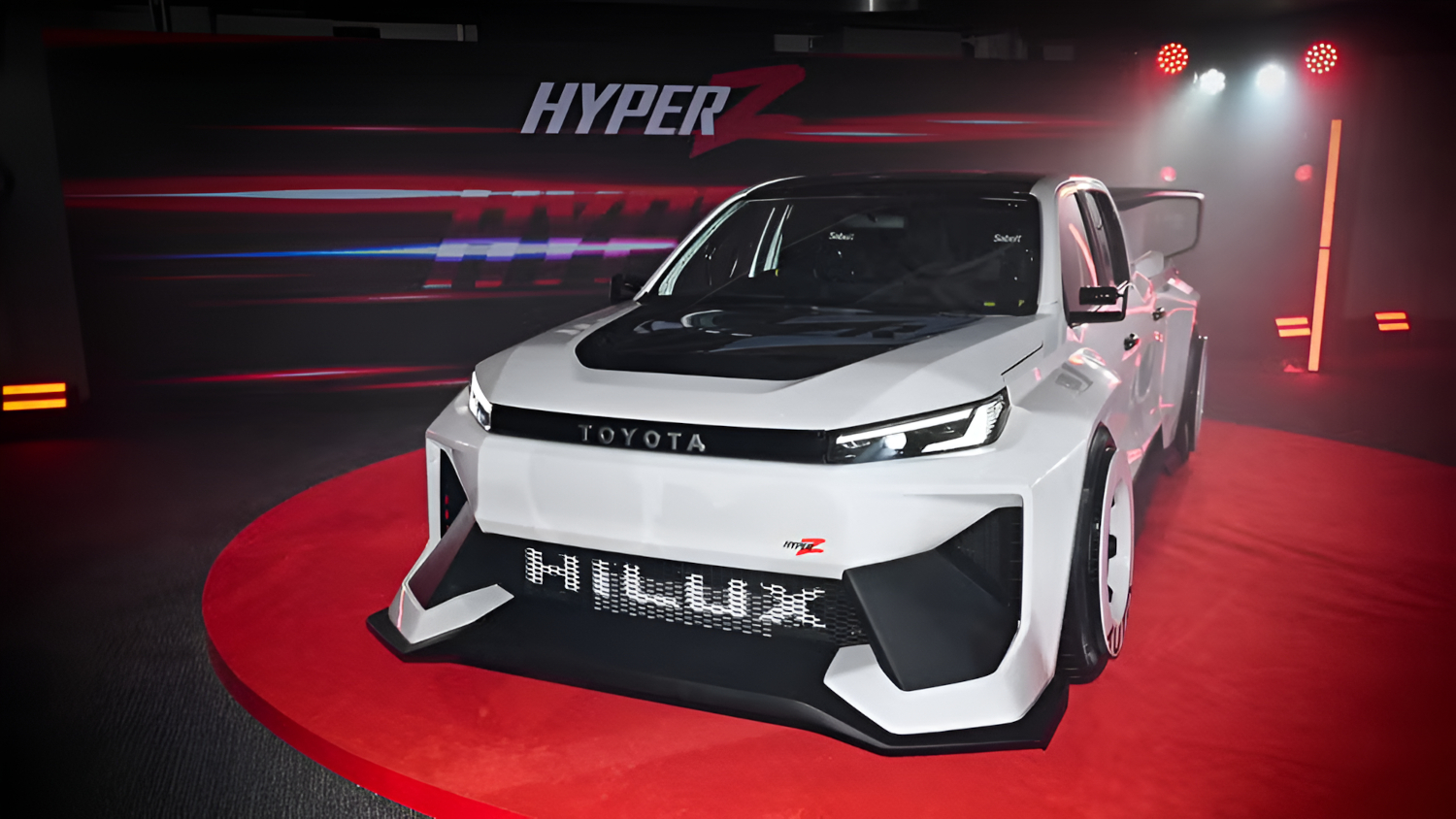
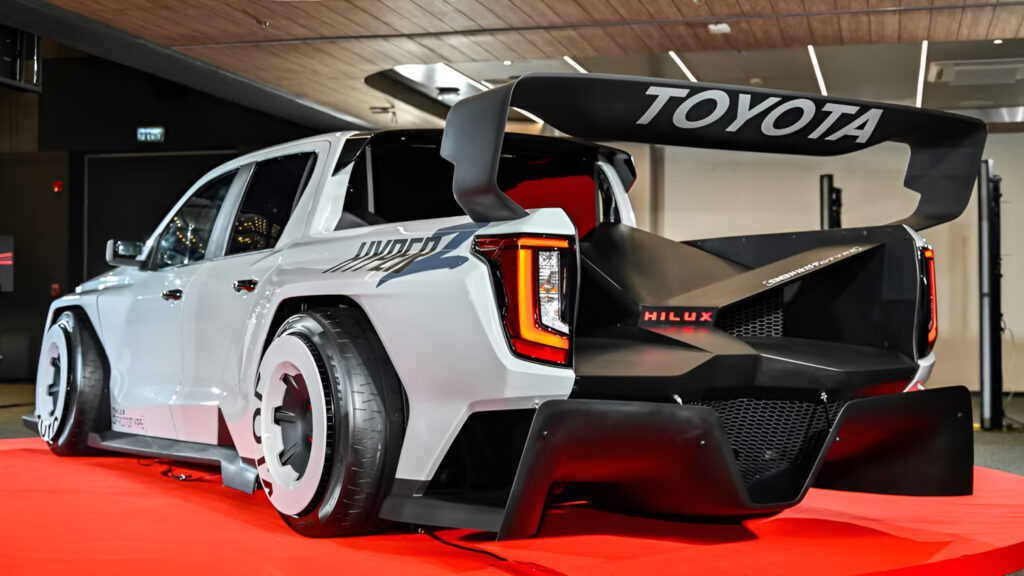
The Hilux — a truck synonymous with durability and hard work across generations — recently appeared in Thailand wearing 22-inch wheels, a widebody kit, and an X-shaped rear wing where the tailgate used to be. Toyota’s Hyper Z prototype, developed with Toyota Design Australia and Toyota Motor Thailand, debuted as a one-off visual statement built around the Hilux Travo Z Edition. The cargo bed, that defining feature of every pickup ever built, has been sacrificed to aerodynamic theater. What remains makes you reconsider everything you assumed a Hilux is supposed to be.
Where Trucks Are Canvases, Not Cargo Haulers
Thailand’s street-truck scene didn’t just inspire the Hyper Z — it wrote the brief.
If you’ve ever seen a Thai street truck up close, the Hyper Z makes immediate sense. Thailand’s pickup culture has long run on personal expression: lowered suspension, widebody panels, and motorsport aesthetics translated from circuits onto street machines. Toyota drew directly from that grassroots visual language and tasked a cross-border design team — Toyota Design Australia working alongside Toyota Motor Thailand — to shape it into an official prototype. That a global automaker commissioned a one-off concept to engage with a local tuning scene signals just how seriously Thailand’s truck market is taken.
The hardware reflects that ambition clearly:
- The rear wing — X-shaped and visually dominant — replaces the tailgate and much of the cargo bed area, effectively eliminating the truck’s hauling function.
- Body modifications include dramatically widened fenders, a large front splitter, side ground effects, and a rear diffuser.
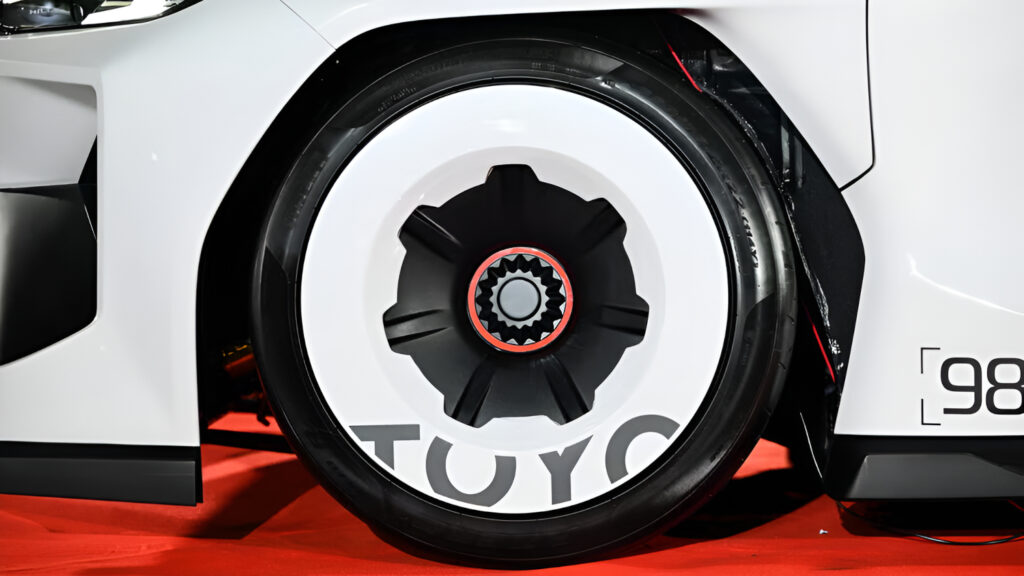
- Wheel and tire fitment runs to 22-inch wheels with 325/35-series tires — proportions closer to a widebody track car than any job site.
- The underlying powertrain is assumed to be the standard Travo’s 2.4-liter turbo-diesel, reportedly producing around 150 horsepower. Toyota has not published engine output or performance figures specific to the Hyper Z.
- The Hyper Z is a one-off prototype. No production or sales plans have been announced.
The absent bed is not a design oversight — it is the concept’s clearest argument. By removing the truck’s most functional feature, Toyota makes the cultural statement impossible to miss.
The Real Truck Behind the Theater
The production Travo Z Edition is the attainable version of everything the Hyper Z is dramatizing.
Toyota Thailand offers the Hilux Travo Z Edition in Double Cab and Smart Cab configurations — lower-riding and road-focused, aimed at buyers who prioritize stance and street presence. The Hyper Z sits at the extreme end of that same spectrum, an amplified expression of what the production model quietly proposes. The prototype appears designed to promote that design direction and draw attention to the Z Edition among younger, style-conscious buyers. The bed, it turns out, was always a question of priorities.