

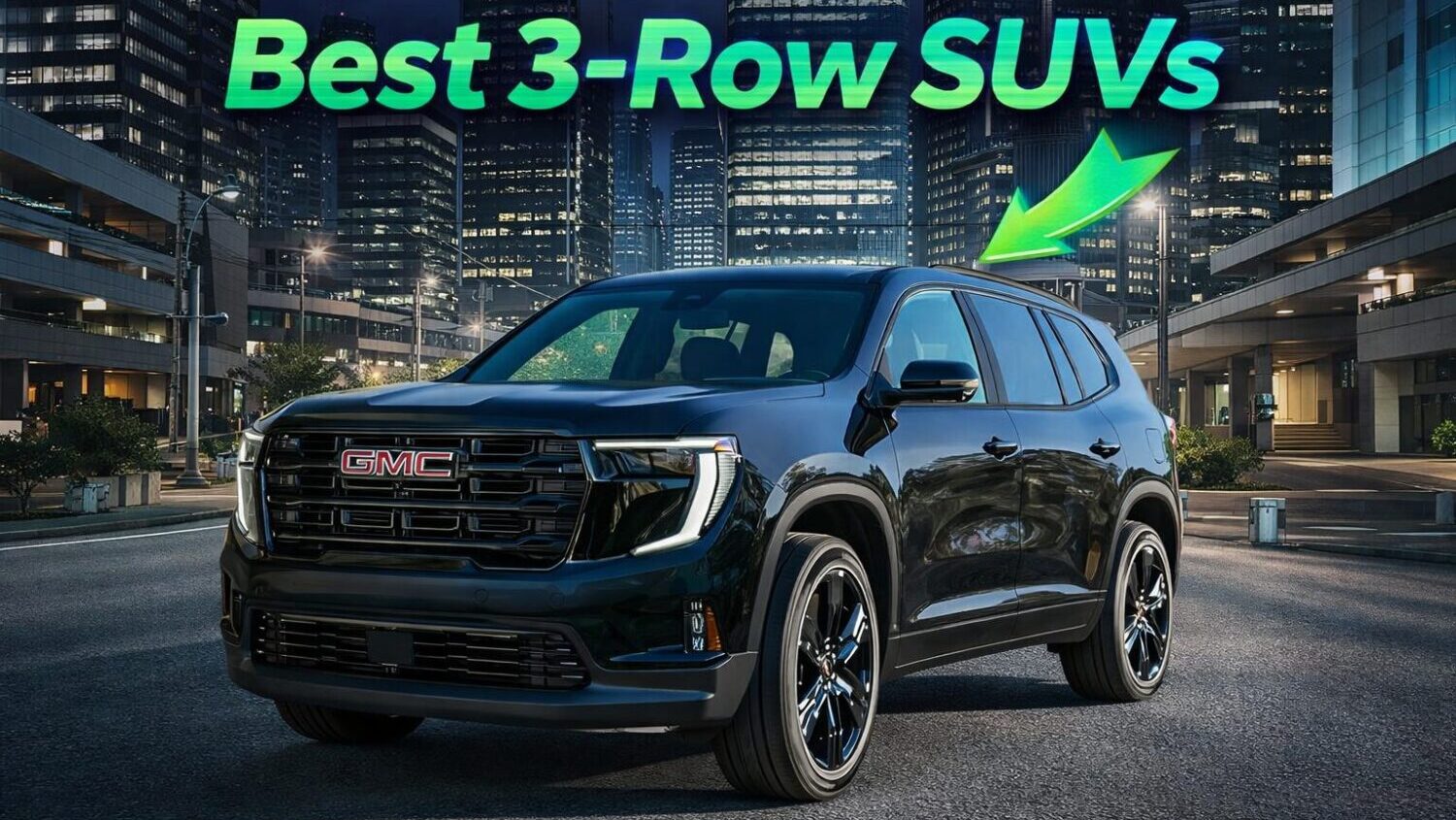
Three-row SUVs have to solve a specific problem: move seven or eight people with their gear, in reasonable comfort, at a price that does not require unusual financial arrangements. Experts at Car and Driver, Kelley Blue Book, and Edmunds have weighed in on the 2025 field, and the range now spans from $38,000 family haulers to $130,000 electric flagships. These 20 vehicles represent the full spectrum of what the segment offers this year.
20. GMC Acadia (Exterior)

The redesigned GMC Acadia grew more than 10 inches longer than its predecessor, which matters when the job is moving seven people with their equipment. The 2.5L turbo engine returns 20 mpg city and 27 highway — functional numbers for a vehicle this size — and the exterior carries enough presence to justify the starting price of $44,900.
GMC Acadia (Interior)

A 15-inch screen handles Apple CarPlay and Google services, and the optional Super Cruise hands-free driving system reduces fatigue on long highway runs. The added length translates directly into usable cargo room, which is the practical point of the size increase. The Acadia now delivers on the functional promise that the family SUV segment demands.
19. Mazda CX-90 (Exterior)

The Mazda CX-90 is what happens when a manufacturer prioritizes driving dynamics in a segment that usually deprioritizes them entirely. Turbocharged engines deliver real power, standard all-wheel drive handles poor conditions without drama, and the steering is calibrated for feel rather than isolation. Starting at $42,500, it enters the segment below most competitors while offering more engagement behind the wheel than almost any of them.
Mazda CX-90 (Interior)

Fuel economy reaches 24 mpg city and 28 highway on the standard turbocharged engine, and the cabin materials sit at a level that puts pressure on entry-level German luxury SUVs. The plug-in hybrid option delivers 26 miles of electric range for daily commutes and school runs. The CX-90 offers a combination of efficiency, interior quality, and driver engagement that is difficult to match at this price.
18. Hyundai Santa Fe (Exterior)

At $38,115, the Hyundai Santa Fe is the most accessible entry point in this segment with genuine three-row capability. The updated exterior design is substantially improved over the previous generation, and the 2.2L turbo engine provides enough output for confident highway driving. This is the value argument for the three-row SUV buyer.
Hyundai Santa Fe (Interior)

Fuel economy sits at 20 mpg city and 29 highway, competitive for the segment at this price. Cargo space trails the larger Palisade by about 20%, and the engine produces more noise under load than some competitors, but neither issue undermines the value proposition significantly. The available hybrid option improves efficiency and makes practical sense for buyers covering substantial daily mileage.
17. Kia EV9 (Exterior)

The Kia EV9 starts at $65,900 — significantly less than the Tesla Model X while offering comparable space and a cabin that genuinely accommodates six adults across three rows. The exterior proportions communicate full-size SUV presence in an electric package that does not require the compromises buyers associated with early EVs.
Kia EV9 (Interior)

The instantaneous torque delivery makes highway merging and passing effortless, and the EV9 handles its substantial size with composure. Range is sufficient for real-world family use without requiring charging stops on most daily or weekend driving. For families ready to transition to electric without waiting for the technology to mature further, the EV9 makes a direct and well-supported case.
16. Lexus GX (Exterior)

The Lexus GX starts at $69,950 and is built around genuine off-road capability rather than the suggestion of it. The 3.4L twin-turbo V6 produces enough torque to tow 9,000 pounds, and the 10-speed gearbox keeps it in the right ratio across varied terrain. This is a luxury SUV designed for buyers who actually plan to leave paved roads.
Lexus GX (Interior)

Fuel economy reads 15 mpg city and 21 highway — a trade-off that reflects the body-on-frame construction and serious off-road hardware. The cabin seats seven in leather-wrapped comfort, and lockable differentials and all-terrain tires are standard equipment rather than upgrades. The GX serves a specific buyer who needs both luxury appointments and the hardware to back up the off-road stance.
15. Lexus TX (Exterior)

The Lexus TX starts at $60,000 as a six-seat luxury hauler with a stretched wheelbase that creates genuine third-row space rather than the token seating that most mid-size SUVs offer. The 2.4L turbocharged engine moves it with authority appropriate for the price point and category.
Lexus TX (Interior)

A 14-inch touchscreen with responsive interface, hybrid and plug-in hybrid options, and a plug-in range of 33 electric-only miles give the TX a efficiency argument alongside its luxury positioning. The optional 21-speaker Mark Levinson audio system is a genuine differentiator at this price. Against the Acura MDX and Infiniti QX60, the TX feels a half-step above in overall refinement.
14. Volvo EX90 (Exterior)

The Volvo EX90 is a seven-seat electric SUV built around safety technology as a primary design priority. Lidar sensors capable of detecting objects hundreds of feet away, dual motors powering all four wheels, and a range exceeding 300 miles combine into Volvo’s flagship product as it transitions toward full electrification by 2030. The distinctive Thor’s hammer headlights carry visual continuity with the broader Volvo lineup.
Volvo EX90 (Interior)

A minimalist Scandinavian interior centers on a portrait-oriented touchscreen that controls nearly all vehicle functions, with sustainable materials throughout the cabin. Federal tax credits offset part of the premium price. The EX90 is Volvo’s clearest statement about where the brand is heading — electric, safety-focused, and designed for buyers who want a vehicle that is both environmentally considered and genuinely quick when the situation calls for it.
13. Ford Explorer (Exterior)

The 2025 Ford Explorer refresh updates the cabin and technology significantly, adding a 13.2-inch touchscreen running Google-based systems that addresses one of the previous generation’s notable weaknesses. Starting at $43,450, the Explorer occupies the mainstream sweet spot between capability and price that has kept it among the segment’s best sellers for three decades.
Ford Explorer (Interior)
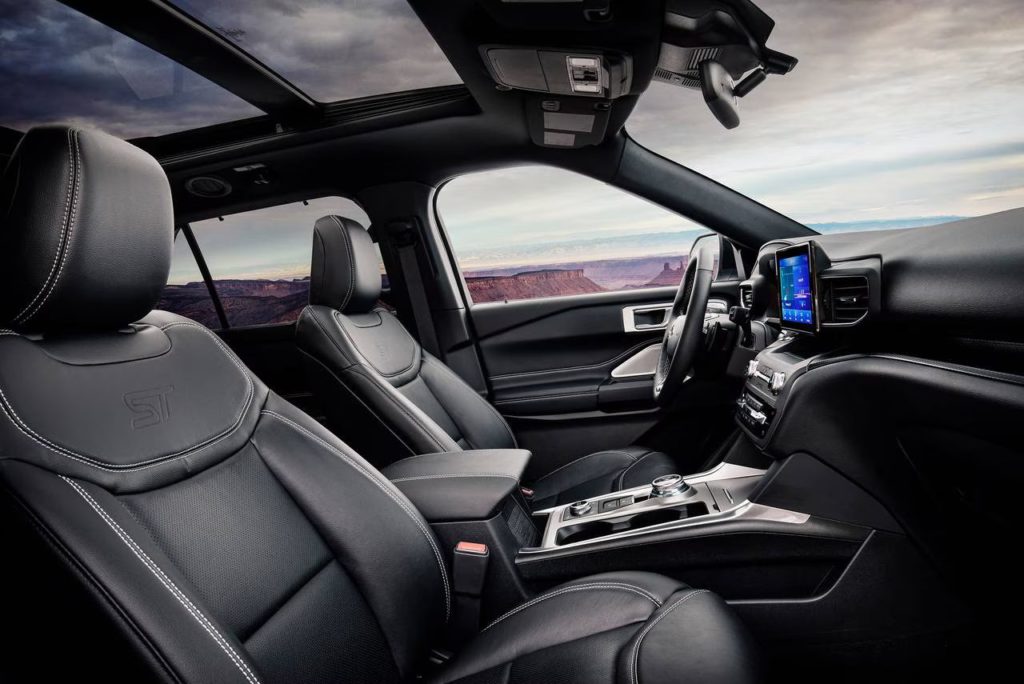
The top engine option is a 400-horsepower EcoBoost V6 that delivers acceleration well beyond what most buyers will need, while available BlueCruise hands-free highway driving adds meaningful comfort on long trips. Trim levels span from straightforward family configurations to near-sporty appointments. The Explorer’s broad capability across different ownership scenarios remains its strongest selling point.
12. Buick Enclave (Exterior)

The Buick Enclave starts at $48,750 as a thoroughly modern seven-seater with a massive 30-inch touchscreen and Super Cruise hands-free highway driving as headline features. The exterior carries Buick’s updated design language with enough presence to justify the premium positioning over mainstream competitors.
Buick Enclave (Interior)

A turbocharged four-cylinder delivers smooth power through an 8-speed automatic, and the continuously damping suspension actively reads road surfaces to filter out imperfections before they reach the cabin. 5,000 pounds of towing capacity and optional all-wheel drive handle weekend utility needs. The Enclave makes a strong case for the buyer who wants near-luxury refinement without European luxury pricing.
11. Infiniti QX80 (Exterior)

The Infiniti QX80 runs a turbocharged 3.5L V6 producing 450 horsepower and 516 lb-ft of torque — numbers that move its substantial body with urgency that surprises most drivers. The exterior presents the full-size luxury SUV silhouette with proportions that communicate the power underneath.
Infiniti QX80 (Interior)

Dual 14.3-inch displays plus a dedicated 9-inch climate control panel define a technology-forward cabin, while adaptive air suspension absorbs road imperfections effectively at highway speeds. 22-inch wheels are standard equipment. The QX80 positions itself between Cadillac Escalade pricing and Lincoln Navigator territory — Escalade-adjacent luxury at a price that makes the comparison worth making.
10. Cadillac Escalade IQ (Exterior)

The Cadillac Escalade IQ replaces the traditional V8 with an electric powertrain built on GM’s Ultium platform, offering 450 miles of range in a body that presents the same imposing Escalade proportions without combustion. The wide stance and full-size dimensions are unchanged from the standard Escalade.
Cadillac Escalade IQ (Interior)

Starting around $130,000, the Escalade IQ is the most expensive vehicle on this list. The battery pack pushes total weight between 8,000 and 9,000 pounds, which affects dynamics despite the suspension’s best efforts. For buyers who want the Escalade’s luxury positioning and status with zero emissions and the instant torque delivery of an electric drivetrain, this is the only vehicle in the segment that delivers exactly that.
9. Chevrolet Traverse (Exterior)

The redesigned Chevrolet Traverse starts at $41,995 and offers 98 cubic feet of cargo space with the seats folded — more than most competitors in this price range. The turbocharged 2.5L four-cylinder moves it efficiently without the fuel consumption of larger engines. For families who routinely run out of cargo room before running out of passengers, this is the direct solution.
Chevrolet Traverse (Interior)

The cabin includes thoughtful storage and access details that reflect real family use cases. The Traverse competes directly with the Honda Pilot and Toyota Highlander on features and price, but delivers more usable space than either. For buyers who prioritize maximum cargo volume in a mainstream three-row SUV, the Traverse is the straightforward answer.
8. Toyota Grand Highlander (Exterior)

The Toyota Grand Highlander addresses the standard Highlander’s persistent third-row complaint by stretching the platform enough to create seating that adults can actually use. Starting at $46,370, it provides genuine three-row space for full-size passengers and resolves the cargo-versus-passengers dilemma that the smaller model never fully solved.
Toyota Grand Highlander (Interior)

The hybrid powertrain achieves 34 mpg combined — exceptional efficiency for a vehicle this size. A 12.3-inch touchscreen handles infotainment without unnecessary complexity, and seven trim levels give buyers a wide range of specification and price options. The Grand Highlander’s ability to combine genuine passenger space, strong efficiency, and Toyota reliability in one package makes it one of the more complete offerings in the segment.
7. Mercedes EQS SUV (Exterior)
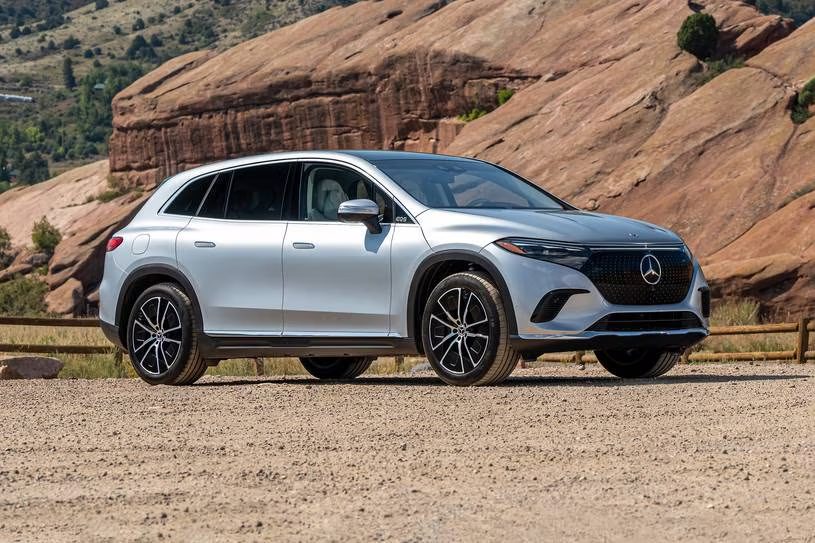
The Mercedes EQS SUV starts at $118,400 and answers the question of whether electric luxury can justify that price point with a cabin dominated by the Hyperscreen — a single curved display spanning the entire dashboard. Range extends to 305 miles and the aerodynamic exterior is shaped specifically to maximize electric efficiency at highway speeds.
Mercedes EQS SUV (Interior)

Electric all-wheel drive delivers effortless acceleration, and the cabin operates at near-silence at highway speeds with only marginal wind intrusion around the mirrors. Third-row seating accommodates adults rather than requiring compromises. For luxury buyers who want zero emissions without sacrificing the refinement standards Mercedes customers expect, the EQS SUV is the clearest expression of that combination currently available.
6. Honda Pilot (Exterior)

The Honda Pilot starts at $46,988 as an eight-passenger family hauler built on Honda’s track record for long-term reliability. The 3.5L V6 delivers consistent, smooth power without the peaks and troughs of turbocharged alternatives, and the exterior has been substantially sharpened compared to the previous generation.
Honda Pilot (Interior)

A removable center seat creates captain’s chairs on demand without requiring a separate trim level. The TrailSport trim adds upgraded suspension, skid plates, and all-terrain tires for buyers who need occasional off-road capability. The Pilot’s combination of eight-passenger capacity, genuine reliability credentials, and flexible interior configuration keeps it among the most practically complete options in the mainstream three-row segment.
5. Toyota Sequoia (Exterior)

The Toyota Sequoia is a full-size hauler running a hybrid-assisted 3.4L twin-turbo V6 that produces 437 horsepower — a combination that delivers both towing capability and improved efficiency over the previous V8. The TRD Pro trim adds dedicated off-road hardware that the Sequoia’s body-on-frame construction can genuinely support.
Toyota Sequoia (Interior)

Leather seating and a 14-inch touchscreen with Apple CarPlay and Android Auto are standard, and the hybrid powertrain delivers meaningful efficiency improvements over a conventional full-size V8 at this weight class. The Sequoia occupies the specific niche of a full-size family SUV that is also genuinely capable off-road and genuinely efficient for its size — three attributes that most competitors in this segment deliver only two of.
4. Mercedes-Benz EQB (Exterior)

The Mercedes-Benz EQB brings electric power and three-row seating into a compact crossover footprint — a combination that remains rare in the EV market. All-wheel drive is standard, the electric powertrain delivers instant torque that makes urban driving noticeably more responsive than combustion alternatives, and the Mercedes build quality carries through from the larger EV products.
Mercedes-Benz EQB (Interior)

The infotainment system is intuitive and responsive, carrying the interface quality expected at Mercedes pricing. The third row is sized for smaller passengers rather than adults — an honest limitation in a compact footprint. The EQB competes directly with the Tesla Model Y on price and mission, and offers a credible alternative for buyers who prefer established luxury brand backing and the broader Mercedes dealer network.
3. Cadillac Escalade V (Exterior)

The Cadillac Escalade V installs a supercharged 6.2L V8 producing 682 horsepower in the standard Escalade body — a powertrain choice that gives a three-ton luxury SUV acceleration figures that belong in a different category entirely. The exterior is visually identical to the standard Escalade, which means the performance is entirely unexpected to anyone who does not know what they are looking at.
Cadillac Escalade V (Interior)

Air suspension and adaptive damping manage the vehicle’s weight through corners with more competence than the specifications suggest possible. The cabin seats seven with screens and leather throughout, and the noise insulation keeps the supercharged V8 audible when pushed but refined at cruise. The Escalade V exists for the buyer who wants everything the standard Escalade offers and considers 682 horsepower a necessary addition rather than an excess.
2. Acura MDX (Exterior)

The Acura MDX has spent more than two decades in this segment, and the current generation reflects that accumulated development. The A-Spec package with all-wheel drive runs $63,500 — less than most European competitors with comparable specifications. The 3.5L V6 produces 290 horsepower backed by Honda’s reliability record across millions of production units.
Acura MDX (Interior)

The interior is genuinely premium without the ostentation of larger luxury products, and the Bang & Olufsen audio system is among the better standard-fit audio options in the segment. The MDX positions itself between the clinical precision of German rivals and the softer comfort of American full-size SUVs — a midpoint that suits buyers who want refined daily transportation without the ownership complexity that European luxury brands can introduce over time.
1. Nissan Pathfinder (Exterior)

The Nissan Pathfinder starts at $46,600 for the SL four-wheel drive trim and seats eight passengers with room that does not require passengers to negotiate their position. The 3.5L V6 delivers sufficient torque for both highway driving and moderate off-road use, returning 21 mpg city and 27 highway — competitive numbers for a vehicle with this capacity.
Nissan Pathfinder (Interior)

The Rock Creek trim adds upgraded suspension and off-road hardware for buyers who need capability beyond paved roads. The Pathfinder balances daily family transportation with genuine adventure readiness — comfortable enough for commuting and capable enough for camping — without requiring buyers to choose between those use cases. For families who want eight-passenger capacity, reasonable efficiency, and off-road capability at a mainstream price point, the Pathfinder delivers all three without significant compromise. For buyers interested in pushing that capability further, there are dedicated off-road vehicles worth examining alongside it.