

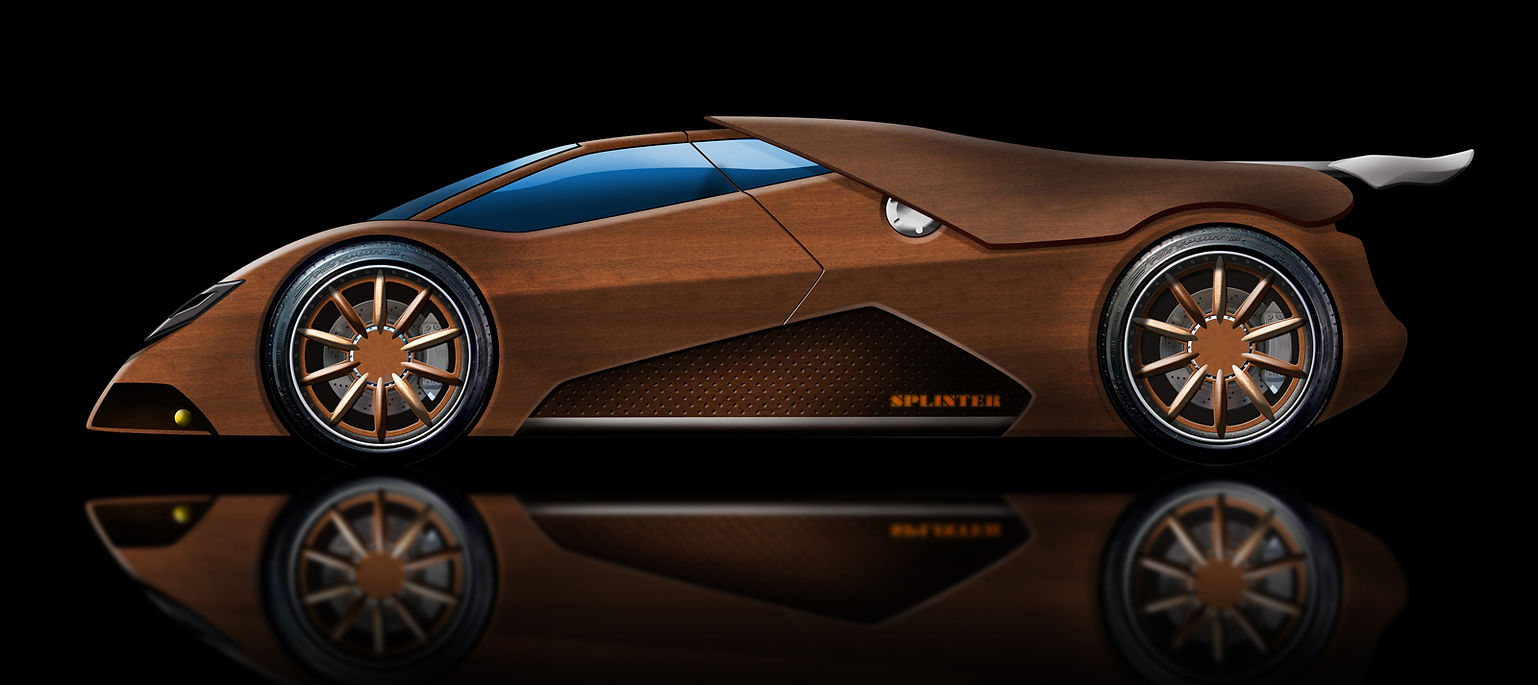
A functional sports car emerged from North Carolina State University as a graduate project that spiraled into a decade-long obsession with proving wood’s superiority over steel and aluminum. This engineering marvel produces 650-700 horsepower while constructed from twenty different wood species, creating a monocoque chassis that challenges everything you know about automotive materials.
Engineering Marvel Built From Trees
Joe Harmon’s team bent and molded birch and maple laminates into a complete chassis, bonding them with epoxies, urethanes, and industrial adhesives that rival Formula 1 specifications. The body uses woven cherry veneer and end-grain balsa cloth, while suspension components—maple A-arms, hickory tie rods, Osage orange leaf springs—handle forces that would snap most furniture.
Even the wheels showcase obsessive craftsmanship: 275 pieces each, featuring rotary-cut oak veneer centers with walnut sunburst patterns. “Better strength-to-weight ratio than steel and aluminum,” Harmon notes, and the engineering proves his point.
Fire Prevention Through Clever Design
The Chevrolet LS7 V8 produces 650-700 horsepower through modifications that include a custom camshaft and eight-throttle-body intake system. But channeling that power through a wooden chassis creates obvious thermal challenges. The team reversed the cylinder heads to route exhaust over the engine top, venting hot gases through the rear wing—keeping flames away from the wood like a well-designed fireplace.
Large cooling vents aid heat dissipation, though the system remains untested above 30 mph.
The Untested Speed Question
Weighing roughly 2,600-3,000 pounds with rear-wheel drive and a six-speed manual transmission, the Splinter should theoretically reach 200-240 mph. That’s Tesla Plaid territory wrapped in sustainable materials. But like any prototype pushing boundaries, the gap between engineering confidence and actual testing remains substantial.
The five-to-nine-year build process that ended in 2015 created a rolling proof-of-concept rather than a track weapon. This isn’t sustainable transportation novelty—it’s legitimate materials science wrapped in supercar aesthetics. Whether wood belongs in your next vehicle depends on how much you trust trees to handle serious NASCAR power demands.