

The vast majority of production cars never see a track, yet marketing departments spend millions convincing buyers they’re built for it. True performance value doesn’t demand a mortgage-sized payment for a car that sits in traffic. Anyone seeking that visceral connection—the kind that makes mundane errands feel like a qualifying lap or turns a grocery run into a low-stakes Targa Florio—can find it without the platinum-card maintenance bill. Some machines, hiding in plain sight, deliver an exotic punch. That moment when an apex gets nailed in a car people barely notice, then watching their jaw drop as the taillight disappears down the road, represents pure gold. These unexpected heroes, with their surprising lineage and potent capabilities, redefine what qualifies as true driving satisfaction.
1. Aston Martin DB9 (2005–2012)
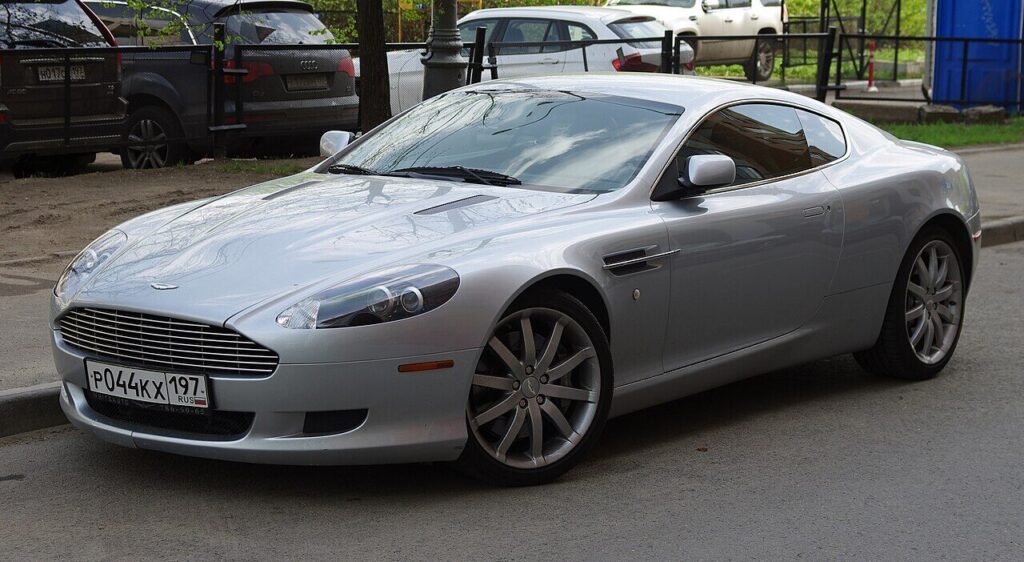
Steep depreciation has transformed this V12 grand tourer into an attainable icon.
Original MSRP exceeded $150,000 depending on year and options; many early DB9s now appear in classifieds around the mid-$30,000 range. The Aston Martin DB9 delivered around 450 hp from its 5.9 L V12 in early models, with later updates pushing output higher. Despite its 3,900–4,000 lb weight, it hit 0–60 mph in roughly 4.7–4.9 seconds according to period road tests.
Built on Aston’s bonded aluminum VH platform with aluminum body panels and a luxurious leather-and-wood interior, the DB9 was positioned as a usable, comfortable grand tourer rather than a sharp track weapon. Concerns over reliability and running costs contributed to steep depreciation. For anyone who once dreamt of Italian exotics, discovering the accessible V12 roar of this Aston on a weekend drive confirms that genuine grand touring thrills don’t always require a lottery win.
2. Honda S2000 (AP1, first generation, 1999–2003)

This roadster’s 9,000 rpm redline and analog feedback make it an extension of the driver’s will.
Honda’s F20C engine in the first-generation S2000 produced 240 hp in US spec (247 hp JDM) from a 2.0 L inline-four, achieving roughly 120 hp per liter—one of the highest specific outputs of any mass-produced naturally aspirated engine at the time. Its exceptionally high redline around 8,800–9,000 rpm defined the car’s raw character. The lightweight X-bone frame, weighing around 2,800–2,900 lb, offered a rigid platform for its precise double-wishbone suspension and 6-speed manual transmission with Torsen-type limited-slip differential.
Take this roadster to a winding mountain road, and it becomes an extension of will. Every steering input and crisp gear change delivers immediate feedback, like reading braille on the tarmac. While a modern hypercar offers brutal speed, its electronic layers often feel like playing a video game. The S2000 demands engagement, delivering unvarnished driving pleasure; that analog connection leaves drivers with an involuntary grin.
3. Porsche Cayman S (987, 2005–2012)
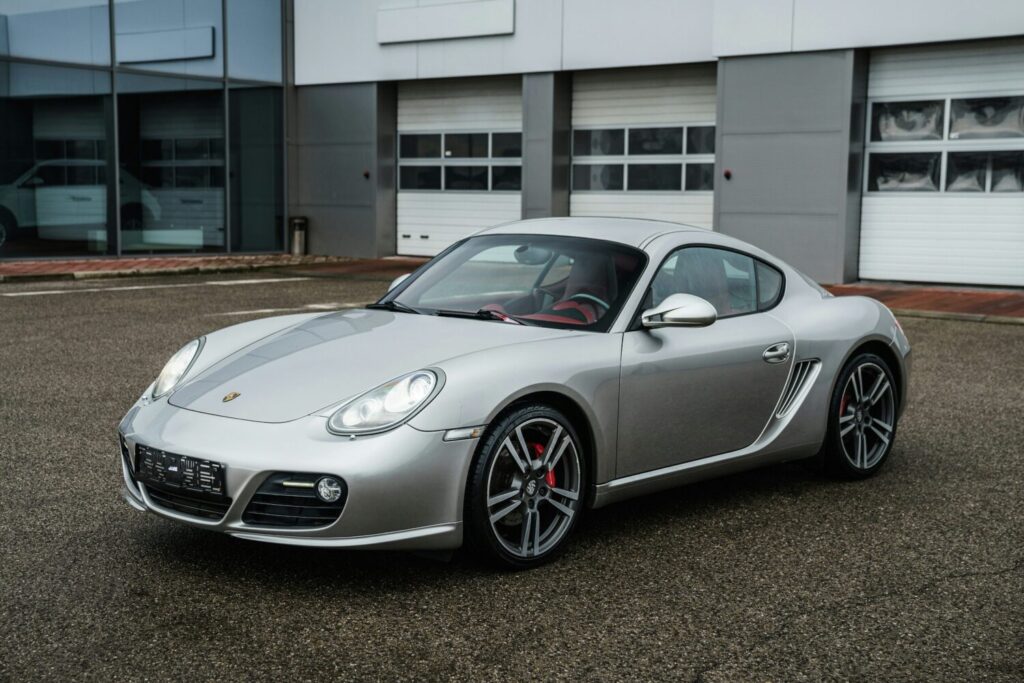
Mid-engine placement gives this coupe chassis balance that many enthusiasts consider superior to the 911.
Introduced in 2005, the early 987.1 Porsche Cayman S featured a 3.4 L naturally aspirated flat-six engine producing 295 hp and 251 lb-ft. The 2009 facelift (987.2) moved to direct fuel injection, pushing output to roughly 320 hp. Mid-engine placement and relatively compact footprint gave the car very balanced handling; Porsche marketed it as a more agile alternative to the 911, though power and pricing were kept below the flagship. Depending on year, 0–60 mph arrives in the mid-4 to low-5 second range, with top speeds around 170–175 mph.
The Cayman S delivers immediate responsiveness. Its agility makes occupants feel less like passengers and more like conductors guiding a precision instrument. On an autocross course, flick the wheel and the nose tucks in with surgical precision, the car rotating perfectly like a compass needle finding true north. No drama, just pure grip rewarding commitment to the line.
4. Chevrolet Corvette Z06 (C5, 2001–2004)
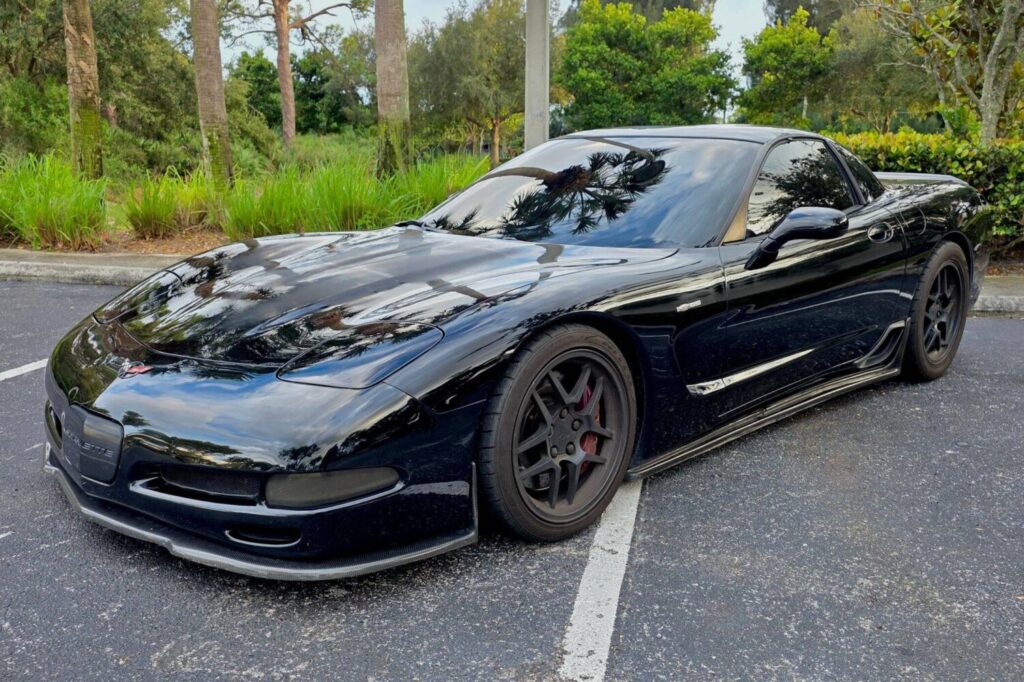
Quarter-mile times around 12.4–12.6 seconds put this fixed-roof coupe in genuine supercar territory.
The C5 Z06, introduced for 2001 with extensive chassis and engine upgrades over the base C5, featured a 5.7 L LS6 V8 initially producing 385 hp and 385 lb-ft. From 2002–2004, output was uprated to 405 hp and 400 lb-ft. Using a lighter fixed-roof coupe body with reduced sound deadening and special wheels/tires, curb weight landed around 3,100–3,200 lb. Period tests recorded 0–60 mph in about 4.0 seconds and quarter-mile times around 12.4–12.6 seconds, performance previously reserved for exotic marques.
Rear-wheel drive, 6-speed manual only, upgraded suspension, larger brakes, and specific gearing gave the Corvette Z06 a reputation for strong reliability relative to many exotics and very high performance-per-dollar. Pull up at a Friday night street light, feeling the visceral punch of its power, and command supercar thrills without needing a second mortgage.
5. Toyota MR2 Turbo (W20, second generation, 1989–1999)
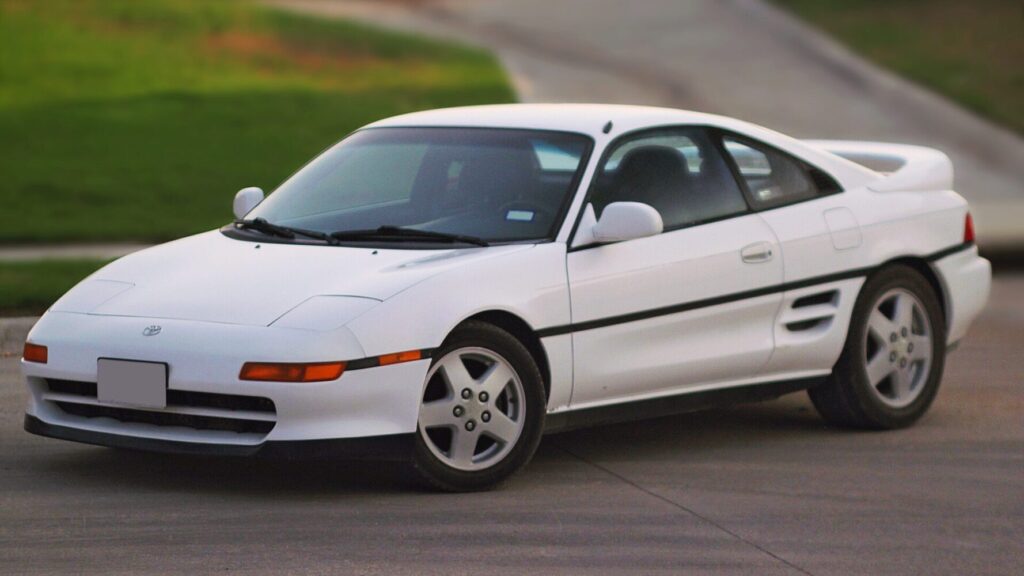
Wedge shape and side strakes earned this mid-engine machine the “poor man’s Ferrari” nickname.
The second-generation MR2’s styling, including side intakes and side strakes, drew visual comparisons to Ferrari models like the 348. This mid-engine machine was no mere aesthetic mimicry; its 3S-GTE 2.0 L turbocharged inline-4 pushed around 200 hp in US-spec models (up to roughly 220 hp in later JDM versions). The mid-engine, rear-wheel-drive coupe weighed roughly 2,700–2,900 lb depending on equipment and market, with turbo versions achieving 0–60 mph in the mid-5 to 6-second range according to period tests.
Yet its visually aggressive stance was matched by a challenging personality. Early cars in particular were known for “snap oversteer” if driven aggressively or lifted mid-corner, leading to a reputation for demanding dynamics; Toyota revised suspension tuning mid-cycle to improve stability. Mastering this car on a track day is less about brute force and more about sensitive balance, requiring the precise inputs of a high-wire artist. It demands respect, or it will quickly teach a lesson.
6. Mercedes-Benz CL55 AMG (C215, supercharged V8, 2003–2006)
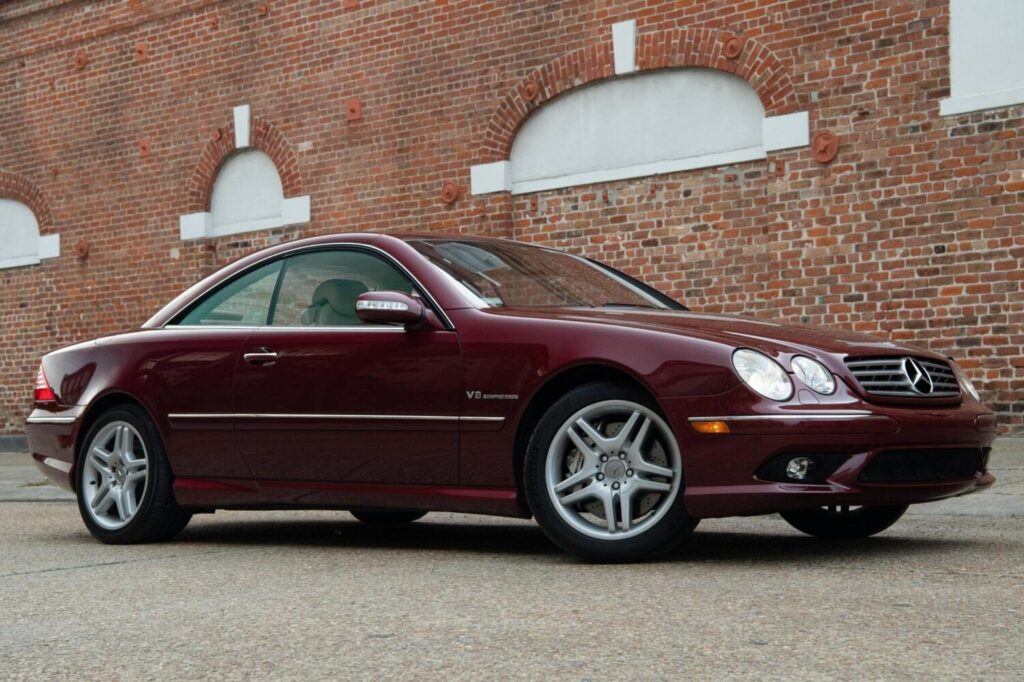
A modified 2004 example set a modern Cannonball Run record at 28 hours 50 minutes.
This C215-generation coupe, with its pillarless two-door design and luxury 2+2 seating, blended opulent comfort and raw muscle. Under the hood, an AMG-tuned 5.4 L supercharged V8 (M113K) hammered out 493 hp and 516 lb-ft of torque. Rear-wheel drive with a 5-speed automatic (5G-Tronic) and standard electronic stability systems gave the car factory figures listing 0–60 mph around 4.5 seconds and an electronically limited top speed of approximately 155 mph. A modified 2004 CL55 AMG used by Ed Bolian was reported to set a modern Cannonball Run record (NY to LA) in 2013, widely cited at 28 hours 50 minutes with very high average speeds.
The CL55 AMG transformed cross-country runs into flowing, effortless sprints—highway miles dissolving like sugar cubes. Its Active Body Control suspension smoothed the asphalt, while the supercharged V8 delivered a proper velvet sledgehammer for the open road. Unrestricted or modified examples have demonstrated higher real-world speeds and acceleration than conservative factory numbers suggest.
7. Audi S6 (C6, 2006–2011, 5.2 L V10)
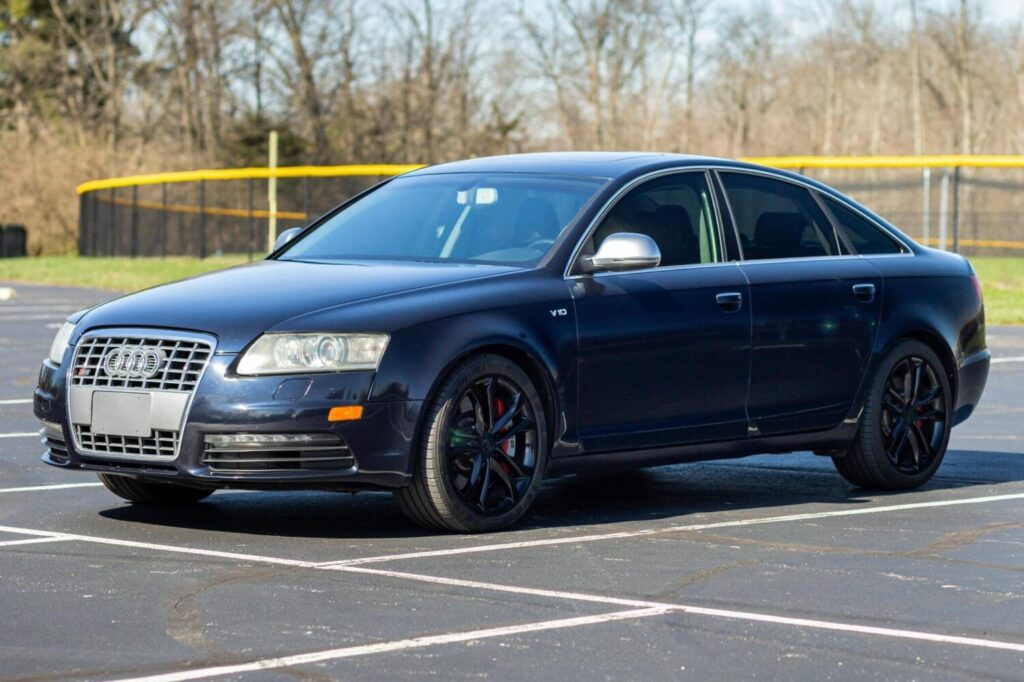
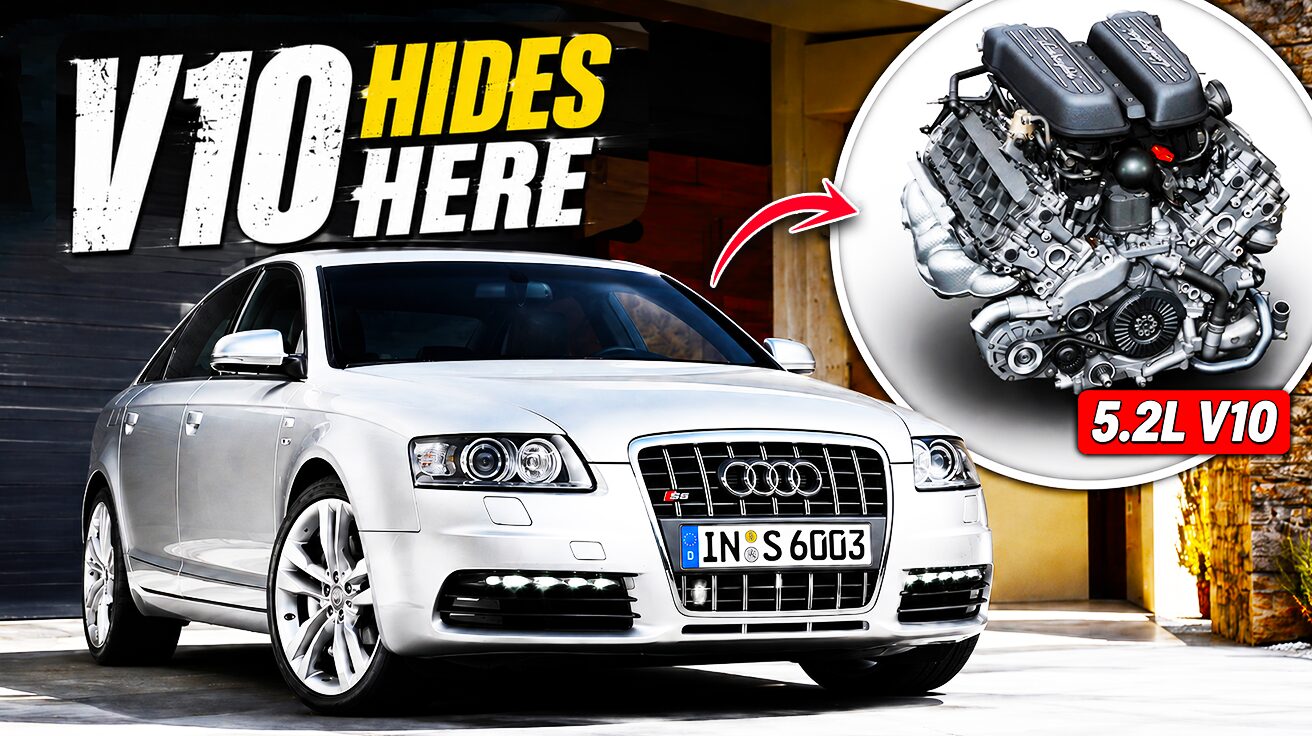
A 5.2 L V10 sharing architecture with the Lamborghini Gallardo’s engine sits beneath this discreet luxury sedan.
The C6-generation Audi S6, produced from 2006 to 2011, featured a 5.2 L naturally aspirated V10 developing around 435 hp and 398 lb-ft. The engine shares architecture with the Lamborghini Gallardo’s 5.0/5.2 L V10, though with different tuning and ancillaries. Front-mounted engine with Audi’s quattro all-wheel-drive system paired with a 6-speed automatic (Tiptronic) rather than a manual. Performance figures typically quote 0–60 mph in the mid-5 second range (around 5.2–5.3 s) with a limited top speed of roughly 155 mph.
Spot one in the grocery store parking lot, looking like any other mid-2000s executive car, yet it has a heart that can outrun most expectations. This machine perfectly embodies the “sleeper” ideal—like finding a custom-built rocket motor under the hood of a classic station wagon. The surprise is half the fun, especially when sportier-looking cars are left wondering what just happened. Known for high running costs and typical aging German performance-car issues, the S6 contributes to relatively low resale values compared with its exotic engine lineage, making V10 thrills accessible to those willing to budget for maintenance.