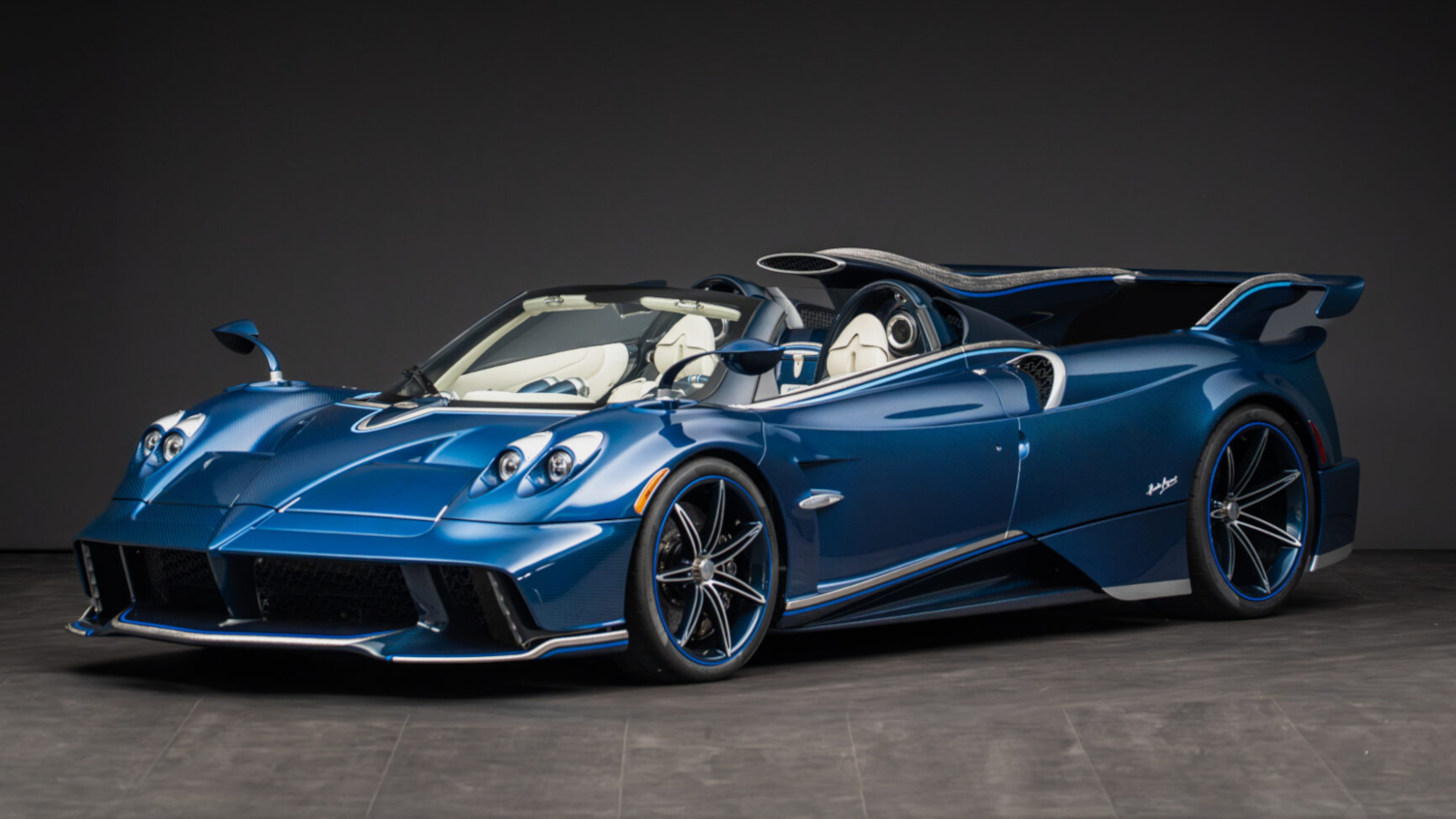
Every major hypercar manufacturer has abandoned the clutch pedal. Pagani just put one back. The Huayra 70 Anima — anima meaning soul in Italian — debuted at the Concours at Wynn in Las Vegas as the third and final car in Pagani’s Huayra 70 trilogy, developed under the Grandi Complicazioni program. That program is Pagani’s atelier for commissions so complex they border on collaborative sculpture. The Anima is the result of more than a year of work between the company and a single unnamed client. One car. One owner.
Diamond Dust and a Clutch Pedal
Grandi Complicazioni isn’t a trim level — it’s a design partnership that produces cars closer to commissioned art than catalog products.
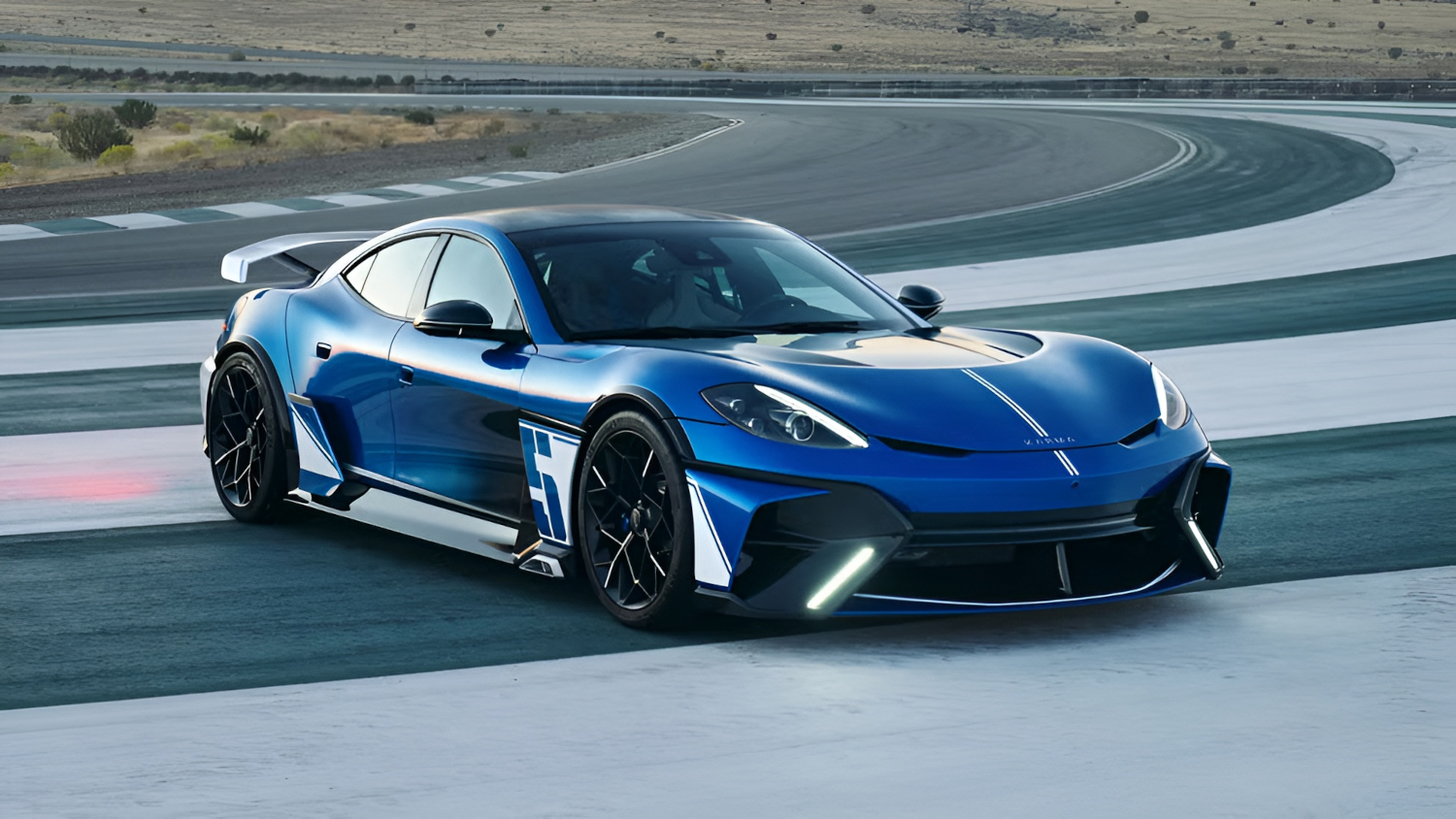
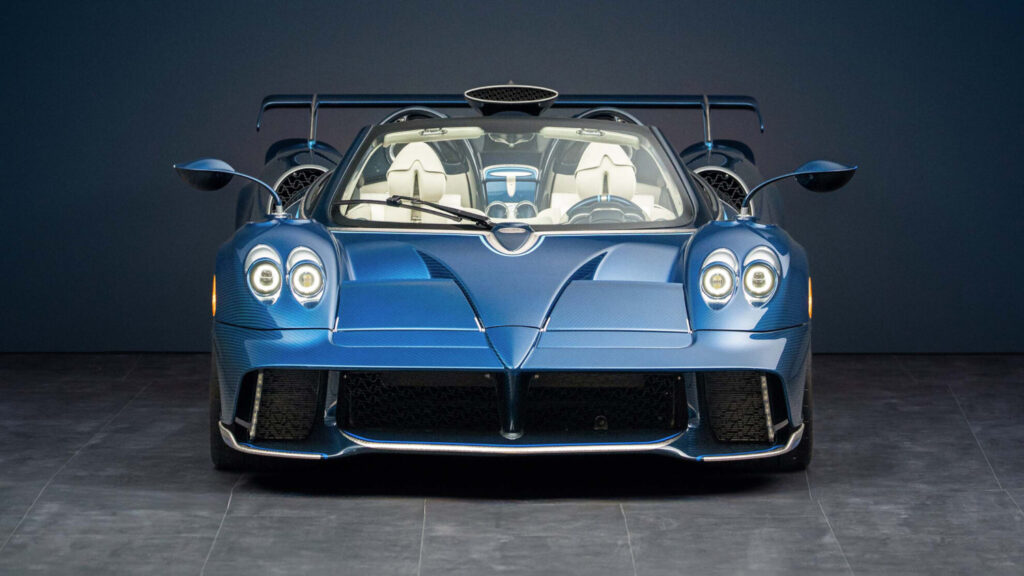
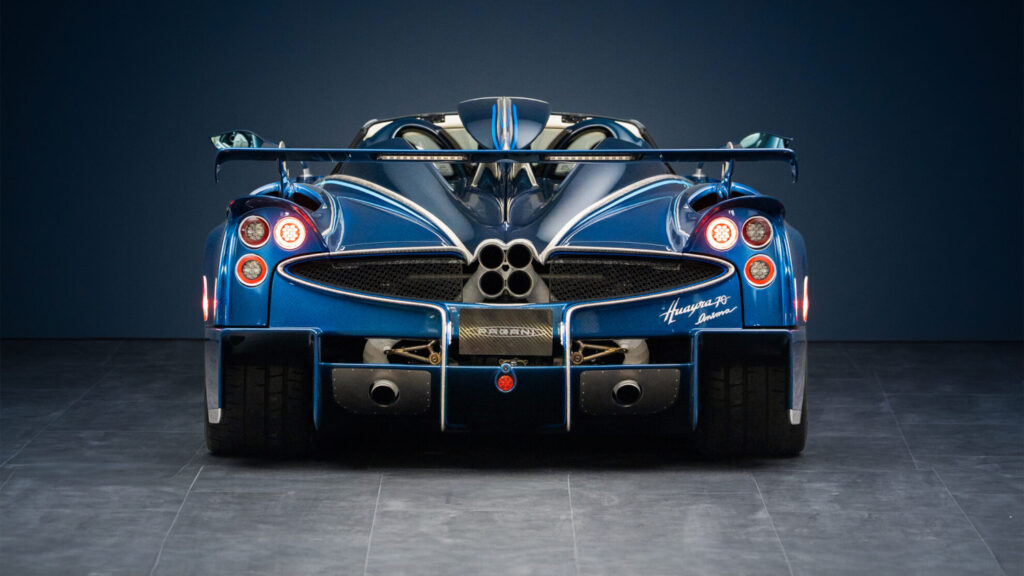
The Anima’s body runs exposed carbon fiber across the bumpers, doors, fenders, hood, and engine cover. The blue finish contains real diamond dust, producing a shimmer that shifts with light. Platinum leaf — applied by hand — covers the front splitter, door sections, engine cover, and rear-wing uprights. The six-pipe exhaust wears white ceramic. Bespoke bumpers, a unique rear diffuser, and a roof scoop inspired by the Pagani Zonda Cinque complete the aerodynamic identity. This is material craft, not marketing copy.
What’s Under the Skin:
- Engine: Twin-turbocharged 6.0-liter Mercedes-AMG V12, reportedly producing 811 lb-ft (1,100 Nm) of torque. No electric assistance.
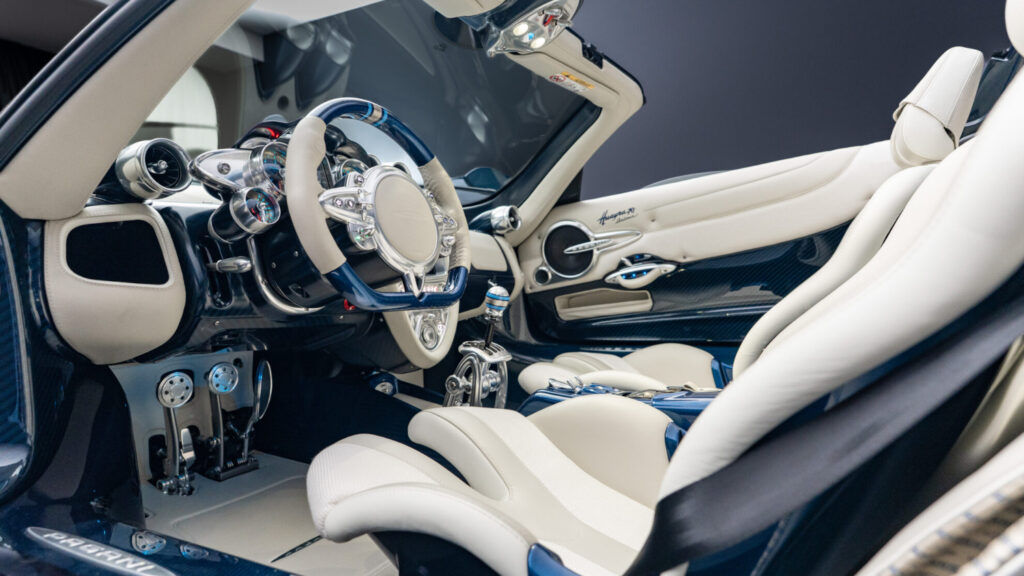
- Transmission: Seven-speed Xtrac manual, electromechanical self-locking differential, three pedals, visible mechanical linkages.
- Brakes and suspension: Carbon-ceramic discs, Brembo calipers, double-wishbone front suspension, electronically adjustable interconnected shocks all around.
- Tires: Pirelli P Zero Trofeo R — 265/30 on 20-inch fronts, 355/25 on 21-inch rears.
- Interior: Milk-colored leather, Inky Blue carbon-fiber accents, diamond dust on the steering wheel and gear knob, machined aluminum throughout.
A seven-speed manual in a high-output V12 does something categorically different from a paddle-shift system — it makes the driver part of the machine rather than its passenger. That is a deliberate choice, not a nostalgic quirk. The decision to mate that gearbox to this engine, for this specific client, says something precise about what the owner wanted from the experience.
The client relationship explains everything else. According to Pagani’s official press materials, designer Lorenzo Kerkoc described accompanying the owner for more than a year through a unique customization journey — one centered on fulfilling a childhood ambition to create a special car together with Horacio Pagani himself. The process translated the owner’s personality, memories, and imagination directly into the car’s material and mechanical choices.
The Last Huayra 70 — And What That Means
Completing the trilogy in Las Vegas, Pagani proves the Huayra platform isn’t retiring — it’s becoming a permanent creative canvas.
The Anima closes a trio alongside the Huayra 70 Trionfo and Derecho, all three shown publicly together for the first time in Las Vegas. Keeping an established platform alive for Grandi Complicazioni commissions isn’t inefficiency — it’s strategy. The Huayra becomes a permanent creative foundation rather than a retired nameplate.
Somewhere in Modena, a craftsperson pressed platinum leaf onto a carbon-fiber splitter by hand while another assembled a three-pedal drivetrain for a car that most manufacturers would never build this way. In a market sprinting toward electrification and automation, the Anima makes a quieter, more deliberate argument — that the most considered thing you can put into a singular hypercar is a clutch pedal.