


The automotive market is rife with vehicles dismissed prematurely, often due to superficial flaws or a brand’s tarnished image. Scroll past countless listings and it’s easy to believe certain models are destined for mechanical purgatory. This narrow view overlooks serious value. This guide cuts through the noise, scrutinizing powertrains, platforms, and maintenance records to highlight cars that surprise with their durability. These are genuine road warriors, ready to defy their reputations and deliver miles of dependable service.
1. Chevrolet HHR
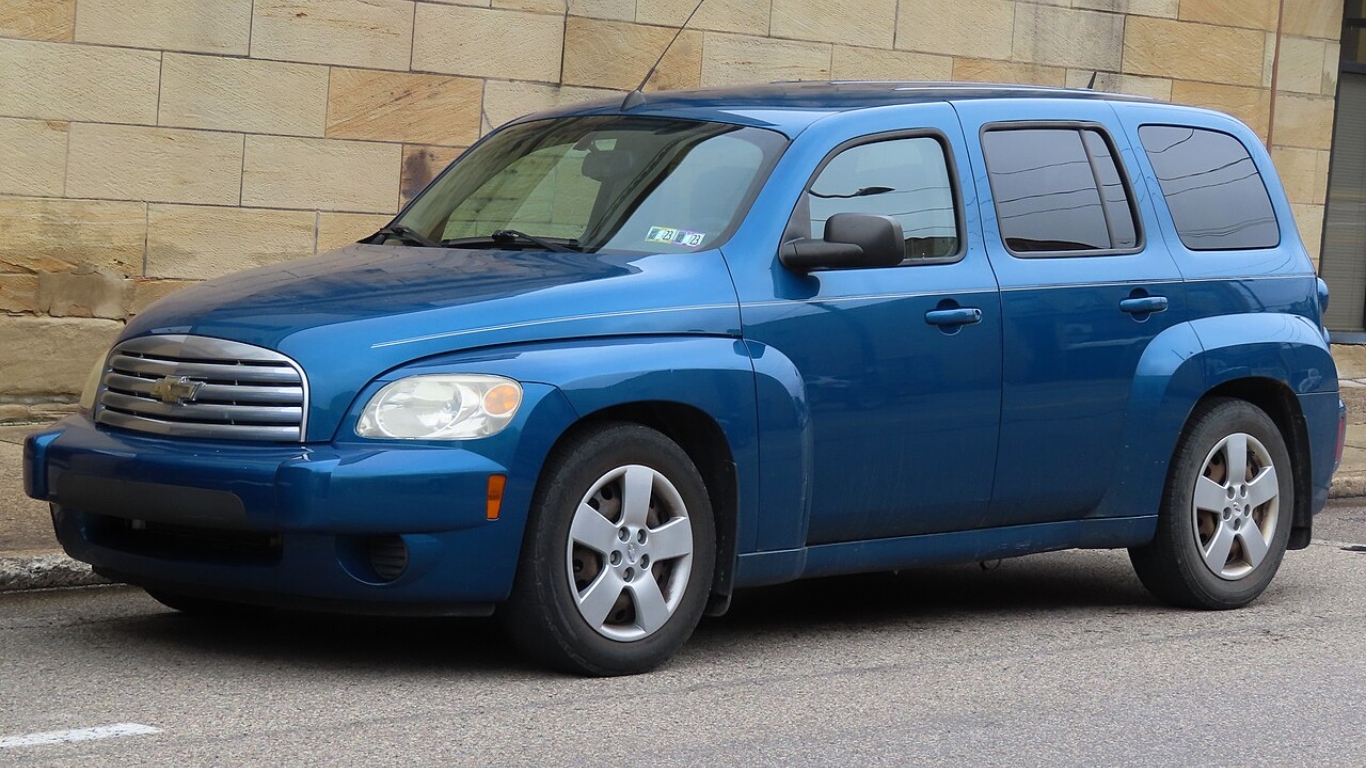
Often dismissed for retro styling, the HHR hides mechanical strength beneath its polarizing exterior.
Around 70% of drivers overlook perfectly reliable vehicles purely due to polarizing styling, often missing out on capable machines. The Chevrolet HHR, produced from 2006–2011, is a prime example. This vehicle shares GM’s robust Delta platform with the Chevrolet Cobalt, giving it typical compact-car underpinnings and parts commonality. Its Ecotec 4-cylinder engine, when maintained, routinely churns past 190,000–220,000 miles without major internal failures.
Major recalls addressed ignition switch defects that could shut off the engine and disable airbags, plus sudden loss of electric power steering assist. Later model years (2010–2011) are generally regarded as the most reliable, benefiting from running improvements and fewer early-production defects. High-mileage Ecotec engines can develop timing chain tensioner wear and chain stretch, causing rattling on cold start. Proactive replacement of chain, guides, and tensioner is recommended on noisy engines rather than waiting for serious damage.
2. Ford Crown Victoria
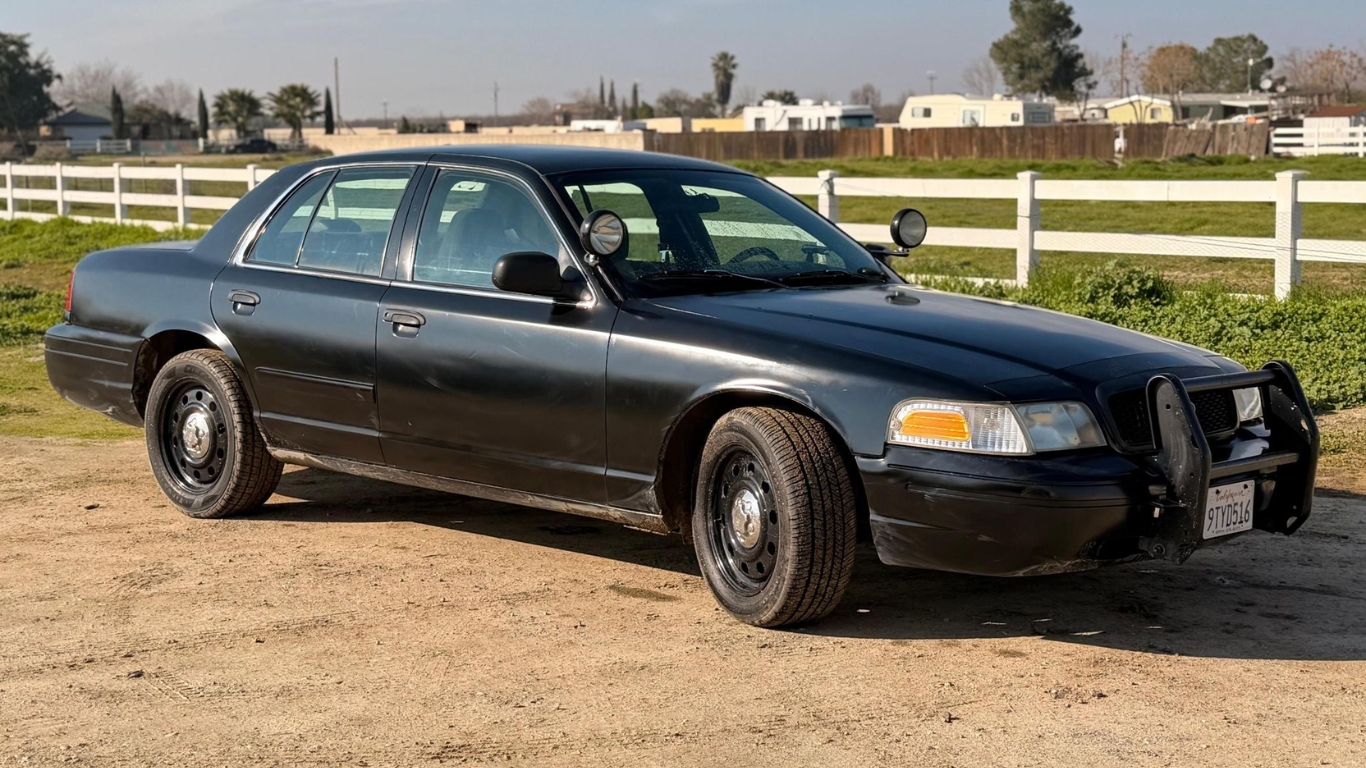
Fleet data shows the Crown Vic’s Modular V8 engine surpassing 250,000 miles in demanding service.
This full-size sedan, built on the body-on-frame Panther platform from 1998–2011, was the backbone of police and taxi fleets because of its undeniable durability. Fleet data and owner reports frequently show engines surpassing 200,000–300,000+ miles with routine maintenance, with some documented examples reaching 400,000–1,000,000 miles.
The Panther chassis is noted for robust body-on-frame construction, simple suspension, and plentiful cheap parts. A key known issue is the composite intake manifold coolant crossover cracking, which can lead to coolant leaks and overheating. Ford issued extended coverage and a technical bulletin (TSB 02-2-2) for manifold crossover seepage. Vehicles in rust-belt regions can suffer severe frame and rear suspension rust, which often ends the car’s usable life before the drivetrain fails. Inspect rear frame rails and suspension mounting points carefully on used cars.
3. Scion xB
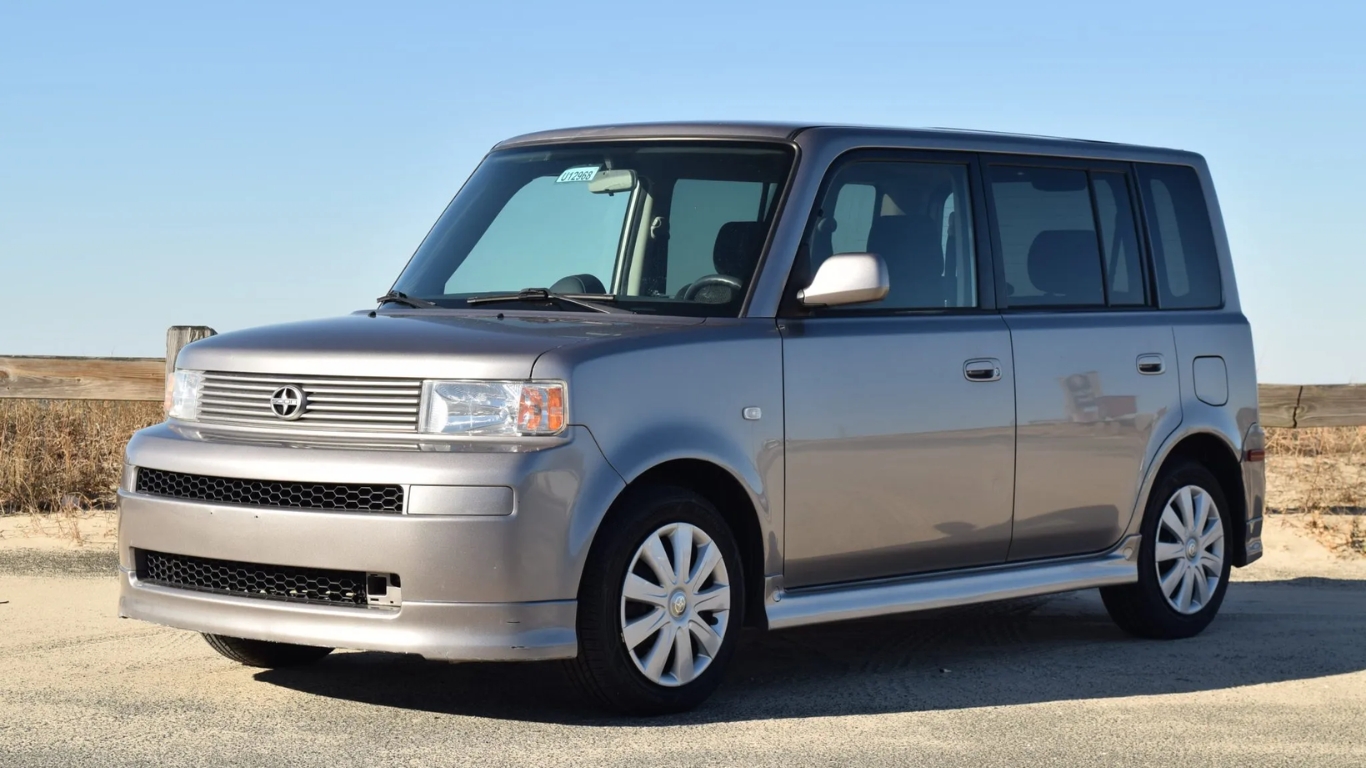
Underneath that polarizing skin lay Toyota’s bulletproof engineering.
The first-generation Scion xB (NCP31) is a boxy subcompact wagon sold in the US from 2004–2006, based on the Japanese Toyota bB. US-market xBs all use Toyota’s 1.5 L 1NZ-FE inline-4 with about 108 hp and 105 lb-ft, paired with either a 4-speed automatic or 5-speed manual. This engine is also used in the Toyota Echo, Yaris, and Scion xA.
The 1NZ-FE is widely regarded as extremely durable. Owners and independent guides often compare it to Toyota’s classic 22R/5S engines, with many examples reaching 200,000–300,000 miles when given regular oil changes. Typical age-related issues include increasing oil consumption beyond roughly 100,000–120,000 miles, usually due to stuck piston rings or worn valve seals, and timing chain stretch causing rattling at start-up. These are manageable if monitored and serviced.
4. Ford Five Hundred
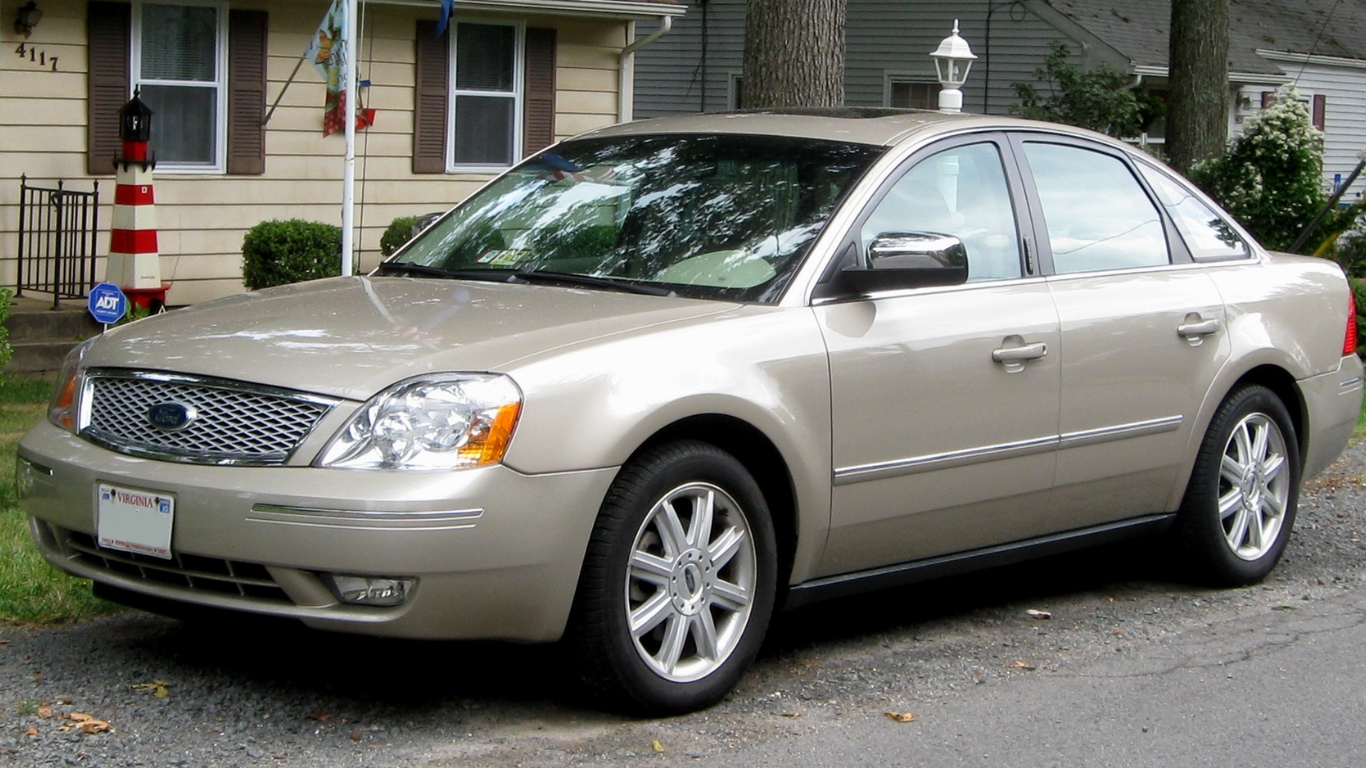
Volvo-derived crash structures earned it 5-star NHTSA crash ratings, making it a quiet fortress for family road trips.
The Ford Five Hundred is a full-size sedan produced for model years 2005–2007, positioned as Ford’s flagship sedan before the Taurus name returned. It rides on Ford’s D3 platform, which is a revised variant of Volvo’s P2 platform used for the Volvo S80, S60, V70, XC70, and XC90. This brings Volvo-derived crash structure and the optional Haldex all-wheel-drive system into the Ford sedan.
Power comes from a 3.0 L Duratec V6 (about 203–206 hp and ~207 lb-ft), paired to either a ZF-Batavia CFT30 CVT (primarily AWD models) or a 6-speed automatic. The Duratec 3.0 is generally viewed as a robust, long-lasting engine when serviced properly. Owner and technician discussions commonly flag the CVT transmission as the main long-term weak point, with higher failure risk and costly repairs compared to the conventional 6-speed automatic. Buyers often prefer non-CVT examples for better long-term reliability.
5. Chrysler PT Cruiser GT
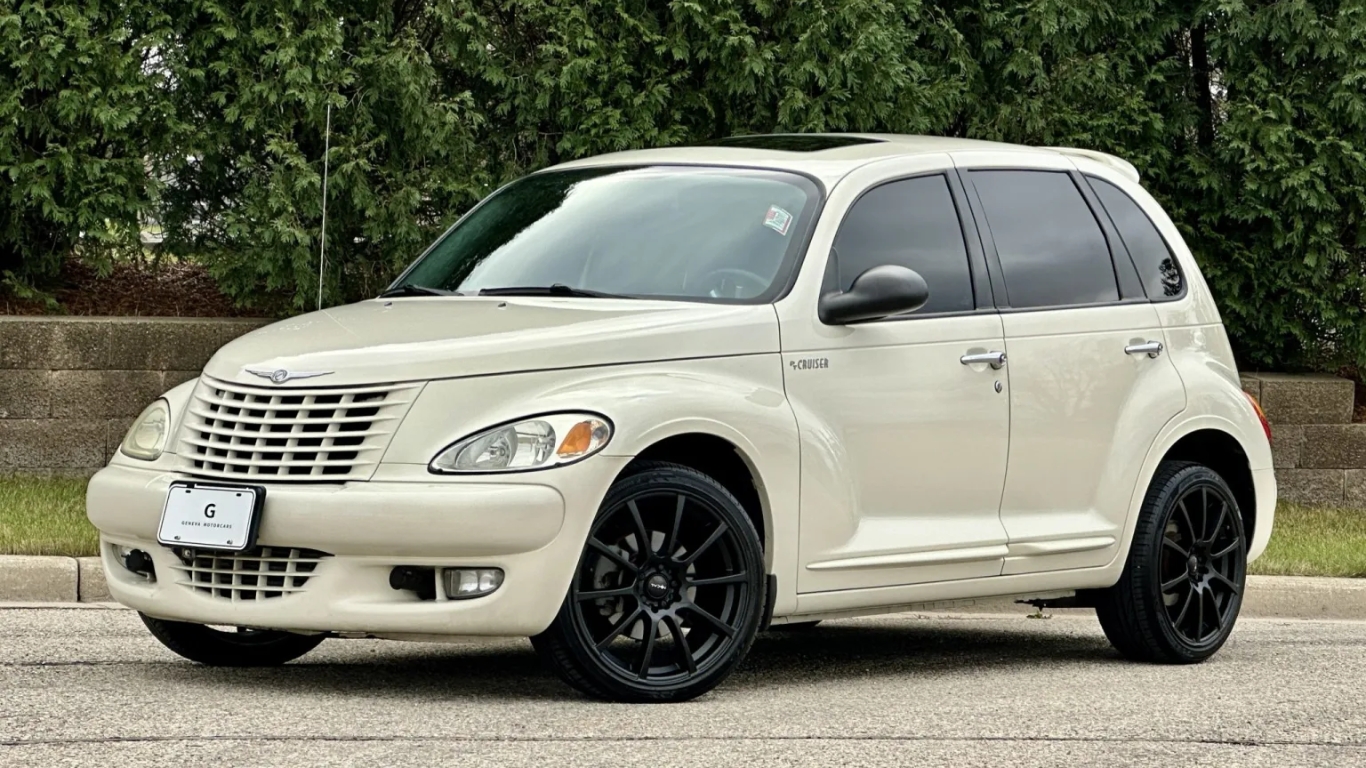
The PT Cruiser GT’s turbocharged engine shared its block and cylinder head with the notorious Dodge Neon SRT-4.
The Chrysler PT Cruiser GT performance models (roughly 2003–2007) use a 2.4 L turbocharged Chrysler inline-4. The PT Cruiser GT’s 2.4 L turbo (EDV/EDT) shares its block and cylinder head architecture with the Dodge Neon SRT-4, with differences mainly in intake manifold, turbo plumbing, intercooler, and calibration. In PT Cruiser GT trim, this turbo engine produced about 215 hp/245 lb-ft at launch, later rising to around 230 hp and 245 lb-ft.
The turbo PT could be ordered with a rugged 5-speed Getrag manual or a 4-speed automatic. Enthusiasts and tuners note that the SRT-4/PT turbo powertrain can reliably support 300–400+ hp with internal hardware still surviving, when tuned properly. The underlying Chrysler 2.4 L is an interference engine, so timing belt failure can cause catastrophic valve-to-piston contact and destroy the engine. Timely belt, tensioner, and water-pump replacement is critical maintenance. Common ancillary issues include power steering pump leaks, typically fixable at relatively low cost.
6. Cadillac Cimarron
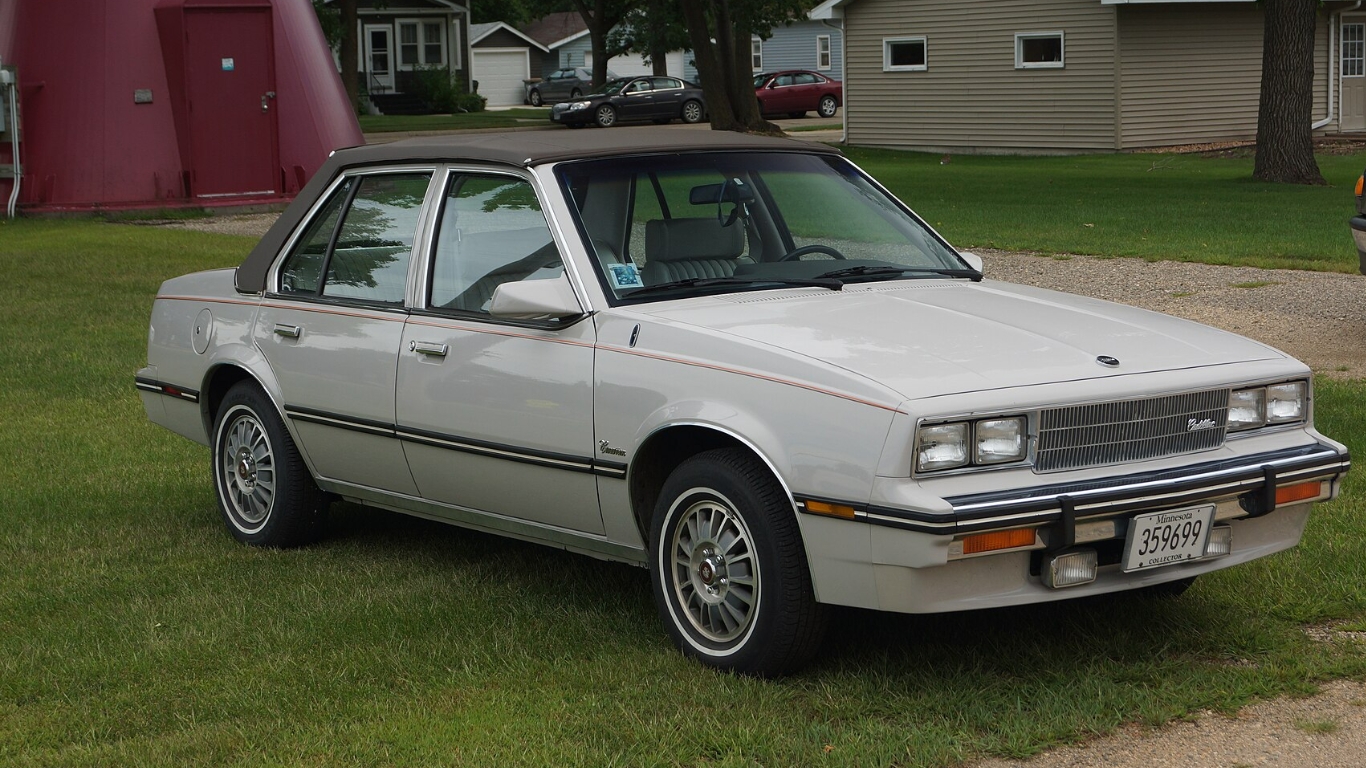
By 1985, the optional 2.8 L V6 offered 125 hp, significantly improving performance and drivability.
The Cadillac Cimarron is a compact entry-level luxury sedan produced from 1982–1988, built on GM’s J-body platform and closely based on the Chevrolet Cavalier. It is one of the most cited examples of badge engineering, sharing much of its exterior design, interior layout, and mechanical components with Chevrolet, Buick, Oldsmobile, and Pontiac J-cars, but priced roughly double a comparable Cavalier when new.
Early Cimarrons used a Chevrolet 1.8 L inline-4 (about 86–88 hp), later upgraded to a 2.0 L inline-4 and, starting mid-1980s, an optional 2.8 L V6 around 125 hp. The V6 (1985–1988) offers significantly better performance and drivability than the original four-cylinder. Common age-related issues on surviving cars include electrical gremlins linked to early-1980s GM wiring and electronics and frame/suspension rust, especially around floorpan and rocker areas. Any Cimarron now is best treated as a hobby or project car rather than a primary daily driver.
7. Pontiac Vibe
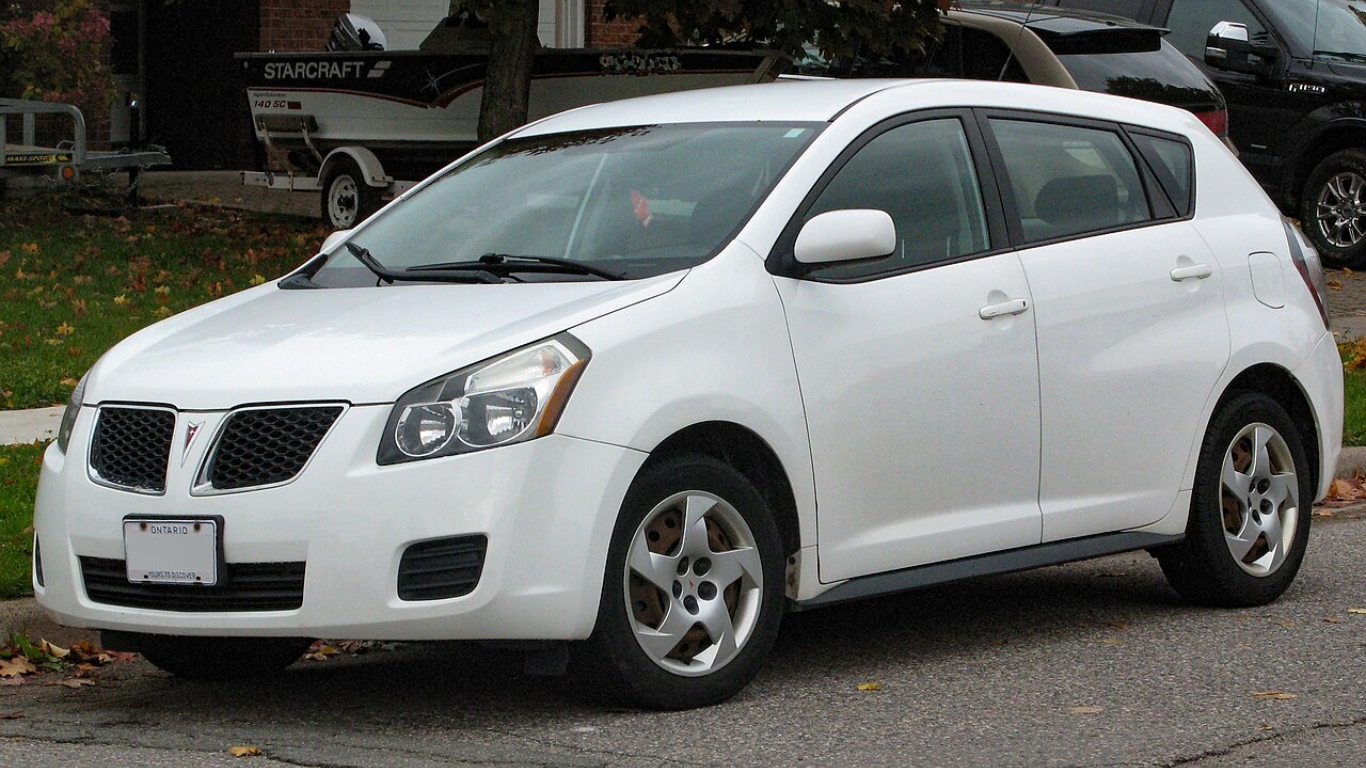
The NUMMI platform and Toyota-supplied engines give the Vibe a reputation for Toyota-like reliability.
The Pontiac Vibe is a compact hatchback built from 2003–2010 as part of a GM–Toyota joint venture at the NUMMI plant in Fremont, California. It shares its platform and powertrains almost entirely with the Toyota Matrix and Corolla. First-generation Vibes use Toyota’s 1.8 L 1ZZ-FE (base and AWD: ~123–130 hp) and optional 2ZZ-GE high-output engine in GT trims (~164–180 hp, high-revving VVTL-i), paired with Toyota manual and automatic transmissions.
Second-generation (2009–2010) Vibes switch to the 1.8 L 2ZR-FE (132 hp) and optional 2.4 L 2AZ-FE (158 hp, 162 lb-ft), again matching the Matrix engine lineup. Many examples exceed 200,000–250,000 miles when maintained. Cross-country drivers report flawless reliability, with some documenting viral TikTok road trips. Known concerns include oil consumption on some Toyota 2AZ-FE 2.4 L engines (linked to piston ring design), particularly in later Vibe/Matrix years, and typical compact-car rust issues in harsh climates. Prospective buyers should check oil level history and underbody corrosion.
8. Buick LeSabre
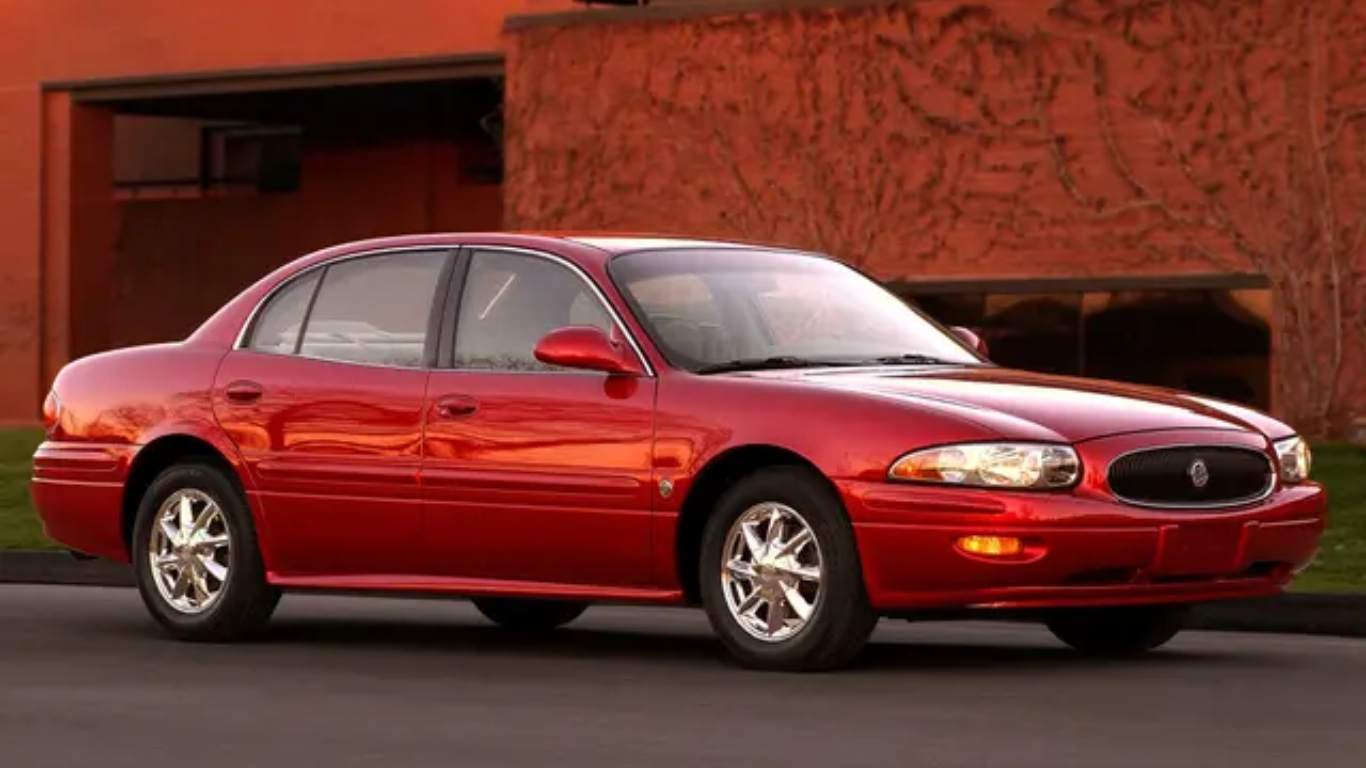
GM enthusiasts dub the 3800 Series II V6 “unkillable,” routinely seeing these cars sail past 200,000–300,000+ miles.
The eighth-generation Buick LeSabre (2000–2005) is a full-size front-wheel-drive sedan known for its soft ride and large, comfortable interior. All 2000–2005 LeSabres use GM’s 3.8 L 3800 Series II V6 (L36), an overhead-valve, cast-iron-block engine widely regarded as one of GM’s most durable powerplants, routinely reaching 200,000–300,000+ miles with basic maintenance.
The 3800 Series II in these cars produces just over 200 hp, paired to a 4-speed automatic transmission. The powertrain balances decent performance with fuel economy around mid-20s mpg combined for 2005 models. Owner data and commentary consistently highlight the 3800’s ability to tolerate moderate neglect while still delivering long service life, though intake manifold gaskets, plastic coolant elbows, and fuel pressure regulator issues are known weak points that can lead to coolant or fuel leaks if not repaired. Common LeSabre chassis issues include front strut mount wear causing clunks over bumps, and power window regulator failures particularly on 2000–2002 models. Otherwise, the platform is generally considered a solid, low-cost daily driver when rust and transmission condition are acceptable.