


The average new car payment in America hovers around $730 per month, trapping drivers in a cycle of perpetual debt and depreciation. While new luxury rigs promise digital distractions, true freedom comes from pickups engineered to outlast payments. These ‘forever trucks’ redefine value and reliability, acting less like a monthly bill and more like a trusty companion on the road. Anyone can find liberation from the relentless grind of modern vehicle financing by choosing machines built for decades of honest work and adventure, giving real independence on the open road.
1. 1999–2006 Chevrolet Silverado 1500 (GMT800) with 5.3L Vortec LM7

The LM7 delivers linear power without fragile turbos or the lifter-collapse headaches that plague later GM trucks.
The LM7 engine produces roughly 295 horsepower and 335 pound-feet of torque from a deep-skirt cast-iron block designed like heavy industrial equipment. Port fuel injection sidesteps carbon buildup, and the absence of Active Fuel Management (AFM) avoids the lifter collapse issues that plague later GM trucks. A robust 24x reluctor wheel provides solid sensor data, simplifying diagnostics compared to modern multiplexed sensor networks.
Maintaining this GMT800 platform is straightforward; mechanics can tackle water pumps and front accessories with basic tools in well under an hour. A 4L60E transmission rebuild runs $1,600 to $2,000 at independent shops. Buyers get a reliable companion on a budget, accessible to anyone willing to keep up with routine maintenance.
2. 2000–2006 First-Generation Toyota Tundra with 4.7L 2UZ-FE

At least two documented million-mile Tundras verified by Toyota prove this truck was built like Cold War-era machinery.
At least two documented million-mile Tundras verified by Toyota show engineers finding cylinder crosshatching still visible upon teardown. This truck was built like Cold War-era machinery, designed to churn miles without complaint. The 4.7L 2UZ-FE V8, shared with the Land Cruiser 100 series, boasts a cast-iron block and forged-steel crankshaft delivering 282 horsepower and 325 lb-ft of torque, optimized for grunt without cylinder deactivation or complex hybrid systems.
The 90,000-mile timing belt service interval is non-negotiable for this interference engine; documented belt changes are a major value factor on the used market. Common EVAP system faults, often signaled by codes like P0440 or P0446, typically amount to simple fixes. These trucks still pull work duty with the same reliability they showed twenty years ago. Finding one for $8,000 to $12,000 gives buyers double the capability for less than many used Tacomas.
3. 1992–1996 Ford F-150 “OBS” with 4.9L 300 Inline-Six
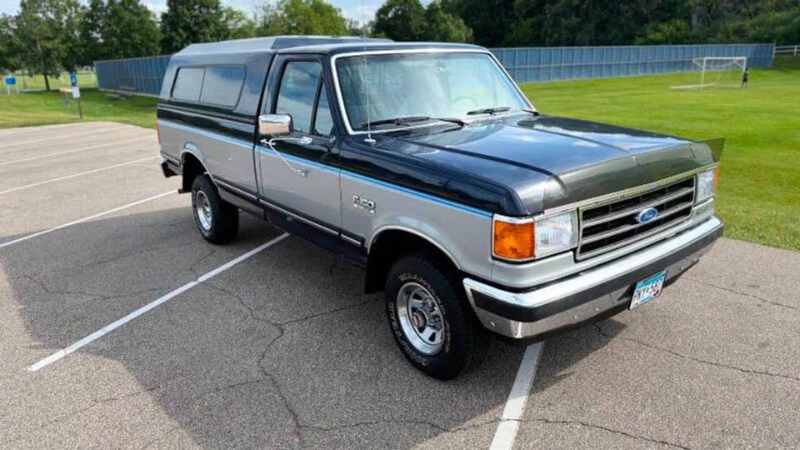
The average new truck contains over 1,500 semiconductor chips; the OBS Ford’s analog simplicity offers 1,500 fewer potential failure points.
The average new truck now contains over 1,500 semiconductor chips, creating 1,500 potential points of failure. The 1992–1996 F-150 (Old Body Style, or OBS) runs on the legendary 4.9L (300 cubic inch) inline-six. Heavy-duty fiber and steel timing gears eliminate timing component stretch or breakage entirely, contributing to exceptionally long service life. The engine delivers 150 horsepower and 260 lb-ft of torque, with peak grunt arriving at just 1,600 rpm for towing and hauling.
Traditional body-on-frame construction uses a real steel frame, providing a solid foundation. Two-wheel-drive models benefit from massive forged steel Twin I-Beam (TIB) front suspension, built for decades of rough roads and heavy loads. Owners rebuild entire cooling systems using basic hand tools in accessible engine bays; parts remain inexpensive and widely available. These workhorses sell under $7,500 and offer monthly ownership costs that put modern truck payments to shame.