

Badge engineering is one of the automotive industry’s most straightforward cost strategies: develop one platform, sell it under multiple brand names with cosmetic and specification differences, and capture different price points with a single development budget. It works well for manufacturers and, when buyers know how to read it, can work well for shoppers too. The Geo Prizm was a Toyota Corolla sold through GM dealers. The Honda Passport was an Isuzu Rodeo with different badges. The Audi RSQ8 and Lamborghini Urus share the same twin-turbocharged V8 and platform. These 13 pairs represent badge engineering at its most transparent — and most useful for anyone who knows what to look for.
13. The Toyota 86 and Subaru BRZ: Twins Separated at Birth

The Toyota 86 family (including the Scion FRS, GT86, and GR86) and the Subaru BRZ share Subaru’s 2.4L flat-four boxer engine producing 228 horsepower and 184 lb-ft of torque through the same chassis and transmission options, with both cars weighing approximately 2,800 lbs. The differences are real but measured: the BRZ uses softer shock tuning calibrated for daily driving comfort, while the 86 runs firmer suspension with a flatter cornering attitude and its own traction control programming. Both are genuine driver’s cars developed jointly — the key distinction for a buyer is whether daily ride quality or handling sharpness is the priority, since the mechanicals are otherwise identical.
12. General Motors’ Truck Strategy: Silverado and Sierra
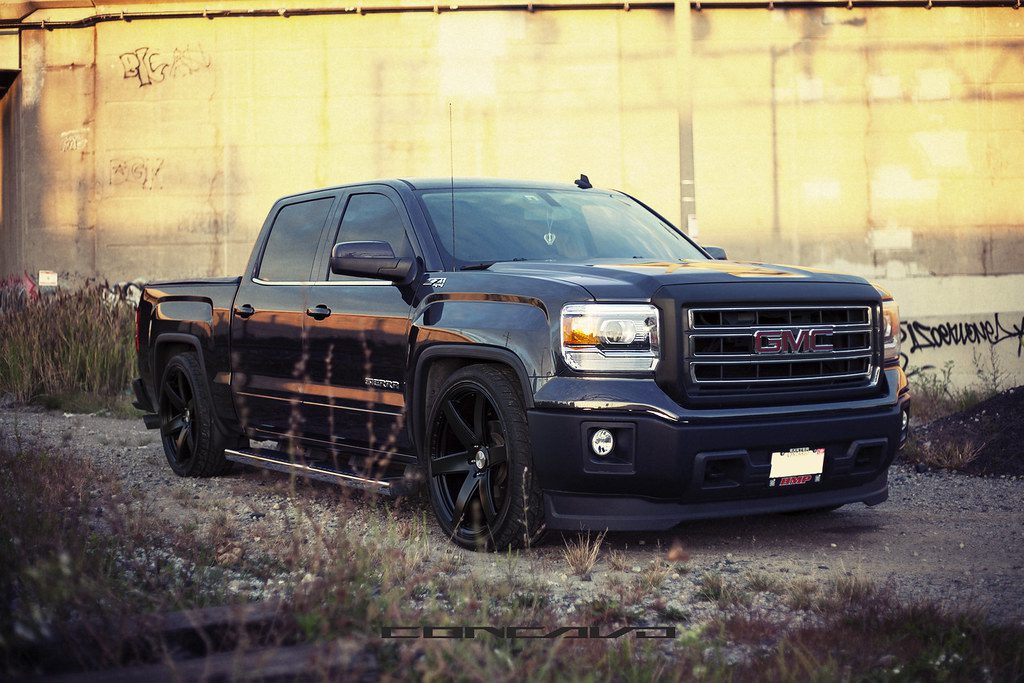
The Chevrolet Silverado and GMC Sierra share identical platforms and the same engine lineup — the 2.7L turbocharged four-cylinder, the 6.2L V8, and the 3.0L Duramax diesel — along with the same cab configurations, bed lengths, and towing ratings. Where they diverge is specification and trim presentation. The Sierra offers a six-function MultiPro tailgate, more interior luxury in higher trims, and GMC’s more upscale visual approach across all levels. The Denali trim delivers a genuinely premium interior experience. The Silverado focuses on workhorse positioning at lower price points. Same powertrain and platform, different market targets — the Sierra typically commands a price premium for the additional features.
11. Chrysler’s Minivan Evolution: The Family Hauler Multiverse

Chrysler invented the modern minivan in 1984 and spent the following decades selling variations of the same vehicle under the Dodge Caravan, Chrysler Town and Country, Voyager, and Pacifica nameplates. The shared mechanical foundation was the 3.6L Pentastar V6 producing 283 horsepower through a six-speed automatic, with the same Stow ‘n Go seating system across models. The Town and Country added leather and upgraded audio; the Pacifica brought a nine-speed gearbox and a plug-in hybrid option. The practical result for a buyer: the Voyager and base Caravan delivered the same core functionality as more expensive trims at significantly lower prices, because the underlying vehicle was the same.
10. Ford and Mazda’s SUV Collaboration: The Corporate Roommates

The 2001 Ford Escape and Mazda Tribute were mechanical twins built on the same platform at the same Kansas City factory, sharing engines from a 2.0L four-cylinder to a 3.0L V6 producing 200 horsepower. The real-world differences were suspension tuning — Mazda calibrated the Tribute for slightly more handling response while Ford tuned the Escape for a more comfortable ride. Both served the same buyer need at similar prices, meaning the choice came down to driving feel rather than any meaningful mechanical distinction. The partnership ended when Mazda moved to the CX-7 and Ford redesigned the Escape in 2013, each brand pursuing its own direction from a shared starting point.
9. Luxury Badge Engineering: When Nissan and Mercedes Had a Baby

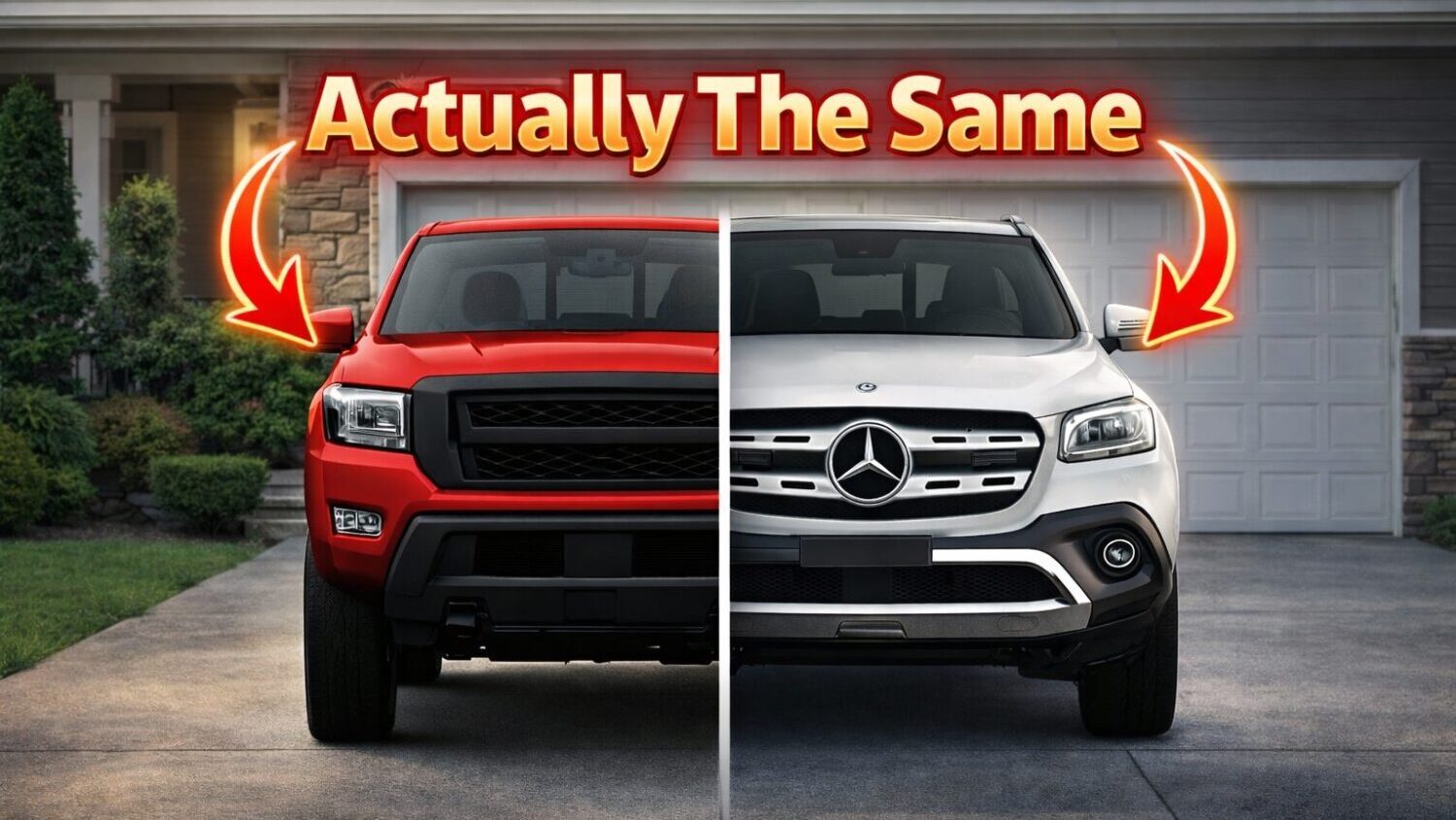
The Mercedes-Benz X-Class was a Nissan Navara wearing Mercedes bodywork, sharing chassis, suspension, and drivetrain components directly. Powertrain options included Nissan’s 2.3L twin-turbocharged diesel with 187 horsepower or Mercedes’ own 3.0L V6 diesel — the latter being the only genuinely Mercedes-sourced mechanical component in the vehicle. Mercedes added a wider body, LED headlights, and upgraded interior materials, but truck buyers recognized the Nissan foundation immediately. The market did not respond well to the pricing premium over an equivalent Navara, and Mercedes discontinued the X-Class in 2020 after just three years — one of the more conclusive rejections of luxury badge engineering in recent automotive history.
8. Volkswagen Group’s Platform Strategy: The Touareg and Cayenne Connection

The Volkswagen Touareg and Porsche Cayenne share core VW Group architecture and an overlapping engine lineup running from V6 options to V8s and the 5.0L V10 TDI diesel. Porsche calibrated the Cayenne’s suspension and steering for sharper handling response, while Volkswagen developed the Touareg around genuine off-road capability with locking differentials and adjustable air suspension with meaningful ground clearance. The Touareg prioritized a broader capability envelope; the Cayenne prioritized on-road dynamics. Both command premium prices — the Cayenne significantly more so — for what is fundamentally the same platform developed in two different directions by engineers with different briefs.
7. Honda’s SUV Entry Through Badge Engineering: The Passport Identity Crisis
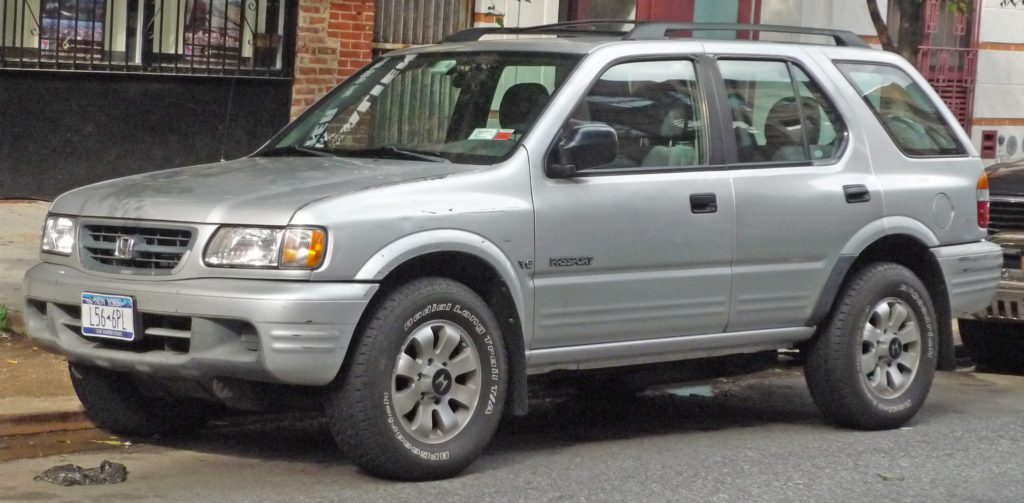
The 1990s Honda Passport was an Isuzu Rodeo with Honda badges — the same frame, the same engines from a 2.6L four-cylinder to a 3.2L V6 producing 205 horsepower, built at Isuzu’s Indiana factory. Honda modified the grille and exterior trim but made no mechanical changes. The Passport gave Honda an SUV presence in a booming market segment without the development cost of building one, and gave buyers access to the Honda dealer network for a vehicle that was mechanically an Isuzu. The arrangement lasted until 2002, when Honda completed development of the Pilot — its first genuinely Honda-engineered SUV — and ended the rebadging arrangement.
6. Performance Siblings: The RSQ8 and Urus — When Germans and Italians Share Custody
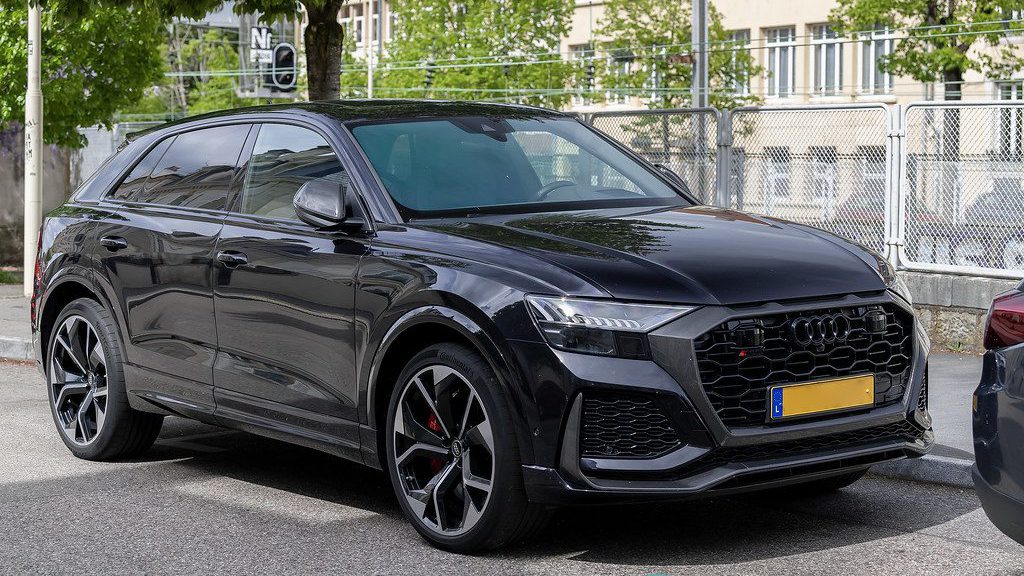
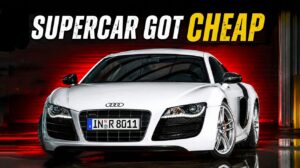
The Audi RSQ8 and Lamborghini Urus share Volkswagen Group’s MLB Evo platform and twin-turbocharged 4.0L V8 engines. The RSQ8 produces 591 horsepower and the Urus 641 — both reaching 60 mph in approximately 3.5 seconds despite weighing over 5,000 lbs. The RSQ8 held the Nürburgring lap record for SUVs at the time of its release. Where they diverge is presentation: the Urus uses dramatic Italian styling with sharp body creases and a sportier interior orientation, while the RSQ8 takes a more restrained approach focused on comfort alongside performance. The price gap between them is substantial, and for a buyer prioritizing performance per dollar, the RSQ8 delivers the same platform outcome with less price premium attached to the badge.
5. General Motors’ Sporty Convertibles: The Roadsters That Time Forgot

The Saturn Sky and Pontiac Solstice shared GM’s Kappa platform with a base engine producing 177 horsepower and turbocharged GXP and Red Line variants producing 260 horsepower through available manual transmissions — a specification that made both genuinely engaging to drive rather than just visually appealing. The Sky used slightly more contemporary styling while the Solstice had a more traditional roadster appearance, but the mechanical experience was the same. GM’s 2009 bankruptcy eliminated both Saturn and Pontiac, ending production of both cars simultaneously. Collector values have risen as the cars’ combination of rear-wheel-drive handling, turbocharged power, and manual transmissions becomes increasingly rare in the modern market.
4. International Badge Engineering: The Chevrolet SS and Holden Commodore VF Conspiracy

The Chevrolet SS was the Holden Commodore VF brought to the American market with Chevrolet badging — the same vehicle, the same LS3 6.2L V8 producing over 400 horsepower, and a manual transmission option that most American sedans had already abandoned by the time of its 2014 introduction. Both cars delivered rear-wheel-drive performance sedan dynamics in a practical four-door body with fuel economy that remained reasonable for the powertrain. Low sales volume relative to the cars’ actual capability has made both the SS and surviving Commodore VFs increasingly sought after, with values rising as buyers recognize that this was one of the last genuinely driver-focused performance sedans available at a non-exotic price.
3. Platform Siblings: The Porsche Boxster and Cayman Myth

The Porsche Boxster and Cayman are mid-engine siblings sharing the same platform, suspension architecture, and most mechanical components — the primary distinction being the Boxster’s convertible body and the Cayman’s fixed hardtop. Porsche reserves its most extreme performance variants for the Cayman, including the GT4 and GT4 RS specifications, which gives the coupe a higher ceiling in the range. At equivalent trim levels, both cars deliver essentially the same driving experience — the choice is genuinely about open versus closed body style rather than meaningful performance difference. Porsche’s own engineers have acknowledged that the mid-engine layout makes the Cayman’s chassis dynamics equal to or better than the 911 at comparable power levels.
2. American-Japanese Partnership: The Toyota Corolla and Geo/Chevrolet Prizm Switcheroo

The Geo Prizm — later sold as the Chevrolet Prizm — was a Toyota Corolla built at the NUMMI factory in Fremont, California, sharing the Corolla’s engines, transmissions, platform, and virtually every mechanical component. The cosmetic differences were minimal. The practical implication was significant: buyers who purchased the Prizm received Toyota engineering and reliability at prices that typically ran below the Corolla’s, simply because the GM badge carried less premium. Buyers who knew the mechanical relationship accessed Toyota’s reliability record through a GM dealer. The Prizm lasted until 2002 when NUMMI ended the arrangement, and used Prizms from this era remain among the more cost-effective entries into Corolla-equivalent reliability.
1. Mainstream to Luxury: The Ford Fusion and Lincoln MKZ Identity Crisis

The Ford Fusion and Lincoln MKZ shared the same platform, engines, and basic architecture — the MKZ differentiated through upgraded interior materials, LED lighting, Lincoln-specific exterior styling, and positioning against European luxury brands at a corresponding price premium. The strategy relied on buyers valuing the Lincoln experience — dealer service, brand prestige, interior refinement — over the mechanical reality that the Fusion delivered the same powertrain and chassis dynamics at a lower price. For buyers who valued the additional comfort and appointments, the MKZ justified its premium. For buyers focused on cost per mechanical capability, the Fusion was the rational choice. This remains the clearest example of badge engineering that a buyer can use directly: the same car at two different price points, with the difference being materials, presentation, and brand positioning rather than engineering substance.