

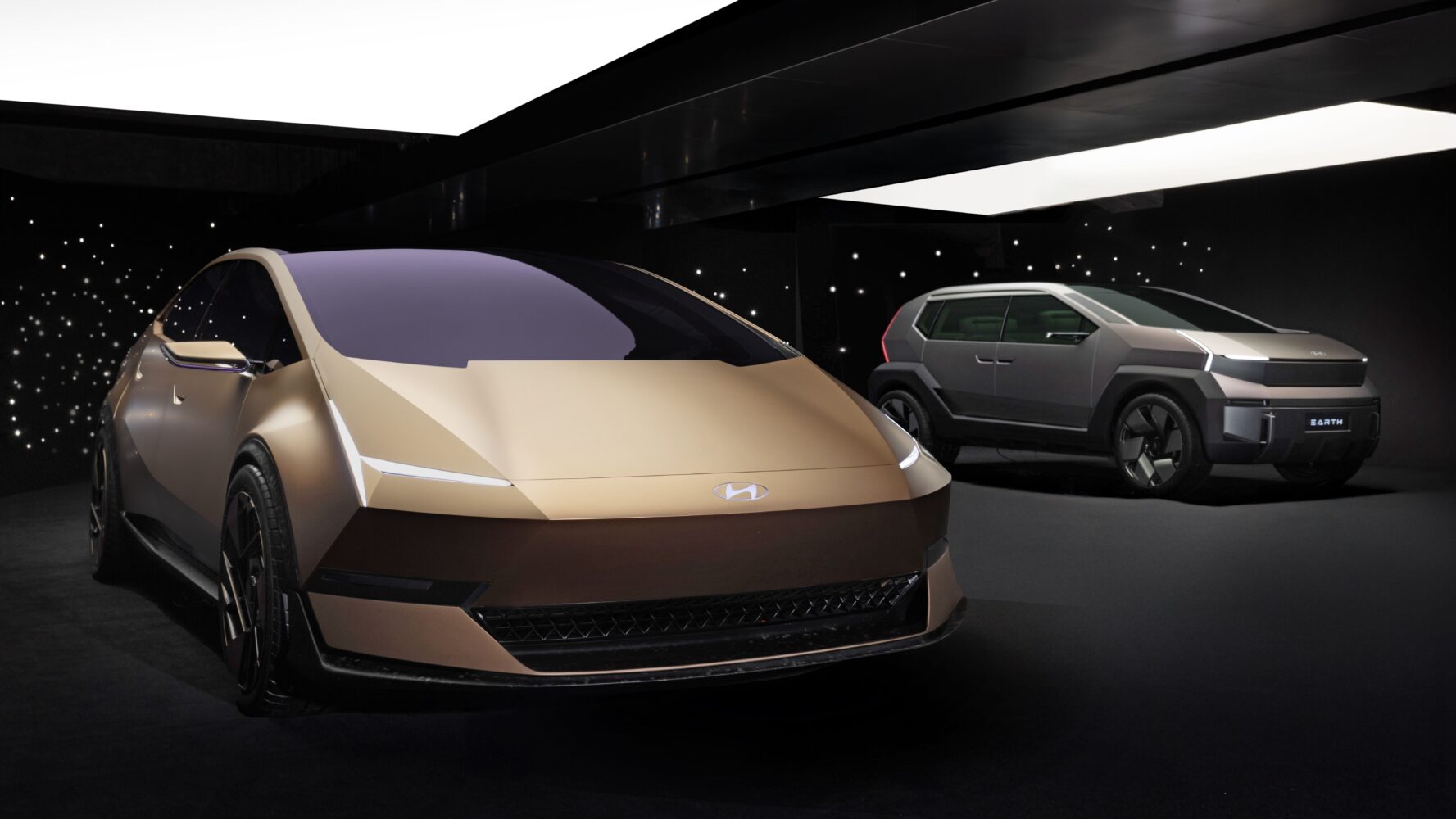
While most automakers tweak colors for different markets, Hyundai just unveiled an entirely new design language for China. The Venus and Earth concepts, revealed April 10th ahead of their Auto China 2026 debut, abandon the brand’s signature Parametric Pixel aesthetic for something called “Art of Steel”—think geometric aggression instead of retro-futurism.
Planet Names Replace Numbers
China’s Ioniq lineup gets cosmic branding while global markets stick with Ioniq 5 and 9 numbering.
These concepts introduce planet-based naming for China’s Ioniq vehicles, symbolizing cars “orbiting around the customer” in what Hyundai calls the “Ioniqverse.” It’s a bold departure from the numerical system used everywhere else, signaling that China gets its own automotive universe entirely.
Venus Brings Golden Fastback Luxury
The sedan concept features Voyager Golden Record-inspired details and forged carbon-fiber accents.
Venus arrives in Radiant Gold paint with a sloping fastback silhouette that screams premium. The concept packs an octagonal steering wheel, panoramic glass roof, and brake pads inspired by NASA’s Voyager Golden Record—because apparently even car parts need cosmic references now. Inside, purplish suede meets gold trim in a cabin dominated by a massive dashboard screen.
Earth Goes Rugged with Y-Shaped LEDs
The SUV concept targets families with boxy stance and Beijing-specific interior details.
Earth takes the opposite approach with Aurora Shield silver paint and an upright, utilitarian stance. Thin Y-shaped LEDs replace traditional headlights while chunky bumpers sport tow hooks and skid plates. The interior features “air-hug” seats with integrated air modules and ambient lighting that casts tree shadows—plus Beijing map patterns woven into the design details.
China Strategy Signals Bigger Shift
The concepts target China-specific production as Hyundai pushes 36 new models by 2030.
“We chose to be ‘the origin’, something entirely new—recognisable at a glance… delivering a ‘best in first impression,’” said Hyundai head designer Simon Loasby. Whether these concepts reach production remains unclear, but their design cues will likely influence global Ioniq refreshes. Auto China 2026 should reveal if Hyundai’s betting on regional design languages actually resonates with Chinese buyers—or if it’s just expensive market research disguised as concepts.