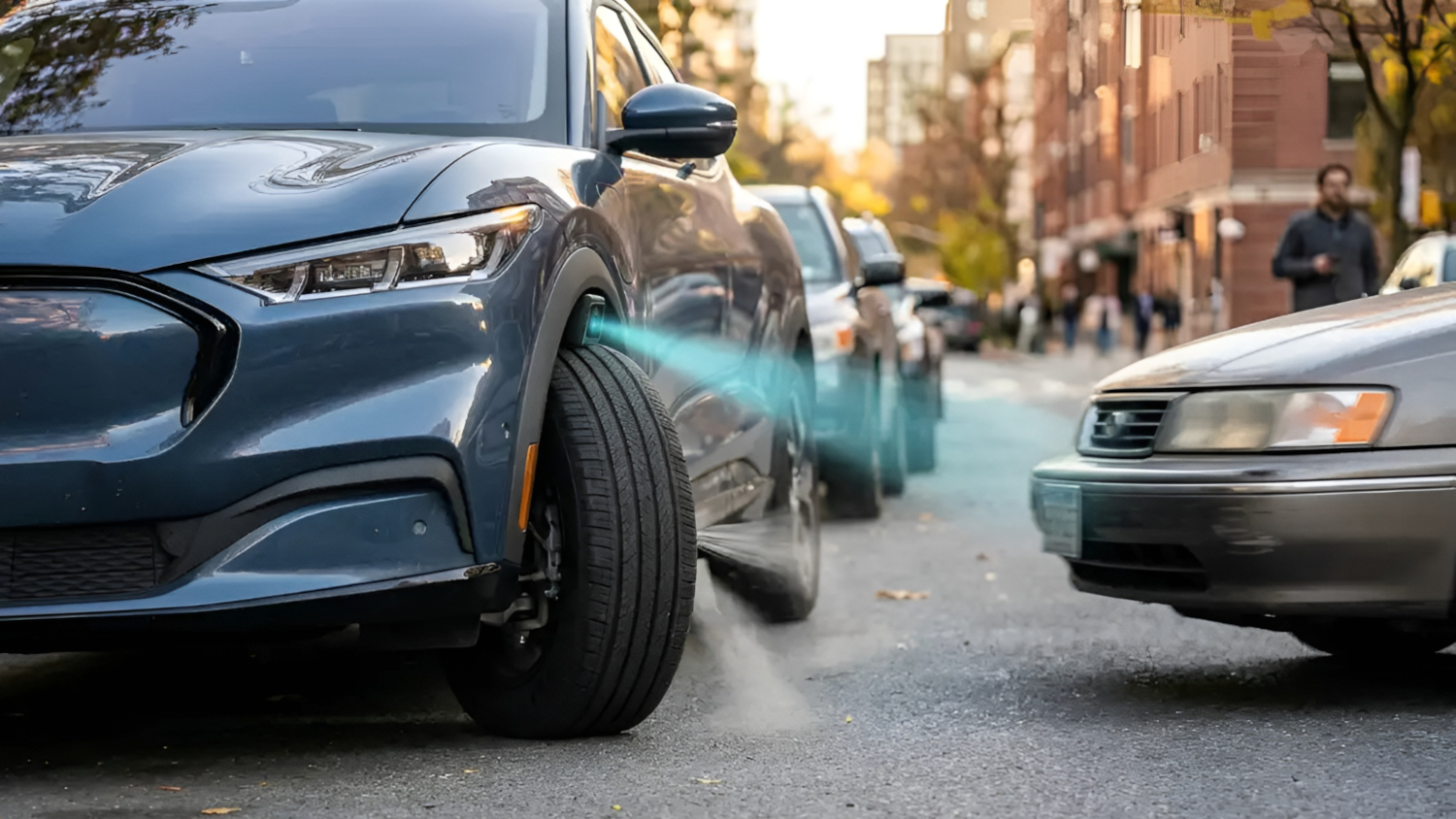


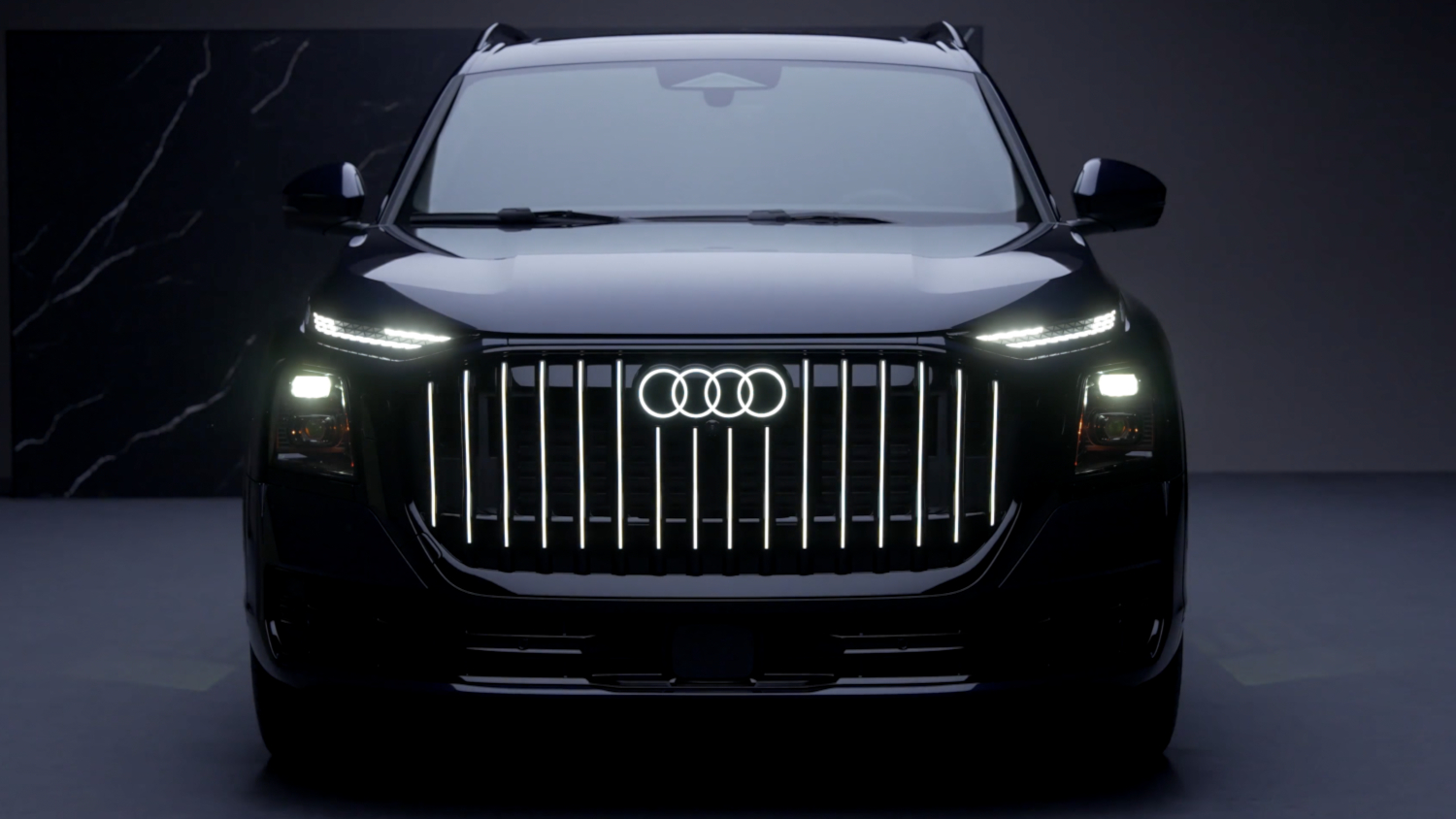
Parallel parking on a busy street and edging back into traffic exposes a familiar blind spot: conventional turn signals sit flush against bodywork, invisible to approaching drivers until the gap has nearly closed. The 2027 Q9’s system reportedly throws a dynamic arrow onto the pavement ahead of the bumper — potentially visible to approaching traffic before the car’s conventional lamps even enter their sightline. That’s the pitch. The 2027 Q9 is the first U.S.-market Audi to combine digital Matrix LED headlights with pavement-projection functions, arriving after a 2022 NHTSA rule established performance requirements for adaptive-driving-beam systems and permitted their use in the United States.
How The Anti-Glare High Beams Work
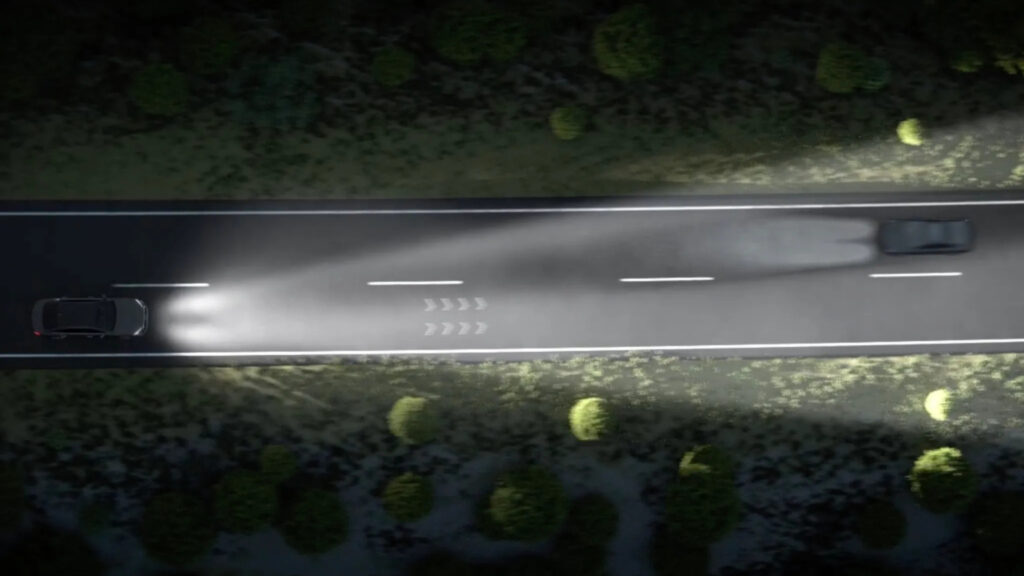
A camera carves low-intensity zones around other drivers so the surrounding road stays brightly illuminated without directing full intensity at oncoming traffic.
A camera behind the rearview mirror monitors the road ahead. When high beams are active, the system places moving low-intensity zones around oncoming vehicles, cars ahead, and road signs — leaving the surrounding road at higher-intensity illumination. The hardware behind this: 25,600 individually controllable light points inside a module roughly 13 millimeters wide, according to Audi’s press materials.
During a nighttime demonstration in Utah, the system reportedly produced a substantially wider illuminated field on unlit rural roads, while the darker exclusion zones around other vehicles were nearly imperceptible from inside the Q9, according to Jalopnik’s firsthand account.
Key specs and availability, per reported U.S. specifications:
- Digital Matrix LED headlights standard on Q9 Premium Plus and above, plus the SQ9 — among the models worth waiting for
- Projected turn signals available in the Q9’s $14,700 Prestige package or the SQ9’s $4,750 Luxury package
- Eight selectable daytime-running-light signatures
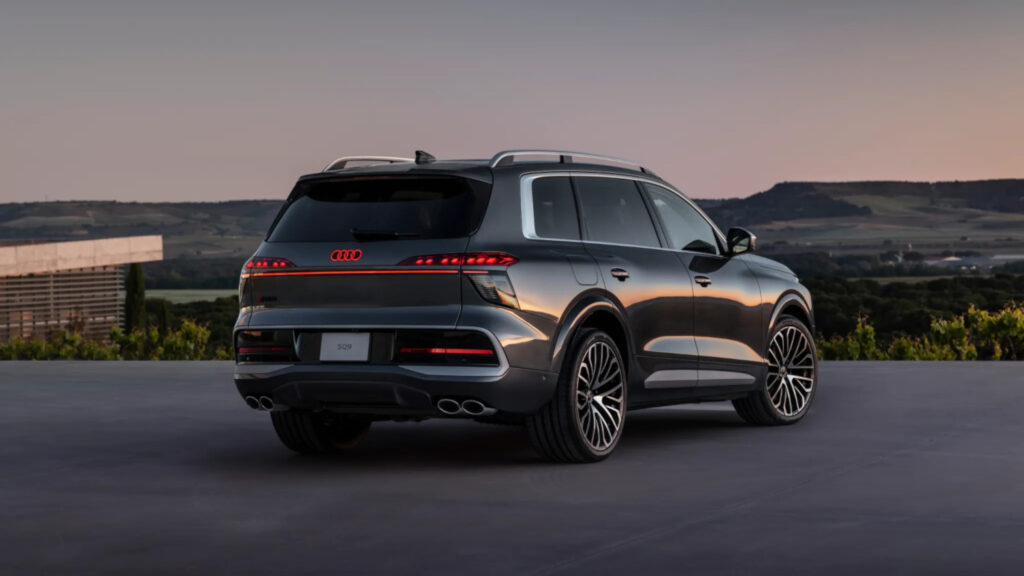
- Curved digital OLED taillights that display a hazard triangle when hazards activate
- Door-exit rhombus projection, with rear-radar detection that can alert occupants to approaching cyclists
The parallel-parking scenario is the projection’s strongest argument. Because the arrow extends beyond the car’s body, approaching traffic may register the vehicle’s intended movement before its conventional lamps come into view — though visibility depends on road geometry, pavement contrast, and the observer’s attention. A white rhombus can also appear beneath opening doors, while rear-bumper radar flags approaching obstacles separately.
What To Watch
Visibility caveats, unknown repair costs, and the absence of independent crash data deserve honest attention before drawing firm conclusions.
Projections were not equally bright across all conditions during the Utah demonstration, according to Jalopnik’s review. Pavement color, ambient light, weather, and viewing angle could all affect what other road users actually see. Replacement costs for the headlight module remain unknown. The 2022 NHTSA rule permits adaptive beams and sets performance requirements — it does not validate real-world effectiveness, and no independent crash-reduction evidence was identified in the reviewed sources for this specific implementation. Federal regulators continue to shape the broader landscape of vehicle-safety standards beyond adaptive beams.
This is genuinely capable technology sitting behind a substantial package premium. The intended benefit of the anti-glare high-beam system is wider illumination while limiting glare for oncoming drivers — a clear design goal, even if independent proof of safety gains is still pending. Whether projected arrows deliver measurable benefits beyond standard indicators remains an open question, and long-term durability data has yet to emerge.