

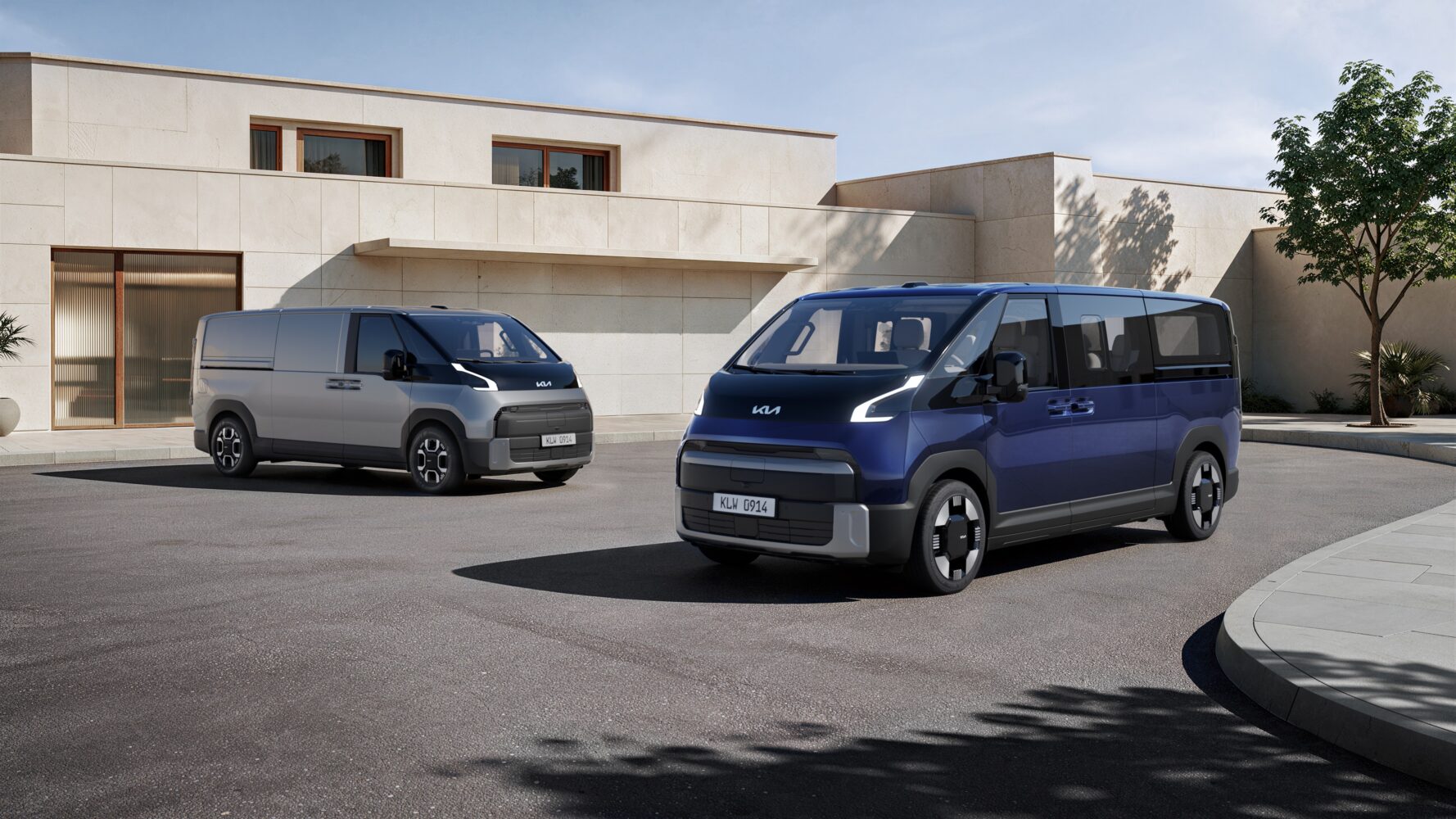
You know that shuttle. The one from arrivals that smells like two decades of synthetic pine and industrial despair, where the diesel knock rattles your molars for twenty minutes before depositing you at the hotel. That vehicle is overdue for retirement. Kia just built its replacement — and the replacement looks like something that drove off a Neill Blomkamp film set.
Revealed in mid-September 2026, the PV7 is Kia’s full-size electric van, sitting above the smaller PV5 in a lineup the company calls its Platform Beyond Vehicle (PBV) strategy — a dedicated family of Kia’s commercial EVs aimed squarely at Ford’s E-Transit and the Mercedes-Benz eSprinter.
Seventeen and a Half Feet of Modular, Flat-Floor Muscle
This is the full-size people- and cargo-mover built to quietly rewire how hotels, airports, and food-tour operators move the people who matter most to them.
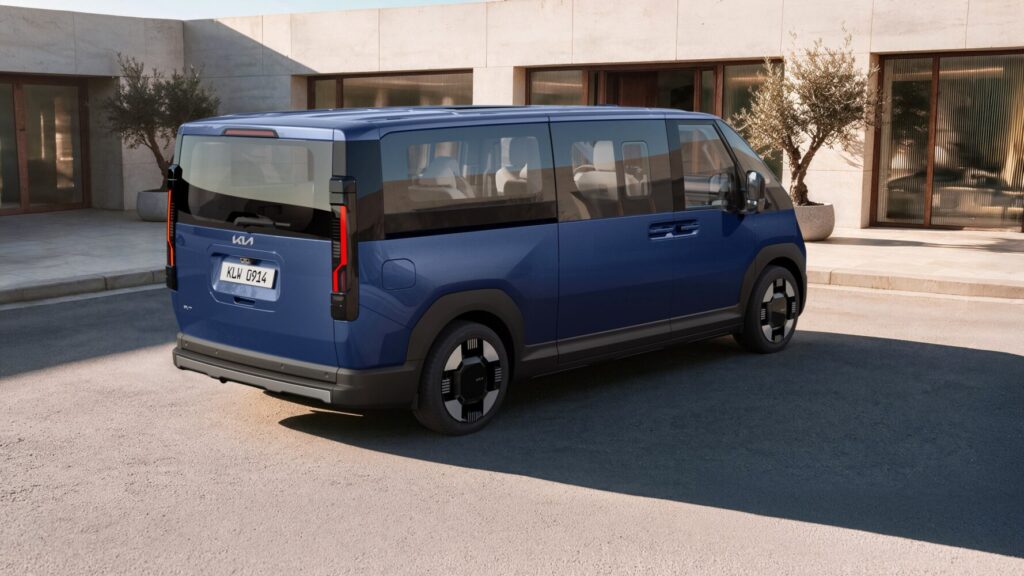
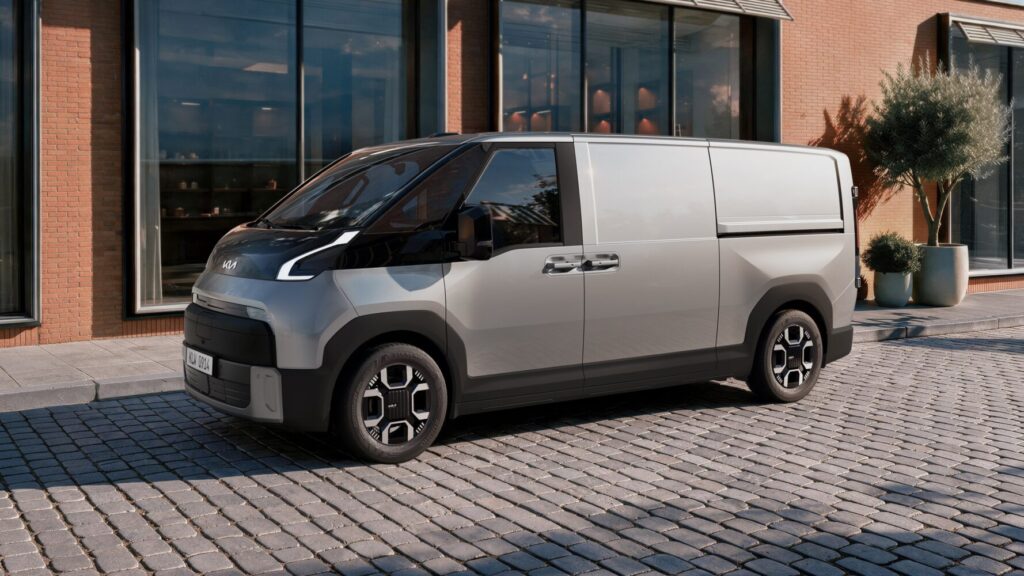
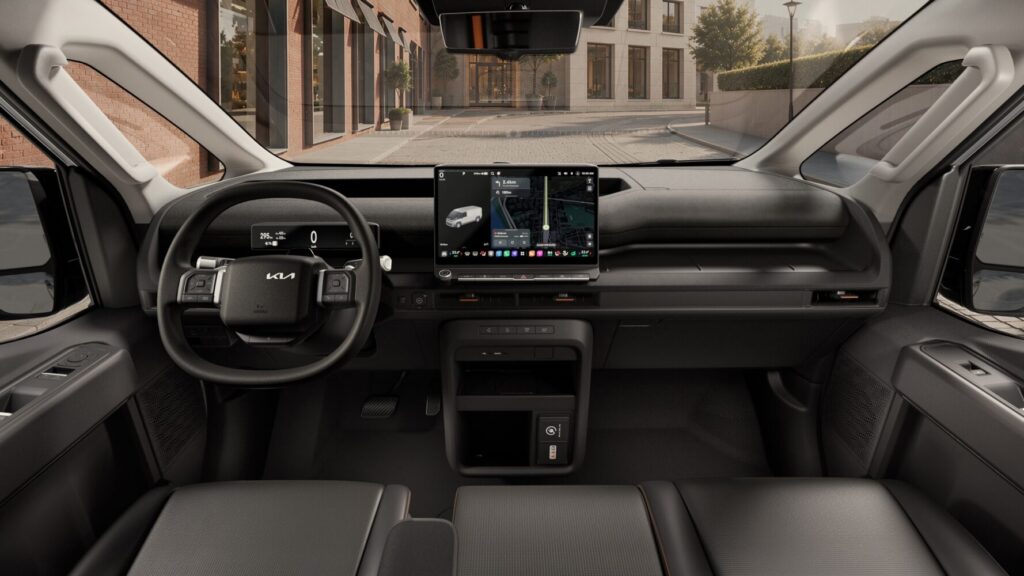
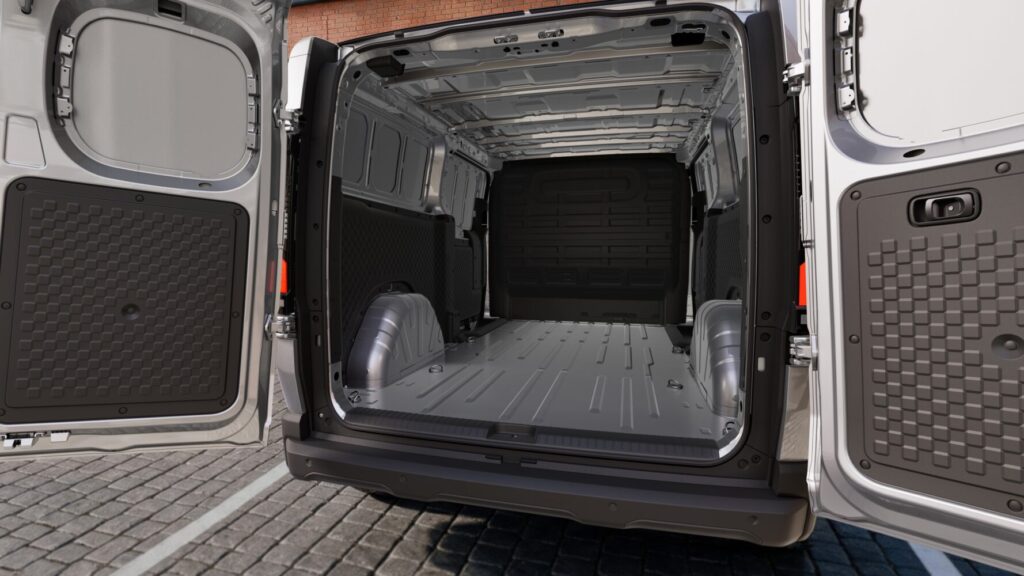
At 5,350 mm long — roughly 17.5 feet — the PV7 Long is not trying to be discreet. Built on Kia’s E-GMP.S skateboard platform, a flat-floor electric architecture designed specifically for commercial use, it offers 23 configurations: cargo vans, passenger shuttles seating 7, 9, or 11 people with rail-mounted removable seats, and chassis cab options for custom bodywork.
A few numbers worth knowing:
- Cargo volume reaches 6.1 m³ in Long Cargo trim and 8.0 m³ in High Roof variants; Long Cargo fits three Euro pallets at a 550 mm loading height
- Payload tops out at 1,200 kg
- Battery choices are 71.5 kWh or 96.2 kWh NCM
- WLTP range target: over 460 km (~286 miles) for Long Range Cargo — preliminary, subject to confirmation
The engineering headline, though, is the 800-volt architecture. Unlike the 400-volt system in the PV5, 800 volts means charging from 10% to 80% in approximately 25 minutes on a 350 kW DC fast charger. Kia notes these figures are still subject to final confirmation, but the implication for fleet operators is significant.
That is roughly the time it takes to grab a coffee and clear security. Less downtime means more airport runs, more hotel transfers, more market deliveries per shift.
Alien Geometry Wearing a Work Jacket
What the PV7 looks like at the curb matters as much as what it carries — and right now, nothing else moving passengers between terminals looks remotely like this.
Commentators describing the PV7 as “alien” are not exaggerating. Standing curbside, the low beltline creates a glassy, airy presence — more glass than van, more statement than box. The boxy, subtly blistered wheel arches look unlike anything currently shuttling diners to tasting menus or guests to vineyard tours. It is unapologetically upright — a concept-car silhouette doing warehouse-district work.
For hotel operators and food-tour companies, aesthetics are not vanity. The vehicle parked outside a property is a brand statement, and the PV7 makes an unmistakably confident one.
European markets are the confirmed target, with availability expected around 2027. U.S. availability remains unconfirmed. For now, American travelers will most likely encounter the PV7 abroad — somewhere between the airport and somewhere genuinely worth eating.