


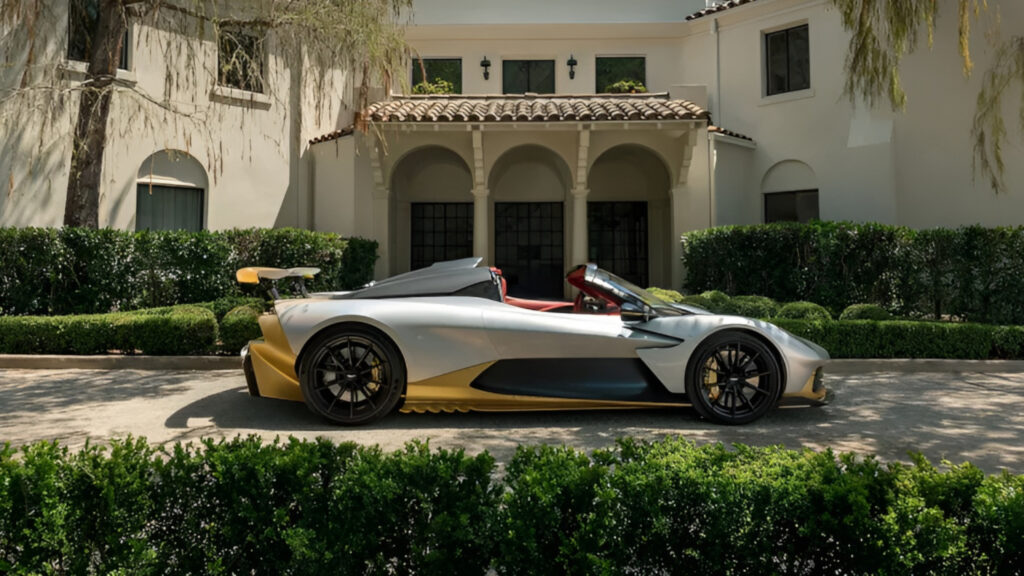
Standard fabric roof off: 217 mph. Standard fabric roof on: electronically limited to 124 mph. That 93-mph gap is not a misprint — it is Aston Martin’s deliberate engineering position on the Valhalla Spider, the open-top version of their mid-engine plug-in hybrid supercar. Convertibles typically accept a performance penalty for dropping the roof. Aston Martin built this one to work the other way around. Remove the fabric top, and the car’s full capability unlocks. Keep it on, and the electronics step in and hold you to motorway speeds that a well-optioned Camry could theoretically approach.
Why the Roof Is the Slowest Part of This Car
The Spider’s electronic brain decides your speed ceiling based entirely on which roof — if any — is sitting overhead.
The Spider detects whether its stowable fabric roof is installed and imposes the 124-mph ceiling electronically when it is, according to Aston Martin and reporting by The Drive. Want 217 mph with something overhead? The optional carbon-fiber hardtop permits that — but it does not stow. The choice becomes concrete: weather protection you can pack away inside the car, or ultimate speed with a lid you will need to leave somewhere. Aston Martin has not publicly detailed every engineering parameter behind the fabric roof’s speed ceiling, but the trade-off is clear: the stowable top exchanges top-speed access for everyday convenience. Another supercar brand is exploring a similar path, with an convertible version of a high-hp flagship hinted at by Audi’s CEO.
Key figures on the Spider:
- 1,064 hp from a twin-turbo 4.0-liter V8 paired with three electric motors (PHEV); 811 lb-ft of torque
- 0–62 mph in approximately 2.5 seconds; 217-mph top speed with standard fabric roof removed
- Fabric roof stows inside the car; carbon hardtop option available but not stowable
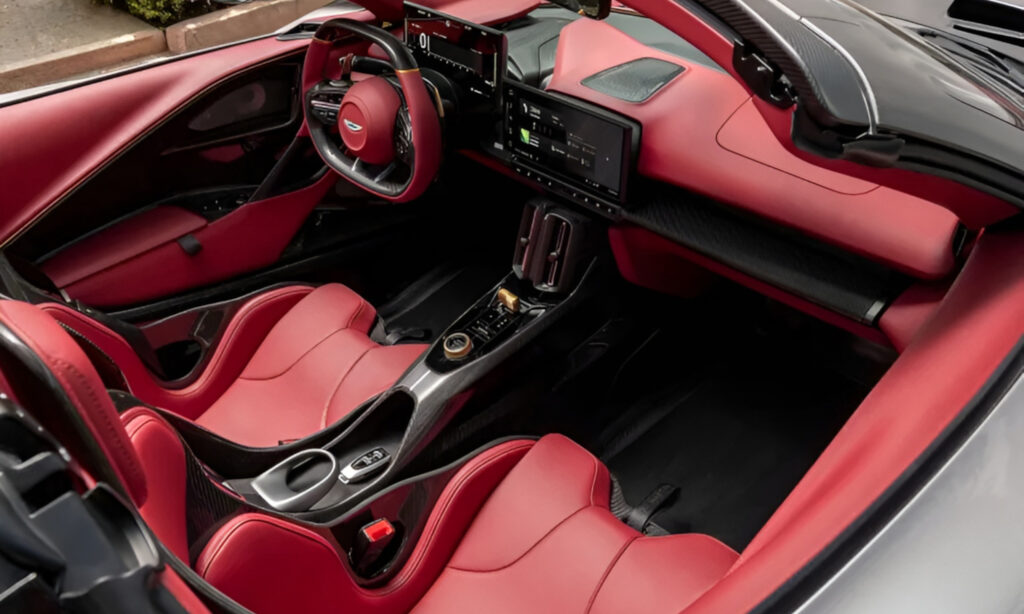
- Touring seats standard; carbon bucket seats available at no extra cost, per The Drive
- Coupe starts at $1,051,700 per Car and Driver; Spider pricing unannounced; debut at 2026 Concours at Wynn Las Vegas
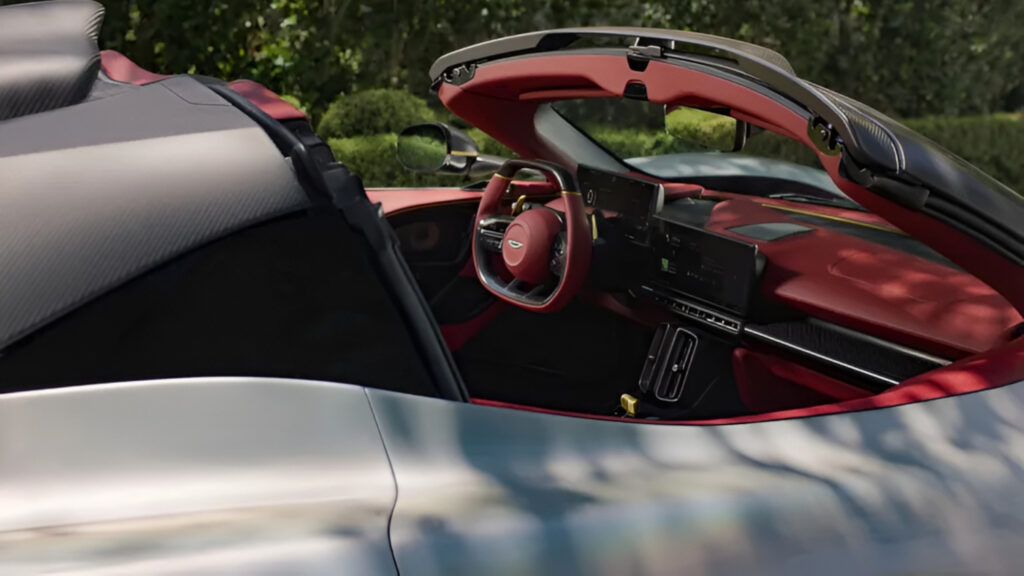
Aston Martin says the open-top car retains the coupe’s full performance capability. Delivering on that required genuine aerodynamic and electronic engineering work: the company revised both systems so that removing the standard fabric roof does not compromise ultimate performance. The exact reasoning behind the 124-mph fabric-roof ceiling has not been fully disclosed, but the engineering intent is unambiguous — open air is the performance mode.
Built for the Drive, Not Just the Spec Sheet
Despite its hypercar credentials, the Valhalla Spider is designed with the long-haul touring driver firmly in mind.
Touring seats are standard fitment, giving the Spider a grand-touring orientation for longer drives alongside its 1,064-hp powertrain. That specific combination — stow the roof, settle into the touring seat, and let a twin-turbo V8 and three electric motors do their work — is precisely the ownership experience Aston Martin is selling. The Spider’s plug-in hybrid powertrain also places it squarely within one of the fastest-growing segments in the American market. If you want the fastest configuration this car offers, the answer is counterintuitive and completely on brand: remove the standard fabric roof, feel the wind, and let it run.
Pricing remains unknown. Given the coupe clears a million dollars, budget accordingly — and if you need context on what owning exotic cars truly costs, it is worth a read before signing anything. And know this: with the standard fabric roof stowed and the cockpit open to the sky, you are already in the car’s fastest configuration.