

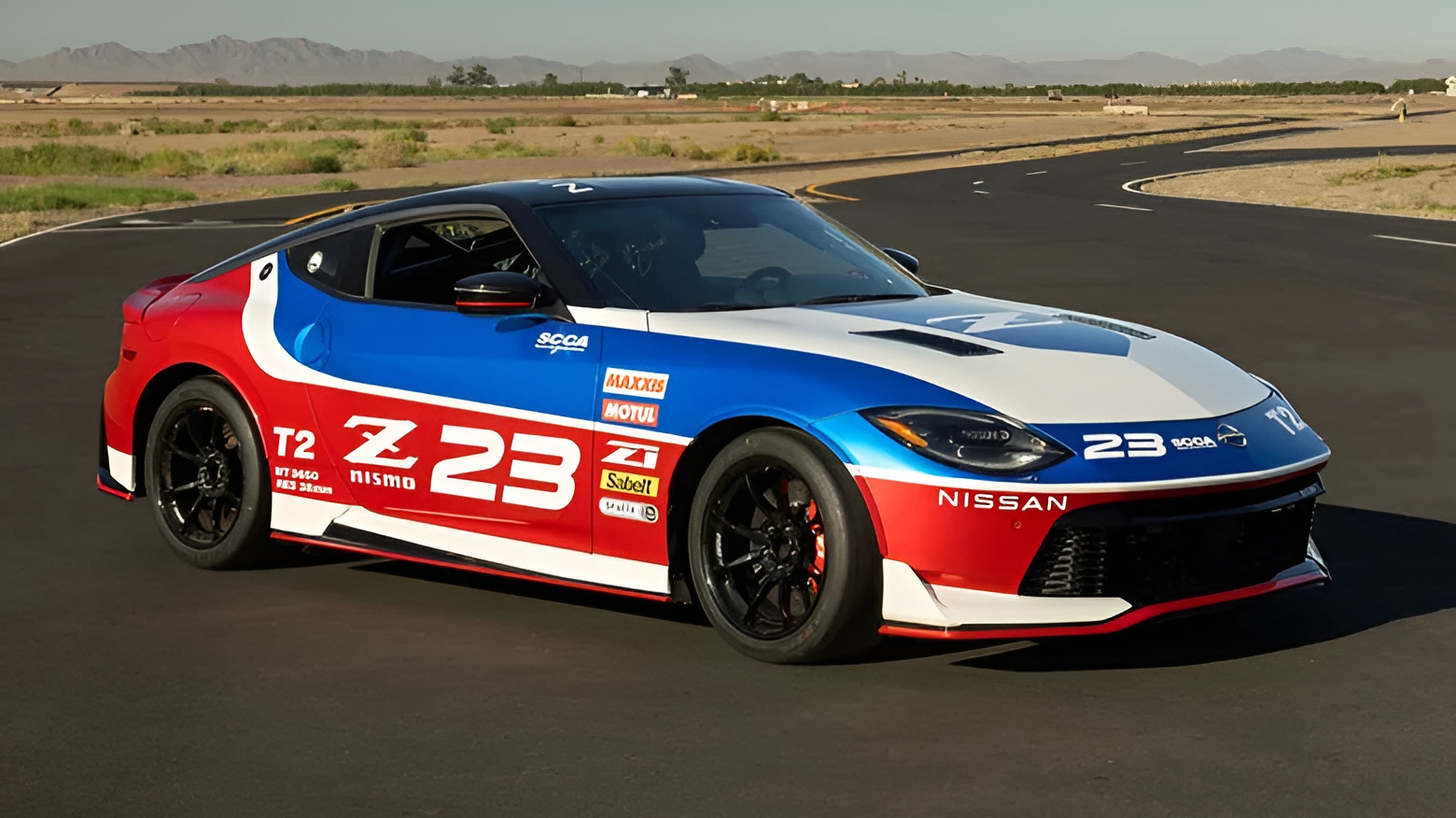
Project NAT2 (left) meets the Datsun S30 Concept (right) at SEMA — one built for the rulebook, one built for the soul.
Same twin-turbo V6. Two completely different answers to the same question. At SEMA 2026, Nissan presented Project NAT2 — a competition-stripped Z built to SCCA Touring 2 specifications — alongside a Datsun S30 Concept restomod developed with Formula Drift champion Chris Forsberg. One car is ruthlessly functional. The other is emotionally compelling. Nissan’s materials announce no production plans for either build, which raises the obvious question: why build them at all?
Project NAT2 Proves the Z Can Run With a Rulebook
Volunteer Nissan employees built a genuine SCCA club racer, and every part is traceable to the real aftermarket.
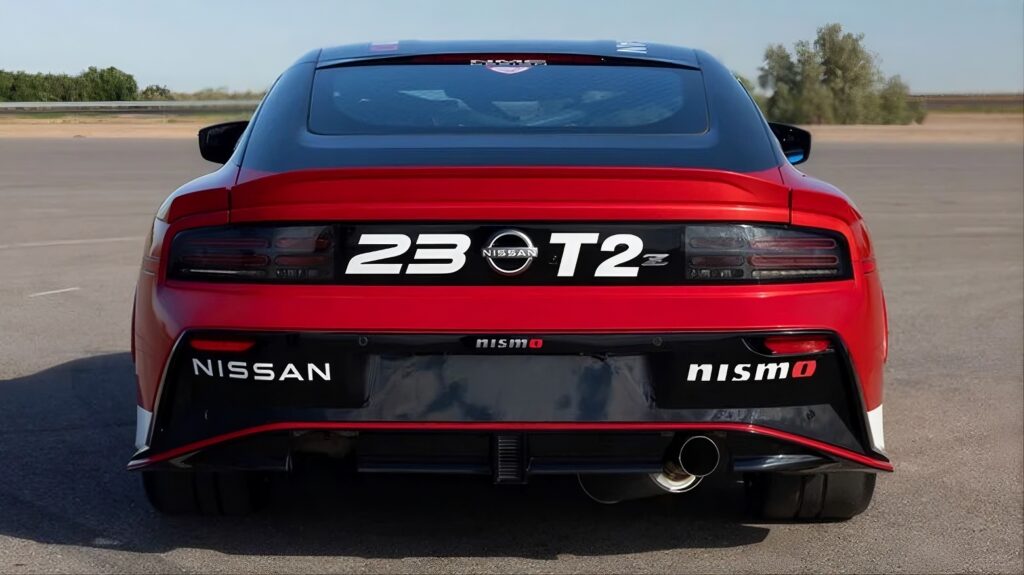
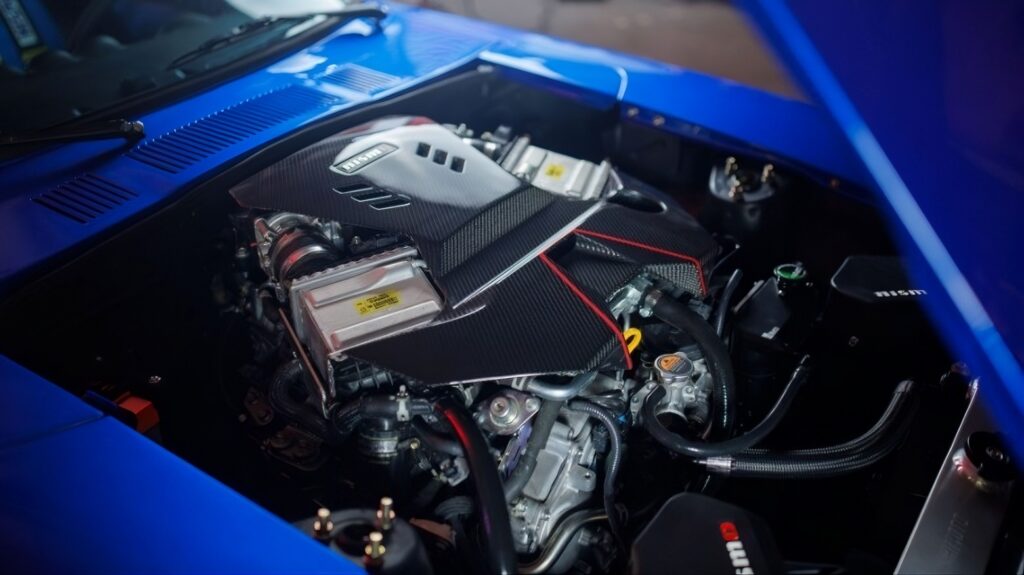
Project NAT2 came from the Nissan Acceleration Team — not a factory skunkworks, but an all-volunteer group of Nissan employees who pursue motorsports on their own time. SCCA Touring 2 is a road-racing class that permits defined modifications within strict technical boundaries. The Z’s twin-turbocharged 3.0-liter V6 receives a NISMO cold-air intake, stainless-steel exhaust, custom ECU calibration, upgraded heat exchanger, oil cooler, and differential cooler. The turbochargers run 38 mm inlet restrictors per class rules. Nissan’s official materials list no confirmed output figure, so the power number stays open.
Key hardware, per Nissan’s SEMA release and CarScoops:
- Chassis: NISMO coilovers, revised front upper control arms, polyurethane bushings, aluminum subframe and drivetrain mounts
- Brakes: Z1 Motorsports six-piston front calipers with 380 mm two-piece rotors; Hawk DTC-60 pads; stainless-steel lines (rear remains stock per class rules)
- Interior: roll cage, Sabelt full-halo driver seat and steering wheel, custom dash, revised paddle shifters
- Exterior: 18-inch forged wheels, white/blue/red racing livery
The S30 Concept Is the One That’ll Stop You Cold
Chris Forsberg and Nissan dropped a modern twin-turbo V6 into a classic Datsun silhouette — and somehow made it feel inevitable.
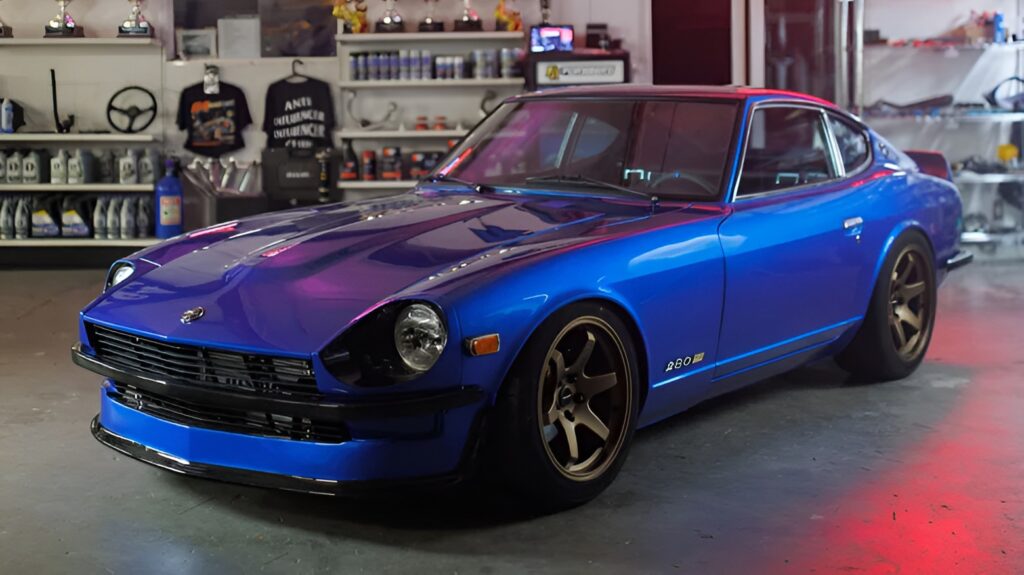
Stand in front of the Datsun S30 Concept long enough and the proportions do something to you. The shape is unmistakably 1970s. Everything underneath is decidedly current. Forsberg’s collaboration with Nissan transplants the modern Z’s twin-turbo V6 — fed by Garrett turbochargers, cold-air intakes, and an upgraded heat exchanger — into the classic S30 body, now dressed in carbon-fiber fenders and bumpers and finished in Seiran Blue.
A six-speed manual, twin-disc clutch, and NISMO limited-slip differential manage the power delivery. The chassis gains aftermarket coilovers, a new steering rack, billet tie rods, upgraded control arms, and fresh sway bars. Wilwood six-piston front calipers clamping 300 mm discs and four-piston rears on 280 mm discs handle stopping duties. Inside, OMP racing seats, a Grip Royal steering wheel, and a harness bar round out a cabin that treats the driver as the only instrument worth reading.
What Nissan Is Actually Selling Here
Two concept cars, zero production plans — and a very clear message about the Z’s aftermarket ecosystem.
Nissan presented both builds as concepts, and its materials announce no production plans. That’s the honest answer. But the parts list tells a second story: NISMO, Z1 Motorsports, Wilwood, Garrett, Hawk. Every component is real, available aftermarket hardware. Nissan isn’t selling these cars; it’s demonstrating what the ecosystem around the Z can already do — a credibility play aimed squarely at people who spend Saturday mornings in garages, not showrooms. The broader SEMA display also included a revived Sentra Spec-V concept, reinforcing that Nissan arrived with something to prove across its entire performance lineup.
Both cars ask the same question from different decades: what does a Z want to be? One answers with a rulebook. The other answers with a feeling. At SEMA 2026, Nissan had both covered.