

Every vehicle on this list represents a specific kind of engineering decision: the choice to treat convention as a starting point for questioning rather than a framework for compliance. The Stout Scarab invented the minivan layout in the 1930s and nobody noticed for 50 years. The VW XL1 achieved fuel consumption numbers that established engineers had declared impossible. The Peel P50 is 54 inches long and holds the official record for smallest production car ever built. The Bugatti Type 57 SC Atlantic used riveted seams because its magnesium alloy body panels were too flammable to weld. These are not concept cars that gathered museum dust — they are rolling arguments about what transportation is allowed to be.
12. Tesla Cybertruck (Exterior)

The Cybertruck’s 30X cold-rolled stainless steel exoskeleton is not a styling decision — it is a structural one, and the angular geometry is a direct consequence of that material’s forming limitations. You cannot press stainless steel into compound curves the way you can press conventional automotive steel, so the design is flat panels and straight lines by engineering necessity. Production delays stretched years beyond the original 2019 reveal, which built anticipation for a vehicle that looked like a prop and functioned as a legitimate truck. The design approach abandoned every assumption about what a pickup truck is supposed to look like, which sometimes defines how vehicles reshape history.
Tesla Cybertruck (Interior)

Electric powertrain variants deliver up to 500 miles of range while maintaining 14,000-pound towing capacity. The Cyberbeast variant reaches 60 mph in under 2.9 seconds — acceleration figures that prove electric powertrains do not require the performance trade-offs that early EV skeptics predicted. The interior continues the exterior’s angular language with a large central display and horizontal surfaces that echo the vehicle’s flat-panel geometry. The Cybertruck is simultaneously the most controversial production vehicle of the past decade and a genuine technical achievement across multiple specifications simultaneously.
11. Daihatsu Midget II: The Working Ant (Exterior)

Tokyo’s density created a transportation problem that Western manufacturers were not addressing: how to move cargo through urban environments where full-size vehicles cannot fit, park, or turn. The Daihatsu Midget II answered with dimensions of under 10 feet long and roughly 4 feet wide — smaller than a motorcycle’s turning radius with pickup truck utility attached. The result is a vehicle that navigates urban environments that stop conventional trucks at the first narrow alley.
Daihatsu Midget II (Interior)

The single-seat cabin prioritizes function entirely — there is no passenger seat because the design brief was cargo transport, not commuting. The 660cc engine and optional four-wheel drive delivered more capability than the dimensions suggested possible. The Midget II is the logical conclusion of designing a vehicle specifically for its operating environment rather than adapting a general-purpose platform for a specialized use, which is why it succeeded in Japan while nothing comparable existed in markets that had not thought through the same problem.
10. Bond Bug: The Orange Wedge of Joy (Exterior)

The Bond Bug arrived in 1970 as a three-wheeled wedge in a color that made ignoring it physically impossible on British roads. The economy car market of the era was producing forgettable boxes designed solely to transport people from one place to another without emotional engagement — the Bug treated that baseline as an opportunity rather than a constraint. Traffic-cone orange and an unconventional layout turned the vehicle into a moving statement about what a small car was allowed to be.
Bond Bug (Interior)

The 700cc engine produced 29 horsepower and pushed the Bug to 76 mph — respectable for its weight and class. The interior was appropriately minimal for a three-wheeled vehicle designed to be fun rather than practical, which is an honest design brief that the Bug executed without apology. It is not among the fastest cars of its era by any measure, but it is among the most distinctive — and distinctive turned out to be the more durable attribute across 50 years of automotive history.
9. Volkswagen XL1: Efficiency Taken to Extremes (Exterior)
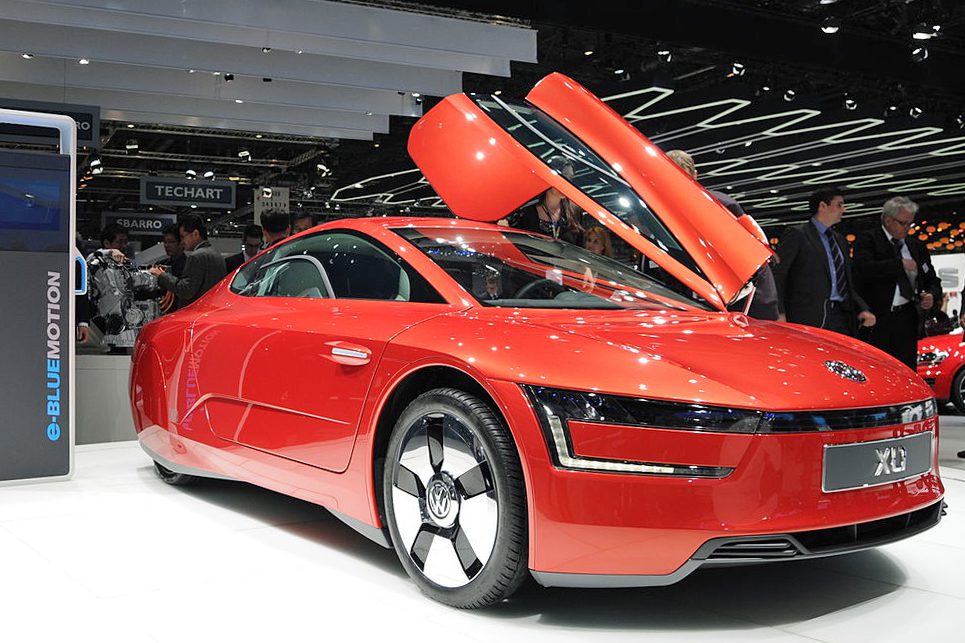
The XL1 was built around a single engineering objective: achieve 100 kilometers per liter of fuel consumption. Carbon fiber and magnesium construction kept total weight just over 1,700 pounds. The drag coefficient was optimized to a level that makes most sports cars look unengineered by comparison. Every design decision — the covered rear wheels, the narrow tandem seating, the vestigial camera mirrors — exists because of its aerodynamic or weight consequence. This is what happens when efficiency is treated as an absolute rather than a variable to balance against other priorities.
Volkswagen XL1 (Interior)

The hybrid diesel-electric powertrain produced 74 horsepower — sufficient for the XL1’s purpose, which was demonstrating what efficiency numbers were achievable, not what performance numbers were achievable. The cabin used lightweight materials throughout and minimal amenities, because every added kilogram has a fuel economy consequence at the level of optimization the XL1 was pursuing. The efficiency figures the XL1 demonstrated had previously been considered impossible; the production version proved they were not.
8. Amphicar: The Car That Swims (Exterior)
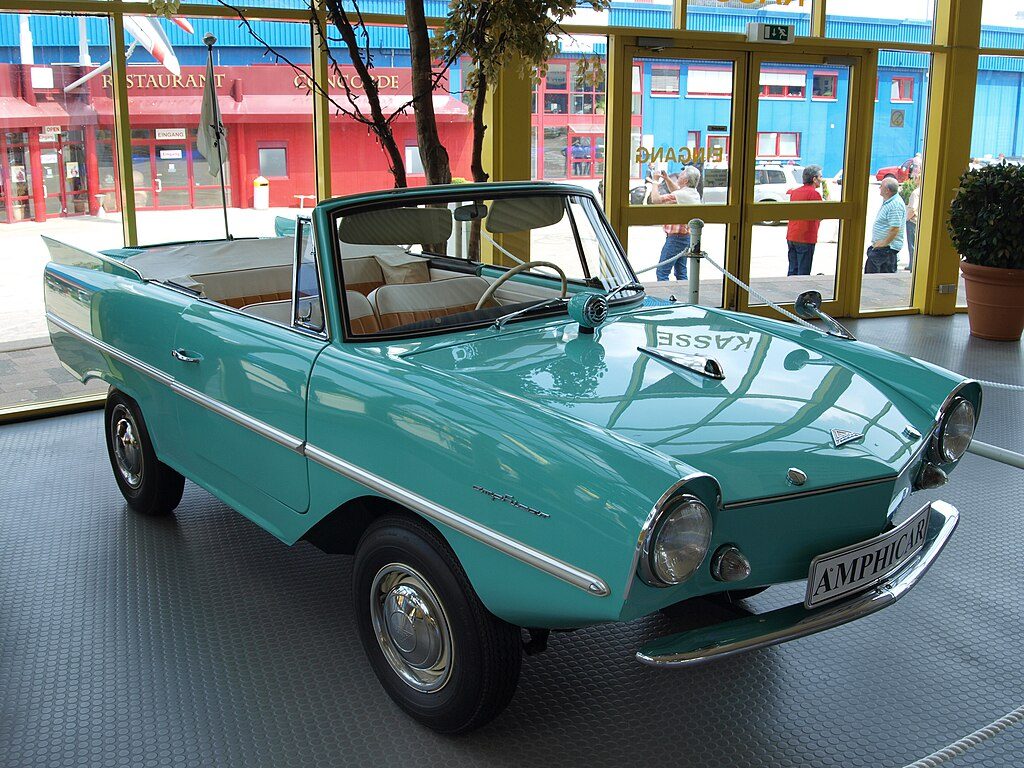
The Amphicar was a production amphibious vehicle — not a concept, not a military prototype, but a car available at dealerships in the early 1960s that could be driven directly into water and continue moving. Built-in propeller and rudder systems provided the marine propulsion; the sealed hull provided the flotation. Only 3,900 examples were produced across the production run, which makes surviving examples genuinely rare collector pieces with a specific claim to originality that no other vehicle can replicate.
Amphicar (Interior)
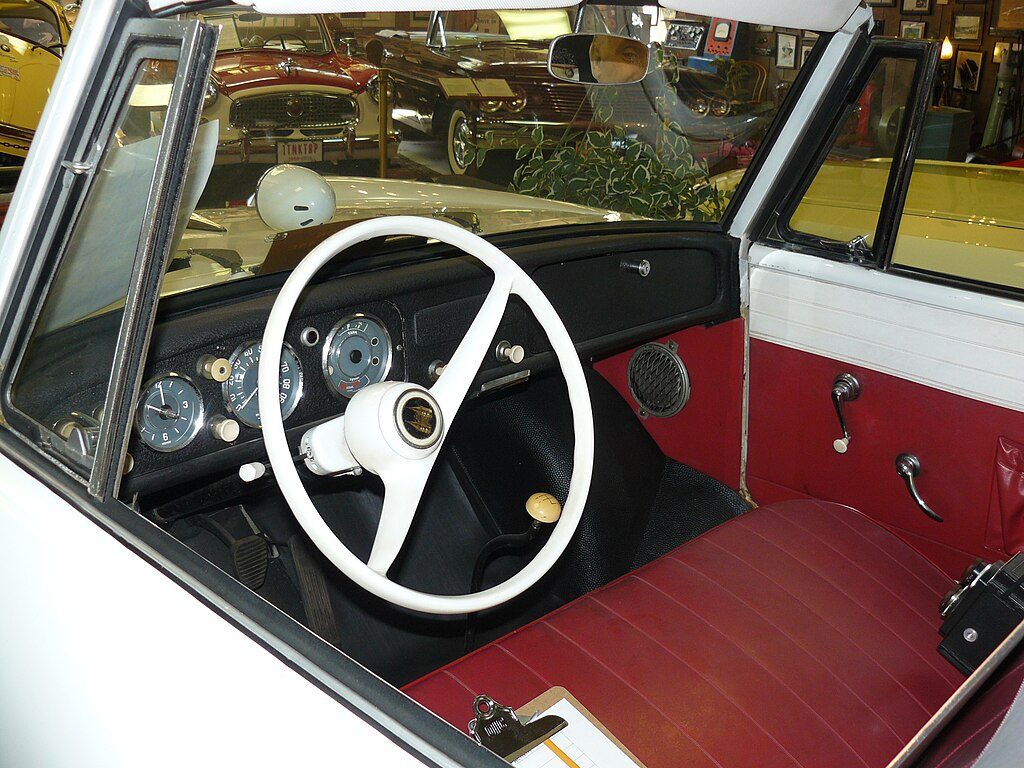
The 43-horsepower engine delivered 70 mph on land and 7 knots on water — land performance adequate for the era, water performance that outperformed the skepticism that greeted the concept. Waterproof seals and marine-grade controls addressed the dual-environment requirement without compromise to either mode’s functionality. The Amphicar sits among the most distinctive vehicles of the 1960s — whether it succeeds aesthetically depends on whether the observer values the engineering ambition or the resulting proportions more heavily.
7. Karlmann King: The SUV With Delusions of Grandeur (Exterior)
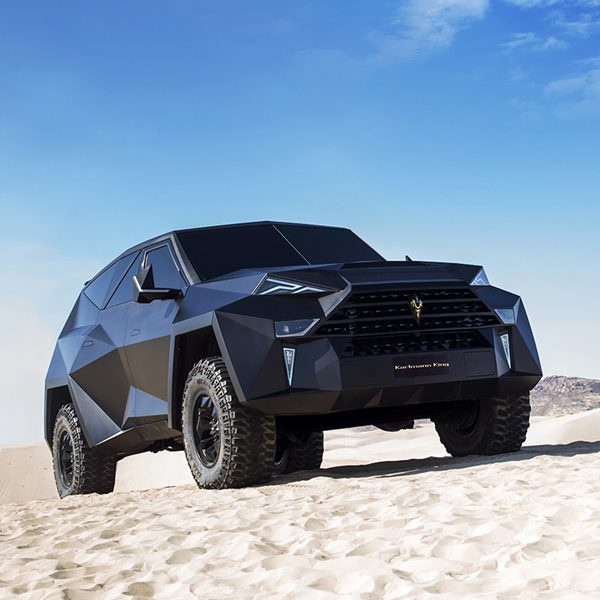
The Karlmann King starts around $2 million for a vehicle built on a Ford F550 chassis and wrapped in bulletproof armor capable of stopping small-arms fire. Total weight reaches up to 13,000 pounds when fully loaded — more than three times the base F550’s curb weight, which explains most of the engineering challenges that follow. The angular exterior geometry is a consequence of the armoring process rather than a design exercise, producing a vehicle whose appearance communicates its function more accurately than most luxury SUVs manage.
Karlmann King (Interior)

The 6.8-liter V10 engine moves 13,000 pounds with predictable effort — this is not a fast vehicle, and the engineering did not prioritize making it one. Bulletproof glass, a built-in coffee machine, and full luxury amenities address the buyer’s priorities, which are security and comfort rather than performance. The Karlmann King occupies a specific market position: buyers who require armored protection but also require the amenities that make extended time in a vehicle tolerable. The price reflects how few manufacturers address that intersection.
6. Covini C6W: Two Extra Wheels, Infinite Conversations (Exterior)

This Italian creation revealed in 2004 features six wheels total — four up front and two in the rear — a configuration that distributes braking force across more contact patches and reduces the impact of front tire blowouts by giving the vehicle two additional front wheels to absorb the loss. The engineering argument is legitimate; the visual consequence is a vehicle that stops conversations by existing in the same vicinity. Every parking lot it enters becomes a demonstration that automotive wheel configurations are a convention rather than a requirement.
5. 1936 Bugatti Type 57 SC Atlantic: When Money Meets Magnificence (Exterior)

One example has changed hands at auction for $34 million, placing it among the most valuable cars ever sold. The distinctive riveted dorsal seams were not decorative — they were engineering necessity. The body panels were formed from magnesium alloy, which is too flammable to weld safely, so the panels were riveted together instead. Every curve was hand-formed by craftsmen who understood that the Atlantic was simultaneously transportation and sculpture. The proportions achieved a standard that subsequent generations of supercar designers have continued to reference without fully reaching.
4. Peel P50: The Car That’s Smaller Than Your Office Chair (Exterior)
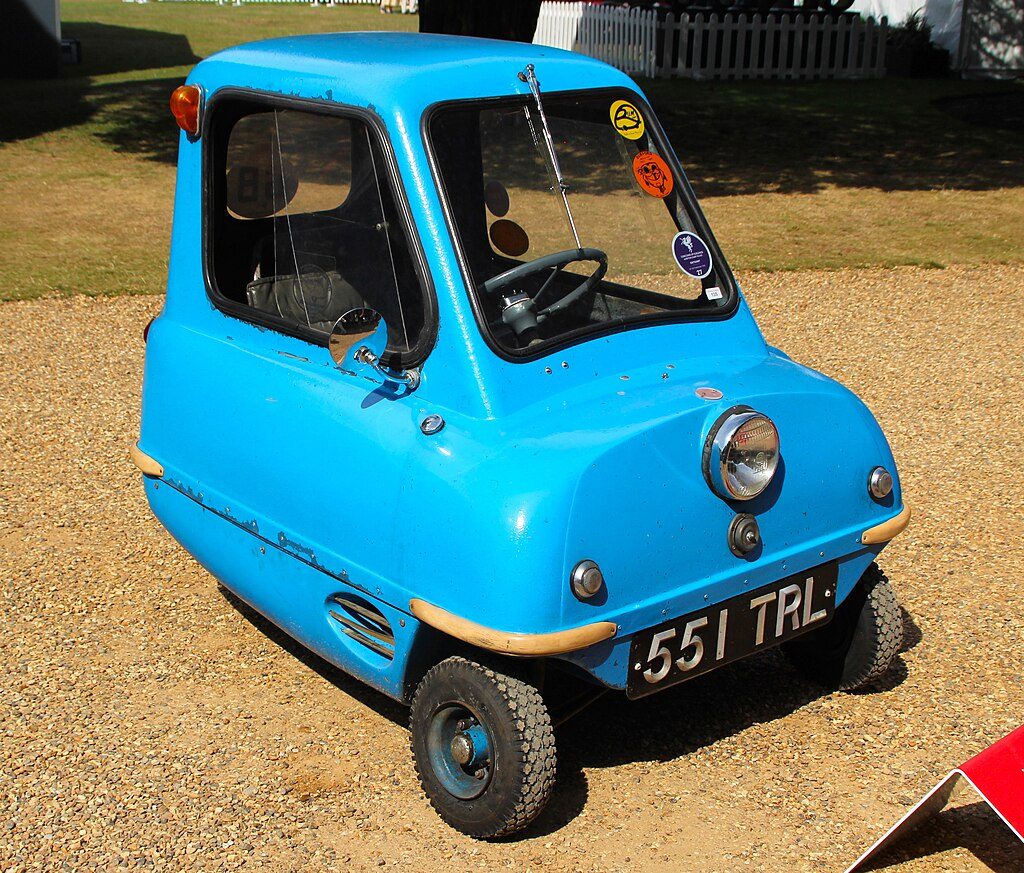
The Peel P50 holds the official record as the smallest production car ever manufactured: 54 inches long, 41 inches wide, and 130 pounds total. These are not approximate figures — they are the certified dimensions of a vehicle that was produced and sold to the public, which is what distinguishes the P50 from concept vehicles with similar ambitions. The three-wheeled single-seater was built on the Isle of Man in the 1960s for the specific use case of urban commuting in the smallest possible package.
Peel P50 (Interior)

The 49cc engine produces sufficient power to reach 30 mph — an experience that feels considerably faster given the proximity of the driver to road level and the complete absence of structural buffer between occupant and environment. Basic controls, zero luxury amenities, and a single seat constitute the entire interior specification. The P50 is the most honest expression of minimum viable automobile ever manufactured at production scale, and its record has stood for over 60 years because nobody has successfully made a smaller one that sold to actual buyers.
3. 1954 GM Firebird I: The Jet Age Takes to the Road (Exterior)

Unveiled at the 1954 Motorama Auto Show, the GM Firebird I was powered by a gas turbine engine — the same propulsion technology that was simultaneously powering military aircraft above American airfields. The aircraft-inspired bodywork was not cosmetic; it reflected the genuine engineering cross-pollination happening between the aerospace and automotive industries in the postwar decade. Cockpit-style controls and fighter jet aesthetics were the visual consequence of having aerospace engineers work on a vehicle design, producing something that looked like it belonged on a runway because its designers spent their professional lives around runways.
2. Ferrari Modulo: The Wedge That Changed Everything (Exterior)

Paolo Martin of Pininfarina took a Ferrari 512S chassis in 1970 and produced a concept with zero conventional curves — pure geometric precision in an impossibly low profile that made everything else at the auto show look as if it had been designed in a previous decade, which in aesthetic terms it had. The radical wedge shape influenced supercar design for decades afterward because it established what the form language of extreme performance could look like when aesthetic convention was treated as irrelevant. Auto show visitors in 1970 were looking at a design vocabulary that would define the 1980s supercar era before that era had started.
1. Stout Scarab: The Minivan’s Great-Grandfather (Exterior)

Aviation engineer William Stout applied aircraft design principles to a car in the 1930s and produced something that did not resemble any vehicle being manufactured at the time. The Stout Scarab used lightweight aluminum construction decades before the automotive industry adopted that material at scale, incorporated a rear-engine layout that maximized interior space, and created a passenger cabin that anticipated the minivan concept by approximately 50 years. Every contemporary vehicle looked instantly dated beside it — not because the Scarab was styled aggressively, but because it was designed from engineering principles rather than convention, which produced a result that aged differently than everything built around convention.